
That’s wild and incredibly frustrating. What’s the next choice, a set of Focusrite interfaces?
I am very happy with my Motu 16A, and I have used RME devises before with no issues. But I am using a PC

TalkBass has been independent since 1998. Add your voice.
Create a free account to reply to discussions, view embedded media, and browse with fewer display ads.
Join free Log in
Want zero display ads or expanded classifieds tools? Compare plans.
That’s wild and incredibly frustrating. What’s the next choice, a set of Focusrite interfaces?

Likely a pair of Clarrett 8PreX interfaces, 16-channel snake box and a monitor controller.That’s wild and incredibly frustrating. What’s the next choice, a set of Focusrite interfaces?
Both are great brands, especially RME, but not high on my radar. I should give them another look. Thanks for the reminder.I am very happy with my Motu 16A, and I have used RME devises before with no issues. But I am using a PC
Woah woah woah, you can't just drop that bomb on us and not clarify as to whay bass you are waiting for!Likely a pair of Clarrett 8PreX interfaces, 16-channel snake box and a monitor controller.
I could move over to UA Apollo, but their conversion and preamps isn’t on a quality level commensurate with the price point. You’re paying for DSP and a plugin dongle. I have enough plugs and don’t need the onboard DSP.
I could move up to Metric Halo, which is precisely what I want to do, but at this point I can’t justify the cost. I’m trying to pay down the remainder of my studio expenses, have a few more studio pieces to buy, am buying a truck next year and dropped $5,000 on a custom bass build a couple months ago, so... Now is not the time.

Dingwall Super J in pearl white, tort guard, lightweight swamp ash body, birdseye maple neck and fretboard, 3X FDV pickups, Glockenklang preamp with active/passive push-pull, 3X series/parallel switching, black hardwareWoah woah woah, you can't just drop that bomb on us and not clarify as to whay bass you are waiting for!
Let's hear them details
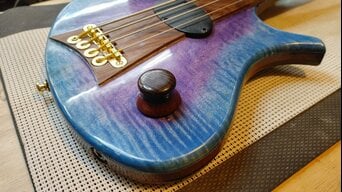
They only give us an option to "like" a post, I need more for this.Dingwall Super J in pearl white, tort guard, lightweight swamp ash body, birdseye maple neck and fretboard, 3X FDV pickups, Glockenklang preamp with active/passive push-pull, 3X series/parallel switching, black hardware



I need 16 channels of input, and after my experience with the Element 88 I'm no longer sold on the idea of using two eight channel devices with one setup as an aggregate. I'm leaning towards a dedicated 16-channel converter. The MOTU 16A is looking very appealing as a standalone interface (converters and monitor control) that I could feed with a pair of eight channel analog preamps.I run my late 2015 Clarett 8PreX with a 2017 MacBook Pro. It sits in a rack case on the floor quietly working without any issues. Just sayin.
I need 16 channels of input, and after my experience with the Element 88 I'm no longer sold on the idea of using two eight channel devices with one setup as an aggregate. I'm leaning towards a dedicated 16-channel converter. The MOTU 16A is looking very appealing as a standalone interface (converters and monitor control) that I could feed with a pair of eight channel analog preamps.
This is exactly the issue. With a typical one-up one-down kit I'd end up with nine mics (kick_in, kick_sub, snare_top, snare_bottom, tom_rack, tom_floor, hats, OH_L, OH_R). On a kit with three toms I'm at 10, and with four toms like the one I recorded a couple weeks ago I'm at 11 just for drums. If the group has their act together and can record drums, bass, keys and guitar at the same time like the one I did last month then I end up using a lot of tracks (in this case it was 9 drum mics, 1 bass DI, 1 guitar DI through a modeler, 4 keyboard DIs, 1 keyboard MIDI).Requiring many drum inputs always complicates things.
Dingwall Super J in pearl white, tort guard, lightweight swamp ash body, birdseye maple neck and fretboard, 3X FDV pickups, Glockenklang preamp with active/passive push-pull, 3X series/parallel switching, black hardware

after my experience with the Element 88 I'm no longer sold on the idea of using two eight channel devices with one setup as an aggregate.
One of the issues I've had with them (lack of direct monitoring on interface B when in dual mode) is the only issue that can be resolved immediately by removing one of the interfaces. That said, the issue is only present on the B interface, so removing it doesn't improve the situation.Pretty sure you covered this in one of this epic thread's installments, but do/did the Apogees bedevil you when used independently, or only when used as a Mac aggregate device? In my one adventure w/ aggregate devices on a MacBook Pro, it was glitchy.
Maybe this is *insert preferred deity here* telling you to stop wasting time and buy the Metric Halo. Life's too short to argue for months with vendors.One of the issues I've had with them (lack of direct monitoring on interface B when in dual mode) is the only issue that can be resolved immediately by removing one of the interfaces. That said, the issue is only present on the B interface, so removing it doesn't improve the situation.
Curiously these aren't truly an aggregate device, but I can't think of another way to describe the setup. They each have their own Thunderbolt connection to the computer, and then there are four ADAT cables linking the two interfaces together. According to Apogee they're supposed to work like one big interface at that point, not a main interface and its aggregate.
Apogee has been telling me to hold off on Catalina, but that they're getting very close. I haven't checked with any of the plugins that I use frequently. I've been avoiding it. Seems like a big OS change.Just to be safe, I'd ask Focusrite if they have tested and certified the product that you are interested in under Catalina. I haven't had any issues with my unit but still...


