
Enjoy the benefits of a premium membership!
Upgrade Account
-
TalkBass has been independent since 1998. Add your voice.
Create a free account to reply to discussions, view embedded media, and browse with fewer display ads.
Join free Log in
Want zero display ads or expanded classifieds tools? Compare plans.
You are using an out of date browser. It may not display this or other websites correctly.
You should upgrade or use an alternative browser.
You should upgrade or use an alternative browser.
Nate Navarro Bass Book
- Thread starter CapnStallings
- Start date
More options
Who Replied?


Hey, guys! Thanks for kicking things off, @CapnStallings
I’m hoping this thread will be useful for book-related questions (technique, theory, practice materials, etc).
I also look forward to hearing how you guys are liking the book so far, and for some fun discussion about BASS.
All my best,
Nate
Thank you for making yourself available here. I'm buying the book just to support those who support us if for no other reason.

View attachment 4419438
Woo-hoo!!
Thanks, y’all!Thank you for making yourself available here. I'm buying the book just to support those who support us if for no other reason.

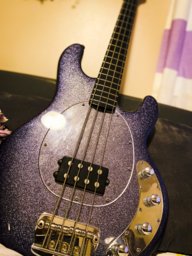
I just ordered this book and can’t wait!
I saw a demo lick on YouTube. I think it was exercise seven ?????
Anyway, after seeing it I’m bound and determined to learn it!
I saw a demo lick on YouTube. I think it was exercise seven ?????
Anyway, after seeing it I’m bound and determined to learn it!
That's awesome! The Beginner section and Moderate to Advanced section each have an exercise 7. Here's a link to the book's full video playlist so you can check out which riffs you want to tackle first.I just ordered this book and can’t wait!
I saw a demo lick on YouTube. I think it was exercise seven ?????
Anyway, after seeing it I’m bound and determined to learn it!

I bought the book a couple of weeks ago.
I'd say that it both terrific, and useless (to me).
Terrific because all the etudes sound great in the recordings and seem very fun to play and of great didactic value.
Useless because, despite claiming to be for "intermediate to advanced players", I'd say all the etudes (except for those claimed to be for "beginners" and which are, IMHO, for advanced beginners) are really for advanced players.
I don't consider myself a beginner - I've learned bass with a teacher for 3 or 4 years, rehearsed with a band once a week and played a few gigs for 6 or 7 years. But I can't imagine myself any of the "Moderate to Advanced" studies without working first on simpler, "intermediate" stuff.
So I wish there was really a section for "intermediate" players, or that the book was marketed for advanced players only.
I'd say that it both terrific, and useless (to me).
Terrific because all the etudes sound great in the recordings and seem very fun to play and of great didactic value.
Useless because, despite claiming to be for "intermediate to advanced players", I'd say all the etudes (except for those claimed to be for "beginners" and which are, IMHO, for advanced beginners) are really for advanced players.
I don't consider myself a beginner - I've learned bass with a teacher for 3 or 4 years, rehearsed with a band once a week and played a few gigs for 6 or 7 years. But I can't imagine myself any of the "Moderate to Advanced" studies without working first on simpler, "intermediate" stuff.
So I wish there was really a section for "intermediate" players, or that the book was marketed for advanced players only.
Hey, sfermigier! Thanks a ton for buying my book, and I really appreciate your feedback.I bought the book a couple of weeks ago.
I'd say that it both terrific, and useless (to me).
Terrific because all the etudes sound great in the recordings and seem very fun to play and of great didactic value.
Useless because, despite claiming to be for "intermediate to advanced players", I'd say all the etudes (except for those claimed to be for "beginners" and which are, IMHO, for advanced beginners) are really for advanced players.
I don't consider myself a beginner - I've learned bass with a teacher for 3 or 4 years, rehearsed with a band once a week and played a few gigs for 6 or 7 years. But I can't imagine myself any of the "Moderate to Advanced" studies without working first on simpler, "intermediate" stuff.
So I wish there was really a section for "intermediate" players, or that the book was marketed for advanced players only.
First I want to acknowledging that every player is different, and I totally respect that. The beginner section of my book includes materials that I've found work best for most entry level bassists, up through 3-ish years of playing. I boiled down the content from tailored lesson programs I created for my in-person students. I've had over 100 students, most of them starting with me as beginners.
[So I wish there was really a section for "intermediate" players, or that the book was marketed for advanced players only.]
I believe this book brings much value to beginner bassists because it covers rudimentary concepts in depth, (The Parts of The Bass, How to Hold the Bass, Tuning, Intro To Fingerstyle, How to Read Tabs, Intro to Slap), while also instilling a foundation of good technical habits that will keep the player from hitting walls and plateaus as they progress; that last point is missing from most other bass programs I've seen, including the those of many private teachers. Given how long you've been playing, and the difficulty you're having with the Moderate to Advanced - Riffs and Etudes section, I suspect there could be a few technical habits that need to be unlearned. My advice for you to get more out of this book...
Step 1:
Work through the Beginner - Intro to Fingerstyle and Beginner - Intro to Slap sections in their entirety. Listen to the detailed explanations and mimic the close-up shots in each demonstration precisely. Don't rush through this portion, as it is vital, and will set you up well for all that follows. Here are a few public quotes from long-time bass players regarding the validity of these two sections from my book:
"I’ve been playing bass for years, yet I still learned quite a bit from this. Definitely going to rework my right hand finger style. Thanks Nathan!" - Liam Keaney
"I have not played Bass in over 13 years, 25 years with a band... I may just start again learning the correct way via your vids along with my 8-year old daughter." - The Python Pit
"Excellent teaching. I have been playing for over 20 years and it was a few times that I saw someone teaching in such a didactic way. Keep going!" - Henrique Rocha
You can read more comments from bassists of all skill levels and see the Beginner Bass Lesson video here:
Step 2:
Once the new forms have been engrained into your muscle memory, and you've spent time practicing Beginner - Riffs & Etudes as well as Beginner - Additional Online Learning Materials, start venturing into Moderate to Advanced - Riffs & Etudes. Slow the tempo down, take it one measure at a time. You can do it!!! If you need a break from practicing technique at any point, check out the Moderate to Advanced - Lessons section. This will allow you to exercise the creative aspects of your playing, while using your preferred level of technical difficulty. Also, don't forget to utilize Moderate to Advanced - Additional Online Learning Materials.
Thanks again for reaching out. I hope this helps.
- Nate
I Nate
. I am a bass beginner. I play guitare for 20 years and want to play bass. Sometimes I am Lost on the rigt hand fingers I have to pick. For example on the latin blues. I have watch your vidéos several Times but it's not so easy to see lol. It could be great to had the right hand finger to play on the exercice
All the best
Guillaume
. I am a bass beginner. I play guitare for 20 years and want to play bass. Sometimes I am Lost on the rigt hand fingers I have to pick. For example on the latin blues. I have watch your vidéos several Times but it's not so easy to see lol. It could be great to had the right hand finger to play on the exercice
All the best
Guillaume
Hi, Guillaume!I Nate
. I am a bass beginner. I play guitare for 20 years and want to play bass. Sometimes I am Lost on the rigt hand fingers I have to pick. For example on the latin blues. I have watch your vidéos several Times but it's not so easy to see lol. It could be great to had the right hand finger to play on the exercice
All the best
Guillaume
That's awesome to hear - learning bass after 20 years of playing guitar.

I've attached a PDF of Latin Blues with the right-hand fingerings I use in the video. I = Index, M = Middle.
I find that many bass players, myself included, consider two primary factors when choosing right-hand fingering...
1) Efficiency
In the PDF you'll see that I often alternate between my index and middle fingers when playing 8th notes. Until... an opportunity for "raking" presents itself. The third and fourth notes in measure 1 are both played with my middle finger because it is more efficient to "rake" one finger across the D-string and A-string than to alternate fingers in that context. Notice that you can only rake from a higher string to a lower string, so the same rule doesn't apply when playing the fourth and fifth note of measure 1, for example. Also noteworthy, my index finger is dominant over my middle finger, so I'll usually begin with my index finger after any rests.
2) Tone
For sections with a consistent-pulse feel, especially when pedaling a single note, I'll use a single finger for a more consistent tone. Notice that the difference in string-plucking positions, from one finger to the next, is enough to cause a change in tone. To demonstrate, pluck one spot on any string with your index finger, then pluck half an inch towards the bridge with the same finger. Hear the difference? James Jamerson is known for plucking with his index finger just about always, and it was a big contributor to his awesome tone. I use this approach for notes 3-7 of measure 12.
Eventually, with practice, your hands will do what's best for the music without even thinking about it. If you're looking for exercises that build right-hand fingering, I recommend the following:
YT Video: Beginner Bass Lesson by Nate Navarro: 4:42 to 15:22
YT Video: Finger Independence Exercises for Bass - A Mathematical Approach
Best wishes on your bass journey!
Nate
Attachments
I Nate
Thank you for your great and clean answer. I already have notice the difference when changing string pluck position but I didn't figure it will be noticable with fingers.
I will take Time to practice my efficiency and try to rack from a string to another instead of pluging the strings with the same finger.
The journey is great and your Book is a good Map lol
All the best
Guillaume
Thank you for your great and clean answer. I already have notice the difference when changing string pluck position but I didn't figure it will be noticable with fingers.
I will take Time to practice my efficiency and try to rack from a string to another instead of pluging the strings with the same finger.
The journey is great and your Book is a good Map lol
All the best
Guillaume
Hi Nate, Received your book as a present, before my bass arrived. Both the book and your videos have been extremely helpful over the last 4-months.
On your Patreon page are the backing tracks, for the Etudes, downloadable as mp3?
Thanks for providing outstanding content.
On your Patreon page are the backing tracks, for the Etudes, downloadable as mp3?
Thanks for providing outstanding content.
Hey CrewSails, That's awesome to hear! All of the backing tracks for the etudes are included with the book. There is a download link on page 5 for all of the book's digital content (tracks, backing tracks, Guitar Pro files, etc). Please let me know if you have any trouble with the download.Hi Nate, Received your book as a present, before my bass arrived. Both the book and your videos have been extremely helpful over the last 4-months.
On your Patreon page are the backing tracks, for the Etudes, downloadable as mp3?
Thanks for providing outstanding content.
Nate, No issues with the download. I'm really enjoying your book, videos and lessons. Watching you play Take Five - Bass Trio is a real inspiration, and shows just how talented a musician you are. Take Five, and your Latin Blues Bass are what I'm currently working on. Thanks again for such an outstanding book that this older bass student spends his time working through.
I was looking at the available music on your .net page ,and was wondering if any are more jazz flavored?
I was looking at the available music on your .net page ,and was wondering if any are more jazz flavored?
David, Thanks a ton for all of your kind feedback. It is very rewarding for me to hear that you and other readers are finding my book valuable.Nate, On small issue. My Chromebook cannot open .gp files. Please let me know if there is another way to gain access to the tabs.
~ David
Jazz flavored - You might want to check out the singles that have been released so far from Ross Jennings' upcoming album, "A Shadow of my Future Self." Ross is best known as the singer of the band Haken, and this is his debut solo album. Some have called it "Prog-Pop," and I think that's fitting, and on many tracks you can hear the Jazz influence manifesting harmonically and in the instrumentation; I played a lot a of fretless on the album, and there are some great brass parts throughout, and a psychedelic sax solo on "Grounded." The full album will release November 19th. Here's a link to Ross' YT channel: https://www.youtube.com/c/RossJenningsOfficial/videos
The .gp files require either:
1. Guitar Pro software, which is an awesome practice tool that I highly recommend. It seems Guitar Pro software is incompatible with Chromebook.
2. Fortunately, .gp files can also run in browsers with free Guitar Pro viewer applications like Soundslice or DGuitar. I have not personally used either of these, but they seem to be pretty popular.
What I like about .gp files is that you can loop sections, change tempo, edit the music in a variety of ways, and export as .pdf files or print it out if you like. Let me know if you have any trouble with the browser apps. I can always send you the .gp files as a pdf.
All my best,
Nate
Hi Nate, I bought your book and I enjoy it. However the link on page 5 bit.ly/bass4contentV1 is corrupted. Here in Belgium I get a warning not to open it since it contains malware. Is there another link?
Furthermore, "How to write a bass line" is -in my humble opinion- the most valuable part, but for me it lacks more in depth info. So any suggestions on books to get to know more about music theory, chord tones, parallel keys etcetera. Thanks!
Furthermore, "How to write a bass line" is -in my humble opinion- the most valuable part, but for me it lacks more in depth info. So any suggestions on books to get to know more about music theory, chord tones, parallel keys etcetera. Thanks!
Hey acudnam! Thanks for buying my book. May I have your email address? I’ll send you a download link with all of the files. Sorry about the issue.Hi Nate, I bought your book and I enjoy it. However the link on page 5 bit.ly/bass4contentV1 is corrupted. Here in Belgium I get a warning not to open it since it contains malware. Is there another link?
Furthermore, "How to write a bass line" is -in my humble opinion- the most valuable part, but for me it lacks more in depth info. So any suggestions on books to get to know more about music theory, chord tones, parallel keys etcetera. Thanks!
Regarding theory, you may want to check out music theory books that are not written specifically for bass. This will give a broader approach. I’m a fan of Berklee’s Tonal Harmony textbooks (levels 1-4).
PS: I just wrote back to you on IG as well. Whichever works best for you.
Hello Nate,
I just got your Bass Book as a birthday gift. Sadly I have got issues to download the files. The download link always gets blocked because of malware risks. (I am living in Germany.)
Could you please send me the files in another way?
Thank you a lot! I am really looking forward to learn all the things in your book
I just got your Bass Book as a birthday gift. Sadly I have got issues to download the files. The download link always gets blocked because of malware risks. (I am living in Germany.)
Could you please send me the files in another way?
Thank you a lot! I am really looking forward to learn all the things in your book


