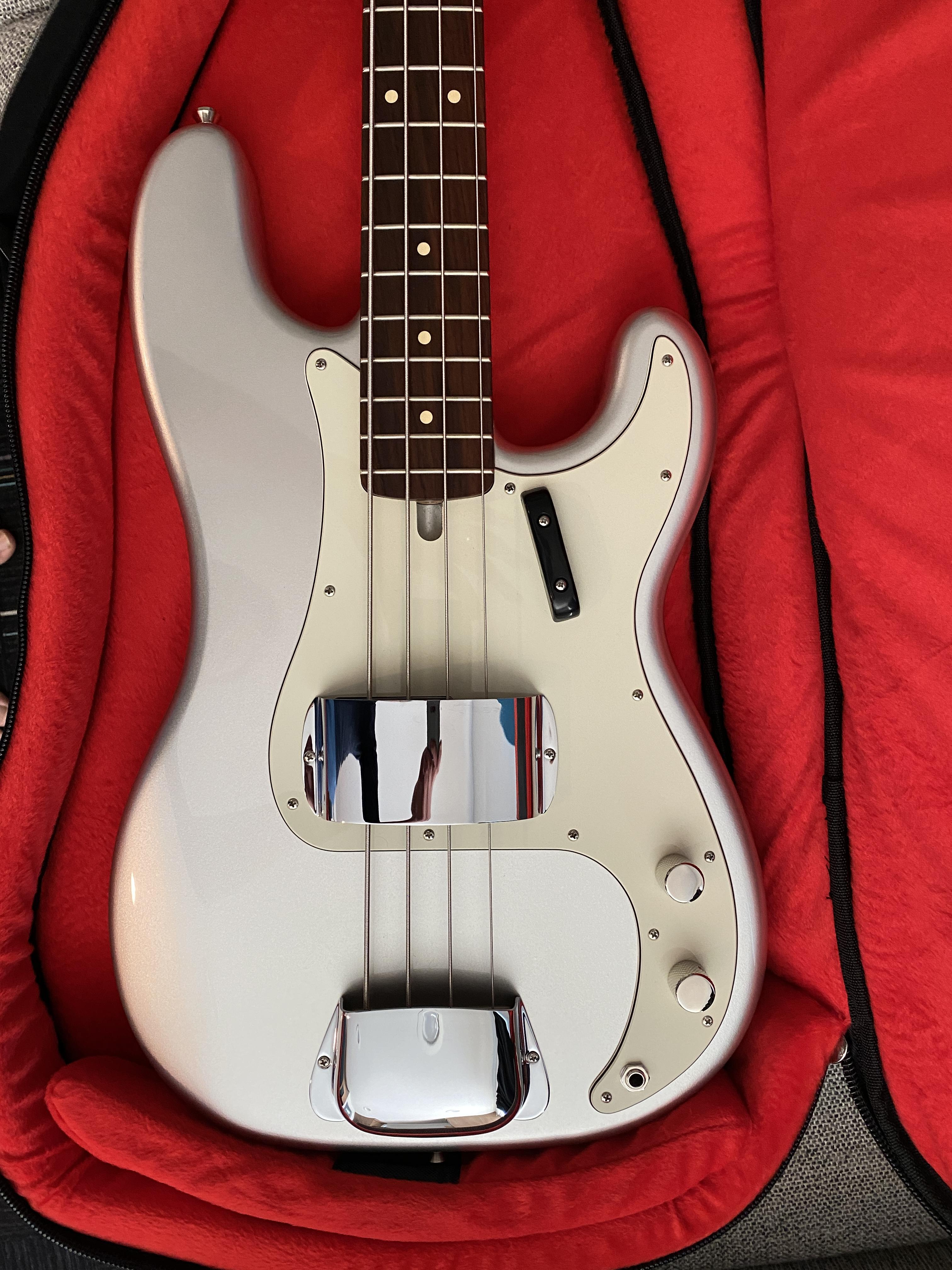
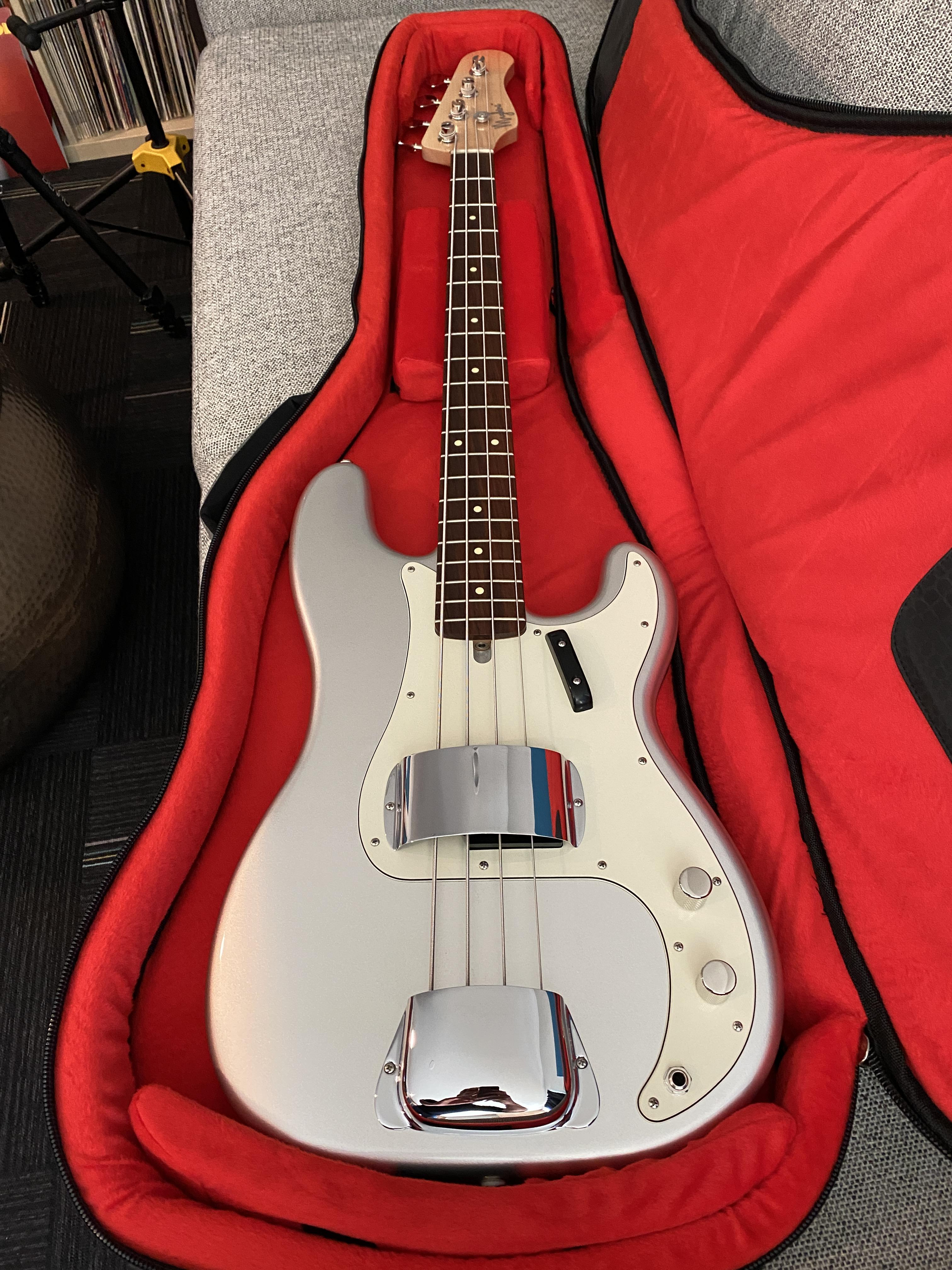
I have this actual bass in my possession for a few days, as RudyTardy and I do a bass-swap, and it's been interesting to put it head-to-head with my 2019 Moollon P-Classic. Out of pure coincidence, mine is also an Inca Silver, so they are ripe for comparison.
There is about a $500-600 price differential between them, and I would say you mostly get what you pay for:
1. In this instance, the Maghini finish is a little more dimensional with an amber top-coat, but it's also a lot thicker and less likely to show wear. It's a little more metallic in the way it glints in the light. That said, I actually really like the thin coating of nitro on a Moollon, which makes it feel lived-in very quickly. No winners here, only your taste in cosmetics.
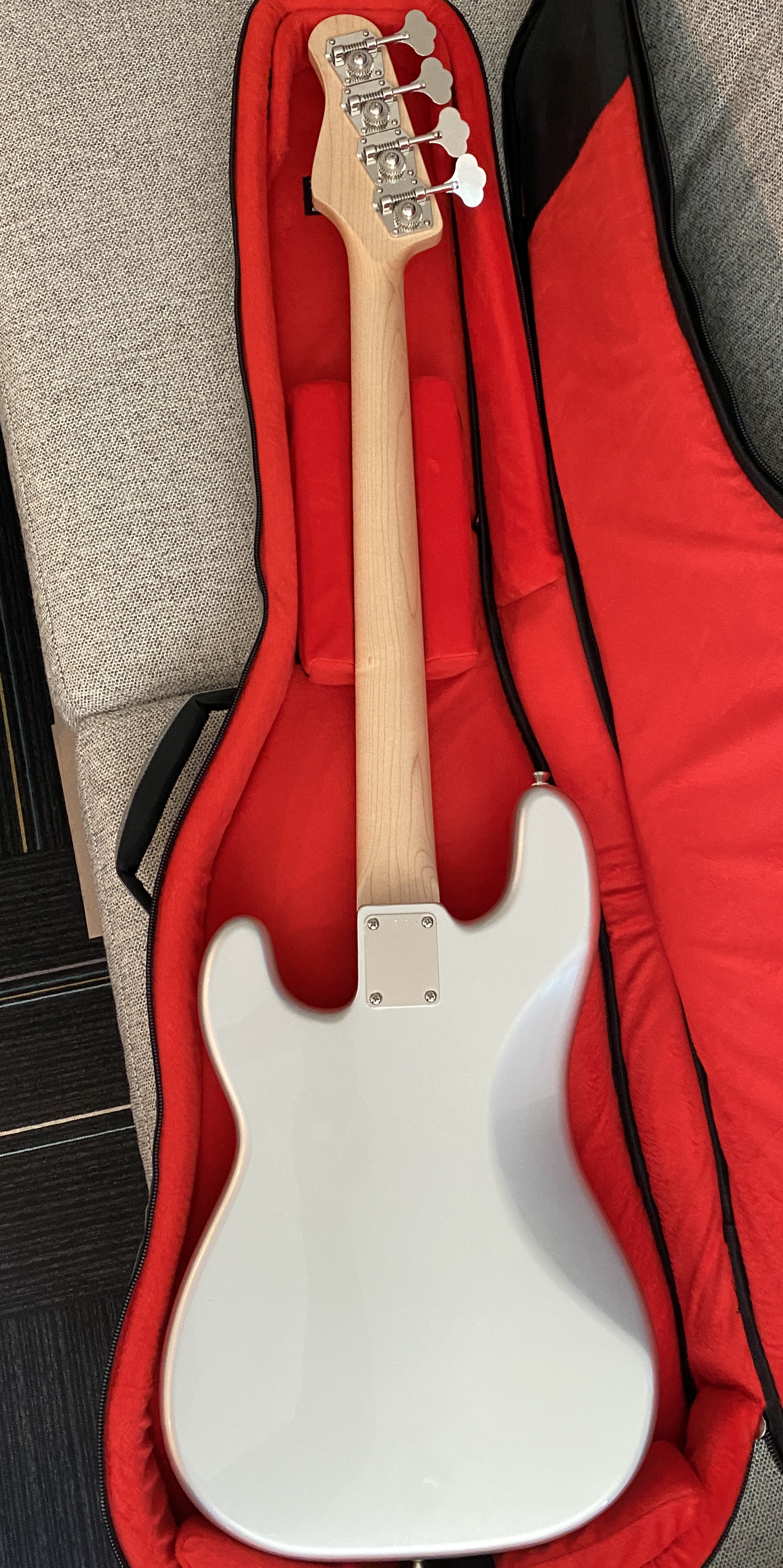
2. The craftsmanship on the Maghini is a little finer in places. Not significantly, but Jon's neck pocket join is to die for, for example. it doesn't make it sound or play better, but this is clearly a professional at work. It's a little more fussed over.
3. The Maghini hardware is more—shall we say—"camera-ready". I don't find I'm missing anything on a Moollon, however, and Moollon players know that YJ makes all his own hardware and his formulation is part of the magic. Still, Maghini's hardware looks handsome and works beautifully.
4. The neck profiles are really similar. Switching between them is almost a "blindfold" test, were it not for the pound of difference in their weights; If my bass suddenly dissolved while I was playing it (could happen) and somebody handed me this Maghini, I could keep on playing with hardly noticing. The Maghini is a satin finish, whereas Moollons come with a glossy finish, but my neck was sanded with a Scotchbrite so they're very similar speed-wise. If I had to guess, the Maghini is ever so slightly more D-shaped in places, giving it a slight chunkiness around frets 1-3 for example. In terms of color, Maghini use no dye in their nitrocellulose, and the slab of Morado is thicker than the fingerboard on the Moollon. Both my bass and his are set up for really low action: around .007" of relief, which is more than most Fenders could ever take. I vote Moollon for overall comfort by a nose, but you really can't lose either way.
5. The biggest giveaway on the neck, however, is the radius. Mine is a standard 7.25" and Rudy ordered his in a comfy 12". No winner or loser here, but this is a selling point for Maghini, as you can specify what you want, whereas YJ only makes one type to keep costs down and production moving.
6. How does it sound in comparison? They are remarkably similar in tone. Basically, the Maghini sounds like a Moollon P-Classic with a very slight smiley-face EQ. There's a small bump of extra bass and also around 2k, which makes it present as a touch louder, although when measured, you can't really see it. You hear it most through a DI in the form of fret noise-plus-extra-bass, but into a recorded amp (both a B-15N and a Mesa 2x10) they are so similar that you could replace the last verse and chorus of a song with whatever the other bass was and you'd probably not be able to tell. Nice as it is to have the bass bump, there is a low-midrange quality to the Moollon—what I call "bounce", whatever that means—that I don't get with the Maghini, probably because that bass bump is masking it if it's there at all.
Here is the same note played on both basses, this one through a B-15. There is no correction for levels or anything, this is just taking the cable out of one bass and putting it into the other:
And this is through a DI:
You can't look at an FFT and necessarily explain subtleties in tone, as there are other factors (like voodoo!), but I still thought it was remarkable how close the basics of these two instruments were. Kissing cousins.
7. Both these luthiers use their own custom pickups and windings, and they seem to be working toward similar sonic ends. I don't view this is a bad thing at all; if anything, to me it's one more bass maker who "gets it". This is not the kind of tone that echoes what the Fender Custom Shop of 2020 believes to be period-correct, which to me usually sounds like an all-thumping 70's P, with a "60s" sticker slapped on the box.
Despite the fact there is a—shall we say "luxury"—competitor or alternative in the target market that Moollon appeals to, both have long waiting lists, so no relief there! Nice as the Maghini is, I'm not at all conspiring to sell my Moollon to get one. But down the road, if I had a mind to have another bass made, there is no question it would be on my very short list. As I put it to Rudy, this is the result of two artists interpreting the same model in their own way. This Maghini is no-nonsense—it's meant to be played and played—but the quality of his work is also very appealing, and it is done at a high level, at a price that is impressive, and is made in the USA. It's a winner for sure.





 she’s a keeper. I also think you should keep the bass




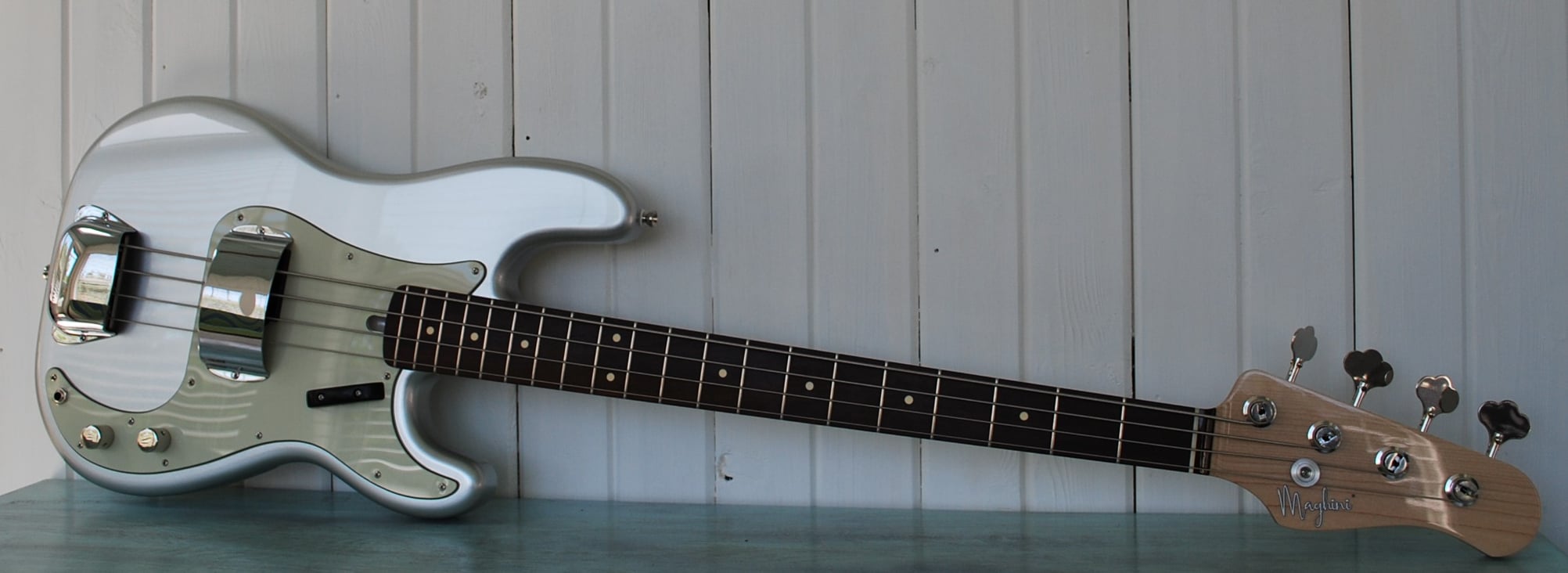
 What's with the headstock on yours? When looking at the classic model on the website it looks totally different.


