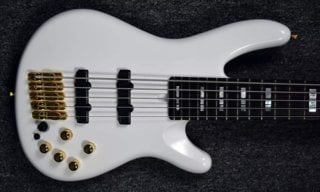
Yes, Thumbs do have severe neck dive. I've had fours and fives and they all have it.Warwick thumb. Just a great bass with terrible neck dive. Would love to own one but can't

Enjoy the benefits of a premium membership!
Upgrade Account
-
TalkBass has been independent since 1998. Add your voice.
Create a free account to reply to discussions, view embedded media, and browse with fewer display ads.
Join free Log in
Want zero display ads or expanded classifieds tools? Compare plans.
You are using an out of date browser. It may not display this or other websites correctly.
You should upgrade or use an alternative browser.
You should upgrade or use an alternative browser.
More options
Who Replied?
I'd still have the EB3 if it wasn't for that. it was a pretty nice bass all in all, even if I found one without the problem they are so expensive right now. I LOVE the shape of the body.
I'd like to have a mid-60s one. My EB-0 is a '64. I've wanted an EB-3 for a long time but agree they're expensive now.

Hey folks...
So I keep seeing all these warnings about neck dive with Fender basses. I've never owned enough P basse long enough to have any real standing up all night performing with a P experience, but what limited experience I do have in that regard, I cannot recall ever having to wrestle to keep the neck up off the floor.
With Jazz basses I've own(ed) all manner of variants from Fender, standard, dinky body, long scale, UL tuners, factory BA bridge, factory Schaller locking bridge, and just about anything else you can think of. I've also logged a lot of hours standing all night with a Jazz performing and have never experienced even a hint of neck dive. I've also discussed this with a lot of other bass players and so far I have yet to meet a single bass player with any experience with neck dive when using a Fender Jazz bass.
Outside of Fenders I've played a lot of other basses over the years, a lot of different Peavey models, a bunch of hollow and semi hollow bodies, short scale, long scale, ex long scale, and 4 and 5 strings and unless it happened in my sleep I can honestly say I've never experienced any neck dive, or so little I can't recall it happening.
Am I living a sheltered life or is there something I'm missing here. I understand the basic premise of balance and how strap button placement, top horn length, etc, can have an effect on balance, or the obvious too much weight out at the end of that lever called the neck, but are there other factors like where you wear you bass in relation to your body, neck angle in relation to the ground, type of strap, width of strap, etc that can contribute to or cause neck dive.
I'm just trying to get a handle on why I read about neck dive but have never experienced it and don't know anyone else who has.
Thanks in advance for any and all opinions and experiences.
Because you're lucky I guess. It's not just the bass but the players body and the way the bass hangs. Trust me. It's a real issue. It's not mass psychosis. These threads come up all the time. All I can tell you is that you are lucky if it hasn't happened to you.

You're not alone. I've been playing close to 20 years and never, ever, experienced what everyone refers to as "neckdive."
Additionally, I don't remember ever worrying about the weight of my instrument. I am NOT a big strong guy and have never had issue playing my 10-ish pound jazz bass for a few hours.
You're very lucky on both accounts. Your experience however doesn't invalidate anyone else's experience.

I have with a few different basses. But I absolutely can not and will not own a bass with neck dive. 100% deal breaker for me.

Dammit, NOW I have "neck ascending" issues!
(Not really, just want to see if it now becomes the "problem du jour" just because it was posted on a highly read bass site)
Now....Hands over head, duck and run, SERPENTINE! SERPENTINE!!!!
"Neck Float" (tm)
I popped the strap off my 70's Fender Jazz 4 string right onto my new-to-me EBMM Stingray 5, stood up, and almost tripped over the headstock it was hanging so low.
Off came the 2" wide nylon strap. On went a 3" wide leather/suede one. Issue ameliorated, albeit at a cost of some $60+.
After years of punching that jazz bass around I have way too heavy a touch for the EBMM. Working on that.
Off came the 2" wide nylon strap. On went a 3" wide leather/suede one. Issue ameliorated, albeit at a cost of some $60+.
After years of punching that jazz bass around I have way too heavy a touch for the EBMM. Working on that.

these help...neck dive or not...
https://www.amazon.com/Strap-GummyT...1502471118&sr=8-1&keywords=strap+gummies&th=1
https://www.amazon.com/Strap-GummyT...1502471118&sr=8-1&keywords=strap+gummies&th=1
As an Amazon Associate, TalkBass may receive commissions from qualifying purchases made via links on this site.

My PJ is well over 9 lbs and neckdives. I've heard some say that lightweight tuners don't really fix the issue and others say it does. Hard to invest money on a maybe
I have a couple P's (one has J pickups in it, but the wood is a P bass), that are 7 and 7.5 pounds respectively, and neither neck dives. Both have Hipshot ultralite tuners. If you switched to those, your bass would lose a bunch of weight (probably half a pound, assuming the tuners on it are the standard big steel things), and it would balance, unless there's something very odd about your bass.

Just a malicious side thought here: if by any means your strap holds securely to your shirt does your shirt not simply follow the strap down your chest?

I've had a few basses with neck dive, and what annoys me is that having to keep the neck upright tends to make it not as much fun to play. My Japanese Squier P has neck dive, but generally, I get rid basses that have this, because they're annoying to play. I feel like the extra effort it takes to keep it up, minute as it may be, still takes away from what I'm doing. In a world saturated with good basses, I have few reasons to keep them around. My MIJ Squier plays and resonates so well that it's worth using for recording for sure. However, a friend of mine has it, presently, and that's exactly what he's doing with it.
I have an '81 Aluminum neck Kramer "V" coming in the mail (supposed to get here today!) and I am going with the "strap tucked through belt loop" neck dive remediation. I love the sound of those but cannot tolerate having to constantly support the neck while playing. Would never have bought it if I hadn't see that video !
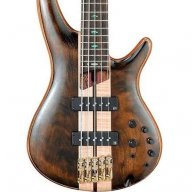
I had a Fender American with some lightweight body material that dove but as long as my hand was on it, fine

Wow a whole half pound is more than I'd expect from tuners. My PJ is pretty much a regular P shape Fender body, im not really sure what's the cause, though I have made several mods.I have a couple P's (one has J pickups in it, but the wood is a P bass), that are 7 and 7.5 pounds respectively, and neither neck dives. Both have Hipshot ultralite tuners. If you switched to those, your bass would lose a bunch of weight (probably half a pound, assuming the tuners on it are the standard big steel things), and it would balance, unless there's something very odd about your bass.

Call me a curmudgeon, but I just deal with neck dive as a reality of playing bass. Maybe if I were playing more technical stuff it would matter more. Maybe just a conspiracy theory to sell more wide straps.

I have a neck dive that is inherent in the design of my Caprice bass and no matter what keys, strap & sitting position, stool etc. my left hand is compensating to keep the bass in balance. If I stand up there is a balance with my strap but where I have to place the bass and the angle just does not work for me. It is the actual ergonomics with this Caprice that doesn't fit my shape. This issue might not be as extreme with others.


Ric5
Inactive
- Jan 29, 2008
- 29,772
- 30,452
- Disclosures
- I like 5, 8, 10, and 12 string basses
Hey folks...
So I keep seeing all these warnings about neck dive with Fender basses. I've never owned enough P basse long enough to have any real standing up all night performing with a P experience, but what limited experience I do have in that regard, I cannot recall ever having to wrestle to keep the neck up off the floor.
With Jazz basses I've own(ed) all manner of variants from Fender, standard, dinky body, long scale, UL tuners, factory BA bridge, factory Schaller locking bridge, and just about anything else you can think of. I've also logged a lot of hours standing all night with a Jazz performing and have never experienced even a hint of neck dive. I've also discussed this with a lot of other bass players and so far I have yet to meet a single bass player with any experience with neck dive when using a Fender Jazz bass.
Outside of Fenders I've played a lot of other basses over the years, a lot of different Peavey models, a bunch of hollow and semi hollow bodies, short scale, long scale, ex long scale, and 4 and 5 strings and unless it happened in my sleep I can honestly say I've never experienced any neck dive, or so little I can't recall it happening.
Am I living a sheltered life or is there something I'm missing here. I understand the basic premise of balance and how strap button placement, top horn length, etc, can have an effect on balance, or the obvious too much weight out at the end of that lever called the neck, but are there other factors like where you wear you bass in relation to your body, neck angle in relation to the ground, type of strap, width of strap, etc that can contribute to or cause neck dive.
I'm just trying to get a handle on why I read about neck dive but have never experienced it and don't know anyone else who has.
Thanks in advance for any and all opinions and experiences.
There are different definitions of neck dive
The classic definition is when you let go of the neck the neck dives to the floor ... my first Fenderbird did that
The alternate definition is that any bass that will not hold at a 45 degree angle after you let go has neck dive ... using the alternate definition pretty much all basses have neck dive
70s Fender basses, both J and P where heavily bodied, and didn't neck dive at all. Thunderbird and msot of Warwicks are the don of neck diving. As neck diving being a problem or not is individual. Same with lightweight basses. What's "lightweight" for you is "super heavy" with another person. Some don't mind slight neck dive, like I do, but it's a clear cut case when it becomes a nuisance, and both mental and physical stop block in terms of how much it hinders your playing. If you have a slight neck dive, you can very well when standing up just angle it a bit, slant it, or whatever and then it's gone, and causes no problem. But if the neck dive is too severe not even that would help. Also the angle needed to mitigate (mind you: not cure) any neck dive can also be a liability with some people. I know that a too "askewed" angle keeps certain folks to fo slap, thumb, and pops properly, since you need an almost 45 degree angle on those. For people who doesn't slap,pop,thumb at all, any angle will be good enough.
It's not that they neck dive or not, it's that they neck dive so much it is a problem, or neck dive a bit so it's not a problem. I think the same about "body dives" too, it's just equally as bad. I've seen too many people deliberately holding their right forearm down on the upper body to keep it from slipping and sliding towards any neck dive, and with force too. A good measure of tolerable neck dive, is it doesn't go south if you just REST your picking forearm on top of the body, and it'll go nowhere. That's good enough for me. And this measurement, my friends, is different from different people. If you have a strap that's good enough to buck it, well then, go for it. I've seen several people trying out my basses who thinks they're neck diving but while I am wearing the bass it doesn't neck dive. It all has to do with each individuals anatomy, and posture and whatever angle they are comfortable with. I do know and have learned on thing though: No headless bass neck dives ever. And I have yet to see any headless "body-dive" too. But I can very well think there are. On top of this, as a side benefit, the dead spots doesn't show up in the usual places.
Q: Have I found a correlation between neck diving and dead spots?
A: No. they can be as heavy, or lightweight, or balanced as hell, but still produce dead spots.
Q: Have I found a correlation between headless and devoid of dead spots?
A: Yes. removing headstock mass moves the dead spot up way above the 12th fret were it causes no problems anymore. Ok, still a slight dead spot, but less annoying.
Which means that headless basses, preferably with graphite necks, will produce NO neck dive, and LESS dead spots. Mind you that I say LESS dead spots, instead of NO dead spots. But absolutely no neck dive. Not less neck dive, but NO neck dive.
Q: Have I found a correlation between broken headstocks (any), increased amount of dents, nicks, cracks, and neck diving instruments?
A: Yes.
If they take a fall the headstock lever effect will produce greater impact and force. Also, one seem to bump into things much easier, like cymbals, or other peripheralls. I have seem more cracks, dents, nicks on head diving instruments headstocks, than non-neck diving. But they are still the heavier ones out there with SEVERE neck diving. On headless, I've never ever encountered any nick, dent, or the slightest crack up where the steel headpiece resides, or anything in its vincinity.
Q: Have I found a correlation between neck diving instruments, and too much wood space between where the bridge ends and end of the body?
A: Yes.
Mind you all this is exacerbated just because it's a bass with longer neck than a guitar. Guitar suffers from these things as well, but not as much. Just the law of physics man, nothing else.
It's not that they neck dive or not, it's that they neck dive so much it is a problem, or neck dive a bit so it's not a problem. I think the same about "body dives" too, it's just equally as bad. I've seen too many people deliberately holding their right forearm down on the upper body to keep it from slipping and sliding towards any neck dive, and with force too. A good measure of tolerable neck dive, is it doesn't go south if you just REST your picking forearm on top of the body, and it'll go nowhere. That's good enough for me. And this measurement, my friends, is different from different people. If you have a strap that's good enough to buck it, well then, go for it. I've seen several people trying out my basses who thinks they're neck diving but while I am wearing the bass it doesn't neck dive. It all has to do with each individuals anatomy, and posture and whatever angle they are comfortable with. I do know and have learned on thing though: No headless bass neck dives ever. And I have yet to see any headless "body-dive" too. But I can very well think there are. On top of this, as a side benefit, the dead spots doesn't show up in the usual places.
Q: Have I found a correlation between neck diving and dead spots?
A: No. they can be as heavy, or lightweight, or balanced as hell, but still produce dead spots.
Q: Have I found a correlation between headless and devoid of dead spots?
A: Yes. removing headstock mass moves the dead spot up way above the 12th fret were it causes no problems anymore. Ok, still a slight dead spot, but less annoying.
Which means that headless basses, preferably with graphite necks, will produce NO neck dive, and LESS dead spots. Mind you that I say LESS dead spots, instead of NO dead spots. But absolutely no neck dive. Not less neck dive, but NO neck dive.
Q: Have I found a correlation between broken headstocks (any), increased amount of dents, nicks, cracks, and neck diving instruments?
A: Yes.
If they take a fall the headstock lever effect will produce greater impact and force. Also, one seem to bump into things much easier, like cymbals, or other peripheralls. I have seem more cracks, dents, nicks on head diving instruments headstocks, than non-neck diving. But they are still the heavier ones out there with SEVERE neck diving. On headless, I've never ever encountered any nick, dent, or the slightest crack up where the steel headpiece resides, or anything in its vincinity.
Q: Have I found a correlation between neck diving instruments, and too much wood space between where the bridge ends and end of the body?
A: Yes.
Mind you all this is exacerbated just because it's a bass with longer neck than a guitar. Guitar suffers from these things as well, but not as much. Just the law of physics man, nothing else.
Last edited:


