
Enjoy the benefits of a premium membership!
Upgrade Account
-
TalkBass has been independent since 1998. Add your voice.
Create a free account to reply to discussions, view embedded media, and browse with fewer display ads.
Join free Log in
Want zero display ads or expanded classifieds tools? Compare plans.
You are using an out of date browser. It may not display this or other websites correctly.
You should upgrade or use an alternative browser.
You should upgrade or use an alternative browser.
More options
Who Replied?This bass:

Will neck dive less than this:
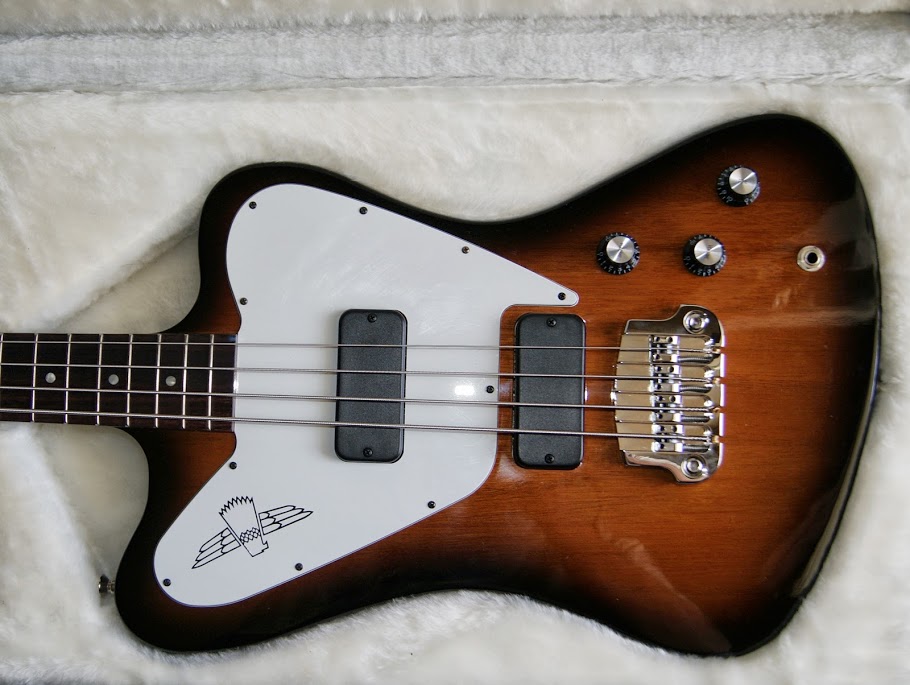
Just because of the placement of the bridge, all else being equal. Now, you may think that this is unfair to compare a "bird" body to a regular Jazz, but one would falsely think that the amount of wood BEHIND the bridge out to the end of the body would counterweight it, but not so, on the contrary. Ok then the next one probably neck dives pretty badly:
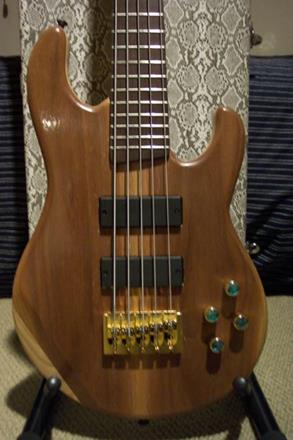
Will neck dive less than this:
Just because of the placement of the bridge, all else being equal. Now, you may think that this is unfair to compare a "bird" body to a regular Jazz, but one would falsely think that the amount of wood BEHIND the bridge out to the end of the body would counterweight it, but not so, on the contrary. Ok then the next one probably neck dives pretty badly:
When I was young, and just started out, I couldn't give an **** about any neck dive. Or dead spots. Neck diving and dead spots are among those little nitpicky things that DAWNS on you as you develop and go along with your playing. It took me ages, at least 2 decades before I became aware of it. If there were ONLY basses around that neck dived and had dead spots, there's no alternative. But as fast as the building progressed, and you happened to try out this or that bass, and you couldn't even in the wildest imagination think of what cause that bass feel, and play so better than the one you already got. Then it SLOWLY DAWNED on me.
Then I started to be eagle-eyed and -eared about those ergonomic things. And the more expensive the bass became, the more I went down on it if it neck dived, or showed dead spots. If it was a 200 USD Japanese or Korean counterfeit I couldn't care less. It gave me the reason to show to people who asked "why are these Asian made copies so much cheaper than American made?" and I showed it to them. The heavier Fenders of the 70s didn't neck dive. Not only that, there was of course several other things.
Then I started to be eagle-eyed and -eared about those ergonomic things. And the more expensive the bass became, the more I went down on it if it neck dived, or showed dead spots. If it was a 200 USD Japanese or Korean counterfeit I couldn't care less. It gave me the reason to show to people who asked "why are these Asian made copies so much cheaper than American made?" and I showed it to them. The heavier Fenders of the 70s didn't neck dive. Not only that, there was of course several other things.


what is so horrible about neck dive? If you want absolutely zero neck dive.............switch to double bass, or play one of those girly 6 string guitar things.

Perfect example. The ES335 has a lighter body but a WIDE one. But I tell you that no Les Paul ever neck dived on me. They're heavy as ****, on the body side. Yes, the rest of them SGs, Thunder (or really Fire) birds, but actually the one and only of them that holds up nicely when standing is the Explorer which is crazy, but that pointy stuff out from the body towards the back and behind you makes up for all of it.When I hear neck dive I automatically think Gibson Electric Guitars. I had a few in the past, some more severe than others, they all had neck dive, except the ES335.
This is the main difference that people are reluctant to recognize. The difference between having a neck dive, and be bothered by it. It's two different things:I can't say I noticed or was really bothered by it
1. There is a neck dive.
2. You are bothered by it.
The neck dive may not be obvious to you, if no one else presents you with it. Of course, if you sit down in a studio and without any strap, neck diving WILL bother you. If you stand up with a proper strap, you'll never knew there was any. Of course. Remember there is a neck dive, whether you're bothered by it or not.

Holding up the neck while fretting adds more forearm muscle tension.what is so horrible about neck dive? If you want absolutely zero neck dive.............switch to double bass, or play one of those girly 6 string guitar things.
Why add extra muscle tension to your fretting arm and reduce your endurance?
And for your information,many guitar players encounter the same thing.
The Late Great Allan Holdsworth had stated that once.
Last edited:

Why settle for a crappy neck-diving bass when there are so many great ones that don't have this problem?what is so horrible about neck dive? If you want absolutely zero neck dive.............switch to double bass, or play one of those girly 6 string guitar things.
Are you such a tough guy that you can't accept that some people actually want a quality, comfortable, playable electric bass?
The main culprit as with all guitars too, is why a bass guitar was made in the first place. How to wear it with a strap. Remember way back, a strap and guitar was worn like this:

I tell you: No neck dive whatsoever. With a wide strap, narrow strap or anything in between. It must be a pretty heavy bass until it neck dives with such a strap on. Because people didn't want to destroy their guitars with an on body strap knob. Now people didn't want this, because it got in their way. I wonder what got in their way of the fretting hand. Never seen any problems with these arrangements of straps.
I have yet to see a bass horn of the body stretch that long out!!!
Guess what they used in the old days, on real vintage Fender P or J basses, yes, this is original:

Strap pin at the headstock, need we say more?
I tell you: No neck dive whatsoever. With a wide strap, narrow strap or anything in between. It must be a pretty heavy bass until it neck dives with such a strap on. Because people didn't want to destroy their guitars with an on body strap knob. Now people didn't want this, because it got in their way. I wonder what got in their way of the fretting hand. Never seen any problems with these arrangements of straps.
I have yet to see a bass horn of the body stretch that long out!!!
Guess what they used in the old days, on real vintage Fender P or J basses, yes, this is original:
Strap pin at the headstock, need we say more?
But even for SGs, RGs, explorers, flying Vs , T-birds with crazy heavy headstocks (etc!) THERE IS AN EASY WORKAROUND that I just ran into the other day...
He does that jump test which I do too when checking balance out. Good thing. He says "there's no bass with 12 strings that doesn't do this". He seemed to have forgotten that there are headless instruments out there. Even with 12 strings they don't neck dive. At all. But you can't do this with spandex trousers on...

You're very lucky on both accounts. Your experience however doesn't invalidate anyone else's experience.
It just makes me think it is more of a perception thing than reality.

It's definitely reality. If you're ever in South Texas come stop by my place and experience my PJs neck dive. As far as the weight thing, that entirely depends on the person. I am young and work out but I have a back injury and a bass at 10 lbs. is enough to be very uncomfortable for me after a while.It just makes me think it is more of a perception thing than reality.
It's more driven by the length of the upper horn than weight of the neck vs body. With a long horn on the bass side (like most Fenders) there is normally no issue even with a lighter body such as basswood. Some of the other Fender body shapes like the Mustang do have a little bit of a neck dive tendency. Gibsons tend to be notorious for this issue. The SG and Allen Woody are two examples where the horn just doesn't extend far enough. The Thunderbird and Jack Casady I'm not sure.
YES! The don of neck dive, everything in the wrong place:
1. Strap button not placed at the horn, but in the back of the neck joint, in the middle.
2. Bass equipped with only one pickup, at the neck side.
3. Bridge placed a bit in on the body, too much wood waste towards the back of the body.
4. Thin and sleek design, and too weak structure overall, like their SG guitars.

With regard to replacement keys, Gotoh resolite make exact size and backplate keys for the Fender basses and weigh 7 ounces (that's just about 1/2 lb) less than the stock. I have them on 2 Fenders. They also make keys for other bsssrs as well in their resolite series. It does make a difference.
My Thumb dives. My Stingray 5 is over 10 lbs and does not dive. Its probably the most comfortable bass I've ever owned. When my back acts up I switch to my Carvin. Lightweight Koa body.It's definitely reality. If you're ever in South Texas come stop by my place and experience my PJs neck dive. As far as the weight thing, that entirely depends on the person. I am young and work out but I have a back injury and a bass at 10 lbs. is enough to be very uncomfortable for me after a while.
I'm old, Have a 25 year old back injury (herniated disks L5 to S2) and I no longer work out (but I need to) because I work 9 - 10 hour days, and have a 100 mile round trip daily commute.
And I travel allot for work which makes exercise difficult.
A good strap makes a difference. I cant play seated for long periods. 2-3 hours standing is no problem however

Take a look here:Wow a whole half pound is more than I'd expect from tuners. My PJ is pretty much a regular P shape Fender body, im not really sure what's the cause, though I have made several mods.
Weight savings of lighter tuners, in pictures!
Half a pound - or really really close.
It's definitely reality. If you're ever in South Texas come stop by my place and experience my PJs neck dive. As far as the weight thing, that entirely depends on the person. I am young and work out but I have a back injury and a bass at 10 lbs. is enough to be very uncomfortable for me after a while.
Oh, I totally understand the weight thing if one has an injury. That's a little different.
Thinking about getting some lightweight tuners to fight it.
I've heard some say that lightweight tuners don't really fix the issue and others say it does
It's all super easy to test this with any bass. Remove all strings, remove all tuners - they can be screwed back again - remove all bushings, washers, and try if it still neck dives. If it does NO tuner in the world will help. If it starts to body dive, well then, just go for it.
I've tried this on too many basses, that this will not even mitigate the problem at all. As well as chaning out control knobs to metal ones, instead of plastic, back plate (or pickguard) to steel, and even changing out pickups to heavier ones, and not neodynium. Mind you that I once repaired a 5 string J or P sort of bass where the user had several (too many) wraps of the strings around the tuner posts up there. I un-wound them and cut off excess length, so they were just one wrap, around the tuner posts. Guess what I did with the remains of the small coils from all 5 strings? Yep I weighted them. All together they weighed more than one and a half LIGHTWEIGHT tuner of the Gotoh type*. The thick B-string "coils" was especially heavy. Who would've thought of that?
Dingwall has got something on their mind when they're thinking about starting making 6 strings J and P basses with half of the tuners like a headless, at the bridge, and the rest of them up there at the headstock. Not only for neck diving but reach.
* think they're called Res-O-Lite but I can't remember.
Last edited:


