
I have a Fernandes 8-string bass made in Japan in 2003 that came from the factory with a shim. I have a G&L Tribute L2500 (Indonesian) that I shimmed myself so I could drop the action at the bridge down where I want it. There's nothing inherently wrong with a neck shim. It's just another tool to get the playability of a bass where you want it. It does not denote shoddy workmanship.

Enjoy the benefits of a premium membership!
Upgrade Account
-
TalkBass has been independent since 1998. Add your voice.
Create a free account to reply to discussions, view embedded media, and browse with fewer display ads.
Join free Log in
Want zero display ads or expanded classifieds tools? Compare plans.
You are using an out of date browser. It may not display this or other websites correctly.
You should upgrade or use an alternative browser.
You should upgrade or use an alternative browser.
Necks Shimmed by the Factory? WTH?
- Thread starter Jarneskeg
- Start date
More options
Who Replied?

1st pic - no shim or neck tilt
2nd pic - neck tilt with screw
There is no pick showing a shim, but it would be wedge shaped and fit in the gap between the neck heel and body.
Pics not to scale for any measurement or angle.
The neck tilt is extreme for the scale of the picture, but gives an idea how much of the neck heel is supported by the body (on one end of the neck pocket across the width of the pocket at the very edge of the pocket opposite the neck tilt screw) and supported on the bridge end by the tip of the tilt screw.
Red - neck
Blue - body
Green - neck tilt screw
Gray - hole to access neck tilt screw
Black - neck screws
The neck is supported somewhat by the neck screws pulling the neck down toward the body, but with the neck “tilted back” by the tilt screw, the neck is sitting on the tip of the tilt screw. The tilt screw is more “between” the two neck screws closest to the bridge on a Peavey. On the Fender 3 bolt neck, the tilt screw is toward the middle of the neck plate from the single screw.
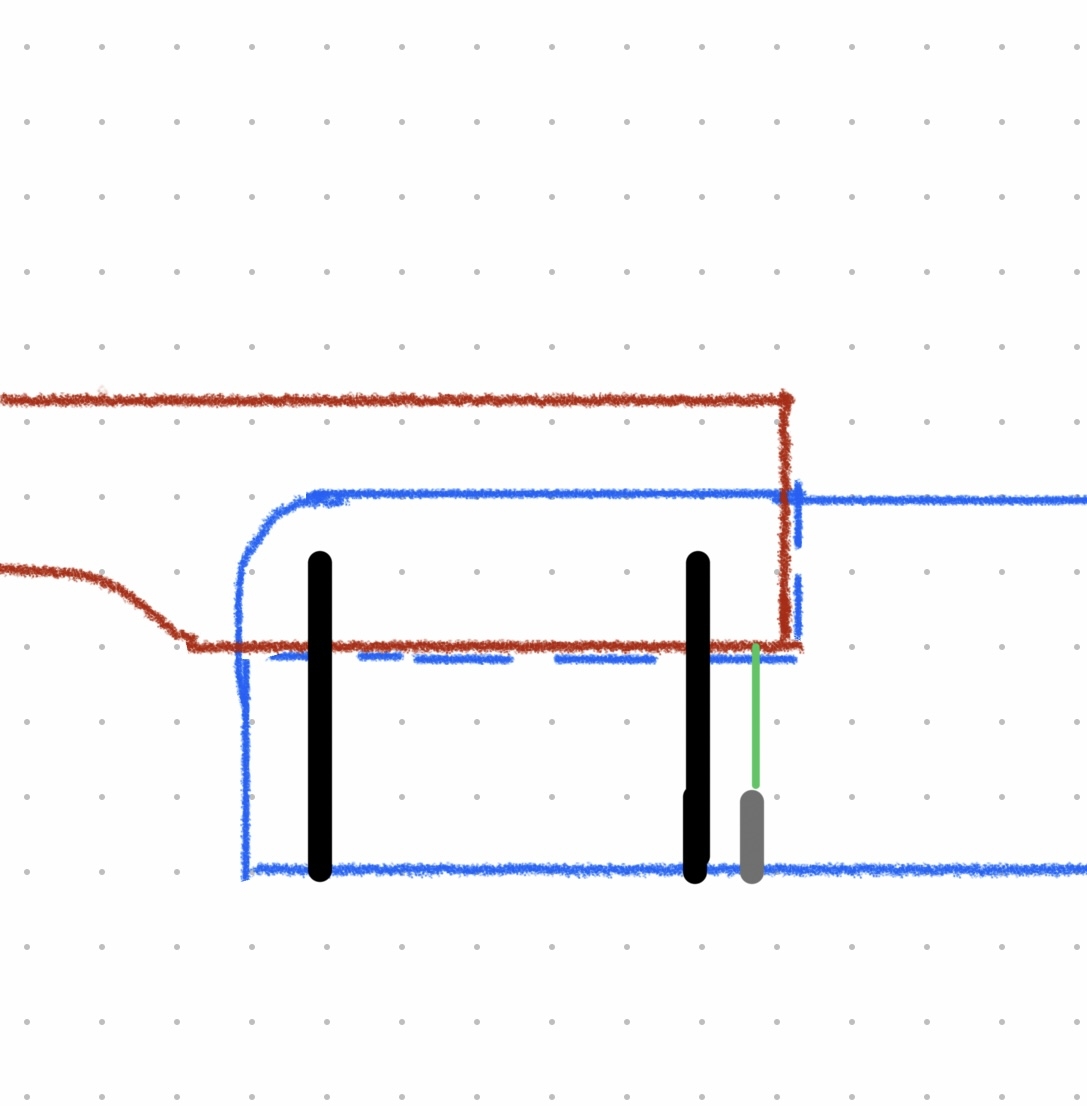
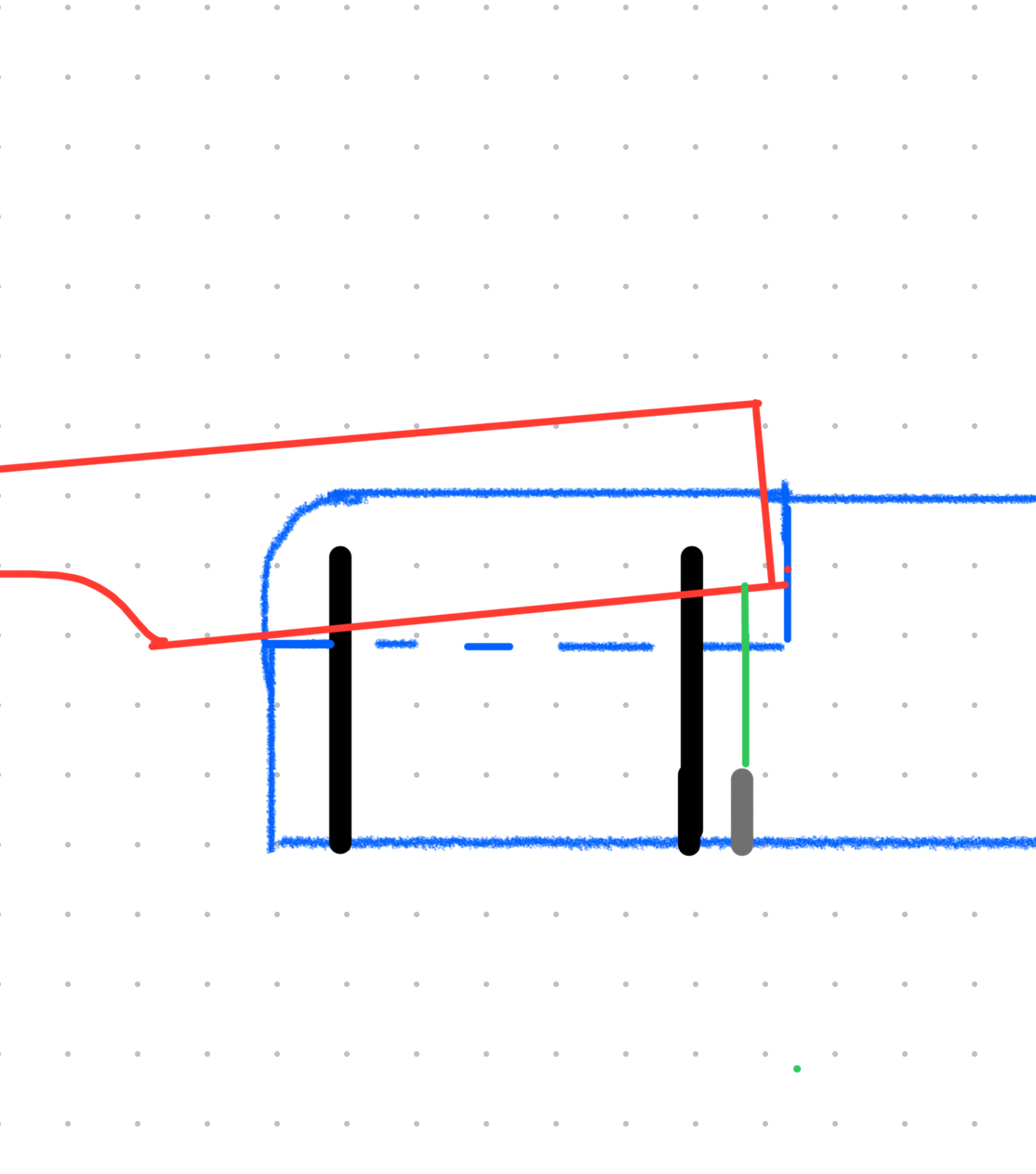
2nd pic - neck tilt with screw
There is no pick showing a shim, but it would be wedge shaped and fit in the gap between the neck heel and body.
Pics not to scale for any measurement or angle.
The neck tilt is extreme for the scale of the picture, but gives an idea how much of the neck heel is supported by the body (on one end of the neck pocket across the width of the pocket at the very edge of the pocket opposite the neck tilt screw) and supported on the bridge end by the tip of the tilt screw.
Red - neck
Blue - body
Green - neck tilt screw
Gray - hole to access neck tilt screw
Black - neck screws
The neck is supported somewhat by the neck screws pulling the neck down toward the body, but with the neck “tilted back” by the tilt screw, the neck is sitting on the tip of the tilt screw. The tilt screw is more “between” the two neck screws closest to the bridge on a Peavey. On the Fender 3 bolt neck, the tilt screw is toward the middle of the neck plate from the single screw.
That would be by choice and not by need. I currently own two 80s Peaveys (Foundation and a Fury) and one late 90s (PV GBass). I also owned another Foundation in the past. No shim is / was required to utilize the neck tilt feature on any of those, but I choose to use a shim over the tilt screw on the GBass.As the owner of 3 basses with neck tilt I can assure you that the neck tilt apparatus is strictly for adjusting playing preference as all three of my basses with neck tilt still have some type of shim, whether it be a piece of emery cloth or two pieces of emery cloth.
I invite everyone with a Peavey bass with Neck Tilt to remove the necks from their 80's Peavey USA basses.
I have owned two Fender 3 bolt neck basses in the past (78 Jazz and 7? Tele). No shim required to use the neck tilt on those.

? Huh? Not what I said at all.That would be by choice and not by need. I currently own two 80s Peaveys (Foundation and a Fury) and one late 90s (PV GBass). I also owned another Foundation in the past. No shim is / was required to utilize the neck tilt feature on any of those, but I choose to use a shim over the tilt screw on the GBass.
I have owned two Fender 3 bolt neck basses in the past (78 Jazz and 7? Tele). No shim required to use the neck tilt on those.
What did this mean?
I interpreted it as you use a shim in basses with neck tilt. I do also, but my post was that it isn’t a requirement. If I misinterpreted what you were saying, then, my mistake.I can assure you that the neck tilt apparatus is strictly for adjusting playing preference as all three of my basses with neck tilt still have some type of shim,

Jazzdogg
Less barking, more wagging!
I'm not sure where you got your information. Fifty years ago, both individual craftsmen like me, and especially factories, were using routers to mill neck pockets.Shims don't bother me, many guitars play and sound amazing with a shim - but I sympathize with OP.
I would expect high end guitars to be made with a level of precision that does not require a shim. They have CNC machines. They have micrometers and calipers that can measure .0001". Neck through guitars can be made with perfect (or close) alignment. (Maybe that's an apples to oranges comparison.)
A factory shim indicates 2 things:
1) Someone at the factory cared enough to add the shim.
2) Someone at the factory couldn't produce a neck and pocket with enough accuracy that a shim wasn't needed.
Shims were needed 50 years ago when craftsmen were cutting neck pockets with chisels. I suspect they're needed today because a bean counter calculated that it's cheaper.

1st pic - no shim or neck tilt
2nd pic - neck tilt with screw
There is no pick showing a shim, but it would be wedge shaped and fit in the gap between the neck heel and body.
Pics not to scale for any measurement or angle.
The neck tilt is extreme for the scale of the picture, but gives an idea how much of the neck heel is supported by the body (on one end of the neck pocket across the width of the pocket at the very edge of the pocket opposite the neck tilt screw) and supported on the bridge end by the tip of the tilt screw.
Red - neck
Blue - body
Green - neck tilt screw
Gray - hole to access neck tilt screw
Black - neck screws
The neck is supported somewhat by the neck screws pulling the neck down toward the body, but with the neck “tilted back” by the tilt screw, the neck is sitting on the tip of the tilt screw. The tilt screw is more “between” the two neck screws closest to the bridge on a Peavey. On the Fender 3 bolt neck, the tilt screw is toward the middle of the neck plate from the single screw.
Appreciate the time and all, But I think he meant "PICs of Convulsions"..


T$

If this was a steel body, you might expect 0.01mm inclination on a whole neck pocket lengthHow narrow can a manufacturer's tolerances be to make money on a bass that ships 10,000 miles to sell for $500 wholesale?
Extrapolation to whole neck is like 1:10 so expect around 0.1mm
Have no idea how wood warps though, but I believe it's easier to machine thus easier to control the dimensions.

IMHO during the CBS era Fender basses resembled frame carpentry, that they came out of the factory without a shim or a professional set up was an issue probably driven by minimizing production costs. Did the equipment work? Yes.I'm saying in 35 years I have NEVER seen a shim in a new instrument. Ever. Rarely in a used instrument. Once that I can recall in that time
If those old basses have ever seen a decent luthier... conditions were probably improved regarding the setup and dialing in.
Jazzdogg
Less barking, more wagging!
Not only does wood move, but the way it moves, and how much, varies by how it's sawn, species, and moisture content.If this was a steel body, you might expect 0.01mm inclination on a whole neck pocket length
Extrapolation to whole neck is like 1:10 so expect around 0.1mm
Have no idea how wood warps though, but I believe it's easier to machine thus easier to control the dimensions.

If this was a steel body, you might expect 0.01mm inclination on a whole neck pocket length
Extrapolation to whole neck is like 1:10 so expect around 0.1mm
Have no idea how wood warps though, but I believe it's easier to machine thus easier to control the dimensions.
Wood is not homogeneous like metal. It has internal stresses that can cause movement when the board is machined. Remember we are talking about small changes that might result in the need for a shim, not wholesale warping.
Fully agree about neck tilt creating less contact between body and neck. How much that matters is, I suppose, up to the individual.The neck tilt apparatus found on several bass brands past & present is a way to speed up the setup process, and seems to be a solution to eliminate use of the lowly shim. Then, a person who can think in abstract, visualizes that a neck with no shim and no neck tilt has the full surface area of the bottom of the neck (body) pocket in contact with an equal surface area of the neck heel. There could also be some contact around the sides of the neck (body) pocket and sides of the neck heel, but these are light to heavy friction contacts & not high pressure contacts.
Now think about adjusting the neck tilt screw up by 1/16” or .0625”. Now the amount of body pocket contacting the heel of the neck is equal to the width of the body pocket at its headstock-facing edge, and the area of the tip of the tilt screw. On an average Fender neck with no shim and no tilt mechanism, there will be about 7 - 8 square inches of neck heel to body contact. On a neck-tilted bass, there might be less that 1/4 square inch in contact. A well made shim provides much more neck to body contact (through the shim) , but does it matter? There are 30+ year old G&Ls, 40+ year old Peaveys & 50+ year old Fenders with the neck tilt screw holding 99% of the body pocket away from the neck heel, and those basses are being played. If a shim creates angst for you, a neck tilt bass should cause you to go into convulsions.
It’s all perspective.
Fully agree and have shimmed my own bass with positive results.I have a Fernandes 8-string bass made in Japan in 2003 that came from the factory with a shim. I have a G&L Tribute L2500 (Indonesian) that I shimmed myself so I could drop the action at the bridge down where I want it. There's nothing inherently wrong with a neck shim. It's just another tool to get the playability of a bass where you want it. It does not denote shoddy workmanship.
Whoa. I never even came close to indicating "that every instrument made should serve as an example of absolutely perfect manufacturing that never ever requires a shim." I said that when originally built an instrument should be designed and built to not need a shim. Every guitar changes over time, be it minutes, years, or anywhere in between. They change whether ever played or not. I have never had an instrument that didn't need adjustments. I also mentioned that I had used a shim. The reason was because the bass had a graphite neck and, at the time, it was common to not use truss rods in graphite necks because builders assumed it would never need one.For me, building within a certain spec is more about consistency from part to part. It just takes more of the thinking and guesswork out of the job. At the end of the day, building a musical instrument from scratch entails a lot of heartbreaks and compromises. Guitars are very complicated pieces of machinery, and the materials, the engineering, and the building process are not always cooperative. The end goal of a luthier is to produce something that looks great, plays great, and sounds great. Adding a shim (if necessary) is just part of the adjustment process, and I don't think it's anything more than that. Someone else in the thread pointed out adjustable saddles as a comparison, and think that's fair. Using the argument that every instrument made should serve as an example of absolutely perfect manufacturing that never ever requires a shim, then we shouldn't need adjustable saddles because everything will be built to make the strings the perfect height and length just by screwing the neck to the body. Heck, let's get rid of the truss rod while we're at it, too.
If instead of a matchbook cover, someone found a small shim made of wood perfectly machined to fit the neck pocket to tilt the neck to .5º and it a branded stamp saying "Official Lakland Neck Pocket Adjuster", and as long as they understood that the shim was necessary part of the manufacturing process, they'd probably think that shim was a work of bass building genius. Personally, I wouldn't waste my time machining a special part to use as a shim - I usually use a piece of 120 grit sandpaper cut to size with a pair of scissors.
While using shims for me an exception, keep in mind, I'm not building 10,000 guitars a month - I'm just building a few per year. You're more likely to find a shim in an Ibanez simply because Ibanez makes a lot of guitars. TBH, the manufacturing tolerances at the large factories is astonishingly good. I've often said that since I've started building instruments, I am less impressed by the quality of a $10,000 instrument, and more impressed by how good a guitar they can put out on the sales floor for under $500.
Fast forward 6 years and mine needed adjusting. So I used a shim.
I assume a brand new bass will need to be properly set up when I receive it. If that first set up requires a shim, honestly, I would take it to a well reputed luthier and ask them to see if a shim is really needed or if they can come up with a different solution. Not because I don't like shims but because if it can be set up to my taste without a redesign (which is what a shim is, and comparing to a truss rod seems disingenuous), that is my preference, but if the pro says shim is the proper choice, then shim it is.
I Don't understand how anyone could be aghast at a player expecting new instruments to be received, in a working and virgin form. I certainly don't define "working" as all set up perfectly and ready to play, but rather put together as advertised, and capable of being set to play well using the advertised adjustment features and, perhaps, a little neck work by a luthier.


