• TalkBass has been independent since 1998. Add your voice.
    Create a free account to reply to discussions, view embedded media, and browse with fewer display ads.
    Join freeLog in
    Want zero display ads or expanded classifieds tools? Compare plans.

New mesa subway amps and cabs!

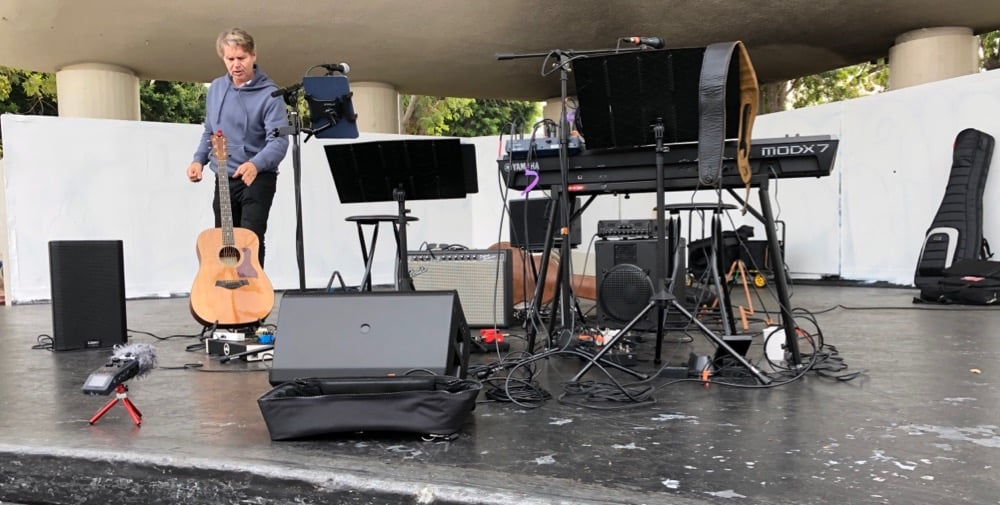
Different day, totally different gig. Ran the Subway + pedal into the PA for the first two sets, pulled out the WD800 into the H1203 for the last set. We had some weird feedback going on with the acoustic guitar and bass through the PA, plus the K10.2 cabs, no matter how nice, are no match for the WD800/H1203 setup.

23dec18%20-%201.jpg
 
The tube position is biased load line wise to work best with the 12AT/AU which is a very different tube than the 12AX7. This has nothing to do with "gain". The 12AX7 will not be as consistent from tube to tube, the articulation and dynamics will generally suffer compared with the 12AT/AU7.
Ok so results not in line with design goals, with disappointing outcome.
Thanks, my curiosity is more that satisfied.
Thanks as always for the honest and clear answer @agedhorse
 
Different day, totally different gig. Ran the Subway + pedal into the PA for the first two sets, pulled out the WD800 into the H1203 for the last set. We had some weird feedback going on with the acoustic guitar and bass through the PA, plus the K10.2 cabs, no matter how nice, are no match for the WD800/H1203 setup.

View attachment 3257871
Daaaaayam, look at that strap hangin' by the pie-ana. Got heavy bass geetar?
 
Ok so results not in line with design goals, with disappointing outcome.
Thanks, my curiosity is more that satisfied.
Thanks as always for the honest and clear answer @agedhorse

The reason for using the AT/AU family is to best match the curves of the existing Walkabout. There are several impedance tracking requirements involved in order to match up with the feel of the WA, and this also addresses some of the requests for more articulation and transparency under higher drive conditions. The slopes and offsets are much better handled with the AT/AU family, and in fact can help with the existing WA to some extent as well.
 
The reason for using the AT/AU family is to best match the curves of the existing Walkabout. There are several impedance tracking requirements involved in order to match up with the feel of the WA, and this also addresses some of the requests for more articulation and transparency under higher drive conditions. The slopes and offsets are much better handled with the AT/AU family, and in fact can help with the existing WA to some extent as well.
I hope you understand that although I did ask for my own purposes, I feel that others may have the same curiosity.
Thank you for the information, and the simplicity of the language !
 
The reason for using the AT/AU family is to best match the curves of the existing Walkabout............. The slopes and offsets are much better handled with the AT/AU family, and in fact can help with the existing WA to some extent as well.

Just for clarification, are you saying that replacing the 12AX7 with a 12AT7 or 12AU7 in the original WA can bring benefits? Can you elaborate? I know the subject of tube rolling with different AX brands and vintages has been much discussed, but I missed hearing about going with a lower gain factor tube such as AT or AU.
 
Yes, there can be benefits using the 12AT7 in the Walkabout.

To repeat, the "gain factor" is not the primary reason for using these tubes. ALL of the performance curves are very different, it's the other performance parameters that are of interest though much more difficult to explain than the more easily marketed "gain factor".
 
Yes, there can be benefits using the 12AT7 in the Walkabout.

To repeat, the "gain factor" is not the primary reason for using these tubes. ALL of the performance curves are very different, it's the other performance parameters that are of interest though much more difficult to explain than the more easily marketed "gain factor".
Is it fair to say that as you wrestled with the design problem of giving us a higher powered WA that simultaneously solved many of the common complaints, the design of the pre-amp circuit and specific behaviors you needed from all the components to get that WA vibe led you to your tube choice? And further, that the unique variable damping control approach provided the complementary element on the power amp end of the equation that gave us the rest of what we all had been looking for?

Please know that I'm not discounting the importance of the overall design as a system, but it seems like the the pre-amp component selection and associated interactions had to be super critical to achieve all the WA goodness without the less desirable artifacts. Then given you had a stable design there with a predicable, consistent and controlled interaction with the power amp, the damping control allowed the users to dial in or out a little of the old WA looseness in interacting with the speaker.

If I got that right (or even close) then tube rolling with the WD-800 is unlikely to do anything that would feel like an improvement since your tube choice was an integral element of the design itself in multiple dimensions and not chosen simply for a single characteristic.
 
Is it fair to say that as you wrestled with the design problem of giving us a higher powered WA that simultaneously solved many of the common complaints, the design of the pre-amp circuit and specific behaviors you needed from all the components to get that WA vibe led you to your tube choice? And further, that the unique variable damping control approach provided the complementary element on the power amp end of the equation that gave us the rest of what we all had been looking for?

Please know that I'm not discounting the importance of the overall design as a system, but it seems like the the pre-amp component selection and associated interactions had to be super critical to achieve all the WA goodness without the less desirable artifacts. Then given you had a stable design there with a predicable, consistent and controlled interaction with the power amp, the damping control allowed the users to dial in or out a little of the old WA looseness in interacting with the speaker.

If I got that right (or even close) then tube rolling with the WD-800 is unlikely to do anything that would feel like an improvement since your tube choice was an integral element of the design itself in multiple dimensions and not chosen simply for a single characteristic.

What he said^^^^^
 
  • Like
Reactions: Al Kraft