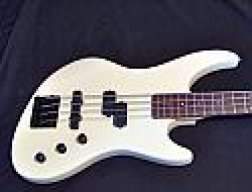
Actually, I am. I'm curious to know what qualities of the wood used in the construction of current Squier basses as vs Fender (or in your example, old MIJ Squiers) warrants the price differential in your opinion? Same question for electronics, particularly pots, wiring, jacks and caps, but also pups. Bridges?
My experience with current VM and CV Squiers (and a few late-'80s MIK models) is that the build quality and finish rivals Fender's. I've seen some pretty bad finish flaws in MIA Fenders. Haven't you? There are plenty of complaints about current Fender QC.
My point here for the OP is that the Squier will get you 90% of the value for 50% of the cost of the Fender. I'd further posit that the additional 10% of the "value" is in resale and a HSC, not in playability, reliability or sound, and that's all that really matters.
Less than six months ago, folks on this board were raving about how good the Fender MIA, MIM, and Squier QC had gotten. So I'm not sure where you're coming from with that, unless you figure 0.1% or so failures by the time the instrument reaches the user (that would be after shipping twice, being warehoused, and possibly sitting in a store subject to further abuse) and a good return policy are insufficient. I don't buy into samples of one when judging how well an instrument is built or how it sounds.
I've played enough Squiers, MIMs, and MIAs (and other brands) to know there are construction, tonal, and playing differences in them all, even among examples of the same basses. I also know that the wood today isn't the wood from 30 (or 29, or 40) years ago. Agathis isn't basswood isn't ash isn't alder, and plywood isn't laminated body pieces (I know the higher end Squiers are not ply). It can't be,
even if it were the same wood from the same stand of trees, since wood ages. Neither are the rest of the parts or the finishes. We're talking about cheaply mass-produced basses here. Every part comes from a different manufacturer than it did back in the 80s, and costs less. It's a fact of manufacturing life. Some of this is the economy of scale, but some of it is just cheaper parts.
10 minutes' playing in a music store makes lots of basses seem to be the same, but try living with an instrument for awhile and working with it. The little things start to come out, such as the ability to stay in tune, or take a knock. Even the MIJ Squier basses from the 80s play, sound, weather, and set up nothing like the Squiers of today. If you can't see past the fact that the bridges are metal, the bodies are wood, and the like, then they
will seem the same to you. Oh well.
If you like Squier, that's fine. If you think the Squier you buy today will be worth 10x the purchase price in 20-30 years, then you're free to believe so. History seems to say you'll be lucky if it's worth 1-2x the price. If you want to believe you have to pay at least $900 for a used MIA, or $550 for a used MIJ to prove why a CV or VM is better, so be it. I'm not going to convince you otherwise.
Like I said, if the OP can't tell the difference between a $500 Fender and a $200 Squier, he should buy the Squier. But he shouldn't think he's getting an MIA or MIM, or anything else.


 p) apart?