Yep, the only thing I'd say to that is, you're telling them where they are, and telling them where they're supposed to be going. My BL says "walk us round the corners"Or: the first note, on one, is to tell the others where you are. The rest is to tell the others where you are going.

Enjoy the benefits of a premium membership!
Upgrade Account
-
TalkBass has been independent since 1998. Add your voice.
Create a free account to reply to discussions, view embedded media, and browse with fewer display ads.
Join free Log in
Want zero display ads or expanded classifieds tools? Compare plans.
You are using an out of date browser. It may not display this or other websites correctly.
You should upgrade or use an alternative browser.
You should upgrade or use an alternative browser.
Now I Remember Why I Stopped Trying To Walk...
- Thread starter Matthew_84
- Start date
More options
Who Replied?

I don't read, so there's a big problem. therefore, it would be next to impossible for me to learn this tune (So What) without a chart....I can't see any other way to get all of that notation correct...and you don't just fake it through this stuff....you'll miss important cues and key changes etc if you just try to hang in there...
Walking starts at 39:17 to 40:56 before another great solo from Buddy....
Walking starts at 39:17 to 40:56 before another great solo from Buddy....
- Oct 18, 2012
- 6,683
- 5,538
- Disclosures
- Endorsing Artist: Fender, Spector, Ampeg, Curt Mangan, Nordstrand Pickups, Korg , Conquest Sound
IMHO it depends on how complicated the harmony is. If I am learning a new tune and the harmony has lots of alterations, I still start slowly and work out the note names of the alterations and implied extensions. It can takes a couple of weeks for me to play in a complicated tune really well.
Maybe it would be easier if I had a better education, but I have read long and interesting threads where doctors of music argue over chord analysis. Perhaps a true master would be able to move from one harmonic analysis of a progression to another while playing.
If the harmony is more diatonic in nature, I can typically sight read it with no problems.
In real world playing situations, I rarely came across chord charts that I could not read through, but there were a few that greatly benefited from in-depth analysis and study.
I am completely self taught and do not read music. I have no trouble playing walking bass lines. I actually find them fairly easy to play. They are not as complicated as some people think. If you know scales and can keep time, you shouldn't have a problem. I definitely think education would help you. Good luck.
I would start by walking over twelve bar blues and move it to different keys then move to twelve bars with different turnarounds like 2-5 or 1,6,2-5 turnarounds. Remember Jazz has alot of 12 bar blues.Once you can walk in the 12 bar format then you can move on to tunes with chord changes. I would start simple and work your way up... It’s hard as hell.
It’s so much more fun for me to groove along to a funk tune, then fumble through a jazz tune and realizing I don’t know the fingerboard or theory anywhere close to a proficient level.
But, I’m at the point in my bass journey where I need to change things up. I’ve faked my way on this instrument for too long.
I have Ed Fuqua’s “Walking Bassics” on the way (should be here Tuesday), and already have Friedland’s “Building Walking Basslines”, a handful of jazz backing tracks, some Jazz workshop courses from Scott Devine, a Ray Brown songbook, and the big, Jazz Theory Book.
I figure I’m going to start with Walking Bassics, then use Ed’s advice (and maybe Friedland’s if there’s anything to add) to improvise over Ed’s tracks. Then go through Scott Devine’s workshop to introduce me to a few standards. Then split my time improvising over the backing tracks of standards, and transcribing Ray Brown’s basslines in the book (using the book to compare notes when I’m done) and then walking over Ray’s tunes. And finally, going through The Jazz Theory Book as I transcribe other walking basslines, and walking over them. At that point, I’m going to start working on playing melodically and soloing as well.
If anyone sees any faults in this plan, or has any additional tips, I’d welcome it. Thanks in advance.

Once you’re at a point where you can play from Real Book charts, find someone to jam at home with. Someone who is eager to practice their soloing skills while you practise/develop your walking skills.
There’s nothing like playing thru a chart 22 times in a row in a live setting to help it sink it, try new ideas, recover quickly, build confidence, & strengthen your sight reading skills. Careful.... it becomes addictive.
There’s nothing like playing thru a chart 22 times in a row in a live setting to help it sink it, try new ideas, recover quickly, build confidence, & strengthen your sight reading skills. Careful.... it becomes addictive.

I don't read, so there's a big problem. therefore, it would be next to impossible for me to learn this tune (So What) without a chart....I can't see any other way to get all of that notation correct...and you don't just fake it through this stuff....you'll miss important cues and key changes etc if you just try to hang in there...
Walking starts at 39:17 to 40:56 before another great solo from Buddy....
When I was in high school, I learned music like that note for note to play with a university band that did not have an enrolled bass player. During rehearsal it wasn't necessary to play the patterns in the proper order, just to play them over the proper changes. I memorized all of the patterns and observed the chord progressions just repeated over and over again for the most part. I didn't have any trouble following along even though I couldn't read chord changes.
I did have the advantage that I could read standard musical notation, count bars, and also follow the root movement, which helped me keep my place in the arrangements. This allowed the director to stop and restart the band as is normal for rehearsal. Ultimately I played the patterns I had learned in whatever order I felt like for sections that repeated without change. For the few places where the chord progressions varied, I played the original bass lines note for note.
This tune would be fairly easy because it's really only two chords, Dmin7 (dorian mode) and Ebmin7 (dorian mode). So basically you learn all of the walking patterns used by the bass player and they will work over either chord, you just have move up or down a half step depending up on which part of the tune you are in.
The road map for the solo section is
16 bars of D-7 dorian
8 bars of E-7 dorian
8 bars of D-7 dorian
With a bit of practice/experience you should feel 16 and 8 bar sections without even having to count, as these are standard musical phrase lengths.
The road map for the head is the same as the solo section. Basically the form is AABA (repeat).
It may seem hard because you have not done it. But if you can walk in dorian mode and feel 8 bar phrases, playing this tune should be fairly easy.
You could also learn the bass lines in these versions for some different walking ideas...same chords; so the ideas would be usable if you were playing the Buddy Rich arrangement.
Last edited:
Just want to say thanks again for all your replies. I’m really happy to be taking this step. TBH, for the last two years, I’ve been a little lost. I didn’t really see any goals to work towards with bass/music and starting getting into my childhood/teenage hobby of playing videogames.
While I have a lot of fun with them and made some great friends, I do feel a bit more reinvigorated with a purpose that I haven’t felt in a while.
Lots of work ahead, but it’ll be worth it. Thanks again.
While I have a lot of fun with them and made some great friends, I do feel a bit more reinvigorated with a purpose that I haven’t felt in a while.
Lots of work ahead, but it’ll be worth it. Thanks again.

I certainly agree with this point of view, but I’m not ready.
Last time I tried walking in a group with others, the pianist (jam leader) stopped playing, told everyone else to stop, and told me to leave if I don’t know what I’m doing. I stayed and just played roots/octaves on the 1, to avoid any musical clashes and mistakes. Thankfully that was one of the last songs anyway, but it was cut short unexpectedly - presumably by my playing.
It was humiliating of course, but I realized that I wasn’t making the experience good for him, or others. They went there to have fun, as much as I did, and my poor playing was wrecking that for them.
I don't have any advice for you in regards to learning walking, but that pianist sounds like a jerk. Try to find a group of people to jam with that are not total squares and are ok with people learning / trying new things.
Practicing a new technique or nailing a hard section in a song is much easier when the other musicians you are playing with are easygoing and willing to keep the song rolling and on track when you are trying to work a part out.
okcrum
in your chest
Only one post mentioned a teacher and that was in passing. Can you get there without lessons? Yes, but not everyone has the dedication or ability to practice the right things for the right amount of time. A competent teacher can really accelerate the process.
Mugre
IMO a good teacher is a spring board. The best teachers will also teach you how to learn if you don't already know. So they equip you better to fend for yourself.
The things a teacher can't change are the required practice, listening, and gigging (ensemble playing) times. They vary player-to-player.
An easier first step is learning to walk over Blues tunes eg. 12-Bar Blues.
Bb Major and F Major are two popular keys for horn players so start there.
(Someone might even chime in with a list of jazz tunes that are based around the 12-Bar lies pattern).
Bb Major and F Major are two popular keys for horn players so start there.
(Someone might even chime in with a list of jazz tunes that are based around the 12-Bar lies pattern).

Good on you for studying, but how much are you listening to jazz?If anyone sees any faults in this plan, or has any additional tips, I’d welcome it. Thanks in advance.

To me it’s about math. As an example, I’m going from a G7 to a Cmaj7. I start on G and walk to my target C, and I have four beats to get there(“G, walk, walk, walk | C.”)
The best walks are linear—not jumping around. Ascending or descending. So I can walk:
Oh, and this is very important: Always read a full measure ahead of the changes. You have to know where you’re going when you start the walk.
The best walks are linear—not jumping around. Ascending or descending. So I can walk:
- Chromatically. Up: G G# A B | C; or down: G E D Db | C
- Scale like. Up: G G A B | C; or down: G F E D | C
- Arpeggio like: Up: G B D Db| C; or down G E D Db | C
- A hybrid of the above
Oh, and this is very important: Always read a full measure ahead of the changes. You have to know where you’re going when you start the walk.

Easiest step by step way to start IMO (get each one solid before moving on):
1) play the root on beat 1 of each bar
2) add the 5 on beat 3 (a country “2 feel”)
3) on beat 4, add a chromatic approach (a note 1/2 step above or below the next note)
4) add a chromatic approach on beat 2
5) start to modify some approach tones to be whole steps (use your ears)
Do this for a while, on a few easy songs. The blues are good. Also cycle of 5ths tunes like Autumn Leaves. After a bit, you’ll start to hear it. Then you can start to change notes to the ones you like, by ear.
Do this a lot, and make it groove. You won’t be Ray Brown, but you’ll be able to supply a simple, solid rhythm that outlines the harmony.
Also, learn one or two songs really really well. Like, REALLY well. Be able to hear the melody in your head as you walk. Hear the chords in your head if you can. This will pay off much better than playing many tunes half-assed (although that has its place too, to get ready for a jam or gig).
While doing this, try to sing your lines while you play them. Try to sing the melody too. And Listen to lots of jazz recordings to get the sounds in your head. And start to learn some theory and analyze songs so your lines don’t sound so simple and repetitive.
Good luck!
1) play the root on beat 1 of each bar
2) add the 5 on beat 3 (a country “2 feel”)
3) on beat 4, add a chromatic approach (a note 1/2 step above or below the next note)
4) add a chromatic approach on beat 2
5) start to modify some approach tones to be whole steps (use your ears)
Do this for a while, on a few easy songs. The blues are good. Also cycle of 5ths tunes like Autumn Leaves. After a bit, you’ll start to hear it. Then you can start to change notes to the ones you like, by ear.
Do this a lot, and make it groove. You won’t be Ray Brown, but you’ll be able to supply a simple, solid rhythm that outlines the harmony.
Also, learn one or two songs really really well. Like, REALLY well. Be able to hear the melody in your head as you walk. Hear the chords in your head if you can. This will pay off much better than playing many tunes half-assed (although that has its place too, to get ready for a jam or gig).
While doing this, try to sing your lines while you play them. Try to sing the melody too. And Listen to lots of jazz recordings to get the sounds in your head. And start to learn some theory and analyze songs so your lines don’t sound so simple and repetitive.
Good luck!

Last time I tried walking in a group with others, the pianist (jam leader) stopped playing, told everyone else to stop, and told me to leave if I don’t know what I’m doing. I stayed and just played roots/octaves on the 1, to avoid any musical clashes and mistakes. Thankfully that was one of the last songs anyway, but it was cut short unexpectedly - presumably by my playing.
Although I can understand some of ‘Joe Cool’s’ annoyance, that sort of unfortunate behavior (and on the part of far too many jazzers) is exactly the clique attitude and petty grandstanding that completely turned me off to the whole jazz scene.
Sorry you had to get subjected to some of that.
The problem of those instructional books is that most of them do not specify fingerings. And fingerings are crucial. If you learn it the wrong way, with too many jumps, bad technique, bad economy of movement, it will never sound good. Good swing requires extreme timing precision, and bad technique is going to hinder it all the time. You have to 'cement' fingerings/positions into your brain while working on common progressions. You cannot play them in any way you like, because optimal ways have already been invented. Mastering Simandl 1-2-4 is crucial for a bass player. Any beginner, if they are serious about jazz, need to get lessons from a legit double bass teacher, even if they don't touch double bass at all.
For the last five years, I’ve added jazz into the various genres I listen to when I work, drive, or have free time - so unfortunately, it gets spread between hip-hop, prog rock, metal, funk, Motown, and classical.Good on you for studying, but how much are you listening to jazz?
This decision, honestly, kinda came out of the blue (I was set on playing jazzy music but with funkier basslines, so most of my listening recently was just funk, hip-hop, or groovier jazz forms).
I’m going to cut that stuff out for now, and focus on the standards and classic recordings.
I certainly agree with this point of view, but I’m not ready.
Last time I tried walking in a group with others, the pianist (jam leader) stopped playing, told everyone else to stop, and told me to leave if I don’t know what I’m doing. I stayed and just played roots/octaves on the 1, to avoid any musical clashes and mistakes. Thankfully that was one of the last songs anyway, but it was cut short unexpectedly - presumably by my playing.
It was humiliating of course, but I realized that I wasn’t making the experience good for him, or others. They went there to have fun, as much as I did, and my poor playing was wrecking that for them.
I really despise people who do that sort of thing to other people. The lowest of the low. A complete lack of empathy and human decency.
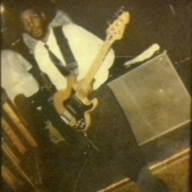
Well it is possible you weren't ready or those guys were advanced and ready to move on. Something similar happen to me very early on but I went to woodshedding and putting hours into learning, studying, ear training, timing and technique, fretboard patterns for a specific genre of music (blues)but when I came out again (for me about 2yrs) I could hold my own with any of those cats and I wanted redemption and got it too. (Long story).I certainly agree with this point of view, but I’m not ready.
Last time I tried walking in a group with others, the pianist (jam leader) stopped playing, told everyone else to stop, and told me to leave if I don’t know what I’m doing. I stayed and just played roots/octaves on the 1, to avoid any musical clashes and mistakes. Thankfully that was one of the last songs anyway, but it was cut short unexpectedly - presumably by my playing.
It was humiliating of course, but I realized that I wasn’t making the experience good for him, or others. They went there to have fun, as much as I did, and my poor playing was wrecking that for them.
That’s awesome! I’ve unfortunately let too much time slip, but even if I don’t show up to those people specifically, the feeling that I will do it with others in the future will be great when it happens. Thanks.Well it is possible you weren't ready or those guys were advanced and ready to move on. Something similar happen to me very early on but I went to woodshedding and putting hours into learning, studying, ear training, timing and technique, fretboard patterns for a specific genre of music (blues)but when I came out again (for me about 2yrs) I could hold my own with any of those cats and I wanted redemption and got it too. (Long story).
I feel ya, but that's one great thing about it. Somewhere down the road somebody will remember you and where you were at that time and look at you now. Blow their minds if they ever see you again. Goodluck big bro.That’s awesome! I’ve unfortunately let too much time slip, but even if I don’t show up to those people specifically, the feeling that I will do it with others in the future will be great when it happens. Thanks.


