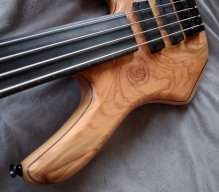
my ex one was a flamed koa top - gorgeous
What was the battery life of the ZON lightwave basses?

TalkBass has been independent since 1998. Add your voice.
Create a free account to reply to discussions, view embedded media, and browse with fewer display ads.
Join free Log in
Want zero display ads or expanded classifieds tools? Compare plans.
my ex one was a flamed koa top - gorgeous
my ex one was a flamed koa top - gorgeous
[Invalid or Expired Link Removed]

What was the battery life of the ZON lightwave basses?
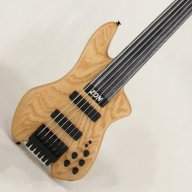
nostatic said:Sweet. Just yesterday I passed my Zon Lightwave on to my buddy who had been wanting it ever since I snapped it up at the local shop 11 years ago. Nothing else sounds like it, and it'll cover pretty much any style. I don't think very many of these were ever made...

As a side note, I played a fretless Sabre and didn't dig it at all. The playability was great, but the tone was cold, ultra-modern, and brittle. That was their preamp tho... I imagine the pickup system feeding a traditional preamp (which I'm assuming is also possible) could be a whole new ballgame.Fretted Lightwaves never did it for me. The fretless otoh could be magic.


I don't know why they have so much trouble making them sound good when the Zons sounded great for what it was, but it is not a successful venture for them to be sure. But they had to do it, because traditional brands dropped using Lightwave systems because they were so unreliable and poorly constructed after they started out sourcing the boards/assembly.

my ex one was a flamed koa top - gorgeous
[Invalid or Expired Link Removed]
Well, there are a few things to consider... and it's entirely possible they made great strides with the system since I tried it... so caveat lector on this...Many moons ago, I tried to get Zon to build me a 6er with Lightwave electronics. They said HELL no. I then tried to get Conklin to do it and they also refused to do so. Shame since it's definitely an interesting concept.
Well, there are a few things to consider... and it's entirely possible they made great strides with the system since I tried it... so caveat lector on this...
The sound of an electromagnetic interaction is what we're all used to, and an opto-mechanical interaction is going to sound different. IMHO, in opposition to their claims, it's NOT just simply/strictly about detecting string movement, and elimination of the magnetic effect on motion is not necessarily an improvement... it's just a difference subject to personal preference (taking a "hit" on familiarity as well).
The other thing is, and admittedly, this should be a one-time "problem", but any time you change your action settings, you have to individually recalibrate each string. The reason is, for most setups, the difference in string location at the sensor when fretting at the first fret, vs the last fret, is pretty much at least, if not slightly more than, it's ideal range (fretting at the last fret is very low in the sensor's range, fretting at the first fret is very high in its range). So any adjustment... even a modest one, would require the recalibration procedure. It took me a whole evening to figure out how to "balance" the setup... I had to figure out which strings sounded better when they pushed the sensor range on the low side vs the high side.
Finally, does all this mean the whole opto-mechanical idea is bad? NO!!! Just means it's a personal taste thing, and at least in my case, a different friggin' preamp for a fretless. I didn't get a chance to play a fretted, but I always figured the tone of that Sabre I had would go MUCH better with a fretted... as Angus said. For a fretless tho... I could not think of a worse tonal base. My gosh. It was about as anti-organic as it gets, which is a total deal breaker for me on a fretless. Cold and clinical. Tonal suckage to the Nth power.
I guess I can see that. When I was adjusting the sensors, they did at least seem like they'd be somewhat fragile, and a touring musician might have some risk here.Perhaps they improved since I inquired, but this was ~2006, so I wouldn't think it would have improved leaps and bounds. Both builders said it was an issue with reliability than tone.
I thought some of the fretless tones I heard seemed to sound cool, but I've never had a chance to play one myself. I think a few luthiers simply refuse to install them, so I don't see myself owning one unless they really improve them over the next couple of years.
Many moons ago, I tried to get Zon to build me a 6er with Lightwave electronics. They said HELL no. I then tried to get Conklin to do it and they also refused to do so. Shame since it's definitely an interesting concept.
I guess I can see that. When I was adjusting the sensors, they did at least seem like they'd be somewhat fragile, and a touring musician might have some risk here.
The other potential tonal impact is, the system takes a LOT of space. There was a HUGE route on the back of the Sabre to accommodate the system.
I think the sensors/housing seemed to be fragile and risky. Conklin basically told me that they didn't want to sell me an unreliable bass.
I can see the routing being a pain for luthiers.
From a practicality perspective, the Lightwave System is unique, but a piezo and 2 mags would seem to make more sense.
Many moons ago, I tried to get Zon to build me a 6er with Lightwave electronics. They said HELL no. I then tried to get Conklin to do it and they also refused to do so. Shame since it's definitely an interesting concept.
I remember calling Zon for some advice about one thing or another, I was impressed that they pretty much immediately patched me through to Joe Zon.
from a practicality standpoint, you are right - but I have never heard a bass that has the same sound as a fretless lightwave.
I don't know what Conklin's issue was, as I know companies like F Bass (iirc) have built 6 string Lightwave basses, but once the individual string Lightwave bridges were available (the S2 version) you could do 6-string setups. I know Zon's problem was on certainly one, but probably two fronts: a) they for sure didn't make a compatible neck yet, as Lightwave bridge ensured a minimum 19mm string width, and they didn't make a 19mm 6-string neck until ~2009 or late 2008, and b) by the time you asked them in 2006 they'd stopped using Lightwave stuff because by then they'd gotten too expensive and horrifically unreliable. They stopped making Lightwave-equipped stuff altogether for the latter reason.

But do they ALL have them now? I was still thinking it was just an option?Just call them up and ask. It was something like 6 years ago when they started, and it wasn't an off/on switchover.


