

Enjoy the benefits of a premium membership!
Upgrade Account
-
TalkBass has been independent since 1998. Add your voice.
Create a free account to reply to discussions, view embedded media, and browse with fewer display ads.
Join free Log in
Want zero display ads or expanded classifieds tools? Compare plans.
You are using an out of date browser. It may not display this or other websites correctly.
You should upgrade or use an alternative browser.
You should upgrade or use an alternative browser.
Official Zon Club Part 2
- Thread starter Bryan R. Tyler
- Start date
-
- Tags
- club
- Status
- Not open for further replies.
More options
Who Replied?
Yep... I'd also pick ash as I'm definitely an ash body guy myself, but that does make it a divergence from the TJ spec. According to the video it's an alder body with a figured maple top, and the web page is in sync with that. Only says alder as a body wood.my TJ has an Ash body, FWIW
Bottom line is, Joe will build you almost anything you want. Just again gets into how closely does something have to match the spec to really be called a true signature model.
BTW, this kinda' thing is in no way limited to Zon. One I can think of right off the top of my head is the "Nitti Signature" model at Warrior. What a joke. My "Nitti Signature" model doesn't represent anything even close to anything Adam has ever played. Jeez.

Looks to me to be a custom Sonus Custom fretless.
TJ fretless. Nothing weird about it. It has the neck pickup that was moved slightly toward the bridge like TJ's (most don't), and is fretless. Nothing that would "disqualify" it or whatever you want to call it. It's good.
Vic, having an Alder body doesn't seem to be a requirement, nor does the ramp (I've yet to see one come with a ramp). TJ's bass is weird- it's got different pickups (flat), different preamp (Bart) and different tuners (Hipshot), and most don't have his neck pickup position. Basically, I think the "standard" specs became specs that were not the same as his original bass.
The wood choices don't seem to matter with whether it is a "signature" or not. Mine is and it has a walnut body.
Well, I'm just going by what's on the web site (only one body wood listed) and what's in the video... and even then what's in the video doesn't fully match the web site, either. Also, if you go to the TJ configurator page, a ramp is listed, and there's no option to not include it. To me, that means if it's a TJ it ships with a ramp. Period.TJ fretless. Nothing weird about it. It has the neck pickup that was moved slightly toward the bridge like TJ's (most don't), and is fretless. Nothing that would "disqualify" it or whatever you want to call it. It's good.
Vic, having an Alder body doesn't seem to be a requirement, nor does the ramp (I've yet to see one come with a ramp). TJ's bass is weird- it's got different pickups (flat), different preamp (Bart) and different tuners (Hipshot), and most don't have his neck pickup position. Basically, I think the "standard" specs became specs that were not the same as his original bass.
The wood choices don't seem to matter with whether it is a "signature" or not. Mine is and it has a walnut body.
Don't stress on my comments above tho... here's my main point...
It's not, nor will it ever be, my decision what qualifies any given bass to be a signature model or not... unless of course I'm the builder. I fully understand that, and am fine with it.
However, if it WAS my choice, my preference would be, if you build a bass to a professional's specs and you want to come out with a signature model so others can have "the same bass", then it should be "the same bass". Otherwise, it's not the signature model... plain and simple. It just shares some features of one, being a custom version of the base model line (in this case, Sonus) with those features simply as "custom options" on the bass.
Just makes more sense to me, I guess.
FWIW anyway... even if that's not much.
My point is just that they don't build to "his" specs really that often, if ever. As I said, I've yet to see any ship with a ramp.
I think the standard specs are more of a baseline than any sort of strict guideline- honestly they aren't organized in such a way that that is how they function. So I don't think they bother to make sure it's a conserved system/model.
I think the standard specs are more of a baseline than any sort of strict guideline- honestly they aren't organized in such a way that that is how they function. So I don't think they bother to make sure it's a conserved system/model.
I know, I got all that already. I just disagree with doing things that way AND still calling it a "signature model".My point is just that they don't build to "his" specs really that often, if ever. As I said, I've yet to see any ship with a ramp.
I think the standard specs are more of a baseline than any sort of strict guideline- honestly they aren't organized in such a way that that is how they function. So I don't think they bother to make sure it's a conserved system/model.
And I think the fact that folks are often confused about "signature models" means I probably have a decent point. But yeah, to your point, Joe's a luthier. He can build you anything you want from the templates and components he has... and that's a GOOD thing. I guess maybe what I'm really saying is I think it might simply be kinda' silly to even deal with "signature models" for the exact reason you just stated. Probably very few would ever be sold in that exact config, so it doesn't really mean much.
Well, I'm just going by what's on the web site (only one body wood listed) and what's in the video... and even then what's in the video doesn't fully match the web site, either. Also, if you go to the TJ configurator page, a ramp is listed, and there's no option to not include it. To me, that means if it's a TJ it ships with a ramp. Period.
Don't stress on my comments above tho... here's my main point...
It's not, nor will it ever be, my decision what qualifies any given bass to be a signature model or not... unless of course I'm the builder. I fully understand that, and am fine with it.
However, if it WAS my choice, my preference would be, if you build a bass to a professional's specs and you want to come out with a signature model so others can have "the same bass", then it should be "the same bass". Otherwise, it's not the signature model... plain and simple. It just shares some features of one, being a custom version of the base model line (in this case, Sonus) with those features simply as "custom options" on the bass.
Just makes more sense to me, I guess.
FWIW anyway... even if that's not much.
Although I understand what you are talking about. I have to say, in the 2 industries that I have spent most of my life in - Music and Skiing - you NEVER get the exact "signature" model. The problem is that, usually, the signature model is SO specific to the artist that it is usually unfeasible or way to expensive to make it a production model.
In this case there is nothing unfeasible or expensive about it in this case- they just don't usually make them that way because it probably isn't as popular of an option set.
it probably isn't as popular of an option set.
that is called unfeasible.
that is called unfeasible.
No, it's perfectly feasible, it just doesn't make sense. That doesn't make it unfeasible.
I can't believe we are arguing word definition.

At first my bass had a custom Sonus body with a larger lower cut-out but it had significant neck-dive so Joe made me another body...a TJ in his words...as I said before..."more real estate" and this would balance the bass better. And it did.
Body is Mahogany with a Maple top. 17mm spacing at the bridge. My understanding is that I have the TJ Bart radiused pickups with the three way Bart EQ with the mid-switch...250/400/800? My neck is custom-sized...a bit thicker.... .85 at the first fret and .95 or so at the 12th fret. Just because it's what I am used to with my Wals. The fingerboard used to go all the way to the neck pickup but I asked Joe to shorten it so I could have some thumb space. I'm not a floating thumb guy. I have 28 positions as is. I think it's enough!
Love the bass. Love the sound, punch, ease of playing, growl and the ability to be very sweet or very aggressive. For fretless, it's becoming my go-to for recording. It has just a slight amount of neck-dive...not bad and certainly can be handled. It is mostly noticable after playing for longer periods or when switching to other basses that don't have any.
Body is Mahogany with a Maple top. 17mm spacing at the bridge. My understanding is that I have the TJ Bart radiused pickups with the three way Bart EQ with the mid-switch...250/400/800? My neck is custom-sized...a bit thicker.... .85 at the first fret and .95 or so at the 12th fret. Just because it's what I am used to with my Wals. The fingerboard used to go all the way to the neck pickup but I asked Joe to shorten it so I could have some thumb space. I'm not a floating thumb guy. I have 28 positions as is. I think it's enough!
Love the bass. Love the sound, punch, ease of playing, growl and the ability to be very sweet or very aggressive. For fretless, it's becoming my go-to for recording. It has just a slight amount of neck-dive...not bad and certainly can be handled. It is mostly noticable after playing for longer periods or when switching to other basses that don't have any.
No, it's perfectly feasible, it just doesn't make sense. That doesn't make it unfeasible.
I can't believe we are arguing word definition.
we are not. It is just your desire to always be proven right. It's cool.
Unsubscribed
we are not. It is just your desire to always be proven right. It's cool.
Unsubscribed
pot kettle black
lol
Depends. It can go both ways. For example, the Sadowsky Will Lee model... it is exactly the model Will plays. At the low end, the Geddy signature model is VERY close to what he plays... in fact, as close as you can get without buying a vintage instrument, and last I heard, he has a signature model neck on his genuine '72 because the original neck was getting too worn out....they just don't usually make them that way because it probably isn't as popular of an option set.
Anyway, no big deal, I just think it should mean more than it does in some cases, and again, the Zon TJ is NOT the only case like it.
Here's another spin... what I think woulda' been really cool is for them to just come up with their own new model name, and then TJ's bass could simply be one custom version of it. For example, the Hyperbass. They probably coulda' gone the TJ route and called it the Michael Manring signature model, but they didn't, and I think that was a better call.
Again tho, just MHO.
Yeah I agree entirely- I don't see the purpose to put his name on it. It could just be the Sonus "X", that has a deeper cutaway, slightly larger body, and that's it. It would make a lot more sense that a loose parameters on a model with someone's name on it...when they don't make his specifics specs pretty much ever. It isn't different enough to warrant the signature thing, where on the other hand the MM Hyperbass wouldn't make sense to called a "Legacy custom", even though that's really what it is.
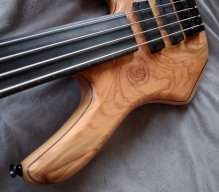
Love the bass. Love the sound, punch, ease of playing, growl and the ability to be very sweet or very aggressive. For fretless, it's becoming my go-to for recording. It has just a slight amount of neck-dive...not bad and certainly can be handled. It is mostly noticable after playing for longer periods or when switching to other basses that don't have any.
My TJ is also a bit neck heavy. When Andy sent it to me the neck had been removed from the body and I was surprised how light the body was.
What strings are you using with your Zon?...
Right now I'm using DR Hi-beams... Anyone tried the Dunlops?
Right now I'm using DR Hi-beams... Anyone tried the Dunlops?

- Status
- Not open for further replies.


