I think this is an interesting topic of choice, because I’m curious as to what bass players like to play through? What they like to record through? What’s their go to amp for live settings even if it’s not the amps that are listed above. Now before I get a lot of replies asserting the recording industry has changed, and things like the Line 6 helix and other mods have taken over the market for live settings, and recording. I’m an old-school guy and I like a Tube amp. I wonder if any players still feel this way or have most players adapted and changed over to the new wave of modern day technology, and taking amp modulations out on the road with them and in the studio. What’s you guys and gals take. I hope to receive interesting dialogue.

Enjoy the benefits of a premium membership!
Upgrade Account
-
TalkBass has been independent since 1998. Add your voice.
Create a free account to reply to discussions, view embedded media, and browse with fewer display ads.
Join free Log in
Want zero display ads or expanded classifieds tools? Compare plans.
You are using an out of date browser. It may not display this or other websites correctly.
You should upgrade or use an alternative browser.
You should upgrade or use an alternative browser.
Orange AD200 or Ampeg SVT or Old School Mess Boogie
- Thread starter PleyswethSqwerl
- Start date
More options
Who Replied?

IF I could install a rehearsal room at home, I would get a SVT, but I live in a flat, I have to keep it quiet, small and light.
Although I'm perfectly happy with my class D and hybrid heads, I recently ordered a 50W full tube amp, "just because". It's only 4.5 Kg, so I should be able to take it anywhere, and because my band don't play super loud, I believe this amp should be loud enough for small gigs (with a super efficient cab). We'll see… (I will get it in December of next January, it's going to be a long long wait). Pure Tone Amps also makes a 7,6 Kg - 120 W model.

Although I'm perfectly happy with my class D and hybrid heads, I recently ordered a 50W full tube amp, "just because". It's only 4.5 Kg, so I should be able to take it anywhere, and because my band don't play super loud, I believe this amp should be loud enough for small gigs (with a super efficient cab). We'll see… (I will get it in December of next January, it's going to be a long long wait). Pure Tone Amps also makes a 7,6 Kg - 120 W model.

I own all of those amps. They are all great in their own way. Only you can decide which is best for you. Go play a bunch of amps!
I learned to play through a blackface Fender. IMHO the AD200B is about as close as you can get. Feels like home. One big difference is the AD200B has a pretty high gain preamp and a Master. Max out the Master and set your level with the Gain and you get Fender. Dial the Master down and crank up the Gain and the preamp does sort of a modern OD. It's real easy to dial in huge lows with this amp, but it does not have enough headroom to really support it at gig volume. If you push the output section with the lows cranked, the lows gets mushy and wash out way to early. Keep the lows at a reasonable level and .
.
Old School Mesa is in the same Fender tone universe, but not as close to the center as the AD200B. I have the D180, 400, 400+, Buster, and Strategy Eight:88.
It's real easy to hear the evolution that occurred through D180, 400, and 400+. I think my favorite is probably the 400, but my preference can change depending on what I want. The D180 is voiced the leanest down low and the amp's intrinsic voicings became fuller with each model. The 400+ kicks like mule. The highs sort of went the other way over the evolution. The D180 has the most air and glass and the 400+ has the least. IMHO the 400 seems to strike the best balance and has the overall sweetest sound...but there are things the D180 and 400+ do better.
The Strategy is a beast, but I found it hard to dial in. It's fairly lean down low and super aggressive in the high mids.
I finally figured out a few tricks after reviewing the Strategy's frequency response plots in BGM's Amp Lab. Amp Lab: Mesa Boogie Strategy | Bass Gear Magazine The frequency response rises into the high mids and then rolls off fairly early. The resultant tone tends to have a lot of gank, clack, and fret rattle, but lacks air or glass.
I found that by turning down the Treble rotary I can tame the high mids. Then I can use the top two sliders on the graphic to dial in the glass and air that I like.
The flat tone profile (Voicing #3) on this amp rolls off the lows at a pretty high frequency. Voicing #2 is slightly mid scooped, but extends the response significantly lower.
Now I have the Strategy dialed in so it sounds more like an old school Mesa bass amp.
The Buster is also fairly lean down low and aggressive in the high mids. However, I think it has more air up top than the Strategy. If you try to push the lows I think the tone gets sort of blurry or woolly. You can push Buster so it gets sort of tubey and compressed, but it does not have the woody resonance and bounce of the earlier Mesas.
IMHO neither the Buster nor Strategy really excel at OD. The earlier Mesas are better for pushed tones.
The first bass amp I ever bought was a new MTI SVT and 810. Great rig but not my sound. I like SVTs way more than 810s though. I own a 69 and an 87 SVT, but no 810. To me, SVTs seem warmer and less bright than most other amps. Also they get sort of a signature grind in the mids and have what I call a low mid push.
I tend to rotate through my collection. When I put any of these amps in the playing position, I think think they sound great. But over a few playing sessions I sort of grow bored and want to hear something else.
One noteworthy tone universe you seem to be ignoring is Hiwatt. I have two vintage Hiwatts (76 DR201 and 79 DR103) and a big Reeves 400, which is a fairly faithful DR405 clone.
Many people describe Hiwatts as high fidelity. In my experience they seem setup to make max clean power. I would not say the output sections are the best choice if you want to push them into drive though. The preamps are fairly low gain, but can be pushed into light OD. The frequency response is far from flat: huge lows, mid scooped, and aggressive in the high mids. To me the voicing seems very warm with guitar but extremely mid-scooped and bright with bass guitar. Fabulous amps, but if you don't love the basic voicing, the tone controls are not going to help.
I learned to play through a blackface Fender. IMHO the AD200B is about as close as you can get. Feels like home. One big difference is the AD200B has a pretty high gain preamp and a Master. Max out the Master and set your level with the Gain and you get Fender. Dial the Master down and crank up the Gain and the preamp does sort of a modern OD. It's real easy to dial in huge lows with this amp, but it does not have enough headroom to really support it at gig volume. If you push the output section with the lows cranked, the lows gets mushy and wash out way to early. Keep the lows at a reasonable level and
.Old School Mesa is in the same Fender tone universe, but not as close to the center as the AD200B. I have the D180, 400, 400+, Buster, and Strategy Eight:88.
It's real easy to hear the evolution that occurred through D180, 400, and 400+. I think my favorite is probably the 400, but my preference can change depending on what I want. The D180 is voiced the leanest down low and the amp's intrinsic voicings became fuller with each model. The 400+ kicks like mule. The highs sort of went the other way over the evolution. The D180 has the most air and glass and the 400+ has the least. IMHO the 400 seems to strike the best balance and has the overall sweetest sound...but there are things the D180 and 400+ do better.
The Strategy is a beast, but I found it hard to dial in. It's fairly lean down low and super aggressive in the high mids.
I finally figured out a few tricks after reviewing the Strategy's frequency response plots in BGM's Amp Lab. Amp Lab: Mesa Boogie Strategy | Bass Gear Magazine The frequency response rises into the high mids and then rolls off fairly early. The resultant tone tends to have a lot of gank, clack, and fret rattle, but lacks air or glass.
I found that by turning down the Treble rotary I can tame the high mids. Then I can use the top two sliders on the graphic to dial in the glass and air that I like.
The flat tone profile (Voicing #3) on this amp rolls off the lows at a pretty high frequency. Voicing #2 is slightly mid scooped, but extends the response significantly lower.
Now I have the Strategy dialed in so it sounds more like an old school Mesa bass amp.
The Buster is also fairly lean down low and aggressive in the high mids. However, I think it has more air up top than the Strategy. If you try to push the lows I think the tone gets sort of blurry or woolly. You can push Buster so it gets sort of tubey and compressed, but it does not have the woody resonance and bounce of the earlier Mesas.
IMHO neither the Buster nor Strategy really excel at OD. The earlier Mesas are better for pushed tones.
The first bass amp I ever bought was a new MTI SVT and 810. Great rig but not my sound. I like SVTs way more than 810s though. I own a 69 and an 87 SVT, but no 810. To me, SVTs seem warmer and less bright than most other amps. Also they get sort of a signature grind in the mids and have what I call a low mid push.
I tend to rotate through my collection. When I put any of these amps in the playing position, I think think they sound great. But over a few playing sessions I sort of grow bored and want to hear something else.
One noteworthy tone universe you seem to be ignoring is Hiwatt. I have two vintage Hiwatts (76 DR201 and 79 DR103) and a big Reeves 400, which is a fairly faithful DR405 clone.
Many people describe Hiwatts as high fidelity. In my experience they seem setup to make max clean power. I would not say the output sections are the best choice if you want to push them into drive though. The preamps are fairly low gain, but can be pushed into light OD. The frequency response is far from flat: huge lows, mid scooped, and aggressive in the high mids. To me the voicing seems very warm with guitar but extremely mid-scooped and bright with bass guitar. Fabulous amps, but if you don't love the basic voicing, the tone controls are not going to help.
Last edited:
I own all of those amps. They are all great in their own way. Only you can decide which is best for you. Go play a bunch of amps!
I learned to play through a blackface Fender. IMHO the AD200B is about as close as you can get. Feels like home. One big difference is the AD200B has a pretty high gain preamp and a Master. Max out the Master and set your level with the Gain and you get Fender. Dial the Master down and crank up the Gain and the preamp does sort of a modern OD. It's real easy to dial in huge lows with this amp, but it does not have enough headroom to really support it at gig volume. If you push the output section with the lows cranked, the lows gets mushy and wash out way to early. Keep the lows at a reasonable level and
Old School Mesa is in the same Fender tone universe, but not as close to the center as the AD200B. I have the D180, 400, 400+, Buster, and Strategy Eight:88.
It's real easy to hear the evolution that occurred through D180, 400, and 400+. I think my favorite is probably the 400, but my preference can change depending on what I want. The D180 is voiced the leanest down low and the amp's intrinsic voicings became fuller with each model. The 400+ kicks like mule. The highs sort of went the other way over the evolution. The D180 has the most air and glass and the 400+ has the least. IMHO the 400 seems to strike the best balance and has the overall sweetest sound...but there are things the D180 and 400+ do better.
The Strategy is a beast, but I found it hard to dial in. It's fairly lean down low and super aggressive in the high mids.
I finally figured out a few tricks after reviewing the Strategy's frequency response plots in BGM's Amp Lab. Amp Lab: Mesa Boogie Strategy | Bass Gear Magazine The frequency response rises into the high mids and then rolls off fairly early. The resultant tone tends to have a lot of gank, clack, and fret rattle, but lacks air or glass.
I found that by turning down the Treble rotary I can tame the high mids. Then I can use the top two sliders on the graphic to dial in the glass and air that I like.
The flat tone profile (Voicing #3) on this amp rolls off the lows at pretty high frequency. Voicing #2 is slightly mid scooped, but extends the response significantly lower.
Now I have the Strategy dialed in so it sounds more like an old school Mesa bass amp.
The Buster is also fairly lean down low and aggressive in the high mids. However, I think it has more air up top than the Strategy. If you try to push the lows I think the tone gets sort of blurry or woolly. You can push Buster so it gets sort of tubey and compressed, but it does not have the woody resonance and bounce of the earlier Mesas.
IMHO neither the Buster nor Strategy really excel at OD. The earlier are better for pushed tones.
The first bass amp I ever bought was a new MTI SVT and 810. Great rig but not my sound. I like SVTs way more than 810s though. I own a 69 and an 87 SVT, but no 810. To me SVTs seem warmer and less bright than most other amps. Also they get sort of signature grind in the mids and have what I call a low mid push.
I tend to rotate through my collection. When I put any of these amps in the playing position, I think think they sound great. But over a few playing sessions I sort of grow bored and want to hear something else.
One noteworthy tone universe you seem to be ignoring is Hiwatt. I have two vintage Hiwatts (76 DR201 and 79 DR103) and a big Reeves 400, which is a fairly faithful DR405 clone.
Many people describe Hiwatts as high fidelity. In my experience they seem setup to make max clean headroom. I would not say the output sections are the best choice if you want to push them into drive though. The preamps are fairly low gain, but can be pushed in to light OD. The frequency response is far from flat: huge lows, mid scooped, and aggressive in the high mids. To me the voicing seems very warm with guitar but extremely mid-scooped and bright with bass guitar. Fabulous amps, but if you don't love the basic voicing, the tone controls are not going to help.
great breakdown. Thanks!!!!

I like big amps and I cannot lie
But if other people like computer amps good on them.
My favorite big Valve amp is the Ashdown CTM-300 which I think is considerably ‘better’ (for me) than the SVT
I do like the Orange AD200B
Mesa 400 is a lovely amp quite smooth and nice bass tone. But i don’t believe it can OD like the Ashdown
Again YMMV
But if other people like computer amps good on them.
My favorite big Valve amp is the Ashdown CTM-300 which I think is considerably ‘better’ (for me) than the SVT
I do like the Orange AD200B
Mesa 400 is a lovely amp quite smooth and nice bass tone. But i don’t believe it can OD like the Ashdown
Again YMMV
I have the AD200 and SVT. I’ve spent some time with a D180 and would like to add either that or a 400 to my collection at some point though they’d mostly be to have.
I gig the AD200 a lot. As @Wasnex mentioned the orange is basically like a big warm fender sound. It works well for the volume levels I need, I usually find that if I’m beyond the capabilities of a 150-200ish watt tube amp with the decent cab I’m usually in the FOH so I don’t need more power than that. It’s not light by any means but it’s still a significant size and weight savings from the SVT.
I do drag my SVT out from time to time and I’m always happy when I do. It’s a marvelous sounding amp.
I think my favorite amp of my collection is still my Science Mother which is a hiwatt DR201 inspired amp.
I gig the AD200 a lot. As @Wasnex mentioned the orange is basically like a big warm fender sound. It works well for the volume levels I need, I usually find that if I’m beyond the capabilities of a 150-200ish watt tube amp with the decent cab I’m usually in the FOH so I don’t need more power than that. It’s not light by any means but it’s still a significant size and weight savings from the SVT.
I do drag my SVT out from time to time and I’m always happy when I do. It’s a marvelous sounding amp.
I think my favorite amp of my collection is still my Science Mother which is a hiwatt DR201 inspired amp.
I have the AD200 and SVT. I’ve spent some time with a D180 and would like to add either that or a 400 to my collection at some point though they’d mostly be to have.
I gig the AD200 a lot. As @Wasnex mentioned the orange is basically like a big warm fender sound. It works well for the volume levels I need, I usually find that if I’m beyond the capabilities of a 150-200ish watt tube amp with the decent cab I’m usually in the FOH so I don’t need more power than that. It’s not light by any means but it’s still a significant size and weight savings from the SVT.
I do drag my SVT out from time to time and I’m always happy when I do. It’s a marvelous sounding amp.
I think my favorite amp of my collection is still my Science Mother which is a hiwatt DR201 inspired amp.
For the record, the orange, AD200B is my favorite app. It has the (IT) factor.

EdwardofHuncote
I Still Dream of Jeannie
- Aug 21, 2013
- 6,668
- 2
- 16,471
- Disclosures
- I privately own and operate a local musical instument repair shop.



I think this is an interesting topic of choice, because I’m curious as to what bass players like to play through? What they like to record through? What’s their go to amp for live settings even if it’s not the amps that are listed above. Now before I get a lot of replies asserting the recording industry has changed, and things like the Line 6 helix and other mods have taken over the market for live settings, and recording. I’m an old-school guy and I like a Tube amp. I wonder if any players still feel this way or have most players adapted and changed over to the new wave of modern day technology, and taking amp modulations out on the road with them and in the studio. What’s you guys and gals take. I hope to receive interesting dialogue.
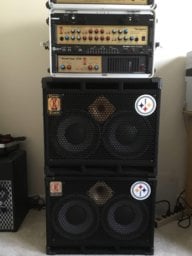
Big - SVT+810E
Not quite as big - SVT+212AV
Pretends to be small while being big - Mesa WD800+210+115
Recording - BDDI + Mic'd SVT/810 or REDDI. I've also done straight in and VSTs.
I used to run a Mesa Strategy+PH410. They way I used it it was a more pissed off, aggressive and articulate SVT. It was like playing a sledgehammer.
The SVT on the other hand is more of a bass pillow. It fills the mix with bass and is punchy without necessarily hammering through like the Strategy does.
I've used an AD200 for guitar, but never put a bass through it. I find most Oranges are a one trick pony. If you need that trick they're awesome, but if you need a different trick you're **** out of luck.
I think this is an interesting topic of choice, because I’m curious as to what bass players like to play through? What they like to record through? What’s their go to amp for live settings even if it’s not the amps that are listed above. Now before I get a lot of replies asserting the recording industry has changed, and things like the Line 6 helix and other mods have taken over the market for live settings, and recording. I’m an old-school guy and I like a Tube amp. I wonder if any players still feel this way or have most players adapted and changed over to the new wave of modern day technology, and taking amp modulations out on the road with them and in the studio. What’s you guys and gals take. I hope to receive interesting dialogue.
Over the decades I’ve owned an SVT, Hiwatt, Marshall, well as an Eden all tube amp. Out of those tube amps, Hiwatt was far and away the best tube amp I’ve ever owned. The rest are not even close.
Mesa 400 is a lovely amp quite smooth and nice bass tone. But i don’t believe it can OD like the Ashdown
Both do OD, but these amps are definitely different. IMHO the native voicing of the CTM300 is darker, and IMHO the way it produces low mids sort of seems in the SVT tone universe. Does not really grind in the mids like an SVT though.
The CTM300 has a much higher gain preamp that drives earlier than the 400, and produces what I perceive as a heavier distortion. Depending upon which tone select buttons are pushed, it can be challenging to get a clean sound through the preamp unless you use the attenuated input. Specifically if you push the Mellow switch and even more so if you also push the Mid shift switch.
I think the CTM300 output section is set up for max clean power. It has noticeably more clean headroom than the 400, and may even be stronger than the average SVT. However, when pushed too far into output drive, the distortion comes on sort of sudden and seems sort of splatty and uneven.
The 400's preamp drive is different, but good. The preamp seems lower gain, so you have to crank it pretty hard to get into drive territory. Both the 400's preamp and output section transition gently into drive which I prefer. I think the character of the 400's drive is a bit more classic rock.
I was just thinking, OP shoulda' just PM'd @Wasnex...
Nah...it's more fun for everyone when we talk in the open (IMHO).

JeezyMcNuggles
Inactive
- Feb 23, 2018
- 14,723
- 20,970
- Disclosures
- I suck, but nobody really notices
I play ampeg cabinets, powered by whatever I have available.I think this is an interesting topic of choice, because I’m curious as to what bass players like to play through? What they like to record through? What’s their go to amp for live settings even if it’s not the amps that are listed above. Now before I get a lot of replies asserting the recording industry has changed, and things like the Line 6 helix and other mods have taken over the market for live settings, and recording. I’m an old-school guy and I like a Tube amp. I wonder if any players still feel this way or have most players adapted and changed over to the new wave of modern day technology, and taking amp modulations out on the road with them and in the studio. What’s you guys and gals take. I hope to receive interesting dialogue.
I record direct.
My favorite amp is the V4b ri. I just wish it had 200w
SirMjac28
Patiently Waiting For The Next British Invasion
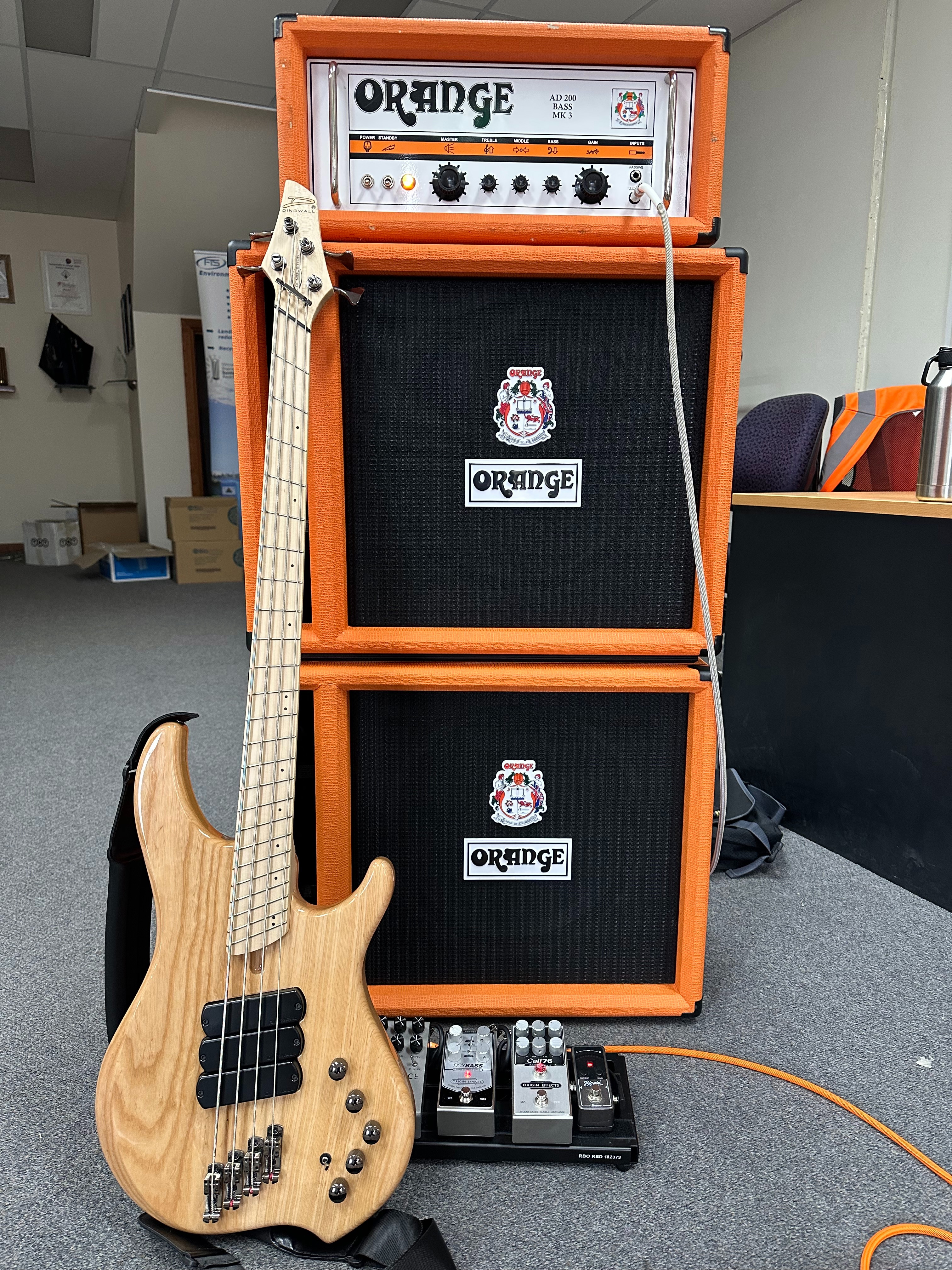
The Orange is a gorgeous sounding amp but it's not plug and play like the SVT. The Orange takes time to get used to the EQ and how it works as opposed to the SVT where if you want more bass you tun up the bass knob etc. I personally love the Orange because it's a the most honest amp I've played through it really lets the tone of your bass shine.
I've only played an SVT with 8x10 once and though i liked it, it didn't grab me. I had an Ashdown ABM500 for years and recently got the AD200. This setup has changed my life. Wow!
The Pure Tone offset is a great sounding amp it reminds me of my 62 Bassman.I would get one If I was Younger and they make the Offset XL at 110 watts you maybe surprised at the volume this amps achievesIF I could install a rehearsal room at home, I would get a SVT, but I live in a flat, I have to keep it quiet, small and light.
Although I'm perfectly happy with my class D and hybrid heads, I recently ordered a 50W full tube amp, "just because". It's only 4.5 Kg, so I should be able to take it anywhere, and because my band don't play super loud, I believe this amp should be loud enough for small gigs (with a super efficient cab). We'll see… (I will get it in December of next January, it's going to be a long long wait). Pure Tone Amps also makes a 7,6 Kg - 120 W model.

I'm an Ampeg lover. I started on Ampeg 33 years ago and that brand holds a special place in my heart. While I currently don't own an SVT, I have had a plethora. All that said, the only head that took me away from the SVT was the Aguilar DB750. Different animal of course. I suck at describing tones with words, so I will spare you all that. I usually used it with an Ampeg 610, but I got to use it once with a Berg NV610 and that was magical. It even sounded incredible through a cheaper Avatar 210 cab I had. Sadly that head was lost in the Nashville flood of 2010. I reassessed a lot of gear priorities after that event and never ventured back into Aggie land. Insurance covered that loss, but I used the funds for a SVT4 and PF500. I'm venturing back into the tube world a little bit these days, but no SVT. Only a V4B reissue and a PF20t. Those cover my needs now in my old age where I don't do much playing.
Both? Studio and gig rigs don't have to be the same. 
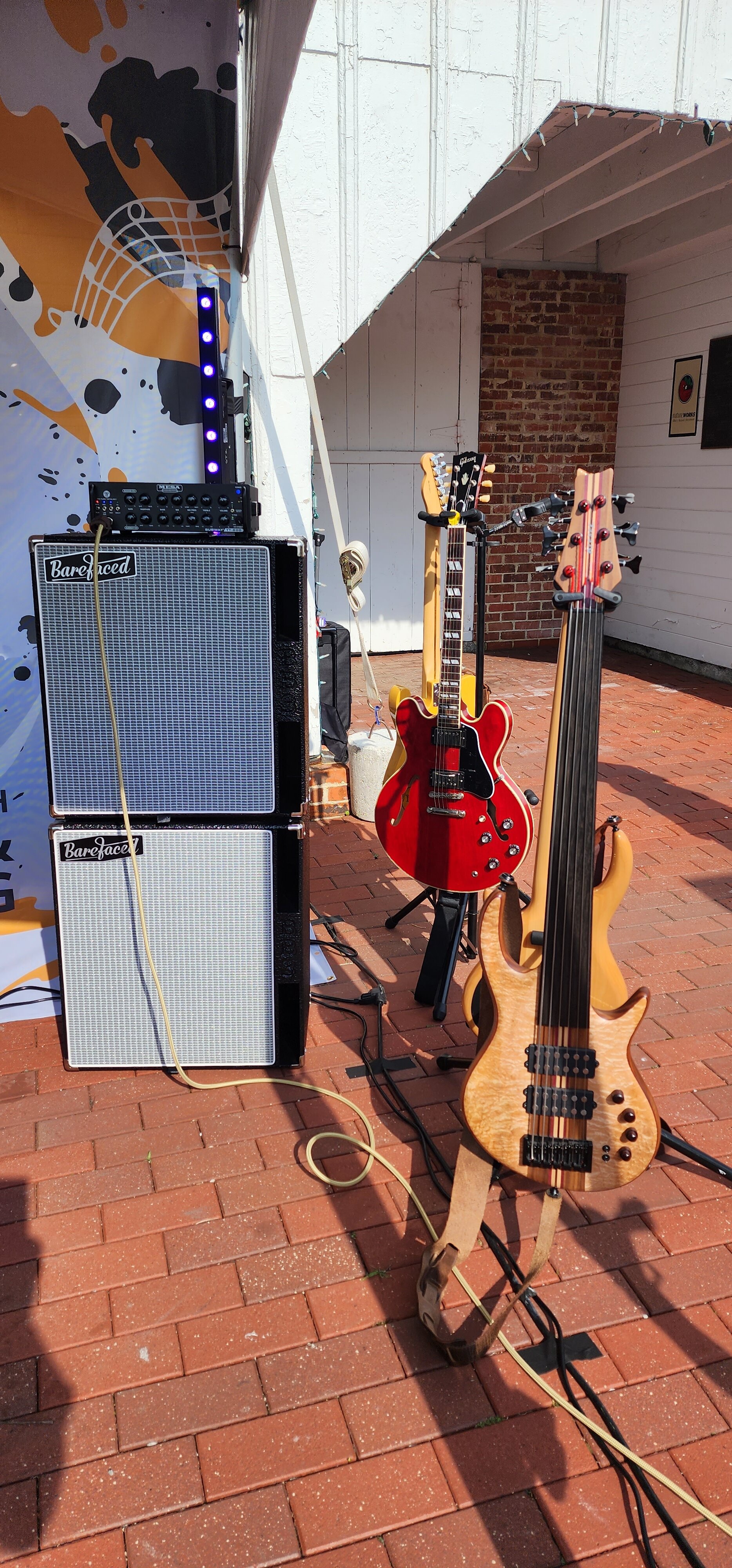
I've grown fond of my B-15R for recording. It is way too heavy for schlepping to gigs. My gig rig is all about headroom and portability. I've been running a Mesa Subway TT-800 into one or two bareface Big Baby 3 cabs. I can load in in a single trip and have lots of firepower if needed. FOH gets a feed from the POST DI on the TT-800.

... What they like to record through? What’s their go to amp for live settings even if it’s not the amps that are listed above...
I've grown fond of my B-15R for recording. It is way too heavy for schlepping to gigs. My gig rig is all about headroom and portability. I've been running a Mesa Subway TT-800 into one or two bareface Big Baby 3 cabs. I can load in in a single trip and have lots of firepower if needed. FOH gets a feed from the POST DI on the TT-800.


