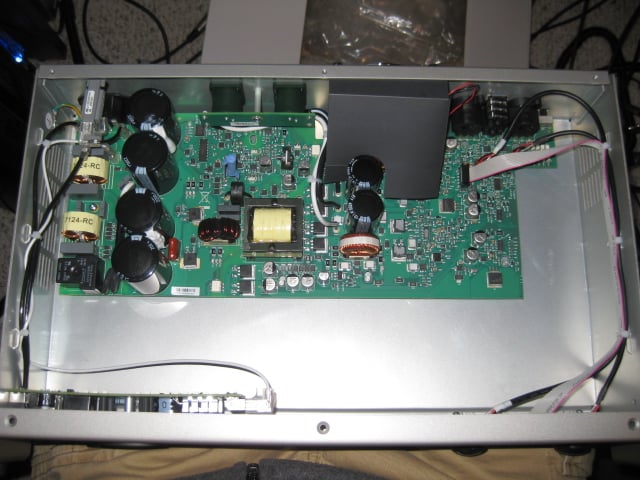
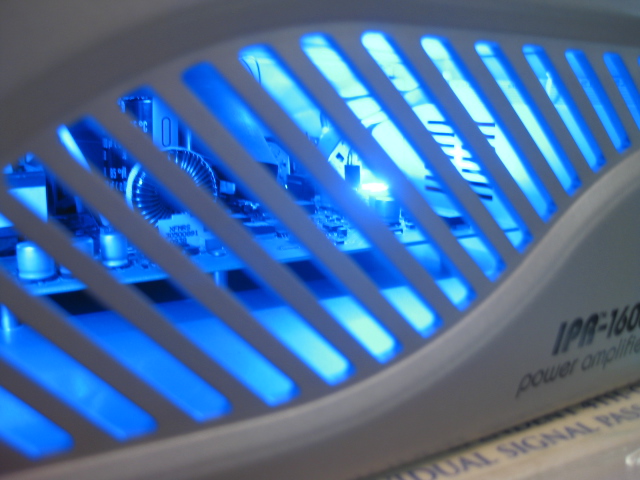
Mr Brown delivered my Peavey IRP 1600 just now. I unboxed, marvelled at how light it was, shook it (nothing rattled), peeked through the vent holes and noted the chassis was pretty empty, then proceeded to take the top cover off to take these photos.
I haven't plugged it in yet or tested it, nor do I have any way to scientifically validated it's performance, NOR the space to totally open it up and drive some massive load for hours to see if it causes a nuclear meltdown.
So you'll have to simply enjoy the photos and note this guy REALLY is super light as advertised.
Two things to note:
1. There's a little piece of cardboard press fit near the exhaust fan, apparently to help focus the cooling on whatever the component is under the cardboard. I'm sure one of you will know what it is. The cardboard is the only questionable engineering I happened to notice.
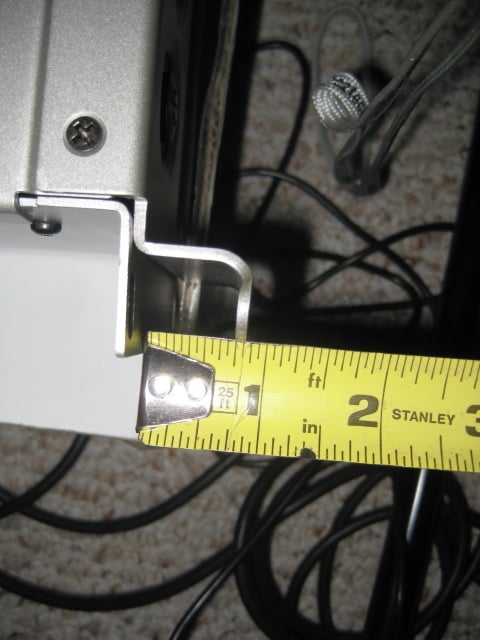
2. There are some seemingly unnecessary "handles" on the front of the unit that stick out nearly 1 full inch. The knobs on some of my other rack gear stick out that much so it shouldn't be an issue. But it's not like you're trying to remove a 40lbs boat anchor so I'm not sure why they're even there.
UPDATE 01/14/10
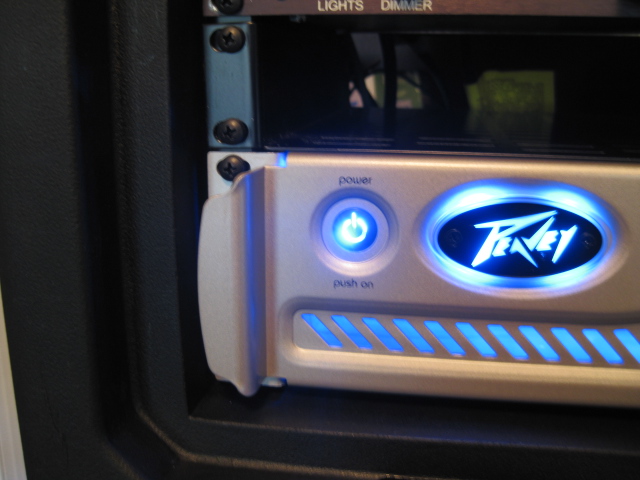
* Added some photos of the front bezel while receiving AC power, and while powered on
* Briefly tested unit, it works fine, no odd noises or artifacts, appears to have plenty of power
* LEDs are extremely bright, not unlike most current products (Genz Benz Shuttle) that use ultra bright LEDs these days
* Fan blows back-to-front like most power amps
* Fan runs constantly while on. At low bedroom volumes (trim to -30) it noticable, but not obnoxious. Low 50's in the dB range as measured with a digital dB meter. At practice volumes the fan quickly ramps up and is noticeably louder, though I'm guessing you'd probably only notice it if you stand near it and listen for it while playing. I'm testing this in a small 12x12 home office all by myself.
I personally installed an ultra-quiet aftermarket fan ($12) in my RMX as the fan was obnoxiously loud in my office even at bedroom volumes. That's a distant memory at this point, but I'd guess the Peavey fan is close to that loudness when you start to really push it.
UPDATE 01/18/10
Had the opportunity to use the amp a bit more today. It seems to have a ton of power, I can barely turn the gain trim to around -20 in my home office before my kids come in from outside and tell me to turn it down. It seems agressive and punchy, though I can't say it's any more so than the QSC RMX it's replacing. Again, I can't easily A-B them, and I'm sure the gain trim cannot be compared apples to apples due to difference in input sensitivity, etc. But the amp doesn't seem to suck.
The only gripes I currently have are that the gain knobs are extremely easy to turn, there's very little resistance, and no detents. If anyone has a Chunk Systems pedal you know how easily those knobs turn. These turn easier.
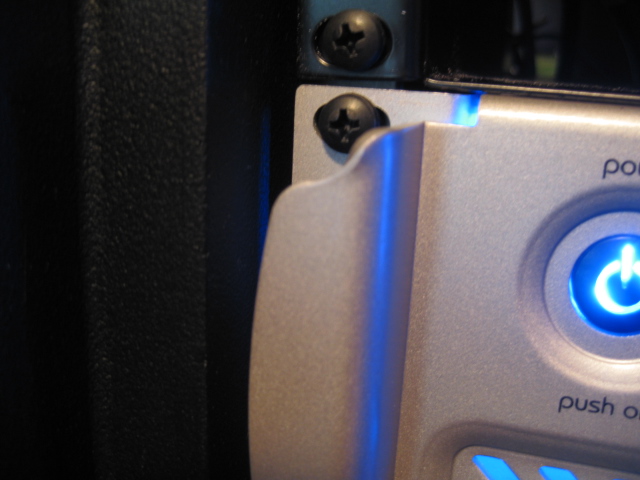
The bump-out "handles" on the front make it slightly difficult to install rack mount screws on a SKB Flyer Roto style case due to the way the rack rails are recessed into the molded area of the case. Wouldn't be an issue with a non-Roto case since the rails are flush with the front edge of the case on the other models.
Internal photos
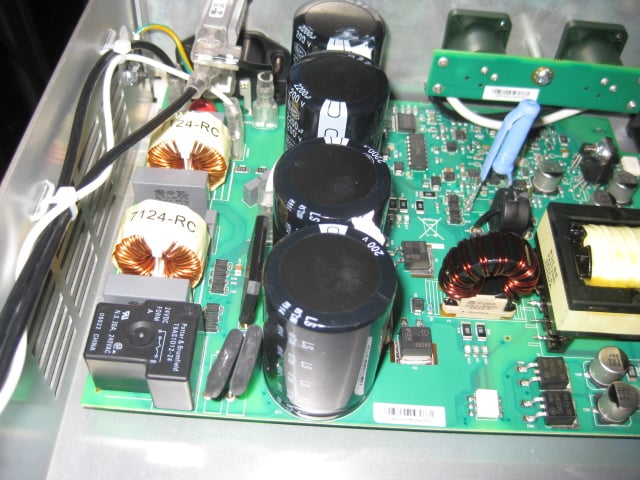
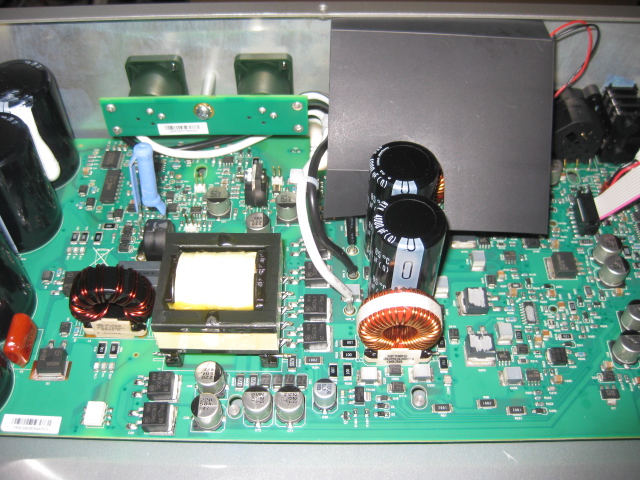
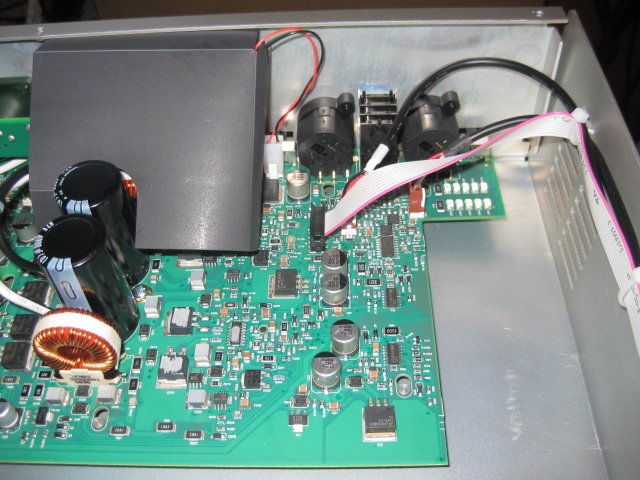
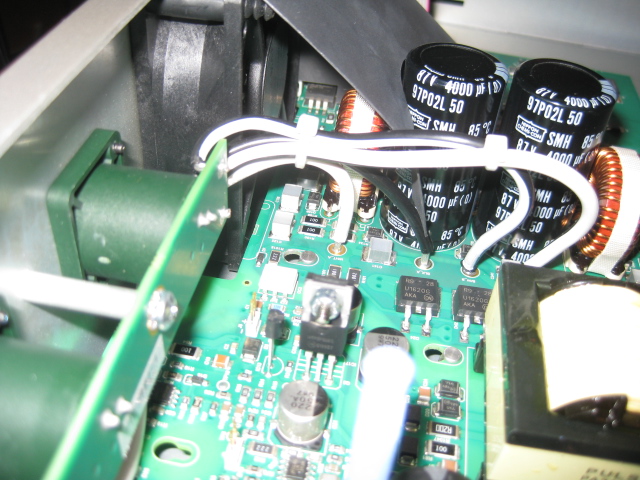

Powered off, but connected to AC. Fairly dim, but the power and logo are lit.

Power on, not receiving a signal which generates even more LED.

LED array in back right corner really lights up the box.
Showing how tight it is to get screws between a Roto Flyer rack and the bump-out handles on the IPR. Minor inconvenience, but I kept dropping the screws as I couldn't fit my man fingers down in there.
I haven't plugged it in yet or tested it, nor do I have any way to scientifically validated it's performance, NOR the space to totally open it up and drive some massive load for hours to see if it causes a nuclear meltdown.
So you'll have to simply enjoy the photos and note this guy REALLY is super light as advertised.
Two things to note:
1. There's a little piece of cardboard press fit near the exhaust fan, apparently to help focus the cooling on whatever the component is under the cardboard. I'm sure one of you will know what it is.
The cardboard is the only questionable engineering I happened to notice.2. There are some seemingly unnecessary "handles" on the front of the unit that stick out nearly 1 full inch. The knobs on some of my other rack gear stick out that much so it shouldn't be an issue. But it's not like you're trying to remove a 40lbs boat anchor so I'm not sure why they're even there.
UPDATE 01/14/10
* Added some photos of the front bezel while receiving AC power, and while powered on
* Briefly tested unit, it works fine, no odd noises or artifacts, appears to have plenty of power
* LEDs are extremely bright, not unlike most current products (Genz Benz Shuttle) that use ultra bright LEDs these days
* Fan blows back-to-front like most power amps
* Fan runs constantly while on. At low bedroom volumes (trim to -30) it noticable, but not obnoxious. Low 50's in the dB range as measured with a digital dB meter. At practice volumes the fan quickly ramps up and is noticeably louder, though I'm guessing you'd probably only notice it if you stand near it and listen for it while playing. I'm testing this in a small 12x12 home office all by myself.
I personally installed an ultra-quiet aftermarket fan ($12) in my RMX as the fan was obnoxiously loud in my office even at bedroom volumes. That's a distant memory at this point, but I'd guess the Peavey fan is close to that loudness when you start to really push it.
UPDATE 01/18/10
Had the opportunity to use the amp a bit more today. It seems to have a ton of power, I can barely turn the gain trim to around -20 in my home office before my kids come in from outside and tell me to turn it down. It seems agressive and punchy, though I can't say it's any more so than the QSC RMX it's replacing. Again, I can't easily A-B them, and I'm sure the gain trim cannot be compared apples to apples due to difference in input sensitivity, etc. But the amp doesn't seem to suck.
The only gripes I currently have are that the gain knobs are extremely easy to turn, there's very little resistance, and no detents. If anyone has a Chunk Systems pedal you know how easily those knobs turn. These turn easier.
The bump-out "handles" on the front make it slightly difficult to install rack mount screws on a SKB Flyer Roto style case due to the way the rack rails are recessed into the molded area of the case. Wouldn't be an issue with a non-Roto case since the rails are flush with the front edge of the case on the other models.
Internal photos
Powered off, but connected to AC. Fairly dim, but the power and logo are lit.
Power on, not receiving a signal which generates even more LED.
LED array in back right corner really lights up the box.
Showing how tight it is to get screws between a Roto Flyer rack and the bump-out handles on the IPR. Minor inconvenience, but I kept dropping the screws as I couldn't fit my man fingers down in there.