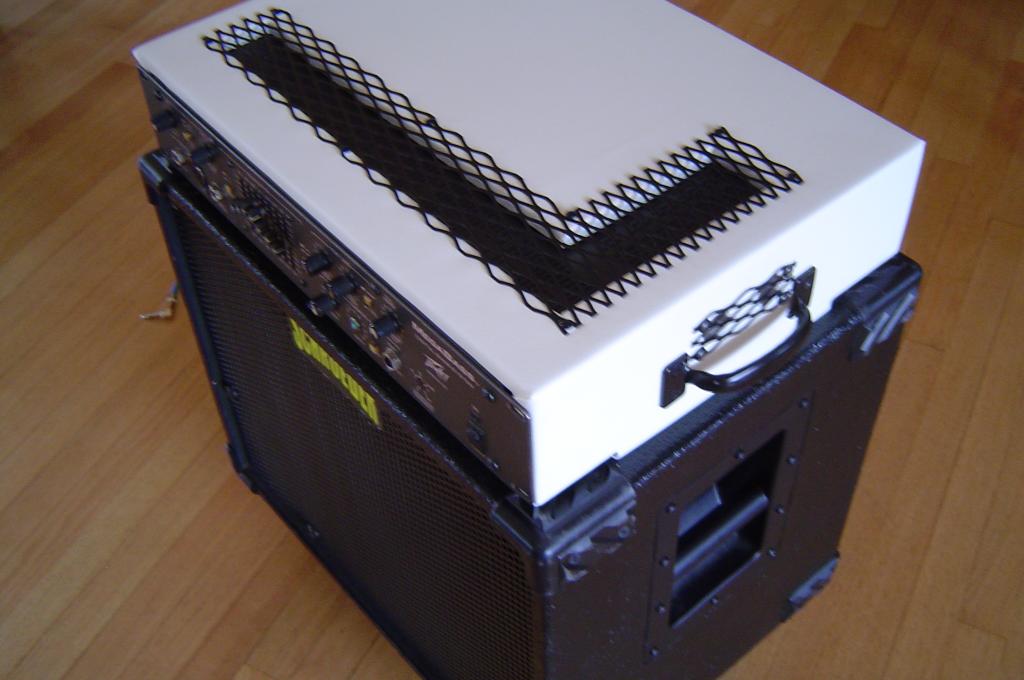
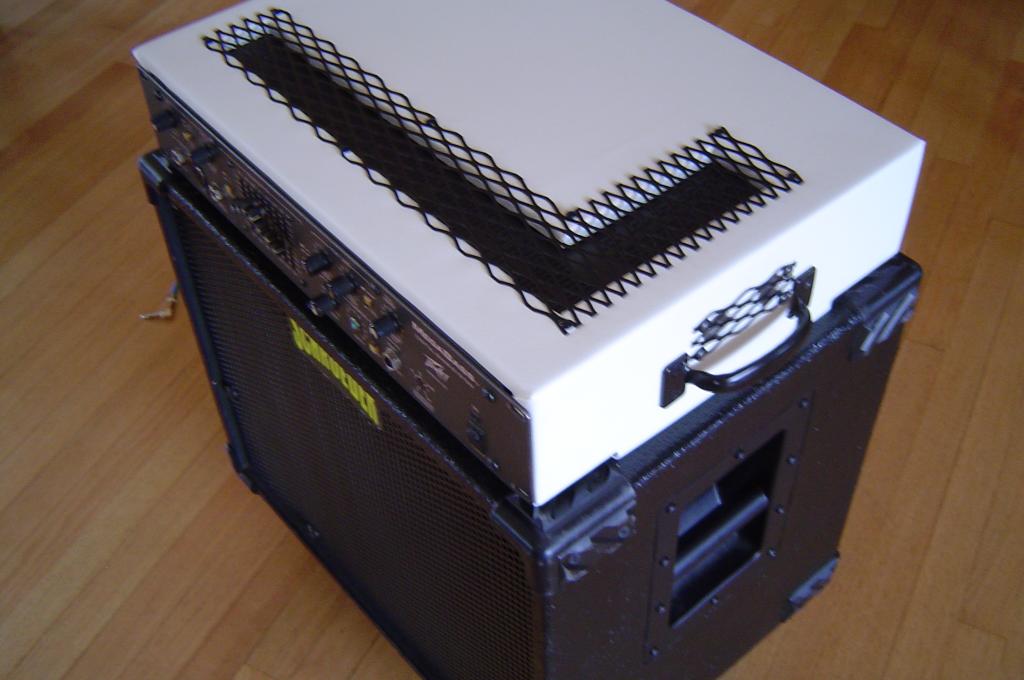
I had a great gig the other night with my MegaBass. So as I was daydreaming through the boring songs, I came up with 10 reasons to love this excellent head. Here's a snap of the rig I'm going to use next weekend: a matched pair of GK 115MBE cabs. These things have neo drivers and weigh 33lbs. Bought each one for a little over $150 used. Cheap, light and loud!
Link Removed
10 Reasons to Love the Peavey MegaBass
1) One of the first Class D bass amps
Peavey engineer Bobby Baldwin posted this earlier in the thread: he says it best.
"One of the reasons the Mega sounds like it does is that it uses a class d power amp that was designed from the ground up with audio quality as a top priority, because a lot of people were against class d back then claiming that the audio quality was inferior to traditional class AB amps. Peavey invested a lot in the technology and had something to prove."
2) Durable and available on used market for $150
Peavey made a TON of these in the late 80s and early 90s, and like other Peavey gear, the thing can take a beating. You could find them in most markets used for about 150 USD, which is a great price.
3) Flexible bi-amping options
Bi-amping is kind of old fashioned these days, but the Mega can be run bi-amp and full-range. The pair of 200w amps behaves rather like a 2-channel PA amp. The selectable crossover divides the signal into high and low (if you're wanting to go large with these signals, you can tap them from the back with XLR to go to larger amps or to the board).
4) Diversity of cabinets to use
Do you play through lots of different cabs? I can't resist a great deal on old bass cabs I find locally. Because each amp can drive down to 4 ohms, you can drive up to four 8 ohm cabinets with no problems. Also, this amp is safe to to use with cabs with low wattage ratings. Example: I have an SWR 2x10t that I really like. Newer amps with tons of power would fry that thing, but the Mega makes it sing. This is a great cab to use if you are going to be playing through someone else's cabs.
5) Made in USA
Every mega out there was made in Meridian, MS.
6) Still supported by the company
When you need to fix a Mega, the friendly folks at Peavey still know the amp well. Their techs are fantastic, they have all the parts and they'll fix it for you. I had mine completely re-built last year.
7) Transparent, clean tone
The Mega sounds like whatever you plug into the front of it... but louder.
8) Loud, Loud, Loud
The Mega's specs claim 200w per side at 4 ohms, but I have never run out of juice with this thing. This amp has a reputation for being super, super loud. Headroom city with this amp. I almost always leave the input pad depressed to take things down a notch.
9) 7-Band EQ
Remember that transparent tone from #7? Well, you can color that to taste with the 7-band EQ (and do more tone shaping with the punch and bright boost switches). I use the EQ on this amp to dial in the right tone for the cabs I am using.
10) Built-in chorus
This amp is a child of the 80s, so a good chorus makes sense. This one is nice and it has a footswitch jack as well as adjustable depth and rate controls. The cool feature is that the chorus does not affect the LOW amp in bi-amp mode. That's a feature that the modern chorus pedals are just now catching up to all these years later. If you keep the chorus off the low frequencies you can shimmer without losing your bottom end.
If you're new here and interested in the features of the MegaBass, check out my video demo:
--Steve







 ) atop the Trace rig:
![DSCN2788[1].JPG](https://www.talkbass.com/data/attachments/2891/2891745-c72cf3a8432b08cb40b9fefc64a216fc.jpg?hash=xyzzqEMrCM "DSCN2788[1].JPG")


