
Lug, I know how the splitting thing works.
It's about worse in humbucking mode.
Nick.
Have you downloaded the manual and read it.
About 90% of folks haven't read how it's controlled... not like a PBass.
T.

TalkBass has been independent since 1998. Add your voice.
Create a free account to reply to discussions, view embedded media, and browse with fewer display ads.
Join free Log in
Want zero display ads or expanded classifieds tools? Compare plans.
Lug, I know how the splitting thing works.
It's about worse in humbucking mode.
Nick.
Have you downloaded the manual and read it.
About 90% of folks haven't read how it's controlled... not like a PBass.
T.

Eilif, on the T60 forum, they confirmed that plenty of owners replaced the tone pots with push / push or push / pull pots to do the splitting, so that they can have bright sound with double coils

I have to admit I am very confused by the T-40 wiring. I have never seen any passive guitar with that many wires and solder.
The soldering was also relatively amateurish. I don't think whoever was doing this was properly trained in how to solder. Quite a few blobs of solder in there.
If you unsolder, I would be careful, as there is probably lead in that solder.
Almost if not all electrical solder from that (or any) era has lead in it.
While the ad says swamp ash; I would be surprised if it were anything but northern ash
I recall reading something that said the T-40's were made of Northern Ash and not swamp ash and that it is a heavier more dense wood.
This one should command top dollar. It's one of the rare 6 digit serial numbers, very early...though it doesn't have the tracing going around the truss rod cover. It also looks to have original strings noted by the light brown silk end windings. These were stock strings on the T-40. Wow. Wish I had the scratch for this.
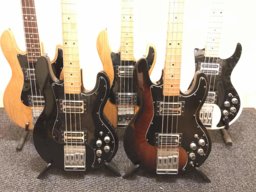
Ffe your #54. Very nice. How does it sound fretless.


