All of this is wonderful and helpful. The OP wanted specifics on settings to make better recordings, such as the exact compressor settings for bass.
The problem is that you have to use your ears more than your fingers while twiddling knobs or keyboard strokes. No standard set of settings will match every situation. So twiddle with your ears on high alert until you can hear differences. BUT to hear all that is there, you have to train your ears. And that takes time in focused effort. Much time!
I hade the good pleasure to have a pro recording engineer, Marty from Baltimore, help me doing voice overs. He worked me until I could hear what he was talking about. BTW - He trained the guys who did the original GIECO gecko commercials.
One thing I learned was the sonic difference between various cables - mic, guitar, headphone, console, etc. After a while I could hear the differences. I chose Neuman cables as my basic set. They were not cheap and I had to make them myself.
Maybe there is a quicker way. If you want to become a recording engineer take some courses at a local college near you.
If you want simple and fast, learn from Leland Sklar on YouTube. In one of his early posts he describes his equipment to make his postings. It is very simple - bass, amp, backing track to play with. His recordings are of his amp and his voice microphone into his video camera. I think he uses a SSL Interface into his computer DAW/video recorder or maybe it is just into his video recorder. He usually plays along to his own previous bass lines. You can do similar.
Get some backing tracks of the songs you want to showcase your abilities. Or get some minus the bass. Play along with them and record like he does. For full effect, do it like Leland - do it in both audio and video.
I think what Leland is doing is brilliant. He is showcasing that he still has it. He can duplicate any of his previous work with perfect playing and perfect tone. He is advertising himself to music directors and studios that he can still do it at top level. I am assuming that is what you want to do.
His process is to set up his equipment and record direct to his video system. Then he does whatever editing he needs in his video editor. If he needs to edit his sound, he may go to a DAW, but that sort of defeats the purpose of him showing he still has it on a first take basis. And yes, I have spotted some of his flubs (as my jaw was hanging open in awe), but he does not edit them out, else I never would have caught them.
There are numerous videos of people at home playing basslines to all kinds of songs. They are doing song-less-bass, or overlaying their bass on the original recordings to make their videos. Find some you like and copy them. Make your video recording very simple like Leland does. And I assume these youtubers are also looking for work as bassists, and these are their marketing videos.
If you want more control, get something like Band-In-A-Box and record with it, but it is only audio, not video.
For showcasing your ability on bass, I think Leland has it right. If you want to showcase your studio engineering, do that also, but that is not bass-player showcasing.
There are some threads here on Leland Sklar, so do a search and use them.
In summary, my tip is to do what the most recorded bass player in history is doing, keep it simple and play with exquisite technique, and do it in published videos. And if it helps, grow a beard




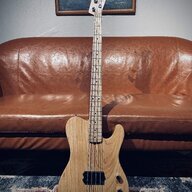


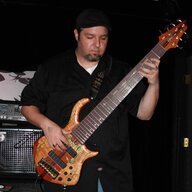

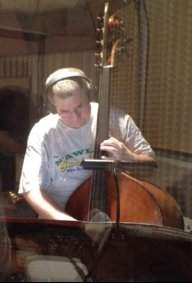
 . Which is to say that there are more/other important, and perhaps intangible, aspects to getting a good professional sounding track, IMO and IME, regardless of what equipment you’re using. I’ve recorded songs in big professional studios that never saw the light of day, and I’ve recorded stuff from my basement office that’s been played on the radio.
 ) through the song from start to finish, and then "comp" them, or selecting the best individual parts of each take, for the final track. After you've got your comp track, then you can focus on any last little punch-ins that need fixing.