• TalkBass has been independent since 1998. Add your voice.
    Create a free account to reply to discussions, view embedded media, and browse with fewer display ads.
    Join freeLog in
    Want zero display ads or expanded classifieds tools? Compare plans.

Post your Studio! <Talkbass Edition! v.01>

Hi again Otto,
you had interesting pieces of history in your studio !
I saw these 8 tracks Otari MX5050 in a local recording studio, mid of the 80's (I was young).

My preferred analog multitrack was the MCI JH24.

Coincidentally, if you go to the 3M section of historyofrecording.com, the first picture of an M23 is my picture of the little two track M23 I put together. I still have that wheeled console, you can see it above in this thread, having been adapted to hold my mixer and effects. That was a rack mount transport, not a console version, and the guy who bought it had his own rack for it. Being able to ship it in pieces did make it somewhat cheaper and easier to send cross country.

At this point, MCI is probably the best compromise of sound, tape handling and availability of parts and service among what's left of pro tape recorders. John Stephens died several years ago, though Brian Roth can still work on them and there is a guy named Keane in Calgary who is big into them still. John only made about 400 machines total, so machines and parts are very rare.

I don't know how many 3Ms were made, but the machines and parts are very rare outside of a very small handful of folks, mainly in California. Also, the Isoloop, while maintaining great tape to head contact, is a bit hard on the tape.

The only reason to consider Studer is the tape handling and control features, not sound, IMO.

Edit: Ampex is another more common option, but MCI copied the early electronics and has better transports. The other Ampex option would be the later ATR series which have great sound but are more complex than I care to deal with.

MCI can't quite compete on audio band scrape flutter, or generally on good, extended low end with 3M machines or Stephens, but you have Chris Mara in Nashville fixing up nice MCI machines and even holding classes on analog recording, and parts and service are to be had. Plus the MCI machines are easier on the tape than 3M. So if I wanted a big pro machine with a big fat class A audio sound now, I'd probably go MCI.

Otto
 
Last edited:
Here's my humble home studio.
LIVE ROOM 7ft x 16ft (Former Detached Brick Garage) sound proofed and fully acoustically treated
full.jpg


full.jpg

CONTROL ROOM 6ft x 8ft (Former Concrete block shed) Insulated and slightly acoustically treated
Link Removed
Resident Drum KIT
full.jpg


MAKESHIFT VOCAL BOOTH
full.jpg


A bit dated now but serves its purpose. Most of the equipment is budget low end stuff. I did all the conversion work myself.
My main issue is my live room and control room are separate and detached buildings, 14ft apart, so I have a camera and 2 way intercom system between the two and a multi core snake lead and a network cable buried under the lawn in a duct. It took some working out and extra headphone amps etc to make this setup work, but it works well. Its advantage is I hear Only what is being recorded from the control room.
My vocal booth is this side, in the corner of control room building. it is heavy curtained/PLY and Carpeted off from the control room side. I need to upgrade this bit realy I put it together on a budget years ago, and never updated it.
Its a bit of a squeeze to get 4 people in the live room with the kit. The control room is fit for no more than a couple of people at a time.

I added a bit more gear and have updated the 2 screens to 2x 25inch LG monitors now. Much more screen reel estate.
Ill update the pics to more recent ones soon.
My resident drum kit has halved in size recently due to hairline cracks in cymbals etc... I'm not replacing them anytime soon.

Hear whats coming out of the desk......
My new band in my studio.

Recording. Mac Or PC
• Alesis - adat 11D24 hard disc recorder
• Behringer - MX9000 24/48 8 bus mixer
• EMU - 1616 adat
• Behringer - Ultra ain pm-8 digital
• Cuebase - SX2.2
• Adobe Audition
• Logic

Monitoring:
• Yamaha - HS80m (active) speakers
• Alesis - MK2 (active)speakers
• Ederol - speakers
• Yamaha -AX396 amp
• Acoustic Solutions (passive) speakers
• Studio Sound (passive) Speakers
• Mackie - Big Knob

Outboard kit.
• DBX - 266XL dual compressor/gate
• DBX -215 graphic equalizer
• Samson -s-com dual compressor/gate
• Alesis - 3630 dual compressor/gate
• Lexicon - MX200 dual reverb effects processor
• Behringer- composer compressor/gate
• Behringer- Virtualizer pro effects processor
• Behringer - Tube Ultra Q
• Behringer - sonic exciter
• Behringer - multigate
• Behringer- Ultragraph
• Zoom - RFX1000 effects processor
• Samson -C-Valve
• Art - Tube MP Studio V3
• LD systems-DI box
• Behringer- Tube Ultragain

Microphones
• AKG-D112
• AKG -Perception 200 (X2)
• Audix - D6
• Beyer dynamic-O pus 53
• Blue - 8 ball
• Sennheiser - e904 Q(4)
• SE Electronics- SE 1 A (stereo Pair)
• SE Electronics - SE2200a
• Shure - SM 57 Q(2)
• Shure - SI.158
• T.Bone - SC600
• T. Bone - RB100 (ribbon)
• T.B one - E M 700 (stereo pair)
• Superlux - PRA 228A (X4)
• Superlux - PRA 218A
• Behringer - Super cordroid 1800s
• Phillips - Dynamic (intercom)

Hendnhones
• AKG -K141
• Beyer dynamic- DT250
• Roland - RH 50
• Senhhheiser - HD433
• Sony MDR-XB950 (x4)


Headphone Amps
• Phonic - Micro 2
• Behringer- HA400
 
Last edited:
Hi Otto,

just checked the picture of you (ex) M23. The M23 really looks like the great father of the family.

I don't know how many 3Ms were made, but the machines and parts are very rare outside of a very small handful of folks, mainly in California.


The M79 reputation was far from stellar around me, during the end of the 80's and the 90's.
And in a sense, this may be the unexpected side effect of a non-technical fact.

Here is the story I've been told :

During the 70's, 3M was very aggressive, commercially speaking, and offered very incentive leasing conditions. Maybe the M79 didn't sell well ?
You could buy a 24 tracks M79, and only begin to pay 1 year later.

As this artificially delayed an important part of the expenses, some wannabe studios owners jumped on this opportunity, and got a pair of M79, 24 + 2 tracks, seemingly "for free".
This may seem a wonderful story, but in fact these guys started their business with not enough money to grow and maintain the equipment.

The M79 was definitively not a "maintenance free" machine. As such, it was particularly exposed in lower end studios, particularly those wo started with inadequate funding.

This and the old, neglected machines that popped up on the used market, had a negative impact on the reputation of the M79.
Not to mention the infamous blue panel :D


P.S. Indeed, I know that great albums were produced using this machine.
 
The 3Ms all used the unusual Isoloop transport that they developed in the 1950s for instrumentation recorders. Technics later also sold machines with this style of transport. It solved the problem of audio scrape flutter by brute force and short unsupported tape path.

However, the front reversing idler was vulnerable to careless abuse, and it must work perfectly for the machine to function well. Moreover, any machine with an unconventional transport got a reputation as unreliable, hard to work on and requiring a lot of maintenance.

Stephens started out buying transports from 3M and installing his electronics. Eventually, 3M began to begrudge him his brisk sales, primarily for remote trucks and portable machines (his machines were by far the lightest and most compact) and so eventually he had to start making his own transports. Those, again, were brilliant and innovative. Translation: you probably needed him to come to fix it when it had problems.

All that said, in terms of sound, those were (and some still are) really superior machines.

Otto
 
Nice studio with a lot of potential, great amount of work here !
Ho long did it take to assemble all this (probably several years, step by step ?)

No less than 5 pedals at the drummer's left foot ! Is there a "User's Manual" for the drum kit ? :laugh:

Yes, three stages realy, but also a constant evolution.

At first it was just the shed (on my first post) with my mac g4, an audio interface and some bits and bobs from a studio I used to work at, It was basically a space for me to record bass parts and overlay some guitar. my currant vocal booth used to be my area to mic up cabs ect (it was my live room)haha.

Next I stole the garage and "treated" it with a load of egg boxes :***: , screens and some home brew bass traps, It was extremely dead sounding and almost eerie to work in. I also moved the desk into this bigger space. I recorded bands in the room for a couple of years, charging a small fee for the service.:whistle:
I found myself getting quite busy recording local artists and decided I needed more room and that the studio needed an upgrade if I wanted to charge worth while money.

Studio circa 2006 (sorry old phone camera pic)
UhTKO7i.jpg


That lead to me utilized both spaces, moving my desk back to the shed and the modernizing of the studio to what you see in my above post.

Believe it or not, I inherited a majority of that drum kit from the studio I used to work at when it closed down. I was quick to get it out before any minds were changed! I added a few bits and bobs, but manly just second hand stuff sold to me by bands, or traded kit for a demo recording etc...
 
Last edited:
Hi again Otto,

thanks for pointing to John Stephens machines.

Already an innovative guy at 16...

Stephens - Reel to Reel Tape Recorder Manufacturers - Museum of Magnetic Sound Recording

3Ms were unequivocally the best sounding machines available when they came out in 1966. They had the best performing transports. Studer and Ampex had nothing that could equal them for years to come. As I said, they had noticeably superior audio band scrape flutter performance, achieved by brute force (somewhat at the expense of wear on the tape.). Studer and Ampex came up with newer transports in the 1970s that could at least equal 3M on audio flutter performance and were also gentler on the tape.

John Stephens started by using 3M transports, the best available when he started, and he came up with several key innovations, including:

1) massive reduction of size, weight and cost by use of his proprietary electronics that used unbalanced audio, eliminating the size, weight and cost of I/O transformers. This also removed the filtering effect of those transformers, giving Stephens machines a very clean, animated sound.

2) once denied access to 3M transports, he came up with his own direct drive, capstan less transport, again saving cost and weight while also improving audio performance.

By way of contrast, I almost bought a 2" 16-track Stephens machine from a friend about 10 years ago. It was in a console, but the console was mostly empty space and the whole thing weighed just over 100 pounds. A 16-track 3M M-56 weighed over 300 pounds. I think some of the big MCI machines weighed more like 400, and an Ampex MM1200 weighed more like 600 pounds. No wonder Stephens sold so many machines for remote trucks.

If someone had a reason to design a new tape machine today, they would be smart to start from his design and then improve on it in terms of performance and reliability with updated servo technology. After all, you would want to design a machine with the minimum of parts and cost, and his designs left the others in the dust.

Otto
 
Nice job! Do you have details of your conversion from car hole to studio? As in what you did for floors and walls and power supply? I've got a similar deal - 1940's detached brick garage that does a great job of collecting junk, aside from holding two motorcycles, a bunch of bicycles, a snowblower, lawnmower and some tools.

Here's my humble home studio.
LIVE ROOM 7ft x 16ft (Former Detached Brick Garage) sound proofed and fully acoustically treated
full.jpg


full.jpg

CONTROL ROOM 6ft x 8ft (Former Concrete block shed) Insulated and slightly acoustically treated
Link Removed
Resident Drum KIT
full.jpg


MAKESHIFT VOCAL BOOTH
full.jpg


A bit dated now but serves its purpose. Most of the equipment is budget low end stuff. I did all the conversion work myself.
My main issue is my live room and control room are separate and detached buildings, 14ft apart, so I have a camera and 2 way intercom system between the two and a multi core snake lead and a network cable buried under the lawn in a duct. It took some working out and extra headphone amps etc to make this setup work, but it works well. Its advantage is I hear Only what is being recorded from the control room.
My vocal booth is this side, in the corner of control room building. it is heavy curtained/PLY and Carpeted off from the control room side. I need to upgrade this bit realy I put it together on a budget years ago, and never updated it.
Its a bit of a squeeze to get 4 people in the live room with the kit. The control room is fit for no more than a couple of people at a time.

I added a bit more gear and have updated the 2 screens to 2x 25inch LG monitors now. Much more screen reel estate.
Ill update the pics to more recent ones soon.
My resident drum kit has halved in size recently due to hairline cracks in cymbals etc... I'm not replacing them anytime soon.

Hear whats coming out of the desk......
My new band in my studio.

Recording. Mac Or PC
• Alesis - adat 11D24 hard disc recorder
• Behringer - MX9000 24/48 8 bus mixer
• EMU - 1616 adat
• Behringer - Ultra ain pm-8 digital
• Cuebase - SX2.2
• Adobe Audition
• Logic

Monitoring:
• Yamaha - HS80m (active) speakers
• Alesis - MK2 (active)speakers
• Ederol - speakers
• Yamaha -AX396 amp
• Acoustic Solutions (passive) speakers
• Studio Sound (passive) Speakers
• Mackie - Big Knob

Outboard kit.
• DBX - 266XL dual compressor/gate
• DBX -215 graphic equalizer
• Samson -s-com dual compressor/gate
• Alesis - 3630 dual compressor/gate
• Lexicon - MX200 dual reverb effects processor
• Behringer- composer compressor/gate
• Behringer- Virtualizer pro effects processor
• Behringer - Tube Ultra Q
• Behringer - sonic exciter
• Behringer - multigate
• Behringer- Ultragraph
• Zoom - RFX1000 effects processor
• Samson -C-Valve
• Art - Tube MP Studio V3
• LD systems-DI box
• Behringer- Tube Ultragain

Microphones
• AKG-D112
• AKG -Perception 200 (X2)
• Audix - D6
• Beyer dynamic-O pus 53
• Blue - 8 ball
• Sennheiser - e904 Q(4)
• SE Electronics- SE 1 A (stereo Pair)
• SE Electronics - SE2200a
• Shure - SM 57 Q(2)
• Shure - SI.158
• T.Bone - SC600
• T. Bone - RB100 (ribbon)
• T.B one - E M 700 (stereo pair)
• Superlux - PRA 228A (X4)
• Superlux - PRA 218A
• Behringer - Super cordroid 1800s
• Phillips - Dynamic (intercom)

Hendnhones
• AKG -K141
• Beyer dynamic- DT250
• Roland - RH 50
• Senhhheiser - HD433
• Sony MDR-XB950 (x4)


Headphone Amps
• Phonic - Micro 2
• Behringer- HA400
 
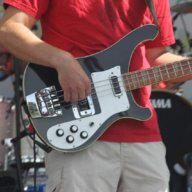
I picked up a Tascam DP-24SD last night. It works very well. Incredibly intuitive and the playback is crystal, which I could never get from a DAW. I recorded 7 tracks simultaneously with no latency, crashing, noise or clipping at all. I made a mixdown master and it produced a finished product, 4 hours after picking it up. Now I think I might read the manual. Color me impressed! FYI: I use vintage reproduction Rickenbackers, with Rick-O-Sound. I run the neck pickup into one pedalboard and the bridge pickup into the other pedalboard. I put effects on one pickup and blend the other pickup in clean. The other pedals are Korg bass pedals that are hooked into the MOOG Minitaur.
Into the rabbit hole I go!!

IMG_2101.jpg

IM (5).JPG

IM (11).JPG
 
Work has begun in earnest on the Big Hoss studio V 2.0, taking video of it not quite ready to publish yet, but here is the status so far...

#1. Guest room furnishings. Removed.
#2. IT Rack, moved aside.
#3. Structured wiring rack / mount board. Built, painted, ready to install. I am using a Monoprice 7u and a Monoprice 4u wall mount rack butted up against each other to provide 11u contiguous rack space. I have 3 cantilever shelves for non rackable gear.
#4. Acoustic foam sections. On order.
#5. Drywall patching / new holes to relocate things such as power, Coaxial cable, audio cables, ethernet etc... Done. Drywall mud is drying as I type.
#6. 4 drawer vertical filing cabinet. Built.
#7. 2 @ 2 drawer vertical filing cabinets to be merged into 1. In progress. Basically I am removing the bottom skirting of the cabinet that will be on top, and using thread inserts and flat head screws, mounting the upper to the lower. This newly combined into a 4 drawer filing cabinet will be placed in the closet.
#8. Mount cleat boards, and guitar hangers. Installed. Cleat boards will be pulled down, and painted, then walls painted, and finally, cleat boards mounted back up.
#9. New corner L desk, and hutch. Purchased, and waiting to be assembled.
#10. Cable management raceway. On order.

My next steps are..
#1. Finish moving amps, pedalboard, guitars, basses out of the room, empty it out.
#2. Finish drywall sanding, texturing.
#3. Paint walls, and trim. Ceiling is staying the color it is. The previous owner of the house had treated the ceiling with dots of glow in the dark paint that looks like stars in the dark. I don't want to get rid of that...
#4. Remount any trim, hangers etc... removed for painting.
#5. Mount up structured wiring mount board and racks, move all wiring, and related rack mounted gear, configure everything to work again IT wise...
#6. Roll in IT rack Computers, storage array etc... Configure it for full function, and install appropriate accoustic baffles (Movers blankets hung over the rack using grommets and small carabiners).
#7. Install Acoustic pads.
#8. Move in filing cabinet.
#9. Assemble L desk and hutch.
#10. Roll in new desk chair mat and chair.
#11. Set up mixer, mic arm, etc... on desk, configured for best work flow.
#12. Move amps, basses, guitars etc... back into studio.
#13. Drink a beer. Trying to turn 13 into good luck...
#14. Install raceway, and route all audio cabling to be out of the way.
#15. Empty out closet. Move in filing cabinet, storage cubes, and office / AV / Shipping supplies. (Wife's doll collection can stay in the old office closet)
#16. Test and enjoy new studio space....

What we don't have in place yet (long story, BIG problem with one of my in laws with stick fingers) is my wife's Yamaha Digital portable grand. I need to find another one to replace it with...

I am still using the XENYX 1202FX / UCA222 mixer / interface combo with good success, but I am not ultra fancy either...
 
  • Like
Reactions: mark beem