
That's actually not correct.The "current owner" looses. It was never his to begin with. I won't buy anything used without complete "chain of custody" documentation for this reason.

Enjoy the benefits of a premium membership!
Upgrade Account
-
TalkBass has been independent since 1998. Add your voice.
Create a free account to reply to discussions, view embedded media, and browse with fewer display ads.
Join free Log in
Want zero display ads or expanded classifieds tools? Compare plans.
You are using an out of date browser. It may not display this or other websites correctly.
You should upgrade or use an alternative browser.
You should upgrade or use an alternative browser.
Prakash John's bass returned.
- Thread starter Paulabass
- Start date
More options
Who Replied?

A great story. Such an amazing player!
It would be funny if he turned around and listed it for sale on CL

It would be funny if he turned around and listed it for sale on CL
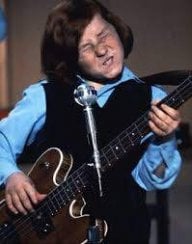
Reed had quite a few over the years. Herbie Flowers, Jack Bruce, Fernando Saunders, Rob Wasserman, Prakash John...no slouches! I don't recall him ever having players who were merely solid--he always went for unique players with their own voice.Prakash John made a huge impression on a lot of us that were playing bass in the early 70's. Lou Reed is another artist smart enough to have a smokin' bassist.


That's actually not correct.
Not giving legal advise here. If anyone has goods they know are stolen, contact a criminal law attorney.
Having said that, let's use California law as an example: "Under California law, it is illegal to receive, buy, sell, conceal, or withhold from its owner property that a person “knows” is stolen."
Unknowingly Receiving Stolen Property – (Is It A Crime?)
Having been employed by licensed attorneys as a certified paralegal (which makes me a layman), I'm not aware of any state where anyone gets to keep something that isn't their's. Once something is determined to be stolen property, and notwithstanding whether criminal charges are filed for receiving stolen property, the stolen property must be returned to its rightful owner, and the rightful owner has legal recourse if the item is not returned. The rightful owner does not have to pay for something that already belongs to them. That's how I've always understood it. But as stated, in the event the situation arises, seek legal assistance from a licensed attorney.
If you or anyone can show me where I'm wrong here, I'm always willing to learn.
Last edited:
Well, if you were hired as a certified paralegal, I guess I’m wrong and you know what you’re talking about...Not giving legal advise here. If anyone has goods they know are stolen, contact a criminal law attorney.
Having said that, let's use California law as an example: "Under California law, it is illegal to receive, buy, sell, conceal, or withhold from its owner property that a person “knows” is stolen."
Unknowingly Receiving Stolen Property – (Is It A Crime?)
Having been employed by licensed attorneys as a certified paralegal (which makes me a layman), I'm not aware of any state where anyone gets to keep something that isn't their's. Once something is determined to be stolen property, and notwithstanding whether criminal charges are filed for receiving stolen property, the stolen property must be returned to its rightful owner, and the rightful owner has legal recourse if the item is not returned. The rightful owner does not have to pay for something that already belongs to them. That's how I've always understood it. But as stated, in the event the situation arises, seek legal assistance from a licensed attorney.
If you or anyone can show me where I'm wrong here, I'm always willing to learn.



Never was a Lou Reed fan, but the first 3:30 of this video/song is my favorite live rock recording. Great bass and both excellent guitarists. Right up there with Live at Leeds. I guess I'm dating myself. 


I have studied hard on his basslines on rock and roll animal. Absolutely brilliant!
I knew it was a Rick cause their's a photo on the gate-fold of the album showing him playing it.
Didn't know it was stolen.... glad he's getting it back.
I knew it was a Rick cause their's a photo on the gate-fold of the album showing him playing it.
Didn't know it was stolen.... glad he's getting it back.
Well, if you were hired as a certified paralegal, I guess I’m wrong and you know what you’re talking about...
Jees Louise. Somebody asked the question, and I answered it. I am more than open to any examples you want to put up here that would substantiate your statement that I was incorrect in what I said. I don't personally care who is right or wrong. If you know something I don't know, share it with all of us. That's why we're here, isn't it?
Here's a case I worked on that's a good example of the point I was trying to make:
One guy (guy #1) loaned a Dual turntable to a "friend" (guy #2). This was back when we had "records", and Dual turntables were all the rage. Trouble started when guy #2 refused to return the turntable to guy #1. So guy #1 took it upon himself to break into guy #2's house, and attempt to take the turntable back by force. That didn't work because guy #2 was home at the time, and called the cops who arrested guy #1 and took him to jail! Even though guy #1 was the rightful owner of the turntable, he nevertheless did not have the right to attempt to recover his property by force.
So as you can see, this is where a lot of confusion arises. Guy #1 needed to take legal action to recover his property, since guy #2 refused to fulfill his obligation to return it voluntarily. Had guy #1 done that, the sheriff would have taken possession of the turntable on his behalf under a court order called a Writ of Replevin. Obviously, the ideal outcome of something like this is for property to be returned to its rightful owner voluntarily, and not under court order. It would have been the same if guy #2 had broken into guy #1's home and stolen the turntable.
In this case, guy #1 ran into trouble because he happened to be affiliated with a certain motorcycle club that strictly forbids calling the police, or using the services of the sheriff under any circumstances. To make matters worse, while guy #1 was waiting for his old lady to bail him out of jail, guy #2 smashed the turntable to bits with a hammer. It turned out that guy #2 felt that guy #1 owed him some money as a result of a disagreement over the serviceability of certain motorcycle parts they had traded with each other at an earlier date. I'm pretty sure guy #2 left town after that and moved to Bakersfield. For obvious reasons!
You may remember the case of O.J. Simpson attempting to recover property by force here in Las Vegas where the property was allegedly stolen from him. If O.J. was indeed the rightful owner of said property, whoever had possession of it would have been obligated to return it to him, and O.J. would have owed them nothing. Or, if that didn't work, provided O.J. was in fact the rightful owner, he could have used the power of the courts to recover his stolen property. Instead, he took the bait and the rest is history.
Last edited:

Wow, what a great story. Always like Prakash’s playing.
@Paulabass does he still play with his son around Toronto? Had heard he was a few years back but can’t find any info on where to see him.
@Paulabass does he still play with his son around Toronto? Had heard he was a few years back but can’t find any info on where to see him.

I thought Fernando was especially great.Reed had quite a few over the years. Herbie Flowers, Jack Bruce, Fernando Saunders, Rob Wasserman, Prakash John...no slouches! I don't recall him ever having players who were merely solid--he always went for unique players with their own voice.
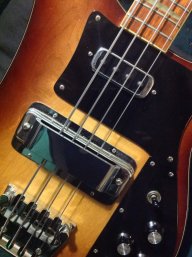
Interesting; I had my '78 Ric stolen in November of '89 and I've often wondered what I'd do if I happened upon it. In my case, my insurance company reimbursed me for it ($800), but that doesn't mean that whoever has it now is the rightful possessor. Most likely the strongest claim would be by Allstate, sad to say. But I still want it back.
Interesting; I had my '78 Ric stolen in November of '89 and I've often wondered what I'd do if I happened upon it. In my case, my insurance company reimbursed me for it ($800), but that doesn't mean that whoever has it now is the rightful possessor. Most likely the strongest claim would be by Allstate, sad to say. But I still want it back.
FWIW / IMHO: In the US, if someone purchases stolen property, they are not the rightful owner, and never will be. The rightful owner can lay claim to their property, if they find it. If whoever has the stolen property refuses to turn it over voluntarily to the rightful owner, the rightful owner can take legal action to recover their property.
Just for anyone who is interested regarding my message No. 26, there is a legal doctrine describing a “Bona Fide Purchaser For Value Without Notice” (BFP). It means as long as someone has no reason to believe something is stolen and they purchase it, they get to keep it even if the original owner shows up to claim it. So under such a doctrine, if the rightful owner wanted their stolen property back, they would have to buy it back from whomever has it. However, the BFP doctrine is not universal, and is solely dependent on the laws of the relevant jurisdiction, country, etc.
Yes, there are countries where the BFP doctrine or some form of it is in force. By and large, the US is not one of them. In almost all cases, the U.S. follows the rule that nemo dat quod non habet (no one gives what he does not have). In other words, no one can take good title from a thief. This rule is enshrined in Section 2403 of the California Uniform Commercial Code which provides in relevant part: “A purchaser of goods acquires all title which his transferor had or had power to transfer . . .”. Please refer to my post No. 26.
The basic common-law principle is that an individual cannot pass a better title than she has, and a buyer can acquire no better title than that of the seller. A thief does not have title in stolen goods, so a person who purchases from the thief does not acquire title. This, of course, strongly favors the original owner who will almost always prevail against whomever unwittingly purchases stolen property.
In Regent Alliance Ltd., for example, the Court of Appeal, in an opinion by Justice Frances Rothschild, noted that the tort of conversion is a strict liability tort and that questions of the defendant’s good faith, lack of knowledge, and motive are ordinarily immaterial (citing Burlesci v. Petersen, 68 Cal. App. 4th 1062, 1066 (1998). Therefore, bona fide purchasers of converted goods will ordinary be liable for conversion.
Liability for Stolen Goods: A Four Thousand Year Old and Still Unsolved Problem
In other words, in the US, if you purchase stolen property, you are not the rightful owner, and never will be.
There are certain limited exceptions to the rule such as with financial securities and US patents, for example. There may be others. If you find yourself in such a situation, be sure to seek guidance from a licensed attorney. I cannot and do not give legal advise. Get in touch with someone who does.

Sometimes good things just happen out of thin air.
I've always loved his playing!
I wish I still had a copy of Steve Hunter's solo album from the Nightmare era. The bass work on Eight Miles High is just killer with a tone to die for.
I had a dearly-departed bass come back into my life in similar circumstances about a decade ago. I'm glad his came home as well.
John

Yes. You can find tour dates on jordanjohnmusic.comWow, what a great story. Always like Prakash’s playing.
@Paulabass does he still play with his son around Toronto? Had heard he was a few years back but can’t find any info on where to see him.
IMHO the best RnB band out there doing it now.
Two jazz pick ups and a mudbucker, electronics by Neil Moser. If you mod something to make it more suitable for your own uses it's not butchery. It wasn't vintage when they started routing the body, it was a used bass.A heavily modified (butchered) 1968 4001.


