Let it be free! Letting it sit for a few days before fretting it isn't a bad idea anyway. If it's going to move or bow or something, you want to know about it. So you can correct it before you go farther.
If you really want to do the job right, tighten the truss rod partway and let it sit for a few days. Then check it and see what it does. Leaving the truss rod partly tight, true up the fingerboard surface, making it flat. Then put in the frets and level them, still keeping the truss rod partly tight.
That's the formula for a stable neck that can be finely adjusted: With the strings off and the truss rod maybe halfway tight, the fingerboard should be flat and the frets level.



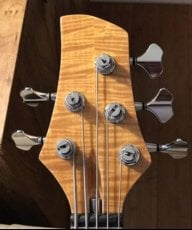
 . I had time on my hands this morning for taking care of business on this neck...

