• TalkBass has been independent since 1998. Add your voice.
    Create a free account to reply to discussions, view embedded media, and browse with fewer display ads.
    Join freeLog in
    Want zero display ads or expanded classifieds tools? Compare plans.

Preamps, Tone, and so much EQ

As a newer bassist I’m a little confused by all this. Because I have plenty of PA gear, I currently practice through a small mixer channel high Z input through a powered speaker. Sounds great to me.

My bass has passive and active pickups. The active pickups have a high, fixed mid, and low EQ adjustment. Passive, tone control only. I think this is pretty common.

Why do so many bassists use a preamp? With so much EQ control on it? There’s EQ on the bass, EQ on the preamp, EQ on the bass amp. So much redundant EQ….

The bigger question is this: How does one discover their tone? I think my bass sounds pretty good regardless of any setting changes I make.
 
Why do so many bassists use a preamp? With so much EQ control on it? There’s EQ on the bass, EQ on the preamp, EQ on the bass amp. So much redundant EQ….
Most preamps color your tone besides adding an EQ. Also, the EQ frequencies on a preamp are not necessarily the same as the preamp inside a bass. It's all a matter of how much control over your tone you want. Many preamps also have a DI out, which is a nice bonus.

The bigger question is this: How does one discover their tone? I think my bass sounds pretty good regardless of any setting changes I make.
By trying out different techniques, EQ settings, preamps, pedals, strings, pickups and the like. Eventually you'll find your 'tone' which is really nothing more or less than the way you want to sound.

If you, your band and your audience are happy with your tone, don't change anything.
 
EQ on a bass seems redundant, but it's not. Especially in live situations when you want to make changes to your sound from song to song. It's super easy to go from some mid heavy for a rock song, to something with a scooped sound for some slap by making the adjustments right on your instrument.

If you don't need all that control simply put it in passive mode and use the tone knob when you need it.

I tend to go for the simpler approach of using passives. The last bass I purchased had active electronics. I planned on tearing them out and throwing some passives in it, but it sounded so good with the actives that I opted to leave it alone and deal with replacing the batteries from time to time.

Use your ear, and decide what YOUR sound is. But keep in mind that in a band situation a sound that is scooped will likely get lost in the mix.
 
Like you, I started with a mixer as my first “rig.” In my case it was a powered Yamaha mixer from the early ’70s. To be honest, it sounded pretty good.

Over the years, “my tone” has changed a lot and continues to do so. With experience you’ll determine which extra things help you fine-tune the sound you’re after and which are unnecessary.

For now, just stick with what you have and learn all the ins and outs of what it can do for your sound. At the same time, you’ll also be learning what various changes in technique can do for your sound. In time it will become clear to you that what you really need to get by is pretty minimal. Everything else just comes down to little adjustments that make you happier with what you sound like.
 
  • Like
Reactions: Ritter667
Well obviously there's adjusting tone right there on the bass. I like to use amp EQ to set a good flat tone. Specially if I'm using a strange amp. Then I can use the frequencies I know and love to make reliable adjustments on the fly. If FOH can't keep up, they should be using the channel like I'm using the amp.

40 years ago Robbie Shakespeare pulled up to the bumper and proved there's no point slapping on a good reggae setup. And vice versa. If FOH can't work the low end to handle that, they got no chance of pulling the whole transformation out of a Vanilla bass sound when they don't even know the set.

Of course I can be a lot more accommodating when I know we're both working towards the same goals. Also worth noting most FOH situations are dealing with bands where the bass tone stays the same all night. Least they used to be.
 
I don’t use active preamps on my basses. I do tweak the passive tone knob and passive blend knob on my basses from song to song. My pedal preamp/DI tone knobs set my main tone for my in-ears and FOH. Then I may tweak my bass amp tone knobs slightly from flat to adjust to the stage acoustics and create a decent monitoring sound for the rest of the band. So I’ve got two sets of tone knobs, and both serve a different purpose. I’m the end, use the gear and amount of tone knobs you want!
 
As a newer bassist I’m a little confused by all this. Because I have plenty of PA gear, I currently practice through a small mixer channel high Z input through a powered speaker. Sounds great to me.

My bass has passive and active pickups. The active pickups have a high, fixed mid, and low EQ adjustment. Passive, tone control only. I think this is pretty common.

Why do so many bassists use a preamp? With so much EQ control on it? There’s EQ on the bass, EQ on the preamp, EQ on the bass amp. So much redundant EQ….

The bigger question is this: How does one discover their tone? I think my bass sounds pretty good regardless of any setting changes I make.

Because it's there. And some of us want more tonal option and or variation. When I first started playing, on a passive Squier P, I plugged straight into a crappy lil 8" Crate practice amp. I played and practiced. But it was so uninspiring before I even really knew what that meant. So playing and learning waned on me. Until I got a sansamp BDDI. When I first heard the difference that made, even through that same lil crappy Crate, I realized the power of added EQ/preamp voicing. My second bass was an Ibbey ATK300. That has an onboard active EQ and pickup switching. That added to the BDDI was even more killer to my ears.

Point is, sometimes tonal variation and voicing can be heavily inspiring to some players. Me included. If it helps/pushes me to play more, I use/utilize it.
 
How does one discover their tone?
This concept seems to come up frequently. It always makes me wonder, when was it decided that there is a singular goal, one dedicated solution to the quest for your tone. I’m always trying different sounds. Tone to match my mood, tone that goes with my outfit, tone that suits the song, tone to annoy the loud drunk talking guy trying to yell over your set. There is a cornucopia of musical noises out there, some yet to be discovered. Don’t limit yourself.

Regarding OP, the potential for confusion is real. Having multiple EQ possibilities between your bass and speaker can create problems more easily than solutions. While finding your way in a new endeavor, learning about your tools, simplifying your signal path can be very helpful. On the other hand, diving blindly into a chaotic mess, flailing wildly, can result in something magical.
 
This concept seems to come up frequently. It always makes me wonder, when was it decided that there is a singular goal, one dedicated solution to the quest for your tone. I’m always trying different sounds. Tone to match my mood, tone that goes with my outfit, tone that suits the song, tone to annoy the loud drunk talking guy trying to yell over your set. There is a cornucopia of musical noises out there, some yet to be discovered. Don’t limit yourself.

Regarding OP, the potential for confusion is real. Having multiple EQ possibilities between your bass and speaker can create problems more easily than solutions. While finding your way in a new endeavor, learning about your tools, simplifying your signal path can be very helpful. On the other hand, diving blindly into a chaotic mess, flailing wildly, can result in something magical.

You are not lying jb. My "ideal" tone is tweaked from where it was 8-10 years ago. On my journey, the more I learned about gear, the more my tonal "goals" changed. I used to be into the Darkglass sound. Heavily. Now, I'm not. Nothing wrong with that. It just is. My tastes changed in where I want to be today. For years I also tried emulating my fav bass tones from fav bands/bassists. Once I got over that period of time where I was trying to get all the same stuff they used or played on, it got much easier and less frustrating and also took me out of that box I was in. Being in a band for a while and playing with other musicians helps A LOT too. There are things that I was convinced if I got, I'd be set for life. Only to plug it in or stomp on it with a full band and find out it did not mesh or sit right or it totally disappeared or was too much for the music we were playing, in the setting and style we were playing it in at that time.

Some pieces of gear I've tried/got have simply worked for me and that's why I still have and use them years later. But yeah, it's all part of the journey. Hell, I've seen some guys switch gear from album to album/tour to tour/every year or two just because they get bored. Then I've seen some use and keep the same exact setup for 30 years. So subjective, this "tone thing" we always speak about. But oh how good it is when you come up on those moments in your playing journey.
 
Last edited:
Welcome to BASS TONE JOURNEY! Discovering what tones to use and when to use them is as challenging as figuring out how to get the tones you decide to use. I use a Zoom A3 or a Tech21 Bass Driver for my basic tone (I love the IR of URB on the A3 along with the onboard graphic eq for presets). Then I can use the bass preamp to adapt to the room or the situation. I usually leave my amp head controls flat unless there are serious problems with the room acoustics (e.g. playing in a gym). Sometimes I need to slap, sometimes finger funk, sometimes muted thump, sometimes a fake arco sound, sometimes a fake old P-bass sound -- if you're trying to fit into lots of situations well, you need to know your options and how to execute them. Listeners won't usually notice that you've done any of this right, but if you use the wrong tone for a song, astute listeners will notice.
 
I can give you 2 reasons; to emulate an amplifier that I don’t have but like, or to emulate playing an amp at design volume (loud) when I cannot play loud.
Tonal variety.

Especially with my guitars but also with bass, I use tube preamps to get that naturally overdriven or edge sound.


Ok, bonus 3rd reason, because of GAS.
 
As a newer bassist I’m a little confused by all this. Because I have plenty of PA gear, I currently practice through a small mixer channel high Z input through a powered speaker. Sounds great to me.

My bass has passive and active pickups. The active pickups have a high, fixed mid, and low EQ adjustment. Passive, tone control only. I think this is pretty common.

Why do so many bassists use a preamp? With so much EQ control on it? There’s EQ on the bass, EQ on the preamp, EQ on the bass amp. So much redundant EQ….

The bigger question is this: How does one discover their tone? I think my bass sounds pretty good regardless of any setting changes I make.
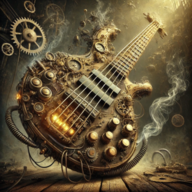
Why would there be so many tools in a tool box? So many socket sizes? You may hardly ever use a particular one, but if you don’t have that correct size at some point, you’re s.o.l., and may have to improvise in a way that’s unsatisfactory. Think of different rooms, stages, provided backline, PA systems, and guitarists’ amp tones as different sizes.
 
As a newer bassist I’m a little confused by all this. Because I have plenty of PA gear, I currently practice through a small mixer channel high Z input through a powered speaker. Sounds great to me.

My bass has passive and active pickups. The active pickups have a high, fixed mid, and low EQ adjustment. Passive, tone control only. I think this is pretty common.

Why do so many bassists use a preamp? With so much EQ control on it? There’s EQ on the bass, EQ on the preamp, EQ on the bass amp. So much redundant EQ….

The bigger question is this: How does one discover their tone? I think my bass sounds pretty good regardless of any setting changes I make.
I would say that when you get into preamps and pedals it's a lot like chasing amps and cabinets. Everything is relative. They all sound alike but at the same time they all have something different. It's a huge market with so many options and I think you discover your tone through listening to everyone else as well as listening to yourself. If you like what you hear now stick with it but if you get bored then here's where experimentation and discovery come in. I'd simply say that what you play on now all has a sound of its own so do your research to find what that is vs what is out there. Do they say that you have a warm vintage sounding Setup? Do they say tight sounding? Do they say hifi? All that and more play into your sound whether you know what it is or not. I've spent a lot time figuring out what all of it means and I'm still learning. I thought I wanted to sound 1 way but after getting everything you'd need to get that sound realized that I wanted to have something in between. A little bit of warmth but definition, clarity, smoothness around the edges but can still get edgy and aggressive if I want. My preamps with my strings and how I set up the bass and play are all factors. I think self awareness is good so you know what gear to gravitate towards when the time comes but also don't be afraid to adapt and grow in your tone. It's a constantly changing thing so just keep playing and enjoying your music.
 
  • Like
Reactions: gregmon79