
Enjoy the benefits of a premium membership!
Upgrade Account
-
TalkBass has been independent since 1998. Add your voice.
Create a free account to reply to discussions, view embedded media, and browse with fewer display ads.
Join free Log in
Want zero display ads or expanded classifieds tools? Compare plans.
You are using an out of date browser. It may not display this or other websites correctly.
You should upgrade or use an alternative browser.
You should upgrade or use an alternative browser.
Pups - what's your favorite flavor?
- Thread starter Al Krow
- Start date
More options
Who Replied?

Other.
I'll never settle on only one bass but my current most frequently used are, in no particular order...
Hofner Ignition Club Bass I've converted to V/V/T
Silvertone Model 1444
Mustang P/J
DIY made using very light dual humbucker Telecaster guitar body, Squier Jaguar SS neck and Amazon $15 rail humbucking pickups.
SCPB converted to shortscale.
No real pickup pattern there.
I'll never settle on only one bass but my current most frequently used are, in no particular order...
Hofner Ignition Club Bass I've converted to V/V/T
Silvertone Model 1444
Mustang P/J
DIY made using very light dual humbucker Telecaster guitar body, Squier Jaguar SS neck and Amazon $15 rail humbucking pickups.
SCPB converted to shortscale.
No real pickup pattern there.
Last edited:

That's how I feel also. I think any bass with 2 of the same pickups demonstrates this quite well.but IMO placement is probably more critical to the sound than the pup itself.
I have that in my $115 OLP with a $20 Wilkinson P added in. I have over a dozen basses at the moment and this setup always kills it. I just love this setup, passive too. 1 volume, 1 blend, nothing else. Bridge in parallel. Coil choices on the MM would be nice but I could go back and do every gig and recording from my entire life with this setup without complaining.Right now, I would do a P/MM. The MM right in it's sweet spot, the P smooshed right up on it.
Sometimes I see P MM set up with the MM closer to the bridge than the usual Music Man spot and it doesn't work as well for me.
If this was my only bass I would occasionally have a fling with a Jazz Bass. No one has to know....
Interesting... Could you explain this please?P...but reversed, for a more even tone and tighter lows.




Yeah but what's the difference between the two? What happens if you reverse the pickups?
The original way the E & A are closer to the neck and the D & G closer to the bridge. So the low strings are a bit deeper toned and the high strings a bit brighter giving a wide range of tone difference. Reversing it brightens the bass strings and deepens the high strings evening out the notes across the strings. Subtle, subject to taste. I prefer the original probably because I've listened to it that way all my life.
Thanks!!The original way the E & A are closer to the neck and the D & G closer to the bridge. So the low strings are a bit deeper toned and the high strings a bit brighter giving a wide range of tone difference. Reversing it brightens the bass strings and deepens the high strings evening out the notes across the strings. Subtle, subject to taste. I prefer the original probably because I've listened to it that way all my life.

Then the original probably fits my needs better


I voted P/J but I actually prefer a P and a Dual Coil. Specifically a Reversed P and a EMG DC
Sounds good to me!
Does your current bass have that reverse P and dual coil in? If so, which make / model?

- Apr 18, 2008
- 16,024
- 1
- 31,755
- Disclosures
- I'm highly opinionated and extremely self-assured
P vs reverse-P?
Be really interested to hear from any folk who have had basses both P and reverse-P what your experiences are and which you ended up going for?
On a double P, the reversing makes a huge difference on the bridge pickup. Not so much at the neck, but I like symmetry, so...
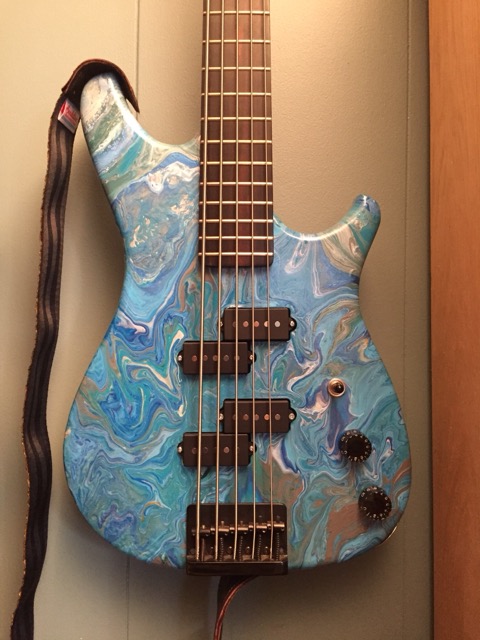
As for the original question, you left out a whole bunch of choices, but my current fave is three narrow-aperture humbuckers.
Invalid Link Removed

SCPB (single coil precision bass pickup)
[Invalid or Expired Link Removed]
[Invalid or Expired Link Removed]
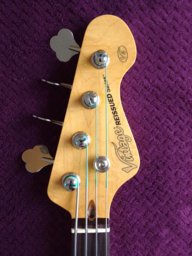
On a double P, the reversing makes a huge difference on the bridge pickup. Not so much at the neck, but I like symmetry, so...
As for the original question, you left out a whole bunch of choices, but my current fave is three narrow-aperture humbuckers.
Thanks for the first point - what do you find is the key difference that the reversing delivers?
Yes it's interesting the US forum bass players seem to be going for a whole wider choice of pups than back in the UK (I've put the same poll for us on the UK sister thread), probably cos there are a lot more folk active on the US forum.
So if we re-ran this poll down the line, and bearing in mind that the bog standard J bass has only had 3 votes so far, which is a little surprising(!), what would be the additional pup options you would suggest including that are pretty commonly used?


