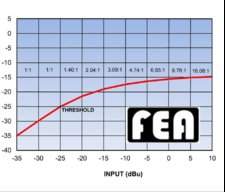
Almost. (Perhaps we are splitting hairs here...)
Different scales for power and field level...
So to be pedantic, it makes a difference if we're talking power or Volts...
Yep, power is a different equation. Thanks... I'll correct my post.
-Frank

TalkBass has been independent since 1998. Add your voice.
Create a free account to reply to discussions, view embedded media, and browse with fewer display ads.
Join free Log in
Want zero display ads or expanded classifieds tools? Compare plans.
Almost. (Perhaps we are splitting hairs here...)
Different scales for power and field level...
So to be pedantic, it makes a difference if we're talking power or Volts...

It's a shame that the original Mythbusters are no longer on the air to test this for sureBut, a true output to input measurement with a dB meter would be accurate, no matter what type of ratio or threshold settings were used.


It's *possible* that aliens or terrorists abducted the owner and staff and are randomly answering phone calls.
It's a shame that the original Mythbusters are no longer on the air to test this for sure

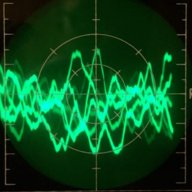
Most pedal compressors use circuits that vary their ratio depending on the input signal strength. It's also relative to where we're momentarily at in the attack-release cycle. For those, when a ratio is published, it's often an averaged number based on a set test tone level. Using steady test tones can give stable results, but they don't reflect the time-based wide peak swings of our instrument. Because the ratio is such a moving target, most of those manufacturers (including me) don't bother to nail down that spec.
It gets further complicated by the fact that those circuits vary their threshold with an input gain control, and the threshold is soft, so that some compression is being applied well before the maximum ratio is reached. So "what is the threshold?" well it may start at a certain dBu level, but you may not hear it working until the signal is well over the threshold. And "what is the ratio?" well it depends on where we're at re the threshold, which changes constantly during play.
I have the equipment to test for the range of threshold response and the range of ratios, but there's not much reward for doing that work. Like Frank said, it can cause as much harm as good, because customers often make up their minds (and declare an opinion) based on specs alone. But I can tell you that for all the pedals that claim e.g. 20:1 or infinity:1 ratio, many are not effective as peak limiters, due to slow transient response. And a pedal with a low ratio can still be a moderately effective limiter if the attack is fast and the threshold is low (input is high). So a ratio number would not be as useful to me as knowing the general behavior of the specific comp, and adjusting it to the specific context.
 j/k
j/k
Would be a lot more interesting if you could specify the company and pedal. I'm assuming you didn't sign any sort of NDA.



Precisely relative!Gain reduction in dB is already a relative measurement.

@bongomania , @boomertech
Somewhat OT, but tangentially related:
How do you in general communicate to the consumer how and possibly why your compressors (or other pedals) do what they do? @scubaduba 's work provides an incredible resource in this regard. And your commenting on this forum is invaluable, too. Sound seems such an ineffable thing. Is it just buy and try?
What if it's something like a Dyna Comp? A 2 knob comp that has output and sensitivity knobs? How do you measure threshold and ratio on that?

I knew if anyone would have the answer, you would, Frank! Well maybe this maker isn't as good as youYou put it on the bench with test equipment hooked to it. I did the same with the Diamond comp a while back and posted the results on TB.
-Frank

I knew if anyone would have the answer, you would, Frank! Well maybe this maker isn't as good as you
My point is measuring criteria can vary, measuring devices have variances but the real differences are the input material tested will give varying results and manufacturers do wanky stuff when nobody is watching to load their results, I know as a witness. A pure sine 1K +3db will hit one way, switch it to square another, but a plucked guitar, strummed guitar chord, plucked bass string, slapped bass string or playback music will all hit the compressor differently because of the signal content even with the same db level.But, a true output to input measurement with a dB meter would be accurate, no matter what type of ratio or threshold settings were used.
-Frank

My point is measuring criteria can vary, measuring devices have variances but the real differences are the input material tested will give varying results and manufacturers do wanky stuff when nobody is watching to load their results, I know as a witness. A pure sine 1K +3db will hit one way, switch it to square another, but a plucked guitar, strummed guitar chord, plucked bass string, slapped bass string or playback music will all hit the compressor differently because of the signal content even with the same db level.