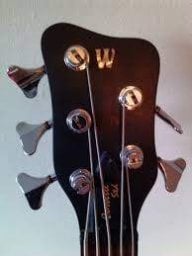
Getting ready to tint a neck with maple fretboard with amber lacquer. Any tips for spraying the fretboard? Was planning on spraying then buffing the frets with 0000 steel wool to remove any lacquer residue. If that's not a good idea, please advise.

TalkBass has been independent since 1998. Add your voice.
Create a free account to reply to discussions, view embedded media, and browse with fewer display ads.
Join free Log in
Want zero display ads or expanded classifieds tools? Compare plans.

The neck will be removed. I do have Scotchbrite and micromesh as well. What do you not like about steel wool?My advice - throw your steel wool as far away from your guitars as possible.
Use Scotchbrite pads instead. Or MicroMesh.
Little scratchy metal hairs that get everywhereThe neck will be removed. I do have Scotchbrite and micromesh as well. What do you not like about steel wool?
LITTLE SCRATCHY METAL HAIRS THAT GET EVERYWHERELittle scratchy metal hairs that get everywhere
Gotta test on some scrap maple. Might be regular oil based poly would amber enough.Anyone know what the best color stain or spray lacquer would be to match the face of this headstock to the rest? Neck is a new model Fender Road Worn. I have a can of Colortone vintage amber lacquer on hand, but I'm afraid it may be too "amber" to match.
View attachment 7132189View attachment 7132190

I'm no expert, but I'd say the first coat wasn't really dry all the way through. For me, it's 4-5 really light coats applied maybe 1 minute apart. If that's insufficient upon further inspection, then I let it hang 2-3X times as long as the label says before I respray.Advice needed: I’m currently spraying a body with Rust-Oleum 2X color. Had a couple runs, so I dried overnight and lightly sanded them out today.
Went to re-spray to cover those spots today, and this immediately happened. Current temp is 60F. What’s going on here, and how do I keep it from happening?
What’s strange is that it only crackled where I sanded. I touched up a couple other areas that weren’t sanded, and no problem.I'm no expert, but I'd say the first coat wasn't really dry all the way through. For me, it's 4-5 really light coats applied maybe 1 minute apart. If that's insufficient upon further inspection, then I let it hang 2-3X times as long as the label says before I respray.
Hmm, interesting. Maybe you sanded off the dry outer layer?What’s strange is that it only crackled where I sanded. I touched up a couple other areas that weren’t sanded, and no problem.

I'm working on two bodies right now. It's been a learning process for sure. Both are ash bodies. I sandblasted them. Painted them black with acrylic paint. Sanded the top. Then stained them blue. The Strat has a pinch of black dye in it b/c the owner of that wanted it a bit darker than the bass (mine).
Cleared with enamel then a top coat of satin on the Strat and matte on the P bass. The Strat body was delivered to the owner last week and he's begun assembly. Ignore the upside down jack. That's been fixed. LOL. I don't have any parts for mine yet but I'm going with black PG and black hardware.
So the only rattle can portion of this was the clear coat but still felt like this was worthy of posting here.
View attachment 7037060
View attachment 7037061
View attachment 7037062
View attachment 7037063
View attachment 7037064
View attachment 7037065
View attachment 7037066
View attachment 7037067
View attachment 7037068
It appears so. I let it dry until today, sanded the problem areas, then resprayed. No issues. This paint needs at least 48 hours dry time before sanding and retouching.Hmm, interesting. Maybe you sanded off the dry outer layer?