
Enjoy the benefits of a premium membership!
Upgrade Account
-
TalkBass has been independent since 1998. Add your voice.
Create a free account to reply to discussions, view embedded media, and browse with fewer display ads.
Join free Log in
Want zero display ads or expanded classifieds tools? Compare plans.
You are using an out of date browser. It may not display this or other websites correctly.
You should upgrade or use an alternative browser.
You should upgrade or use an alternative browser.
More options
Who Replied?
All of the orchestral auditions I had required sight reading . I sometimes don't know how I pulled it off . I was never very good at . I think I passed the auditions with the strength of my other attributes . Or maybe it was my glowing personality .^^ Only a little off the subject- Quite often at Univ. entrance auditions, they will get you to play your selection backwards to prove you did not memorize it.
I can't read scores but I do write my own lead sheets with rhythmical annotations. If I get hired as a sub and I don't know the material, I will learn the song by ear and write it down to remember. I will not even try to memorize lines and arrangements for 20 songs for a single show. If it becomes an ongoing thing, I will lose the lead sheets after 2 or 3 shows.

Ear and instrument first.
Paper and instrument if I can't get the passing notes.
I can't read fast enough to sight read.
The kind of music I play does not permit sight reading or notes during performance. When I record bass I make notes, but they are mostly to aid my memory if I find that I am repeating errors. When I record vocals I make notes on every line, draw pictures, etc. to remember inflections.
Paper and instrument if I can't get the passing notes.
I can't read fast enough to sight read.
The kind of music I play does not permit sight reading or notes during performance. When I record bass I make notes, but they are mostly to aid my memory if I find that I am repeating errors. When I record vocals I make notes on every line, draw pictures, etc. to remember inflections.

For me It totally depends on the type of music . If it’s pop or rock (music that’s mainly a few parts; verse, chorus, bridge, and so on repeated over and over I prefer learning songs by ear. If it’s music that’s NOT repetitive I prefer sheet music.I've noticed in the last many years that musicians aren't reading as much as they used to . When I was playing mostly horns (in the early 70s) it was much easier to learn a song with the music written out for you . Of course , then , I was doing stuff that required playing as written . But , since I've gone to bass full time , it seems to be a mostly ear thing . Now , it's nice to have a score handy for reference . But , I think you get better feel when you play by ear . It leaves you open to your own interpretations . And having a good drummer to work with makes it even better .

buldog5151bass
Kibble, milkbones, and P Basses. And redheads.
Either way for me. Notes on a page will give instantaneous results, as I can accurately sight read a gig on the fly if needed.
Wow, never heard of that for me or any of my fellow university friends. But in my experience there’s always a sight reading component as well as a prepared piece (which most places don’t care if you memorize or not, since it’s “prepared”) and scales for university auditions. Sight-reading to examine a persons sight-reading skills seems like a more real-world and accurate evaluation rather than reading a selection backwards. Try reading these words backwards? ?sdrawkcab sdrow eseht gnidaer yrT Does doing it effectively prove your ability or show your skill level to read the English language effectively? I’d be willing to bet some of the best sight readers in the world might struggle to read a piece backwards accurately, when a mediocre or beginner sight reader might do it better since they haven’t spent years learning how to do it forwards yet.
^^ Only a little off the subject- Quite often at Univ. entrance auditions, they will get you to play your selection backwards to prove you did not memorize it.
Wow, never heard of that for me or any of my fellow university friends. But in my experience there’s always a sight reading component as well as a prepared piece (which most places don’t care if you memorize or not, since it’s “prepared”) and scales for university auditions. Sight-reading to examine a persons sight-reading skills seems like a more real-world and accurate evaluation rather than reading a selection backwards. Try reading these words backwards? ?sdrawkcab sdrow eseht gnidaer yrT Does doing it effectively prove your ability or show your skill level to read the English language effectively? I’d be willing to bet some of the best sight readers in the world might struggle to read a piece backwards accurately, when a mediocre or beginner sight reader might do it better since they haven’t spent years learning how to do it forwards yet.

Reading works when everyone can read, but it can still be a train wreck like band class in the 8th grade for months trying to nail down the Theme Song to the Muppet Show.
Ear is fine bc jazz trio we were trying to get off mechanically reproducing Fur Elise.
Regardless practice a lot with very high standards of minimum acceptable being your bar to pass/fail.
My preference as an adult is not having a band mate get drunk or high and completely train wreck bc they haven't spent their own practice time in make the set muscle memory.
Ear is fine bc jazz trio we were trying to get off mechanically reproducing Fur Elise.
Regardless practice a lot with very high standards of minimum acceptable being your bar to pass/fail.
My preference as an adult is not having a band mate get drunk or high and completely train wreck bc they haven't spent their own practice time in make the set muscle memory.

For me, it's whatever it takes. Written music can reach a level of complexity that can't be achieved in any other way, which makes it such a blast to play in a big-band, orchestra, string quartet, etc. And truth be told, you're never completely reliant on the printed notes. Ear music can reach its own level of interaction and intensity.
Playing by ear isn't a panacea. I've observed older people trying to learn things like folk music, fiddling, etc. The biggest hurdle for them is that you're expected to learn songs by ear, and sheet music is frowned upon. But when beginners are simultaneously struggling with technique, intonation, etc., having to internalize a tune under pressure results in cognitive overload. I've seen people get discouraged to the point where they give up. If I have a chance to talk with them, I always strongly suggest that they stay away from the jam sessions, and get some sheet music to learn from. They will eventually have to cope with the jam session atmosphere, but not right away.
Playing by ear isn't a panacea. I've observed older people trying to learn things like folk music, fiddling, etc. The biggest hurdle for them is that you're expected to learn songs by ear, and sheet music is frowned upon. But when beginners are simultaneously struggling with technique, intonation, etc., having to internalize a tune under pressure results in cognitive overload. I've seen people get discouraged to the point where they give up. If I have a chance to talk with them, I always strongly suggest that they stay away from the jam sessions, and get some sheet music to learn from. They will eventually have to cope with the jam session atmosphere, but not right away.

By ear for me, can’t read a lick of music, sometimes tab but I find that most of the tabs you find are wrong...
I've noticed in the last many years that musicians aren't reading as much as they used to . When I was playing mostly horns (in the early 70s) it was much easier to learn a song with the music written out for you . Of course , then , I was doing stuff that required playing as written . But , since I've gone to bass full time , it seems to be a mostly ear thing . Now , it's nice to have a score handy for reference . But , I think you get better feel when you play by ear . It leaves you open to your own interpretations . And having a good drummer to work with makes it even better .
had a longer post typed out, but deleted it. bottom line is I sadly don't have the time to figure out things by ear for the most part, so most of the time I'll just look for bass transcriptions of songs or go to youtube video lessons for them.
bolded..on the feel part, I've found that works both ways..Some tunes I'll listen to and the bass part just doesn't click, than I'll look at a transcription of it, see the note and rythym breakdown and be like "ohhhhhhh thats whats going on"
By ear for me, can’t read a lick of music, sometimes tab but I find that most of the tabs you find are wrong...
its really mind boggling how incorrect many tabs are...
Both I tend to always be listening and having a chart, of any sort, makes the learning faster and easier.

buldog5151bass
Kibble, milkbones, and P Basses. And redheads.
Is might blow some minds to know that the best sight readers are reading by ear.
Not sure I get you. Back when I was a good sight reader, I could walk in and lay down a part without anything but a tempo counted off.
Ear and tabs. I can do notation if I have to.I've noticed in the last many years that musicians aren't reading as much as they used to . When I was playing mostly horns (in the early 70s) it was much easier to learn a song with the music written out for you . Of course , then , I was doing stuff that required playing as written . But , since I've gone to bass full time , it seems to be a mostly ear thing . Now , it's nice to have a score handy for reference . But , I think you get better feel when you play by ear . It leaves you open to your own interpretations . And having a good drummer to work with makes it even better .

Back when I first started in music I learned to read sheet music... (Violin and cello) Then when I switched to guitar and bass I played by ear... Now I mostly play with neither...
Upon seeing the part, you got the vibe of what was going on and your experience kicks in with how to play the written notes.Not sure I get you. Back when I was a good sight reader, I could walk in and lay down a part without anything but a tempo counted off.
Reading is not a mechanical exercise, experience in reading notation is only a part of sight reading. You hear what you are seeing.
I sight read very well on multiple instruments and each one builds on what I can do with the other instruments - both in how I approach my part and how I interact with the other parts happening around me.
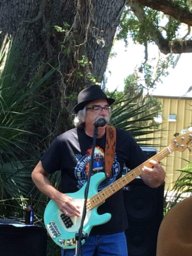
I can’t read music but after playing bass for over 40 years I have an opinion on this. Being able to walk in and play a song you’ve never heard correctly would be great. On the other hand to walk into a band match the key without being told and get a bass line that while not perfect it is in key in time and fits the song is a talent as well. My dad played the Grand Ole Opry in the 50’s. He didn’t teach me how to play but how to learn. Best lesson you could ever getI've noticed in the last many years that musicians aren't reading as much as they used to . When I was playing mostly horns (in the early 70s) it was much easier to learn a song with the music written out for you . Of course , then , I was doing stuff that required playing as written . But , since I've gone to bass full time , it seems to be a mostly ear thing . Now , it's nice to have a score handy for reference . But , I think you get better feel when you play by ear . It leaves you open to your own interpretations . And having a good drummer to work with makes it even better .


