

Enjoy the benefits of a premium membership!
Upgrade Account
-
TalkBass has been independent since 1998. Add your voice.
Create a free account to reply to discussions, view embedded media, and browse with fewer display ads.
Join free Log in
Want zero display ads or expanded classifieds tools? Compare plans.
You are using an out of date browser. It may not display this or other websites correctly.
You should upgrade or use an alternative browser.
You should upgrade or use an alternative browser.
Roasted/torrefied is misunderstood by industry
- Thread starter Inkadibass
- Start date
More options
Who Replied?
That is degrades the fibers to the point that they no longer provide any longitudinal structural benefit?I think shavings vs sawdust says a lot about the 2 different products
What do you think it says?


They never would let me play a bass in my cell...You know, I just realized I've never really considered the cell walls when buying a bass. Manufacturers should really start publishing the specs of the strength of cell walls on each instrument. Us bass players deserve this information.
...but I got paroled...
to me it "says" one of them has advantage over the other in overall durabilityThat is degrades the fibers to the point that they no longer provide any longitudinal structural benefit?
What do you think it says?
Last edited:
They never would let me play a bass in my cell...
...but I got paroled...[/QUOTE
They tried to Roast you!

I think shavings vs sawdust says a lot about the 2 different products
What sawdust are you talking about?
Post 19 on page 2
I don't have statistic but I've used both. Thermally aged maple (like what Ruokangas uses) is exactly like it says, like very old and dried maple. Planes and sands just like maple. Colour change is very slight, just like the smoke smell. Roasted maple smells like it's taken from bonfire, is pretty brown and, most important, is way, way more brittle. When planed, I got no shavings, just sawdust. You can read what Ruokangas and other Finnish luthiers say about their thermal treatment and compare that what's sold as roasted wood.What sawdust are you talking about?
https://ruokangas.com/wp-content/uploads/2020/07/Thermally-Aged-Tonewood-2020.pdf
Then I hope you use both thermally aged and roasted wood and tell how you feel they differ. I have no interest in arguing about the differences unless you have worked with both. No use IMO.
Last edited: Thursday at 6:40 PM

I remember it very well and "those people" were Yamaha. As usual, trying to stay a step ahead and a big selling point in the catalog at the time. I don't know whether they still do it or how effective it was. It was some years ago, maybe some feedback on that is available.Not to rain on the parade, but isn't this another "much ado about nothing" type of trend?
Years ago, a Bass Player mag article revealed a group of people placing body blanks on a vibrating platform for a crazy amount of time just vibrating. Theory had it, that magic tone of vintage instruments could be attributed to the fact that they'd been played so much, the wood fibers had settled in and firmed up over all the years of reproducing string vibrations, so they could now build new instruments and charge accordingly for that "magic tone of yesteryear"

ToneRite and others still sell these types of devices, but target them specifically at acoustic guitars. Seems like utter nonsense to me.I remember it very well and "those people" were Yamaha. As usual, trying to stay a step ahead and a big selling point in the catalog at the time. I don't know whether they still do it or how effective it was. It was some years ago, maybe some feedback on that is available.
This wood tech is out of my wheelhouse. I have a bunch of really nice basses that preclude this conversation. If this provides an additional positive option, and you can tell, absolutely have at it. I think roasted can look cool as heck, aesthetics my only consideration.ToneRite and others still sell these types of devices, but target them specifically at acoustic guitars. Seems like utter nonsense to me.
Sandberg does the vibrateI remember it very well and "those people" were Yamaha. As usual, trying to stay a step ahead and a big selling point in the catalog at the time. I don't know whether they still do it or how effective it was. It was some years ago, maybe some feedback on that is available.
I remember it very well and "those people" were Yamaha. As usual, trying to stay a step ahead and a big selling point in the catalog at the time. I don't know whether they still do it or how effective it was. It was some years ago, maybe some feedback on that is available.
The now infamous TimberTech "shaker table"…I believe Rick Turner did the column on this. The science and rationale were plausible back in the day but don't recall seeing any outcome-based evidence of efficacy.
Riis
You would have to shake it for 200years to harden up the cell wallsThe now infamous TimberTech "shaker table"…I believe Rick Turner did the column on this. The science and rationale were plausible back in the day but don't recall seeing any outcome-based evidence of efficacy.
Riis

I don't have anything against any of these methods & I'm not opposed to their appearance.
That said I guess I'll just stick with the old tried & true construction methods found in my collection.
That said I guess I'll just stick with the old tried & true construction methods found in my collection.
You would have to shake it for 200years to harden up the cell walls
No, the theory and approach was somewhat different than the topic-at-hand. In part, they were trying to move the resonant freq (dead spot?) of the structure to a less conspicuous area. The article has to be archived somewhere.
Riis

I had a Warmoth roasted swamp ash body and it was great, did not doubt the longevity of the wood. Sold the bass to fund GAS. I finished the body with Minwax Wipe-on Poly.
Currently have a Warmoth roasted maple neck with roasted maple fretboard 32" scale neck and it's very stable without any stiffening rods inside of it. That neck is mounted to a roasted swamp ash body with a bubinga top. I applied a little bit of Howards Feed n Wax to the neck (three coats), and at least 5 coats to the body.
Also have a cheap Harley Benton bass with a roasted maple neck/laurel fretboard and it's also been very stable. It's satin poly finished.
Just ordered a 34" roasted maple/roasted maple neck from Warmoth. Will also put Howards Feed n Wax on it.
I haven't had any issues with roasted woods.
If there's scientific data out there, would love to see it. Would also like to see some evidence beyond textual hearsay about working with roasted vs. thermally aged woods. Not naysaying anyone here, just providing my firsthand experience.
My favorite company, Dingwall, won't use roasted maple due to some of the concerns others have raised. They tried it and didn't like it, but they're now offering roasted ash necks as an option for their handmade basses. It's chocolate brown, almost like wenge.
Currently have a Warmoth roasted maple neck with roasted maple fretboard 32" scale neck and it's very stable without any stiffening rods inside of it. That neck is mounted to a roasted swamp ash body with a bubinga top. I applied a little bit of Howards Feed n Wax to the neck (three coats), and at least 5 coats to the body.
Also have a cheap Harley Benton bass with a roasted maple neck/laurel fretboard and it's also been very stable. It's satin poly finished.
Just ordered a 34" roasted maple/roasted maple neck from Warmoth. Will also put Howards Feed n Wax on it.
I haven't had any issues with roasted woods.
If there's scientific data out there, would love to see it. Would also like to see some evidence beyond textual hearsay about working with roasted vs. thermally aged woods. Not naysaying anyone here, just providing my firsthand experience.
My favorite company, Dingwall, won't use roasted maple due to some of the concerns others have raised. They tried it and didn't like it, but they're now offering roasted ash necks as an option for their handmade basses. It's chocolate brown, almost like wenge.
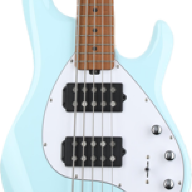
I like the roasted brown necks on my basses. They've been really stable through a bunch of temperature and humidity changes. They play great and look great. I have no complaints so far, and frankly this is all more than I care to worry about for mid-priced instruments that I'm mostly playing through a NightBass or a Spark Go.

- Jun 30, 2010
- 49,636
- 222,263
- Disclosures
- musician/artist/owner - Gildaxe
A fire chief sent Finland's Thermal Aging tech to somewhere in Canada...
Then somebody over there (United States) did it wrong...
But you can make it right yourself on a budget as long as you call yours Thermally Aged.
View attachment 5210843
//BTW, didn't Jaco play on The Tone Quest Report?
The guy in the vid gave a very honest overview of why he uses thermally aged wood in his builds. Nothing that doesn't make sense logically. Since I learned of the process I assumed that stability was the point, which he emphasized as why he uses it. I've used it to make bodies and the blanks I used were generally darker and smelled really good. Sounding dramatically different I don't know, and other than pointing toward possibly more mids - he also doesn't solidly state there is a huge tone improvement.
- Jun 30, 2010
- 49,636
- 222,263
- Disclosures
- musician/artist/owner - Gildaxe
Reading that back, I probably should have had my morning coffee first.
Hopefully it was fresh roasted...


