

Enjoy the benefits of a premium membership!
Upgrade Account
-
TalkBass has been independent since 1998. Add your voice.
Create a free account to reply to discussions, view embedded media, and browse with fewer display ads.
Join free Log in
Want zero display ads or expanded classifieds tools? Compare plans.
You are using an out of date browser. It may not display this or other websites correctly.
You should upgrade or use an alternative browser.
You should upgrade or use an alternative browser.
Roscoe Club
- Thread starter JOME77
- Start date
More options
Who Replied?
I believe most are only "exhibition" grade but I think one is "Masterblaster" grade.
My favorite had a Bubinga top and I stupidly sold it.
[/QUOTET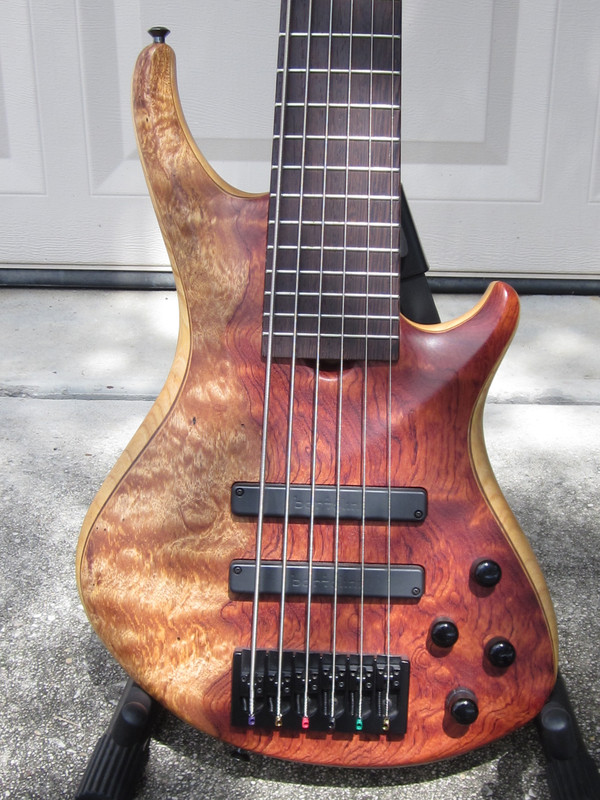
This looks killer. You sold it ?

It's striking and admirable that Roscoe invested in the evolution of their designs, materials, process, and craft, in the history of their production leading to the present.
In contrast, others invested in "marketing terms" for their instruments. That "Mastergrade" refers to a famous maker's ornamental veneer found on their most expensive basses, and "Masterbuilt" refers to their offshore production by another bass manufacturer, illustrate cases in point.
In contrast, others invested in "marketing terms" for their instruments. That "Mastergrade" refers to a famous maker's ornamental veneer found on their most expensive basses, and "Masterbuilt" refers to their offshore production by another bass manufacturer, illustrate cases in point.
Last edited:

Most of them. I have a couple non Roscoes but not too many
Wow!
What a collection!

Last edited:
Even your bass stand is extremely high end!

@blmartin2215
So do you string your Roscoes with different types of strings to create sound diversity between them or do you find that each has a unique enough sound based on the varied configurations (wood types, pickups and electronics) that you just string them all with your favorite strings?
I ask this because that's the reason that I eventually diversified my collection more with different brands. I tried owning as many as 4 Roscoes but even with Roscoes with Roscoe Barts, JM, X5 or X6 configurations I found that they didn't really differ that much in the live mix (unless I installed totally different strings; flats, nickel RW's or SS RW's). And even with that the live mix resulted in a similar sound (that baked in Roscoe sound). Of course that's a great sound but I just didn't need but a single fretted and a fretless (other than the days that I was experimenting with 6 string basses).
Maybe my ears are defective after all the years of abuse.
So do you string your Roscoes with different types of strings to create sound diversity between them or do you find that each has a unique enough sound based on the varied configurations (wood types, pickups and electronics) that you just string them all with your favorite strings?
I ask this because that's the reason that I eventually diversified my collection more with different brands. I tried owning as many as 4 Roscoes but even with Roscoes with Roscoe Barts, JM, X5 or X6 configurations I found that they didn't really differ that much in the live mix (unless I installed totally different strings; flats, nickel RW's or SS RW's). And even with that the live mix resulted in a similar sound (that baked in Roscoe sound). Of course that's a great sound but I just didn't need but a single fretted and a fretless (other than the days that I was experimenting with 6 string basses).
Maybe my ears are defective after all the years of abuse.

@blmartin2215
So do you string your Roscoes with different types of strings to create sound diversity between them or do you find that each has a unique enough sound based on the varied configurations (wood types, pickups and electronics) that you just string them all with your favorite strings?
I ask this because that's the reason that I eventually diversified my collection more with different brands. I tried owning as many as 4 Roscoes but even with Roscoes with Roscoe Barts, JM, X5 or X6 configurations I found that they didn't really differ that much in the live mix (unless I installed totally different strings; flats, nickel RW's or SS RW's). And even with that the live mix resulted in a similar sound (that baked in Roscoe sound). Of course that's a great sound but I just didn't need but a single fretted and a fretless (other than the days that I was experimenting with 6 string basses).
Maybe my ears are defective after all the years of abuse.
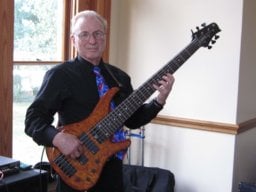
I think there's a "baked in" sound. Yeah, subtle differences with woods, strings and electronics, but probably not so much in a live mix. That said, I do think my Classic P with TI Flats sounds different than my Century 5 with nickel rounds. I have all the variety I need in these 2 basses. I sometimes think about a fretless again, but finances don't allow such an extravagance right now.
@blmartin2215
So do you string your Roscoes with different types of strings to create sound diversity between them or do you find that each has a unique enough sound based on the varied configurations (wood types, pickups and electronics) that you just string them all with your favorite strings?
I ask this because that's the reason that I eventually diversified my collection more with different brands. I tried owning as many as 4 Roscoes but even with Roscoes with Roscoe Barts, JM, X5 or X6 configurations I found that they didn't really differ that much in the live mix (unless I installed totally different strings; flats, nickel RW's or SS RW's). And even with that the live mix resulted in a similar sound (that baked in Roscoe sound). Of course that's a great sound but I just didn't need but a single fretted and a fretless (other than the days that I was experimenting with 6 string basses).
Maybe my ears are defective after all the years of abuse.
For a long while I used only the strings recommended by Keith.....D'Adarrio super long XL's. I still have them on my fretless Century 6 but my SKB 6 has TI flats on it except for the B string which is a Ernie Ball Cobalt flat (for some reason it speaks more clearly than the TI flat did on this bass) and my Century 5 has TI flats.
I just made a deal to buy the LG 5 that Jimmy Lowman had up for sale....he got it from Armybass who got it from Fauxtoe. That one is probably going to get TI flats too but I will see how it sounds with XL's. I may leave it that way.
I wonder why that bass got passed around so much. This one: SOLD - Roscoe LG 3005 ***PRICE REDUCTION! WILL ACCEPT REASONABLE OFFERS*** I think it will have found its home when it arrives. My collection of Roscoe basses is now up to 4. Enough. That is enough. Unless I am tempted again.......
I've tried others but end up using the "stock" strings as well on my 5. The classic P has TI flats. I've been tempted to try flats on my Century 5, but just can't pull the trigger. Our sound guy loves when I use my P with flats. I don't slap or tap or anything like that so it's not like I need rounds. 
Not sure why that bass is moving around. Looks amazing. Probably sounds like a Roscoe.
Not sure why that bass is moving around. Looks amazing. Probably sounds like a Roscoe.
They all get either Daddario NYXL or Roscoe Daddario XL. I've tried other brands but to me they sound best with the Daddario's. Fortunately they all sound a little different. The two SKB's have the thinner neck profiles from the 2012-2015 era. The Box Elder sounds more compressed. The Waterfall Bubinga has more low- mids. But to answer your question directly they all still sound like Roscoes with Barts except the J5 with John East and Nordstrand pickups. I usually play my Modulus or MTD if I want to change it up. I still prefer the Roscoe neck over them all. I've tried them all Fodera Smiths but the necks on the Roscoe just suits me. I don't think about the bass when I'm playing them and to me that's a testament. One thing I can tell a difference is the maple boards are ..... yep brighter. Some say woods don't matter but at least in my experience the Roscoe maple boards have a snappier brighter attack.@blmartin2215
So do you string your Roscoes with different types of strings to create sound diversity between them or do you find that each has a unique enough sound based on the varied configurations (wood types, pickups and electronics) that you just string them all with your favorite strings?
I ask this because that's the reason that I eventually diversified my collection more with different brands. I tried owning as many as 4 Roscoes but even with Roscoes with Roscoe Barts, JM, X5 or X6 configurations I found that they didn't really differ that much in the live mix (unless I installed totally different strings; flats, nickel RW's or SS RW's). And even with that the live mix resulted in a similar sound (that baked in Roscoe sound). Of course that's a great sound but I just didn't need but a single fretted and a fretless (other than the days that I was experimenting with 6 string basses).
Maybe my ears are defective after all the years of abuse.
This is why I will always have my Roscoe Century 5. I have played dozens of basses and this is it....but the necks on the Roscoe just suits me. I don't think about the bass when I'm playing them and to me that's a testament.
27454055[/URL], member: 49312"]Not sure why that bass is moving around. Looks amazing. Probably sounds like a Roscoe.
My SKB 6 changed hands at least two times before I got it. It was originally a fretless and went back to Keith for conversion to fretted. It has a rather unique tone to my ears....sort of has a lot of that Jaco jazz bass growl. I love it.
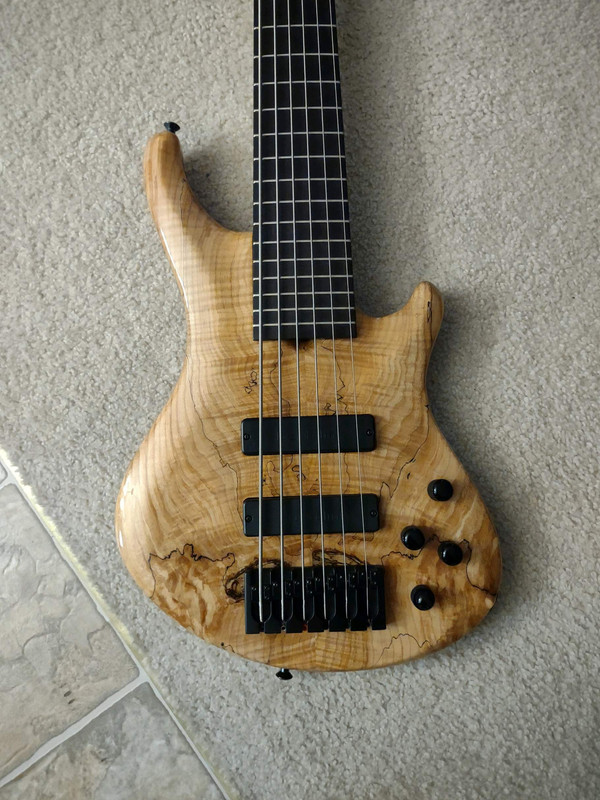
Also, no other bass has that "rasp" in the midrange. I think that's kinda what everyone says is the "baked in" sound? To me I call it the Roscoe Rasp or Splat lol. It's such a unique sound. I like basses that have A distinct sound. Smiths have it, MTD's and Modulus. The Roscoe I think is similiar to the Smith probably because of the pickup placement. They don't quite have that "Ping" the Smiths do but similar "Rasp". The J5 I have is basically a Marcus Miller 5. It's got it's thing too, an active J5 is something you can play any gig with. I have no idea if I described the "baked in" sound accurately I'm not great at descriptions. Best I could do though. All three body shapes I love too.They all get either Daddario NYXL or Roscoe Daddario XL. I've tried other brands but to me they sound best with the Daddario's. Fortunately they all sound a little different. The two SKB's have the thinner neck profiles from the 2012-2015 era. The Box Elder sounds more compressed. The Waterfall Bubinga has more low- mids. But to answer your question directly they all still sound like Roscoes with Barts except the J5 with John East and Nordstrand pickups. I usually play my Modulus or MTD if I want to change it up. I still prefer the Roscoe neck over them all. I've tried them all Fodera Smiths but the necks on the Roscoe just suits me. I don't think about the bass when I'm playing them and to me that's a testament. One thing I can tell a difference is the maple boards are ..... yep brighter. Some say woods don't matter but at least in my experience the Roscoe maple boards have a snappier brighter attack.

I've tried others but end up using the "stock" strings as well on my 5. The classic P has TI flats. I've been tempted to try flats on my Century 5, but just can't pull the trigger. Our sound guy loves when I use my P with flats. I don't slap or tap or anything like that so it's not like I need rounds.
Not sure why that bass is moving around. Looka amazing. Probably sounds like a Roscoe.
I love GHS bass boomers on my fretless better than the D'addarios, or rally any others. I love them on my fretted as well. They have such a great agressive midrange that really opens up the sound.
But the band agrees, me included, that the flats (chromes of all things) sound really sweet on the P/J. So they stay for the time being.
I recently picked up this Century 5 JMM in the classifieds. It definitely sounds different than my Century 5 PJ and both of them sound different than the Bart equipped Roscoe’s I’ve had. My current build now 6 months in the works will bring that Bart pup + Bart pre sound @blmartin2215 is describing back into the stable. The JMM came strung with Elixers, which I’ve never played before. The jury is still out on them. Thanks to @JOME77 the PJ is strung with Dunlop Nickel Super Brights and I really like those strings on that bass!
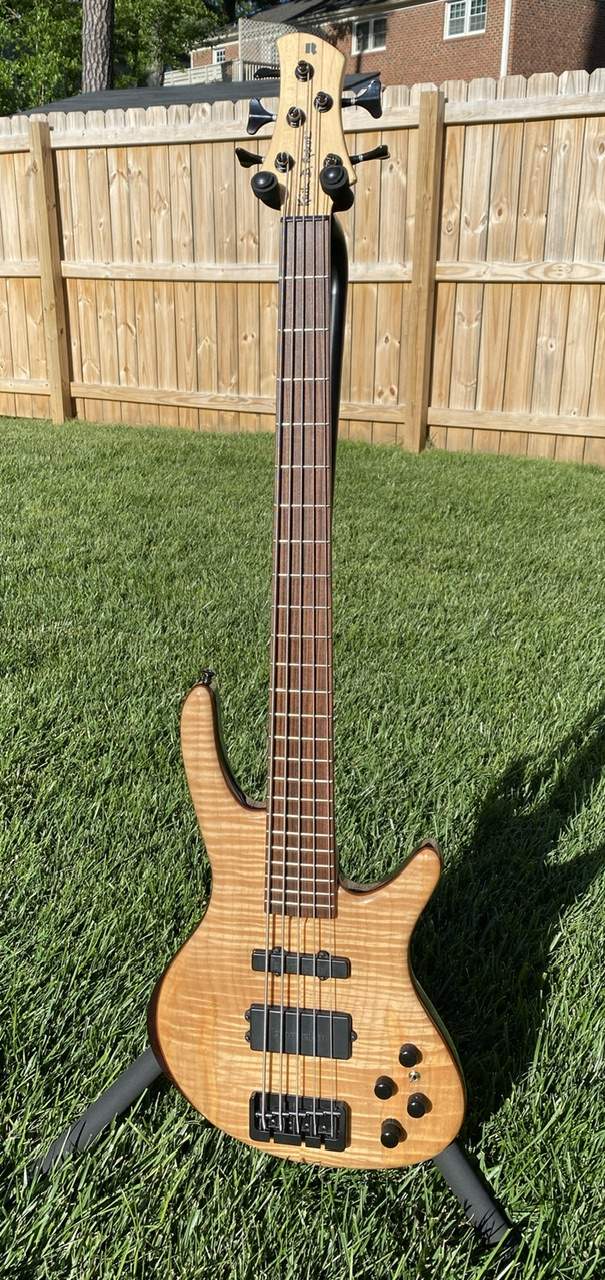
Jimmy is a great dude. That is a killer LG 5 you are getting. Classic with slanted BartsFor a long while I used only the strings recommended by Keith.....D'Adarrio super long XL's. I still have them on my fretless Century 6 but my SKB 6 has TI flats on it except for the B string which is a Ernie Ball Cobalt flat (for some reason it speaks more clearly than the TI flat did on this bass) and my Century 5 has TI flats.
I just made a deal to buy the LG 5 that Jimmy Lowman had up for sale....he got it from Armybass who got it from Fauxtoe. That one is probably going to get TI flats too but I will see how it sounds with XL's. I may leave it that way.
I wonder why that bass got passed around so much. This one: SOLD - Roscoe LG 3005 ***PRICE REDUCTION! WILL ACCEPT REASONABLE OFFERS*** I think it will have found its home when it arrives. My collection of Roscoe basses is now up to 4. Enough. That is enough. Unless I am tempted again.......
I have flats on my (non-Roscoe) PJ too - Fender 9050 in my case. I had it out tonight for a jazz fusion session - first time I’ve played an electric bass with people in well over a year, and it sounded great. Flats FTW!I love GHS bass boomers on my fretless better than the D'addarios, or rally any others. I love them on my fretted as well. They have such a great agressive midrange that really opens up the sound.
But the band agrees, me included, that the flats (chromes of all things) sound really sweet on the P/J. So they stay for the time being.
Sorry to start another show and tell thread but what does everyone on here use for amps specifically for gigs? I think the Roscoe's sound amazing through pretty much anything.
Mesa Subway amps and cabinets.


