• TalkBass has been independent since 1998. Add your voice.
    Create a free account to reply to discussions, view embedded media, and browse with fewer display ads.
    Join freeLog in
    Want zero display ads or expanded classifieds tools? Compare plans.

Roscoe Club

...clearly, he has no intentions of competing with the Roscoe Mother Ship.
I have _NO_ knowledge of the distributor arrangements in this case.
But I know that some (many?) manufacturers work through distributors as well as maintaining a direct-sale operation (e.g. Snap-On).
As long as the manufacturer does not undercut the distributors on price, IMO there's room to make everyone happy.
The distributor buys (and potentially sells) at a discount and can theoretically take advantage of economies of scale when purchasing multiples.
 
  • Like
Reactions: staccatogrowl
I my case, my local shop is a small one man shop that has been in business for over 25 years, probably more. I know that money tied up in high end basses that don't move is money that is not working for the business. Couple that with the state of the Canadian dollar and you see stock hanging for months on end. Now add competition for the same instruments with the manufacturer directly and the business case for tying up large amounts of money on stock that is hard to move and you retailers leaving the fold. It might end up being the new norm.
Fishheadjoe
 
  • Like
Reactions: TolerancEJ
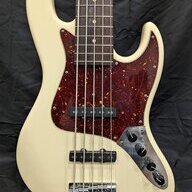
It's a shame to see great stores like Rocket and Club bass pulling away from Roscoe. There ought to be a way to set things up in a manner that a customer can chose whether they purchase directly through Roscoe or a dealer, and both Roscoe and the dealers would be OK with it.

It's just such a shame to see things unraveling like they are. I just hope that it all works out (down the road) in a manner that awesome "mom and pop" stores like Greg's (Rocket Music) and Clubbass will eventually become a Roscoe dealer again, and can still make a decent profit selling Roscoe's (and Keith (Roscoe) can keep making wonderful basses (and make a decent living).

I don't mind ordering via the I-Net but brick and mortar stores are so nice. It's so awesome to be able to go there and actually play the instruments before you purchase it and it's hard to put a price tag on the knowledge (and love of music) that the owners and folks that run them provide.

Sometimes I think that the I-net is wonderful, other times I think that it's not so wonderful .........:)
 
I've tried a few different electronics combos in my Century Custom 5M but I think I'm done.

Nordstrand Bigman (custom spacing), series/single/parallel switch, Darkglass preamp + passive tone knob (pull for passive). So many awesome tones without losing the general MM vibe with the pickup in parallel.

Please excuse the glare in the photo:

View attachment 560941

Hey Jeff.
I know that this post is a few years old but I wanted to pick your brain a bit on the Darkglass preamp.
I was going through some of my older recordings and I came across some sound clips of my former Zon fretless with the Darkglass pre verses the Bart 3-Band pre (Zon Bart SB P/U's).
I've always used the Bart 3-band in my fretless basses so after trying out the Darkglass for a few months I replaced the Darkglass pre with a Bart 3-band. It was a combination of trying to adjust to a Vol/Vol (verses the blend) and 2 mid bands (no treble).
The Bart sounded good in the bass but I was never able to cop the tones that I could dial in on the Darkglass pre. It was so warm and organic and not harsh at all. It wasn't as plug and play as the Bart but it sure could dial in some great fretless tones.

I know that you have (or had) the single Nord pickup installed (and I have the Bart hum-free jazz) but what value pot did you go with for vol?
I've really been thinking about getting a Darkglass for my Roscoe STD JB fretless and going with a stacked Vol/Vol 250K (I want to stay with a 4 knob configuration). Darkglass skirts around the pot value issue by stating to reference your pickup manual for the best pot value to use. Of course Bart pre's use a 25K volume but I suspect that's more due to their preamp design. I'm pretty sure that the Darkglass that I pulled from the Zon had 250K pots (although I seem to remember the buyer of the preamp asking why one vol control was 250K and the other 500K; strange).

Any other Roscoeheads that have installed a Darkglass pre please chime in ......
 
  • Like
Reactions: staccatogrowl
FYI- I posted my Roscoe SKB 5 is the classifieds. But I'm already having second thoughts. Nothing wrong with it, just have too much gear...

For Sale - Roscoe SKB 5 Custom


Fred, I believe if I were you I’d find some other piece of gear to sell to ease you conscious. That is a killer looking Roscoe! Love that top!
 
I think Roscoe is in financial trouble. To me, making Fender copies for a company like Roscoe is a sure sign of a company trying to right a sinking ship. I think the move to the bigger building and the expensive machines was a mistake. The Fender copies seem to be ill-advised not well thought out. I'm not surprised to see so many used ones up for sale. The price increases over the years was just too much. Roscoe sold a ton of bass when they were the most affordable of the boutique basses. Then they bumped prices up into the Ken Smith/Fodera territory and it didn't really work. I think his quality is just as good but the market will only support a few ultra high end companies. Him selling direct is just another sign. It's pretty sad.
 
Actually, Roscoe has employed several proven and respected survival strategies in a ruthless global economy:

1) Expand market/model range to capitalize on market demand (Roscoe traditional line)
2) Invest in facility and technology to provide quality and efficiency
3) Increase prices to cover costs and make profit
4) Keep prices lower than competitors (still lower than Ken Smith, and much lower than Fodera)
5) Provide excellent service to potential, existing, and past customers
6) Follow moral value principal of keeping production onshore
• a) Contrast to another beloved (on Talkbass) NY "maker" that has model lines including several tiers of offshore products, although offering only slight discounts for these. Also, takes orders for future offshore production while keeping no stock. Order is only placed once bulk order number is fulfilled by prospective customers. No inventory cost or production investment risk. Offshore product with "name" brand
• b) Strive to operate and survive in an environment of cheap-minded typical consumers. The norm is exquisite champagne thirsts and watery-beer pocket books.

Beautiful Roscoe basses are found in the Talkbass classifieds on a daily basis. The ones that sell are typically priced in an attractive manner. This trend stretches back many years. It is nothing new for the unique Roscoe designs, or the Roscoe traditional tribute basses.

Point and counterpoint bottom line: It's not over until the fat lady sings. .
 
If you've visited the Roscoe shop lately, then you've probably heard the fat lady warming up her vocal cords. The few times I've been there recently nobody was working on anything.The Roscoe line expansion to include Fender copies wreaks of desperation to me. It just doesn't make sense to tap into a market that is extremely over saturated. As for your Sadowsky reference, I don't really understand the Metro love. I've owned several Sadowsky basses and the Metro's are nowhere near as good as the NYC and I find them to be way too expensive. But for some reason, the Sadowsky fans still buy them. At least they hold true to what Sadowsky has always done which is build updated Fender copies. The copies that Roscoe does has nothing to do with their company and history. He didn't really add any updates to the design or make any changes other than 35" scale for the 5 strings which that scale was probably a mistake. I hope I'm wrong as I really like Keith's basses and Keith is an awesome person.

Actually, Roscoe has employed several proven and respected survival strategies in a ruthless global economy:

1) Expand market/model range to capitalize on market demand (Roscoe traditional line)
2) Invest in facility and technology to provide quality and efficiency
3) Increase prices to cover costs and make profit
4) Keep prices lower than competitors (still lower than Ken Smith, and much lower than Fodera)
5) Provide excellent service to potential, existing, and past customers
6) Follow moral value principal of keeping production onshore
• a) Contrast to another beloved (on Talkbass) NY "maker" that has model lines including several tiers of offshore products, although offering only slight discounts for these. Also, takes orders for future offshore production while keeping no stock. Order is only placed once bulk order number is fulfilled by prospective customers. No inventory cost or production investment risk. Offshore product with "name" brand
• b) Strive to operate and survive in an environment of cheap-minded typical consumers. The norm is exquisite champagne thirsts and watery-beer pocket books.

Beautiful Roscoe basses are found in the Talkbass classifieds on a daily basis. The ones that sell are typically priced in an attractive manner. This trend stretches back many years. It is nothing new for the unique Roscoe designs, or the Roscoe traditional tribute basses.

Point and counterpoint bottom line: It's not over until the fat lady sings. .
 
I think Roscoe is in financial trouble. To me, making Fender copies for a company like Roscoe is a sure sign of a company trying to right a sinking ship. I think the move to the bigger building and the expensive machines was a mistake. The Fender copies seem to be ill-advised not well thought out. I'm not surprised to see so many used ones up for sale. The price increases over the years was just too much. Roscoe sold a ton of bass when they were the most affordable of the boutique basses. Then they bumped prices up into the Ken Smith/Fodera territory and it didn't really work. I think his quality is just as good but the market will only support a few ultra high end companies. Him selling direct is just another sign. It's pretty sad.

Sorry, I respectively disagree.:)
Actually it was the "making Fender copies" (as you put it) that led to the financial strain that Roscoe is currently experiencing. New Plek machine, much larger factory, new CNC machines, merging with B3 guitars ...... and the list goes on. All this and still keeping ALL production in the good ole USA.
I think it's a bit strange that companies like Sadowsky, Alleva-Copplo and Lull can make a living exclusively manufacturing "Fender Copies" and when Roscoe simply adds it to their line it's a "sure sign of a company trying to right a sinking ship".
And as for so many used ones being up for sale, look at how many used Fodera's, Ken Smith, MTD's .... are always up for sale. It's called GAS ........ and it's not sign of anything except infected bass players (and I should know). :)

Roscoe will weather the tough times. It may require additional change (dropping the Fender style line, moving back to a smaller factory .....), but IMO they will endure. And not just because they are an awesome bass, but because Keith loves building basses.
 
Last edited:
I believe he was going to make those purchases and move to a new facility before he decided to do the Fender copies. I know the new location was planned before going the Fender route. The buying of more CNC machines and such could be a result of the Fender plan but I'm not sure. I spoke with him years ago about building Fender type instruments and he and I both were very opposed to it. I suggested that if he did it at all that maybe he could "Fender" up a flat top Century or SKB(this was before his century standard line) by doing solid colors and adding a pickguard similar to what F Basses did with their vintage line and what Fodera eventually did with their standard classics. That would've made more sense to me and he seemed open to that idea. I'm not sure what changed.
 
The move to the bigger building seems to be the root of everything. They needed more space but not that much more. The Fender-style basses and partnership with B3 make sense together but neither should have been necessary. I wish they had found a mid-size facility that allowed them to just keep doing what they'd been doing. The Custom Classics are nice, but at the end of the day they are high-end Fender copies and don't set themselves apart. The "real" Roscoes definitely set themselves apart. There's nothing else like them. The Plek machine is awesome but that might not have been a wise move financially either. I am not a businessman and this is all probably way more complicated than it seems. I hope Keith can keep it going.
 
Maybe they're marketing something to someone, but i don't know what, or where...
With the distributor model, it was up to the distributors to handle the bulk of advertising, with some support at events like NAMM.
Now they seem to be losing distributors, and yet if they're taking up a direct-sale business model, they're not doing any direct-reach marketing.
I haven't seen a FaceBook update in what seems like weeks. I don't think I've seen an 'official presence' here since Gard departed.
Interesting times...