
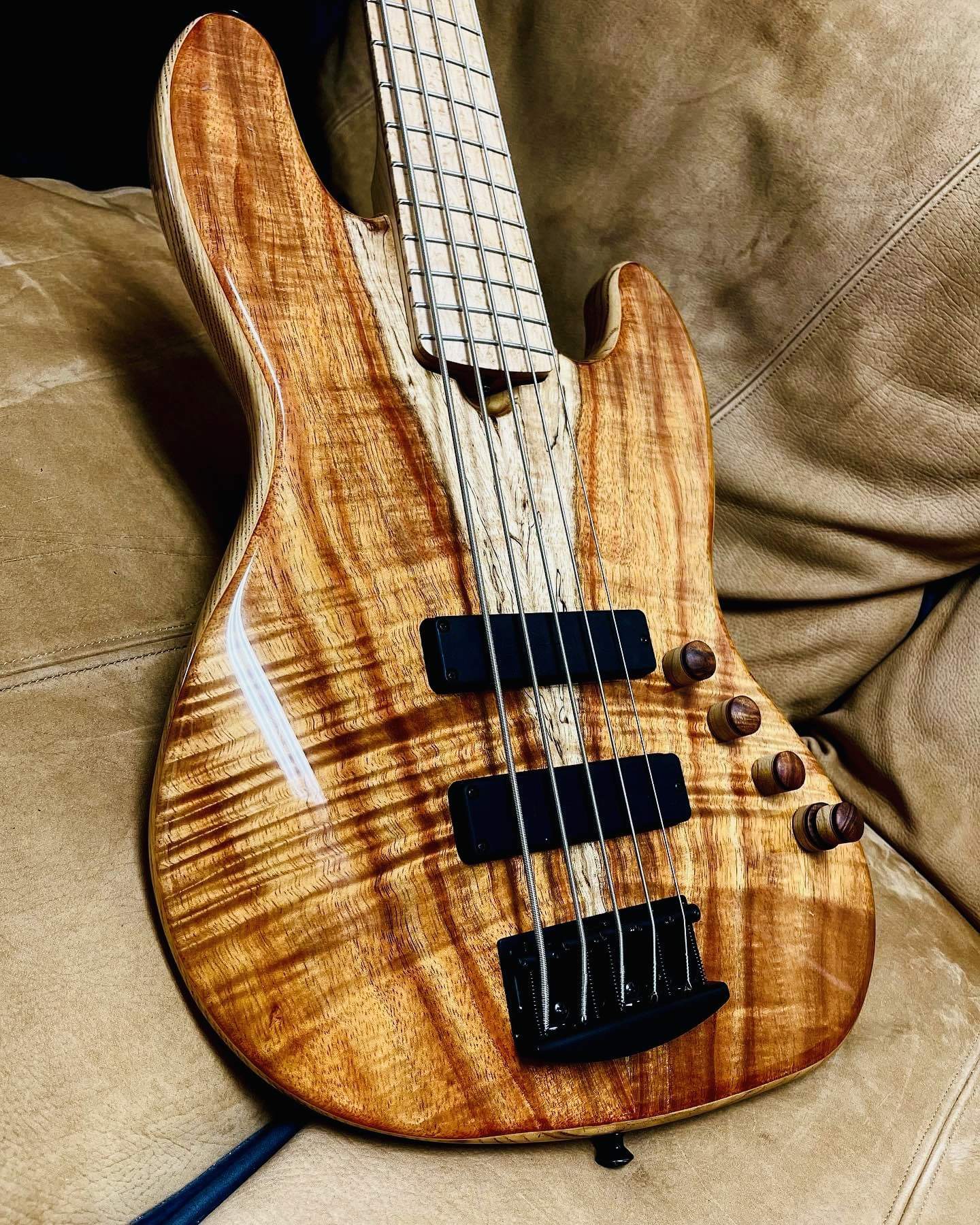
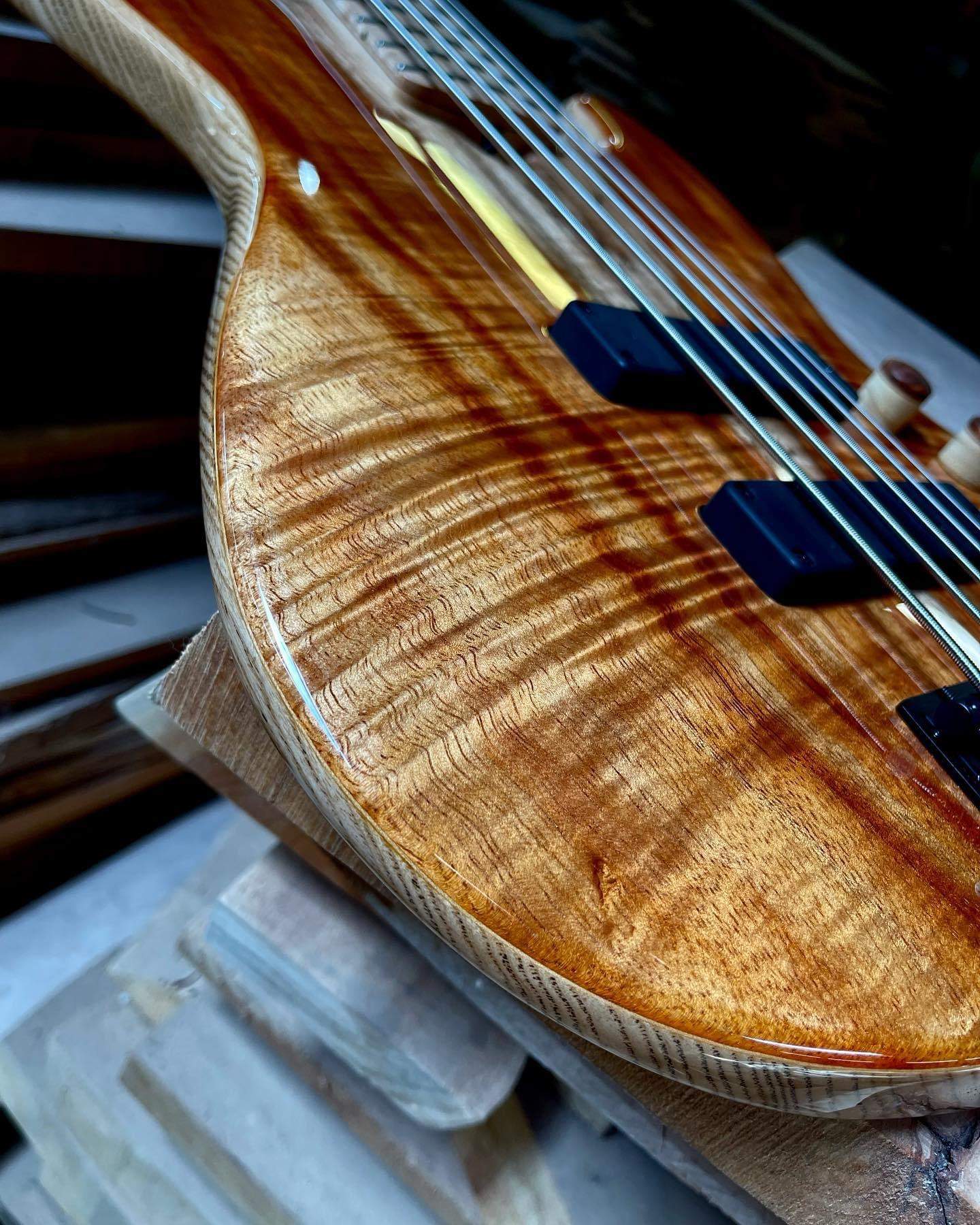
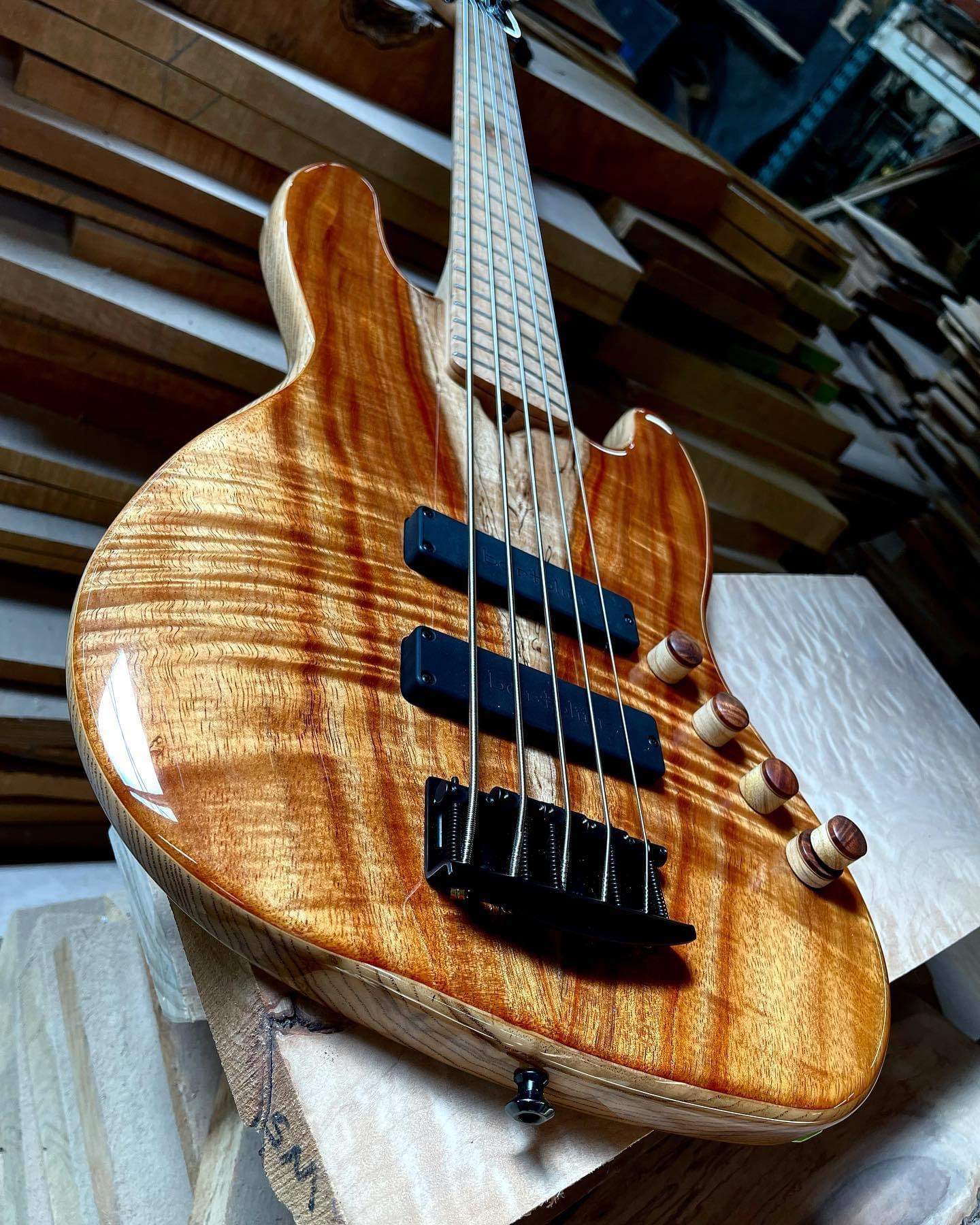
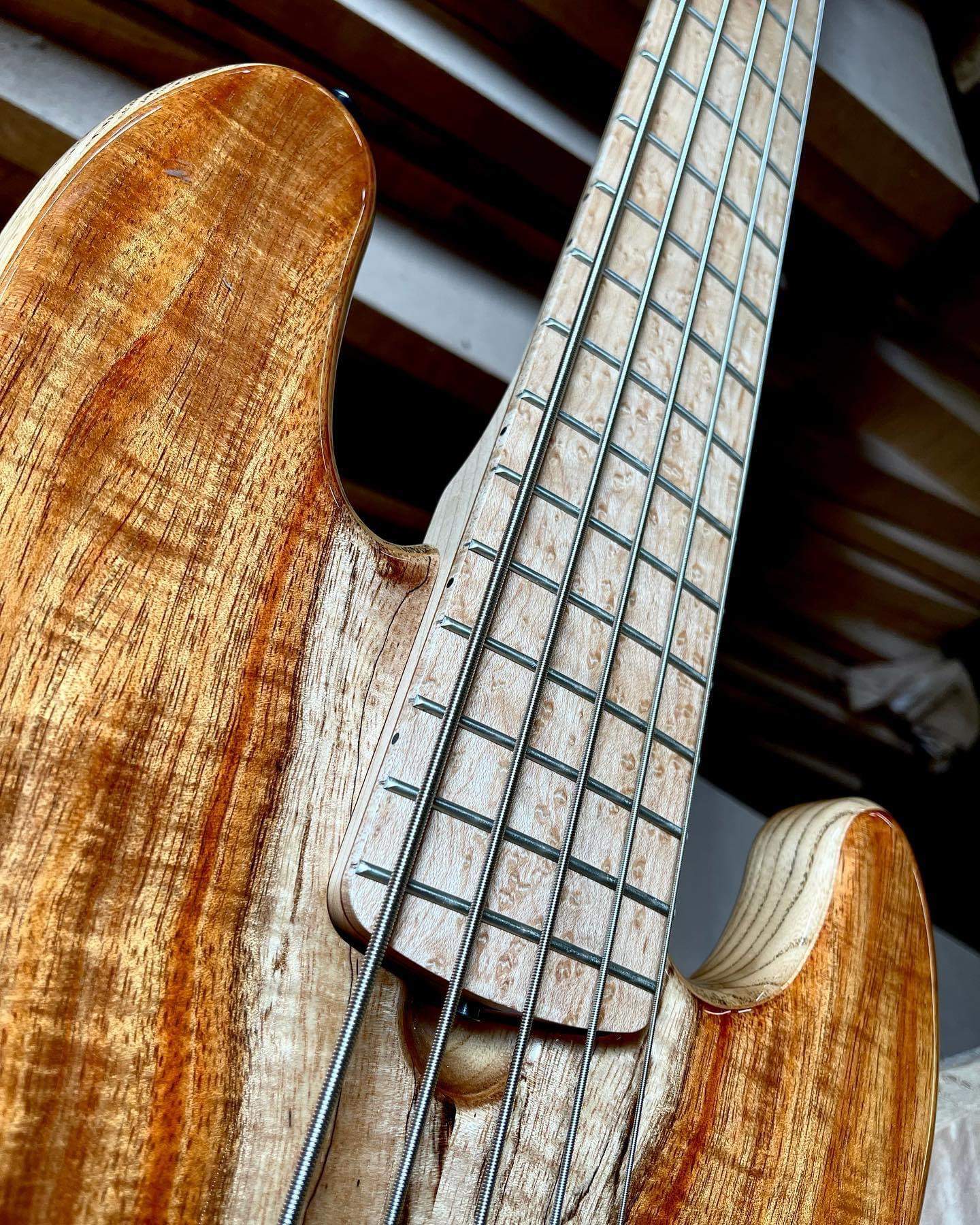
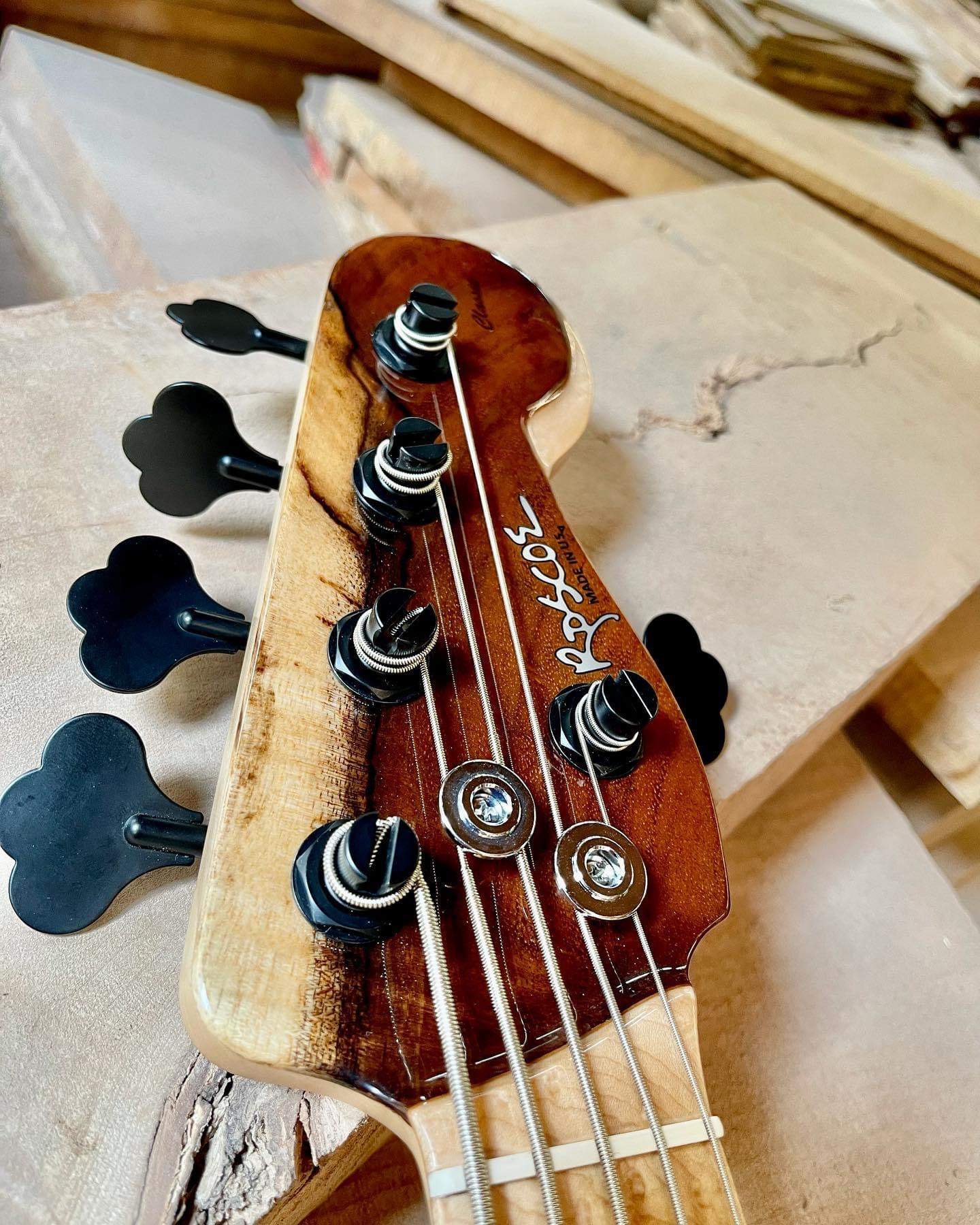
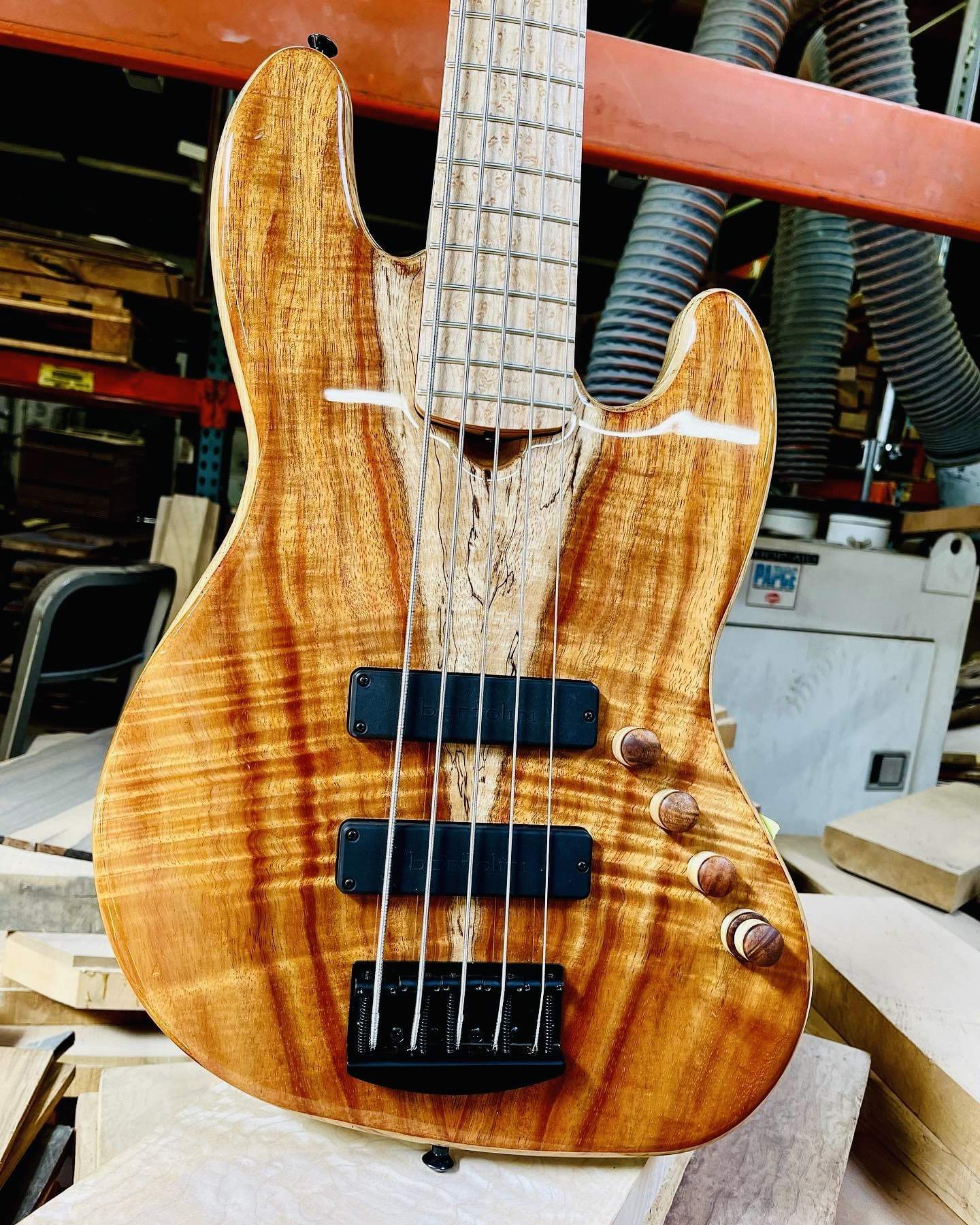
Keith just sent pics of my Classic Modern Koa. Roscoe Quad coils and Nordstrand 3B-5A preamp.

TalkBass has been independent since 1998. Add your voice.
Create a free account to reply to discussions, view embedded media, and browse with fewer display ads.
Join free Log in
Want zero display ads or expanded classifieds tools? Compare plans.
So how do you go about the "feel" aspect of playing the bass with a silent stage? Are the drums electronic? I actually love a hybrid setup in which I have Iems but also a small backline to feel what Im playing.

Another thing I'll mention, based on my experience.Good to know. And I've actually got a set of Fralin P/J pickups that Keith said he would install in whatever I end up going with. And I'm not at all concerned about getting a 'real' P tone...I could care less. It's that bright, mid-scooped, throaty P/J growl that I'm after. The pickup control will never leave 50/50.
Another thing I'll mention, based on my experience.
My LG 4 standard that you've all seen, originally had a reverse Aguilar P.
Now, I asked for a light colored body, to match the color of the neck. And light weight.
However, due to the short upper horn, heavy gotoh tuners, and Hipshot aluminum B bridge, it was pretty neck divey.
In an effort to better balance the bass, I swapped the tuners for Hipshot ultralites, and the bridge for a B style in brass. Mission accomplished.
Now, the point of all that.
Before, with the aluminum bridge, the notes were pretty snappy, but there was something missing.
With the brass bridge installed, the notes suddenly filled out and had "heft".

Our band has a really nice FOH system with Mains and Subs. We have a Digital Board that each member has the Mackie Fader app downloaded to our Iphones or Ipads for individual mix of our IEM mixes. Everyone has the ability to mix what they want in the in ears. We have our Acoustic drums in a drum room sound proofed at church and every band member is running through a DI bix on stage. It's one of the best house and stage setups I've ever played or heard in the audience. We've had several other churches in and around our state that have gotten us to help design and install similar setups. Honestly once you get used to a good IEM type setup where you have control over your own mux it's hard to go back to amps and wedge monitor setups IMO.

My church used a nice Aviom system for the iem mixes. I liked the control but found I needed to pull one ear out 99% of the time to get a “feel” of things including audience interaction. The drums were not contained (on going issue) so that sucked but again I found I needed to feel my bass to get into things.
My church used a nice Aviom system for the iem mixes. I liked the control but found I needed to pull one ear out 99% of the time to get a “feel” of things including audience interaction. The drums were not contained (on going issue) so that sucked but again I found I needed to feel my bass to get into things.
You need to not do this. I don't have the link to the science behind it, but suffice it to say one in and one out is BAD for you. You need to adjust your mix, ad an ambient mic, add a sub/cab on stage for feel (but not interfere with FOH mix) etc. Try a Backbeat. There are ways to "feel" it and still use IEM's and be safe with your hearing.My church used a nice Aviom system for the iem mixes. I liked the control but found I needed to pull one ear out 99% of the time to get a “feel” of things including audience interaction. The drums were not contained (on going issue) so that sucked but again I found I needed to feel my bass to get into things.
You need to not do this. I don't have the link to the science behind it, but suffice it to say one in and one out is BAD for you. You need to adjust your mix, ad an ambient mic, add a sub/cab on stage for feel (but not interfere with FOH mix) etc. Try a Backbeat. There are ways to "feel" it and still use IEM's and be safe with your hearing.

I hope they make more like that. I love the classic shape with the soapbars. Great call on that.Keith just sent pics of my Classic Modern Koa. Roscoe Quad coils and Nordstrand 3B-5A preamp.
View attachment 4412105 View attachment 4412106 View attachment 4412107 View attachment 4412108 View attachment 4412110 View attachment 4412111
I went through comparing bridge material many years ago and have only used brass since. There's less high snap for sure, and more low mid focus, which is what I prefer on both ends. Makes quite a difference.Another thing I'll mention, based on my experience.
My LG 4 standard that you've all seen, originally had a reverse Aguilar P.
Now, I asked for a light colored body, to match the color of the neck. And light weight.
However, due to the short upper horn, heavy gotoh tuners, and Hipshot aluminum B bridge, it was pretty neck divey.
In an effort to better balance the bass, I swapped the tuners for Hipshot ultralites, and the bridge for a B style in brass. Mission accomplished.
Now, the point of all that.
Before, with the aluminum bridge, the notes were pretty snappy, but there was something missing.
With the brass bridge installed, the notes suddenly filled out and had "heft".
As I'm looking again, these look similar to the Nordy basses that Carey used to make...the modern version with Soaps. Still has the Roscoe touch for sure. Just saying I love it. These would be great for Nashville players...or touring bass players, where they need something that looks more traditional, but play more modern, with a wider range of sounds. Just a great idea for Keith I think.Keith just sent pics of my Classic Modern Koa. Roscoe Quad coils and Nordstrand 3B-5A preamp.
View attachment 4412105 View attachment 4412106 View attachment 4412107 View attachment 4412108 View attachment 4412110 View attachment 4412111
The science behind it is that if ambient noise is (say)95db and you have one ear out, you need to raise the SPL of the in-ear to above 95db in order to hear it. It's a one way ticket to hearing damage

What!?
What did you say?
Too late Jon. I did it several time and I guess I got the ticket!
Seriously though. It does make sense. But, literally everyone that plays churches around here does it and told me to do it.
Isn't it unfortunate that this is a thing? A "regular" Roscoe isn't all that crazy of a body shape. You do see them with some country guys. But it is nice to have the soap bar active pre option on a more traditional body. I have a Classic P so I am kind of playing a modern bass in a classic body, too.As I'm looking again, these look similar to the Nordy basses that Carey used to make...the modern version with Soaps. Still has the Roscoe touch for sure. Just saying I love it. These would be great for Nashville players...or touring bass players, where they need something that looks more traditional, but play more modern, with a wider range of sounds. Just a great idea for Keith I think.
I hope they make more like that. I love the classic shape with the soapbars. Great call on that.


