
Enjoy the benefits of a premium membership!
Upgrade Account
-
TalkBass has been independent since 1998. Add your voice.
Create a free account to reply to discussions, view embedded media, and browse with fewer display ads.
Join free Log in
Want zero display ads or expanded classifieds tools? Compare plans.
You are using an out of date browser. It may not display this or other websites correctly.
You should upgrade or use an alternative browser.
You should upgrade or use an alternative browser.
Rosewood vs maple or vice versa and why
- Thread starter Willie5String
- Start date
More options
Who Replied?

Look at my pic on Ampeg's artists page.Statements like these require a pic !!


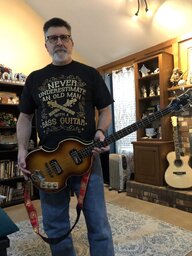
The first bass I ever played any amount was a Gibson Ripper that belonged to my school I played it in the school jazz band back in the Seventies. It had a maple neck and fingerboard. When I bought my own bass, I bought a Fender fretless P-bass with a rosewood fingerboard. That felt downright luxurious. I have stuck with rosewood, except for one Squier p-bass I had back in the Nineties.
Rosewood on guitars and maple on bass. The maple just seems to snap more or have more definition. Of course that could be in the eye of the beholder. But my SG bass has a rosewood neck, and it does feel pretty good.

Ever notice that you always see maple necks with a rosewood board but never a rosewood neck with a maple board?
Hmmmmmm.
Hmmmmmm.

Masewood or Rople?
Oh, and how should one pronounce Wenge?
it rhymes with Bengay (i.e. the ointment)
Last edited:

I've always preferred a rosewood board, no tonal reason, just prefer the look.
I tend to prefer rosewood fingerboard. I have an almost 28 year old MIA strat with a maple fingerboard that I've managed to wear a lot of grooves on it. This was not exactly a daily player, but I did play it a bit. But not enough to create the amount of wear that it shows.
I have never had this kind of wear on a rosewood neck on any of the instruments I owned. Even ones that were daily players and toured with toured with, including a Rick 4001 I had for almost 40 years.

Masewood or Rople?
Oh, and how should one pronounce Wenge?
I believe it's "Wen-Gee"

I suppose I'm in the "wood makes a difference" camp, so it depends on the situation. For jazz or rock gigs where I'm looking more for "my sound," I prefer a darker fingerboard. For the pop country group I play with, the maple definitely has a higher frequency top end treble that sits better in the mix with a 5/6 piece group. Not everyone agrees that there's a discernible difference, but in a mix I can tell pretty easily.
Whichever board looks best with the color scheme of the instrument.
My first two number ones, covering the period from 1988 to 2007, had ebony boards. My third number one (2008–2018) had a rosewood board. My current number one has a one-piece maple neck.
My first two number ones, covering the period from 1988 to 2007, had ebony boards. My third number one (2008–2018) had a rosewood board. My current number one has a one-piece maple neck.
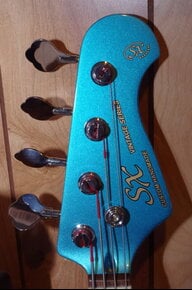
You "need" to have one of each…
FWIW, I saw a video somewhere with Roger Sadowsky and Michael Tobias being interviewed together and both stated that they felt fingerboard wood made more of a difference to the tone of the instrument than body wood.
...

I agree, get both.
And Roger's statement is obviously true once you realize that the WHOLE assembly, neck body and strings is in tension and vibrating when you play. The strings vibrate the most and have the largest effect on tone. And the neck vibrates more than the body and therefore has more tone impact than the body.
Last edited:

Not trying to be a wise guy but I like Ebony. For the feel and the looks.
Between the two choices given, Rosewood. Feels great and gets better with age. At least I think so.
My least favorite is Laurel or Pao Ferro. Feels like sandpaper. No Bueno.
Between the two choices given, Rosewood. Feels great and gets better with age. At least I think so.
My least favorite is Laurel or Pao Ferro. Feels like sandpaper. No Bueno.

I've made basses with rosewood boards (lots of those), one with a Pau Ferro board, one with a Goncalo Alvez board, one with a maple board, and one (on the way) with a Bubinga board (I also had a Ric years ago with a Bubinga board).
The only neck I've ever had issues with was the one with the maple board. I built 3 different basses using that neck - first one I couldn't bond with, so that bass got a rosewood board, and it was great. Did the same thing with 2 other builds, until I realized I just didn't like the sound/clackiness of maple fretboards.
The fretboard that I really love - the Goncalo Alvez one. Half of it looks like maple, the other half (stripes) looks like rosewood. All of it sounds great.
The only neck I've ever had issues with was the one with the maple board. I built 3 different basses using that neck - first one I couldn't bond with, so that bass got a rosewood board, and it was great. Did the same thing with 2 other builds, until I realized I just didn't like the sound/clackiness of maple fretboards.
The fretboard that I really love - the Goncalo Alvez one. Half of it looks like maple, the other half (stripes) looks like rosewood. All of it sounds great.

I go for looks, so I prefer maple, lackered or not.
Light woods in general on a fingerboard look amazing to me, light inlays are ok but dark inlays look best.
Dark fingerboard woods are nice with light inlays, chevrons, blocks, trapezoids or crowns.
I have both, and so should you. lol
Light woods in general on a fingerboard look amazing to me, light inlays are ok but dark inlays look best.
Dark fingerboard woods are nice with light inlays, chevrons, blocks, trapezoids or crowns.
I have both, and so should you. lol

For me, there's ascetic pleasure in all three: Rosewood, ebony, and maple, depending upon the particular instrument. 3 examples:
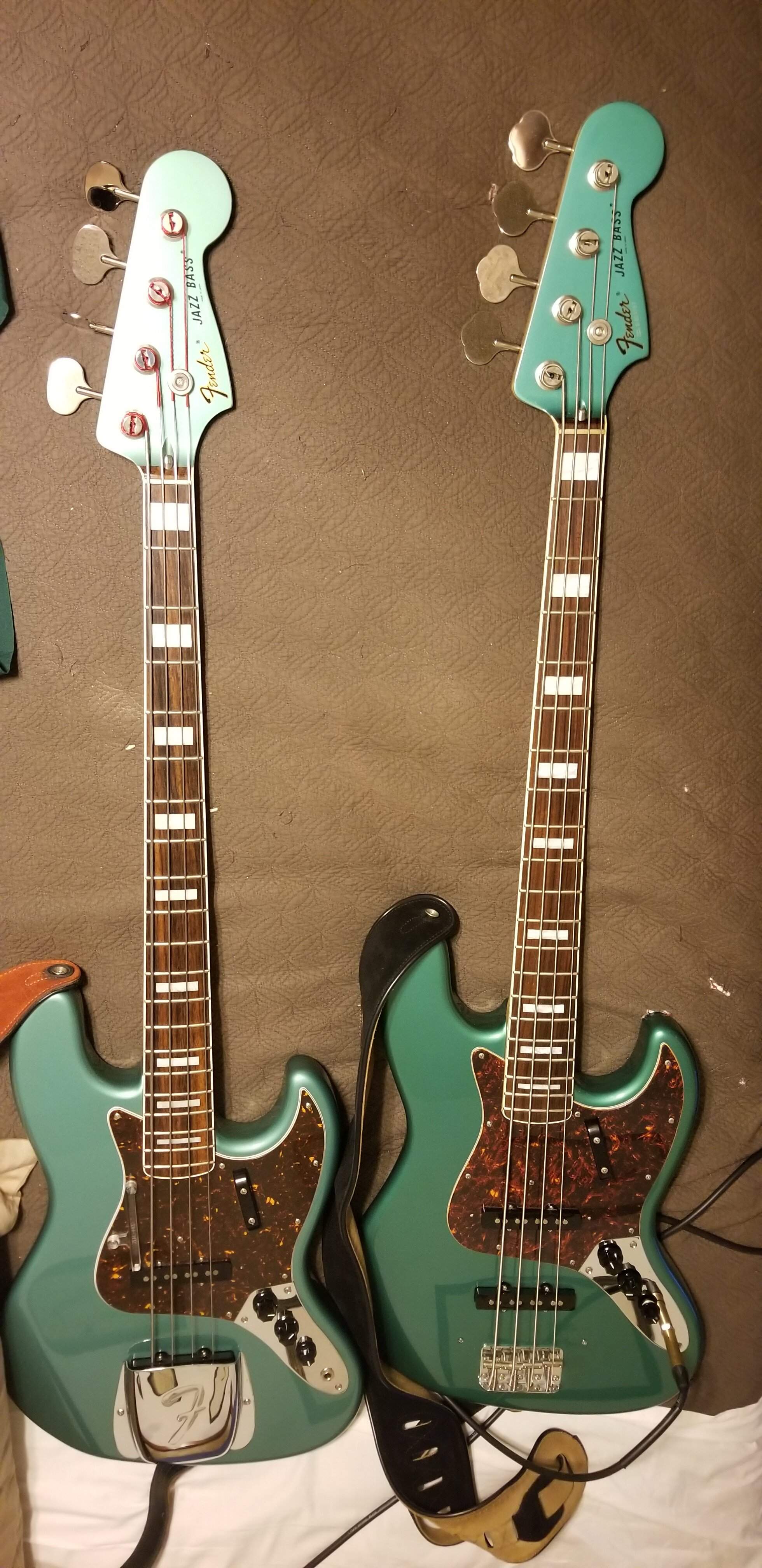


I don't know man, I had a guitar player 50 years ago, with a '53 Stratocaster with maple fretboard. Most Ive seen since with rosewood just dont look right to me.Depends on the instrument.
Bass maple
Guitar rosewood
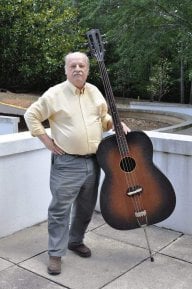
I like both but on a Fender or similar I like the look of maple. I also developed a thing for black basses with maple necks because I look so good with them
It's the hat on the right.


