• TalkBass has been independent since 1998. Add your voice.
    Create a free account to reply to discussions, view embedded media, and browse with fewer display ads.
    Join freeLog in
    Want zero display ads or expanded classifieds tools? Compare plans.

Scale degree number when the root is not the lowest note.....

Status
Not open for further replies.
2 things can be done Malcolm now that I know what you are looking for:

1) it is common to indicate R8 for the root at the octave up. Since there is no mention of that in the bassline, the A# would be musically connecting to the bottom root a half-step from below since the major seventh it is not a great interval in a bassline.

2) would be the MIDI notation like someone mentioned earlier. Having B1-F1-F#1 and then A#0-B1.

Hope this helps

GM
Thanks.
 
Case in point - Page 72 in Hal Leonard Blues Bass by Ed Friedland.
The Thrill is Gone, first measure Bm7 chord.
B, B, F. F#, F#, A# The F, F# and A# are all lower notes than the B.

How would you write this in scale degree numbers? R-R-b5-5-5-7 is what I would do if the root was the lowest, but, it's not. I can go up scale fine, but, going lower has me bumfuddled.

I do not do inversions and think this is the first time I've run up on something like this.

Little help please.

As a slash chord it would be Bm7/F# - so perhaps in scale degree numbers it would be R/5
 
You know, instead of coming up with your own personal (and confusing) method of notation, I would suggest you spend just a little time learning to read music. All the tabs and other notation schemes I've seen work up to a point, but as you are experiencing with your "simpler" notation method, it often ends up being more complex and confusing than just reading music. Standard musical notation tells you the name of the note, the location relationship to the previous and following notes, and the rhythm of how to play it. It will probably take you less time to learn and be less confusing than this 4-page attempt by TB'ers at how to put it into your "simpler" method, which actually becomes more limiting, complex, and confusing.

I think you've passed the point of diminishing returns and perhaps should try something tried and true especially when using it to get a specific musical sequence. Honestly, reading music is not as hard as all the machinations and room for misinterpretation that you are putting yourself through.
 
Bb is the notation to use when you have a chromatic line going down from B to A. A# is used to connect A to B.

Since you are a pro charter how do you write the second note of The Thrill is gone E# or F ? :smug:

Here is my decision making process for "enharmonic equivalents" (notes that sound the same pitch but are notated differently).

1. If there is an obvious, correct, and expected choice, use it. Example: in the key of B, the V chord is always F#. It is not "F# or Gb, whichever is easier."

2. If it is ambiguous then make an intelligent compromise between capturing the composer's intent and making it easy for the player. Example: A blues song might use a "blue note" that is ambiguous whether it is #4 or b5, so it could be notated either way based on the context.

Returning to your specific question, I would tend to write F because I know some musicians don't like to see E#. But if the melody ends/resolves on F# then it would be clearer to write E#. In my opinion. Unfortunately I am not somewhere where I can listen to BB to hear the intent; from memory I think it is just an embellished 1-5 pattern and the important notes are B and F#. So I would emphasize that fact by writing E# and A#.
 
Last edited:
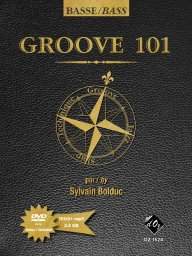
Gee man I wrote Groove 101, Slap 101, Technique 101 and soon Jazz 101.

I guess you haven't wrote any Jazz books because chromatic notes with # for up and b for down are the essence of jazz writing and commercial music as well.

I play lots of jazz. Maybe we just have different publishers with different style guides. Who is your publisher? My book is with Alfred.
 
  • Like
Reactions: Groove Master
Read my edited post, sorry I don't know what you meant exactly. I though you meant a polychord Bmin over Eb Maj7

GM,

Here is what I meant.
1. In general, we use sharps when ascending, and flats when descending; therefore,
B Bb, A, etc...

2. When choosing accidentals, we consider the context of the music such as key signature, harmony, etc...
Mushroo immediately assumed that if we have B in the bass and then the bass descends by 1/2 tone, it should be ONLY A# as in
Bminor(maj7) third inversion - A# - B - D - F#, but
I had in mind the following chord progression - | Bm7 (Beat1 and Beat2) / Ebmaj7 (Beat3 and Beat4) |
therefore,
I posted a question what if I wanted to see Bb as Ebmaj7 in Second inversion, which meant I could not write that note as A# just by assumption.

P.S. Your polychord Ebmaj7 on top of Bm (kind of arpeggiated)
B - D - F# - D - Eb - G - Bb sounded very good,
followed by Fm7b5 in 3rd inversion top of Gm 1st inversion -
as Bb - D - F - B - Eb - F - Gb.
 
WRONG. To prove you wrong is the key of Gmin where you have 2 flats and have to write a F# to the seventh of the harmonic minor scale which is the relative of Bb Major.

The reason for using sharps and flats mixed in a key is to:
1) avoid the unnecessary usage of the natural symbol for every diatonic that have been altered in the bar which complicates visual for nothing. ( I cannot find this symbol on my keyboard computer,anyone?)

2) It does help identify the direction of the line but flatten a descending line and sharping a upward line. These apply to passing tone,chromatic tone etc...
Does nobody know what the word 'enharmonic' means anymore? In what instance then are double sharps or double flats to be used? When I took theory, that's how it was explained to me.
 
  • Like
Reactions: Groove Master
Here is my decision making process for "enharmonic equivalents" (notes that sound the same pitch but are notated differently).

1. If there is an obvious, correct, and expected choice, use it. Example: in the key of B, the V chord is always F#. It is not "F# or Gb, whichever is easier."

2. If it is ambiguous then make an intelligent compromise between capturing the composer's intent and making it easy for the player. Example: A blues song might use a "blue note" that is ambiguous whether it is #4 or b5, so it could be notated either way based on the context.

Returning to your specific question, I would tend to write F because I know some musicians don't like to see E#. But if the melody ends/resolves on F# then it would be clearer to write E#. In my opinion. Unfortunately I am not somewhere where I can listen to BB to hear the intent; from memory I think it is just an embellished 1-5 pattern and the important notes are B and F#. So I would emphasize that fact by writing E# and A#.

C♯ major (or C-sharp major) consisting of the pitches C♯, D♯, E♯, F♯, G♯, A♯, and B♯.
 
I play lots of jazz. Maybe we just have different publishers with different style guides. Who is your publisher? My book is with Alfred.
My editor is Productions d'Oz which is big in classical music and Europe. I write all my material with Finale and then give it to them for the lay-out.
 
  • Like
Reactions: Mushroo
Does nobody know what the word 'enharmonic' means anymore? In what instance then are double sharps or double flats to be used? When I took theory, that's how it was explained to me.

Let's take D-flat major - D♭, E♭, F, G♭, A♭, B♭ and C.
What is the note for the diminished 5th - Abb or G♮?

Now, let's take B major - B, C♯, D♯, E, F♯, G♯, and A♯.
What is the note for the augmented 5th - G♮ or Fx (double sharp)?
 
  • Like
Reactions: Groove Master
Does nobody know what the word 'enharmonic' means anymore? In what instance then are double sharps or double flats to be used? When I took theory, that's how it was explained to me.
That was my point about having E# instead of F going to F# in The Thrill is gone. Also, nobody likes to see ## or bb for no reasons but musically they make sense when used properly in the right musical context.
 
  • Like
Reactions: Whousedtoplay
I believe they would still be the same degrees as if they were higher than the root. Think of when you play country bass: root -> 5th can be played with the root note both higher and lower than the fifth and it's still called "root 5th".
 
OK...I'm going to jump into this mess

Although the "going up scale use a sharp (#) and going downscale use a flat (b) is good musical practice for a single musical line, it can be incredibly confusing when you start throwing flats into any sharp (#) key (F#, C#, G#, D#, A#, E#, B#) or any sharps into a flat key (Bb, Eb, Ab, Db, Gb, Cb, Fb) even though the notes are enharmonically equivalent.

If you are playing in the key of F# (uses 6 sharps [edited to correct number]) it would be pretty silly and confusing to notate the third of the root chord (F#, A#, C#) as a Bb. They are the same note but standard musical practice doesn't notate it that way.

In fact, the key signature tells you what notes are sharp or what notes are flat (they are never mixed together in a key signature) and as long as you don't deviate out of that diatonic scale (8-notes if you counting the octave), you don't notate sharps or flats at all. You do have to notate it if you move to a note outside that scale. So key signatures make it easy.

If you don't use a key signature, then you are presumed to be in the key of C, which has no sharps or flats, and you will have to notate all sharps and flats. The "rising sharp" and "descending flat" is the way to go on this.

Not sure if I helped clear anything up or just muddied the waters here.
 
Last edited:
another example of why i'm very glad i learned to read music ... treble/bass clef ( piano first )

if you're wondering how to notate it for "you" alone ... as in , your own shorthand cheatsheets ... do whatever makes sense to you ... something you'll remember .... or learn the notes as laid out on a piano ...

if you'd write ... B 3 , ... then A 2 ... just for the single bass notes , you'd know B3 is higher the A2 ...

this is SPN ... Scientific Pitch Notation ... Middle C on a piano is C4 .... low E on your bass is E2 ...

[Invalid or Expired Link Removed]
 
Final thoughts on the matter: I chimed in to defend Malcolm's choice of notation. It was suggested that Malcolm should have written Bb instead of A#. But I follow Malcolm's posts all the time, and know he comes from the perspective of 1) really knowing the major scale in all 12 keys, and 2) frequently jamming with other musicians. So I agree with Malcolm's choice of A# in this context for these two reasons.

8-7-b7 is a very common pattern used in thousands of songs in different genres. As a copyist and arranger, my goal is to communicate to the player at a glance the familiar pattern they have played a million times, no matter which of the 12 keys we are in. The pattern is 8-7-b7 (not 8-b8-b7) so I would write it C B Bb in the key of C (not C Cb Bb), G F# F in the key of G (not G Gb F) and B A# A in the key of B (not B Bb A).

Everyone saying "flats descending, sharps ascending" is quoting the second half of the rule out of context. The first half of the rule is "use the obvious and correct choice where an obvious and correct choice exists." ;)
 
What I'm taking from all of this is that there is not an easy way of writing scale degree numbers lower than the root. This is where standard notation takes over.

The real takeaway should be that scale degree numbers don't show register at all. They are meant to be abstractions to indicate function within a chord or key.


If you are playing in the key of F# (uses 7 sharps)

6 sharps.
 
Status
Not open for further replies.

Latest posts