• TalkBass has been independent since 1998. Add your voice.
    Create a free account to reply to discussions, view embedded media, and browse with fewer display ads.
    Join freeLog in
    Want zero display ads or expanded classifieds tools? Compare plans.

Should I Try A BBE Sonic Maximizer?

I have an old 422A, old-school styling which I dig :cool:

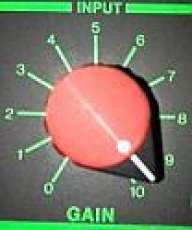
Paid $50 for it, about 11 years ago.. Tried it briefly with my bass rig, didn't like it in that application. Tried it with a pro sound rig in my basement, utilizing an old-school pair of JBL MR802 monitors, for pre-recorded music playback. In that application, as long as the lo-contour and definition knobs were at lower (less than half or below) I actually liked the way it modified the sound. But, only if the effect is very subtle, it is way easy to over-do...

It's hard to explain, but to my ears, it does something a bit different than an eq, an audiophile friend of mine had the same opinion.

I don't care about the numbers, measurements, etc... I base my opinion on what I hear. Is it a magic box? No. Would I encourage others to buy one? No. Will I ever sell mine? No - I'll probably clean the scratchy pots and use it like I've stated above.

YMMV
 
  • Like
Reactions: ToS
I actually like mine, the effect is very subtle but quite nice to my ear. The thing is that I never turn those low contour and process knobs past the 10:00 position, past that it just doesnt do anything good. Also , I only just play in my small quiet studio I dont think I would bother to brimg it to a live gig.
 
  • Like
Reactions: ToS
The old BBE sonic maximiser has in my experience, a very clear and economical upgrade path:
12546_l.jpg

The upgrade advantages are lighter weight (always a big issue here on TalkBass)
better ventilation, less noise, power consumption and above all, audio transparency.:D:bassist:
 
The Aphex exciter preceded the BBE. It was actually "discovered" by accident, when a piece of equipment faulted, but the engineer liked the sound it produced and figured out what the malfunctioning equipment was doing.

The Aphex exciter takes a highpassed signal, runs it through a distortion genterator that is much like a guitar distortion pedal. The distortion generator creates upper harmonics and then a little of those generated harmonics are mixed back with the straight signal.

The original Aphex was thousands of dollars, and they would be rented to recording studios and touring groups. There is also a VCA (voltage controlled amplifier) used on the harmonics generator to control the process and noise.

The BBE was a competing device. BBE, much cheaper, used a different process, with similar results. BBE added a lo control to offset the increased highs.

Later, as Aphex prices came down, Aphex added a low frequency control.

Most overuse enhancers. The original instructions for setting an Aphex said to turn the process up until the enhancement was audible, then back off a hair. The effect was supposed to be subtle, not used as an effect.

BB gives a complicated explanation of it's process, but I'm still convinced they developed the circuit, analyzed it, and then used the analysis in it's description. Phase changes happen to some extent in any gain stage.

The BBE process involves slightly delaying the midrange, and then the low end a little more...just microseconds. There is a psycho-acoustic effect that the sound our ears hear first, the louder we perceive that sound. If the high end hits our ears first, we perceive the high end as louder, even though the high end hasn't been turned up.

Again, if used sparingly, it can be a useful and positive improvement. If turned up too loud, the results are ear fatigue and all the other negative impressions reported.

I find exciters to be very useful. In dubbing old cassettes to CD, an exciter works well, improving high end without adding noise.

I used to use Bose 801's in the 80's. An exciter (I owned Aphex, BBE, Roctron and Alesis exciters) could add sparkle to the full range drivers that EQ just didn't do. The sound system at church had 32 cabinets with four 4.5" Bose type drivers in each. An exciter added sparkle and clarity that I could't get with EQ alone.

Later power amps, with higher slew rates, and better mixers made the exciters not necessary.

I used a BBE briefly in my biamped bass rig. I loved the clean sound, but slapping became strident, so I abandoned it. I use that unit in a keyboard rig where it shines.

For good examples of the use of exciters, listen to the vocals on 80's recordings of Def Leopard or Journey. The vocals are an ad for exciters...likely the expensive Aphex.
 
  • Like
Reactions: ToS
I've gotten different results from different BBE units, and use depends on the gig.

When I carried a six space SKB with preamp and power amp, I had a rack mount unit whose model# I cannot recall. It's studio-like effect worked well with the light rock band at the time, but when I went to a harder rock band, I killed it, as a signal with more edges to cut through the mix was needed.

Now that I am playing an eclectic mix of higher energy blues I really like what I am getting from a Sonic Stomp pedal, both controls at around 1 to 2 o'clock. I don't kick it out of my signal path very often.

I recently picked up a BBE Acoustimax to be able to more finely adjust the tone of the BBE effect when I kick it in or out (for a less refined tone), but the unit's preamp section is always in the circuit whether the effect is in or not. Additionally, my ears tell me its "sonic maximizer" effect is a bit different and not as desirable than the Sonic Stomp. It's considerably larger but I may play with it some more, as I have a little true bypass loop pedal I built that would let me toggle the whole unit in and out of my signal path.

One guy's opinion...
 
With a passive bass and an amp with a Fender tone stack it can add some sparkle if that's what you want. Most modern amp's eq and active basses can pretty much do the same thing.
Like others in this thread, when I first got a Sonic Stomp I used it with everything for a short period. Even got a rackmount for my home studio. Nowadays I might try it once in a great while if I need to juice up a track, but even then it usually isn't the answer.

One thing though, their CS is super. I needed customer service two times - once to replace a broken battery door on the Stomp and the second time to order a 220v (internal) transformer to convert my 120v rackmount unit. Each time there was no charge even though both units were bought used and out of warranty.
 
I just tried B-String's settings for flat EQ, and they were OK. However, it did lead me to retool my EQ. Made me fall in love with my 700RB all over again! Still tweaking, but definitely much punchier and more mids. It seems so far that I upped my hi mids, and lowered my treble as the biggest changes. Slightly less bass as well, but that may change. It didn't have the "oomph" I prefer, but much more bass and I got somewhat boomy. FDeck, I suppose? I have yet to try it in a band setting, and that might take a bit with all these crazy holiday schedules happening. Anyway, I'll let you know my thoughts when it all happens. Thanks for the input everyone!
 
You're on your way. Plenty of room in the EQ left to explore! You'll be surprised the difference in a band mix. Boom may require a little less low-mids. Boost and cut the EQ to explore what they affect.

Yeah, the band mix is what worries me! My previous tone was immaculate for my solo sound, but after doing a band recording with it, it was just ho-hum. Heard a bit of bass here and there, but mostly just noticed if I wasn't playing. I need a bit more presence than that in my band mix! I'll definitely decrease low mids and give it a shot - when I get back from my trip later this week. The wait will kill me!
 
Several years ago, I decided to try several different BBE products including a Sonic Maximizer. To be honest, I never noticed the least bit of difference in my sound. Waste of money in my opinion.
 
The BBE process involves slightly delaying the midrange, and then the low end a little more...just microseconds.

Again, if used sparingly, it can be a useful and positive improvement. If turned up too loud, the results are ear fatigue and all the other negative impressions reported.
did you watch the SMAART test video linked earlier? if it's accurate, the BBE is creating a 360° phase shift from 20 through 20k, i'm guessing lagging on the low and leading on the high, or maybe it's 0° at 20kHz going through 180° in the middle and ending up at 360° behind at 20Hz.

not clear on what that accomplishes, but apparently all you're "turning up" with the control knobs is a plain ol' bass EQ and treble EQ boost.
 
did you watch the SMAART test video linked earlier? if it's accurate, the BBE is creating a 360° phase shift from 20 through 20k, i'm guessing lagging on the low and leading on the high, or maybe it's 0° at 20kHz going through 180° in the middle and ending up at 360° behind at 20Hz.

not clear on what that accomplishes, but apparently all you're "turning up" with the control knobs is a plain ol' bass EQ and treble EQ boost.

That's how how I understand it. There's no real control over the phase shift itself, delay, lag, call it whatever you want. I'm also confused over the concept of the lows "lagging" behind highs. In another thread discussing delays, it was put forth just the opposite: the mains (highs & mids) should be delayed behind the subs (lows).

Riis