The Bass Jive can be a little involved to set up if you know you'll be changing between the boost and classic modes - getting the levels to match. If you want to do that, and have the classic mode adding saturation but not really driving, then I'd recommend running the pedal at 18v and not 9v - so you can get the headroom on the classic mode. The way I've currently got it set up should level match all three modes with the footswitch in it's bypass default- I'm going to play around with it like that until I'm happy with the settings - then set the footswitch into 'always-on' mode.These 3 pedals should really compliment each other. I just received a Bass Jive in a trade today. Looking forward to getting my head around it!

Enjoy the benefits of a premium membership!
Upgrade Account
-
TalkBass has been independent since 1998. Add your voice.
Create a free account to reply to discussions, view embedded media, and browse with fewer display ads.
Join free Log in
Want zero display ads or expanded classifieds tools? Compare plans.
You are using an out of date browser. It may not display this or other websites correctly.
You should upgrade or use an alternative browser.
You should upgrade or use an alternative browser.
Show me your compact pedalboard setup
- Thread starter garmenteros
- Start date
More options
Who Replied?


Was there every a manual/instructions published for it? I searched but couldn't find one.The Bass Jive can be a little involved to set up if you know you'll be changing between the boost and classic modes - getting the levels to match. If you want to do that, and have the classic mode adding saturation but not really driving, then I'd recommend running the pedal at 18v and not 9v - so you can get the headroom on the classic mode. The way I've currently got it set up should level match all three modes with the footswitch in it's bypass default- I'm going to play around with it like that until I'm happy with the settings - then set the footswitch into 'always-on' mode.
In this thread someone from JPTR FX said they're working on a detailed manual, not yet available AFAIK. For now we only have the product description on their site.Was there every a manual/instructions published for it? I searched but couldn't find one.
The way I did for 'bypass footswitch mode' - set an input level going into the pedal - I've made sure the compressor's output is close to the level when that's in bypass. The in classic mode, get the pedal's gain to the point you want (saturation or break up). Then swap between classic and boost to set their relative levels using the pedal's volume dial. The 'volume' has the most effect on the boost-mode's output - whereas 'gain' only really effects classic-mode.In this thread someone from JPTR FX said they're working on a detailed manual, not yet available AFAIK. For now we only have the product description on their site.
Of course, if the plan is to run in one of the modes only, then the relative stuff is not as important. I would think I'd keep it in classic and use the footswitch to occasionally add drive (always-on mode) but I want to start with experimenting with the pedal allowing me to chop and change options without it blowing my head off if I switch it to boost.
Was there every a manual/instructions published for it? I searched but couldn't find one.The Bass Jive can be a little involved to set up if you know you'll be changing between the boost and classic modes - getting the levels to match. If you want to do that, and have the classic mode adding saturation but not really driving, then I'd recommend running the pedal at 18v and not 9v - so you can get the headroom on the classic mode. The way I've currently got it set up should level match all three modes with the footswitch in it's bypass default- I'm going to play around with it like that until I'm happy with the settings - then set the footswitch into 'always-on' mode.
Yeah that's where I read there was supposed to be a manual!In this thread someone from JPTR FX said they're working on a detailed manual, not yet available AFAIK. For now we only have the product description on their site.


I upgraded/downsized yet again:
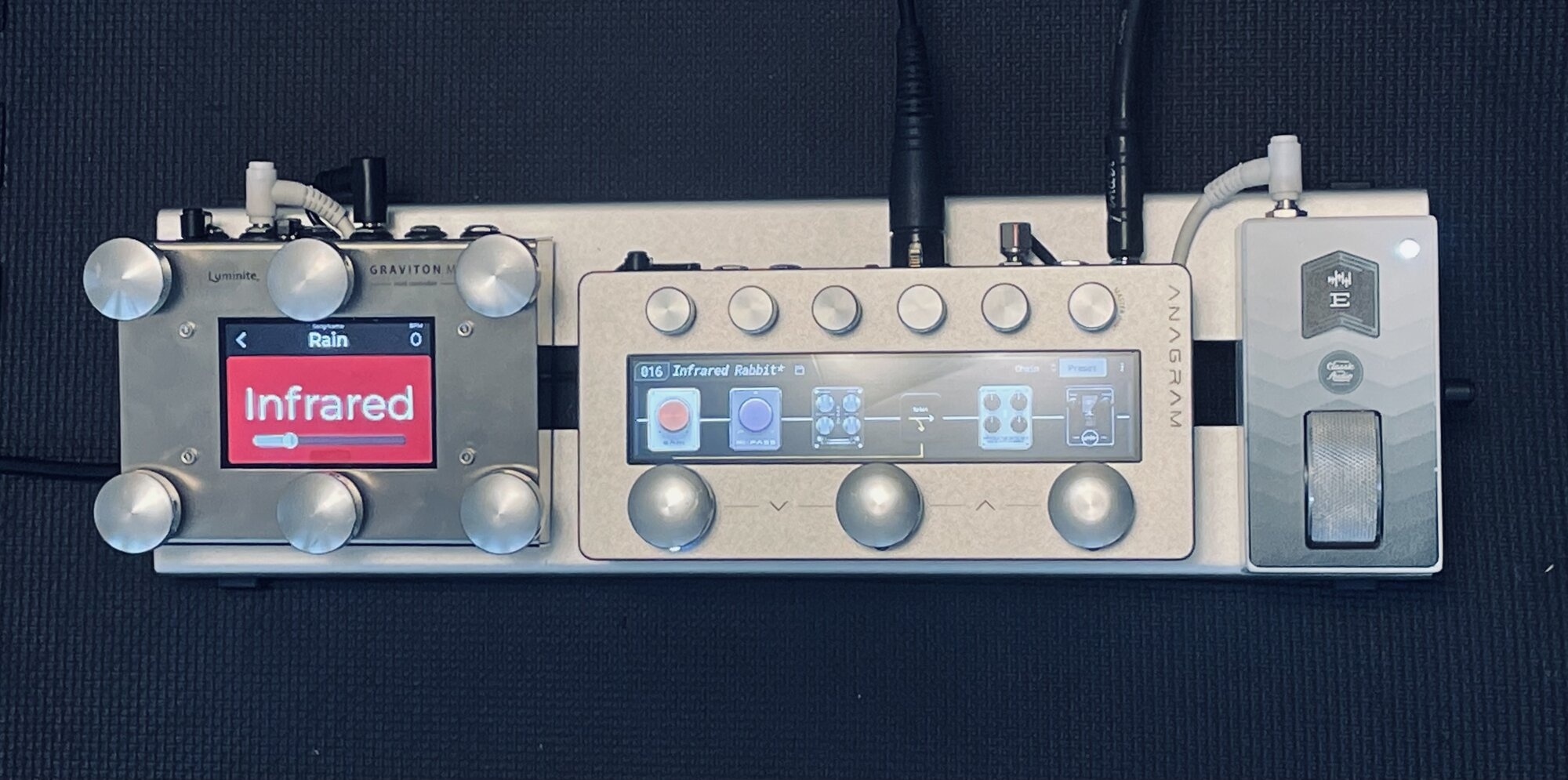
Not pictured is the Oscillator Devices Minerva (MIDI audio sample player) on the underside of the board. The Graviton M2 is choosing presets on the Anagram and audio files on the Minerva on a per-song basis; the Classic Audio expression roller is currently set up to change the audio player volume (via the M2). Will probably do more when MIDI implementation on the Anagram gets better, but all told this is pretty perfect for my needs.
Not pictured is the Oscillator Devices Minerva (MIDI audio sample player) on the underside of the board. The Graviton M2 is choosing presets on the Anagram and audio files on the Minerva on a per-song basis; the Classic Audio expression roller is currently set up to change the audio player volume (via the M2). Will probably do more when MIDI implementation on the Anagram gets better, but all told this is pretty perfect for my needs.

I have a pedaltrain nano coming and I was curious what velcro you all recommend if I'm going to switch out the pedals on the board a fair amount. I have had the really strong grippy velcro and it was a hassle getting the pedals off the board. Are any of you using the velcro that comes with the pedaltrain or have other recs?

I have a pedaltrain nano coming and I was curious what velcro you all recommend if I'm going to switch out the pedals on the board a fair amount. I have had the really strong grippy velcro and it was a hassle getting the pedals off the board. Are any of you using the velcro that comes with the pedaltrain or have other recs?
I've found that true velcro-style hook-and-loop degrades over time--the loops break, the hooks distend. So I don't use whatever comes with the board.
If by the "really strong grippy velcro" you mean the 3M Dual Lock, I do use that since I don't want the expensive pedals falling off. However, you're right--that makes the pedals almost impossible to remove on purpose.
To get around that challenge, I always use two strips with a gap in the middle along wider stretches. To remove the pedal, I put a small wooden ruler or stick in the gap and twist or pry--the pedal pops right off. Make sure it's wooden so it doesn't scratch the pedal or your board.
Ok cool, I do see a ton of people rave about dual lock. Just saw a video where they suggest putting the fuzzy side of the velcro across the board and then to use dual lock to fasten. That may work for me. I can use a plastic pry bar to remove them quickly. That's the tentative plan at the moment.

Just tried this myself for the first time not long ago, can confirm it works great!Ok cool, I do see a ton of people rave about dual lock. Just saw a video where they suggest putting the fuzzy side of the velcro across the board and then to use dual lock to fasten. That may work for me. I can use a plastic pry bar to remove them quickly. That's the tentative plan at the moment.

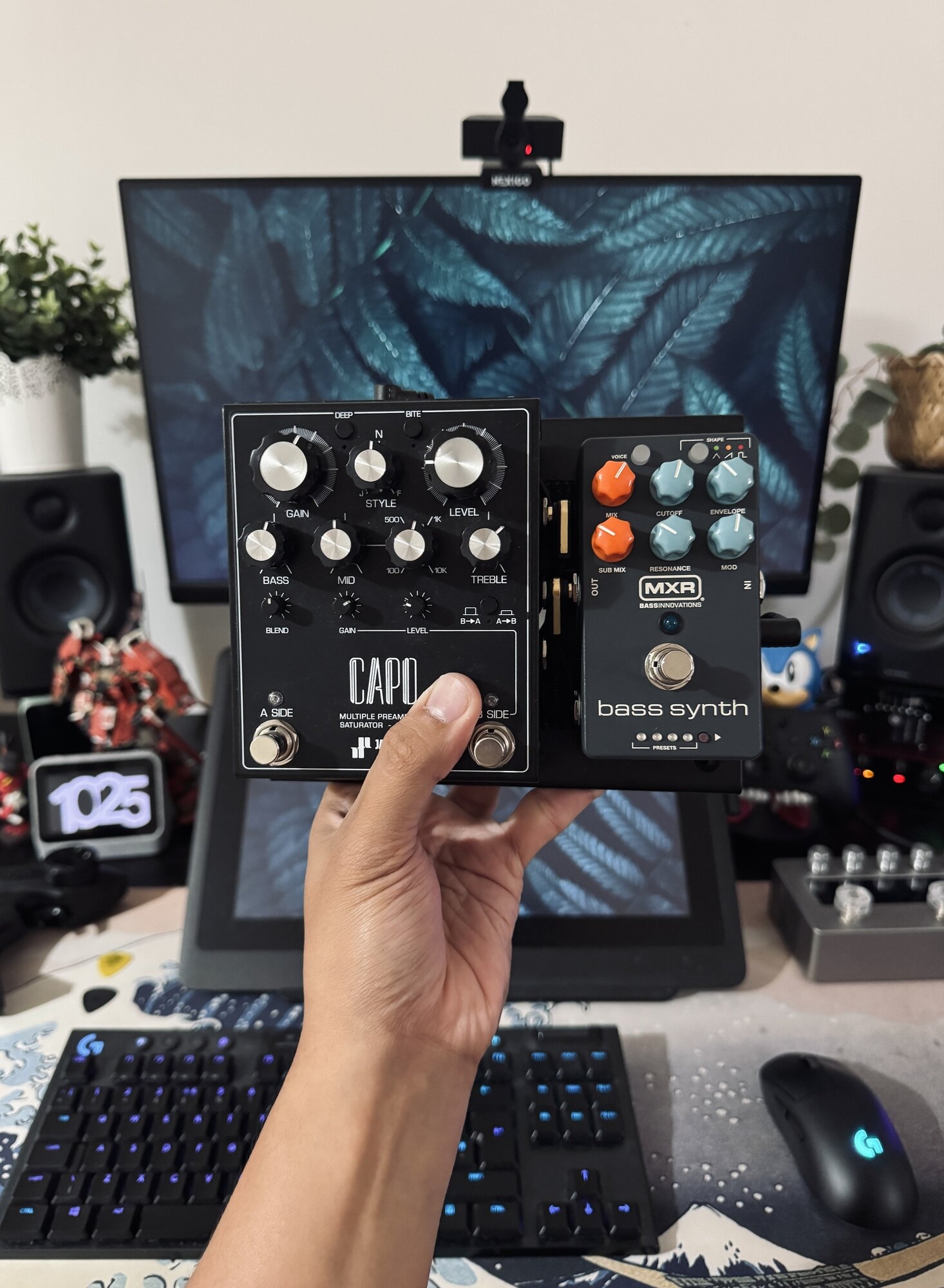
My little project. Just got the latest MXR bass synth. 1st 10 mins of noodling, I freakin' love it and all the stock presets are useable. Really faithful to the moog and synth sounds they aimed for. Will use this when we have plenty of Madonna,Whitney houston, MJ and 80s classic synth tunes in our sets.
I've always just used the Pedaltrain velcro and have never had any problems at all. I use a butterknife rather than just trying to rip pedals off the board, too.I've found that true velcro-style hook-and-loop degrades over time--the loops break, the hooks distend. So I don't use whatever comes with the board.
If by the "really strong grippy velcro" you mean the 3M Dual Lock, I do use that since I don't want the expensive pedals falling off. However, you're right--that makes the pedals almost impossible to remove on purpose.
To get around that challenge, I always use two strips with a gap in the middle along wider stretches. To remove the pedal, I put a small wooden ruler or stick in the gap and twist or pry--the pedal pops right off. Make sure it's wooden so it doesn't scratch the pedal or your board.
It was an April Fools special from @Sushi Box FXThat leftmost pedal name is realy funny. Translatable as passive agression
My D’Addario xpand comes like this from the factory and it works well with both Velcro and dual lock.Ok cool, I do see a ton of people rave about dual lock. Just saw a video where they suggest putting the fuzzy side of the velcro across the board and then to use dual lock to fasten. That may work for me. I can use a plastic pry bar to remove them quickly. That's the tentative plan at the moment.

I've never had any trouble with pedals coming off the board with just regular velcro. When I got my CIOKS SOL I knew it was going on the underside of the board so I decided I better use some of the dual lock just in case. That stuff is like glue. Whenever I go to move the SOL to another board it can be a battle pulling that thing off.
I drilled a few holes and screw my DC7 into the bottom of whatever Pedaltrain board I'm using. I used to velcro, then I used a CIOKS Grip, but it stripped out pretty easily, and hard mounting the supply puts it beyond doubt. It's also two screws, so no different than the Grip.
I have the mini grip coming for the Cioks Sol too. I used dual lock before to fasten the power underneath and it was brutal to remove. This is a lot cleaner setup, although my board is not going to go through rigorous touring anymore so I think the durability of the Grip will be ok for my case. This will be a studio board that I can quickly throw into a bag and go to other studios with, but also if a gig comes up I'll be all set.

The key to the dual lock is finding the "just right Goldilocks" amount. When I first assembled my pedalboard, I did what most do and placed a large piece on the pedal. Got that confident lock down and was "yeah". Tried moving things around and was like "this is impossible". I just use two thin strips on the back of the pedal. Enough to give confidence that it's secured but easy enough to remove.If by the "really strong grippy velcro" you mean the 3M Dual Lock, I do use that since I don't want the expensive pedals falling off. However, you're right--that makes the pedals almost impossible to remove on purpose.
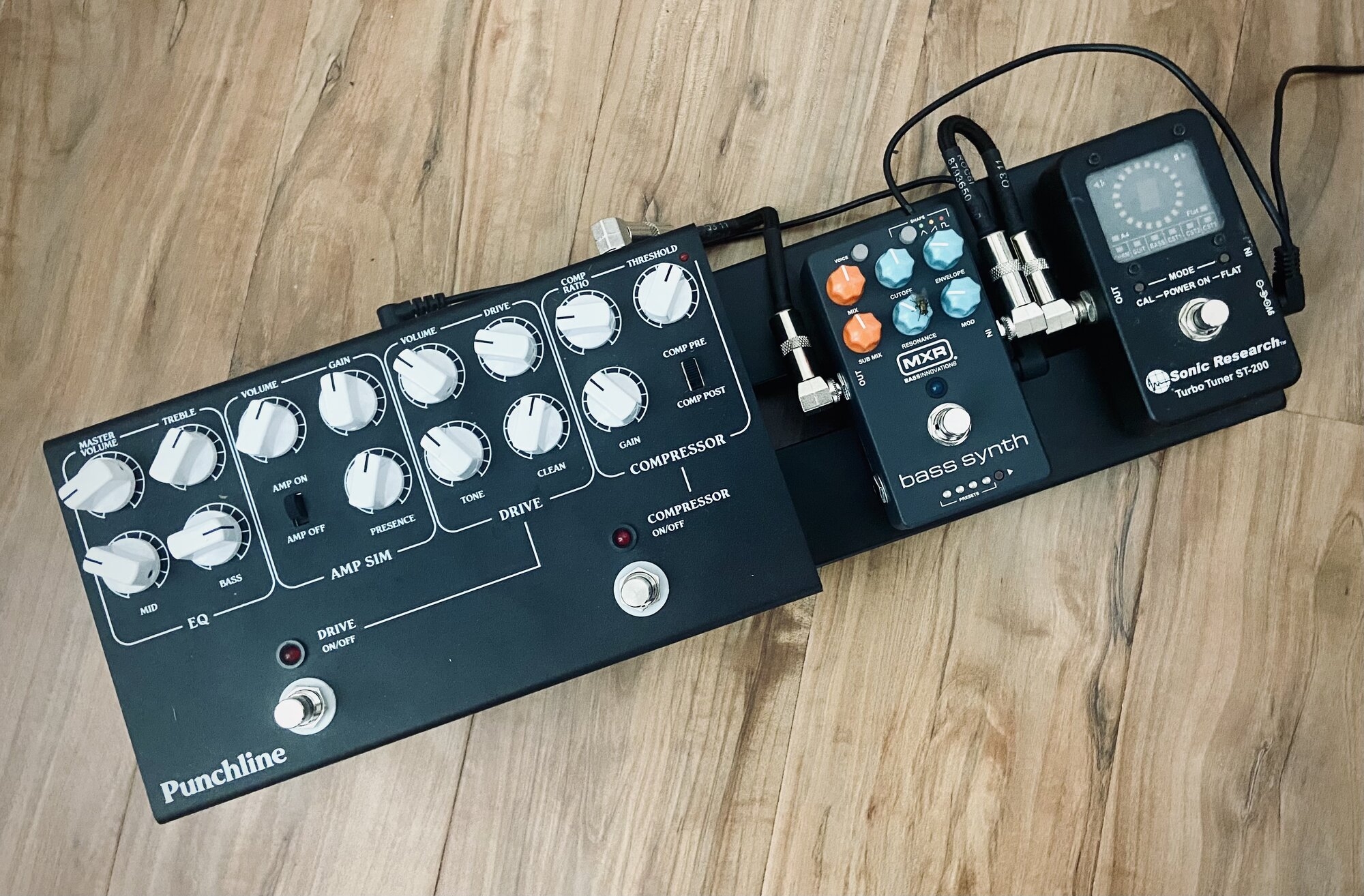
Turbo Tuner > JHS Punchline > MXR Bass Synth on a Nano+