• TalkBass has been independent since 1998. Add your voice.
    Create a free account to reply to discussions, view embedded media, and browse with fewer display ads.
    Join freeLog in
    Want zero display ads or expanded classifieds tools? Compare plans.

Show me your compact pedalboard setup

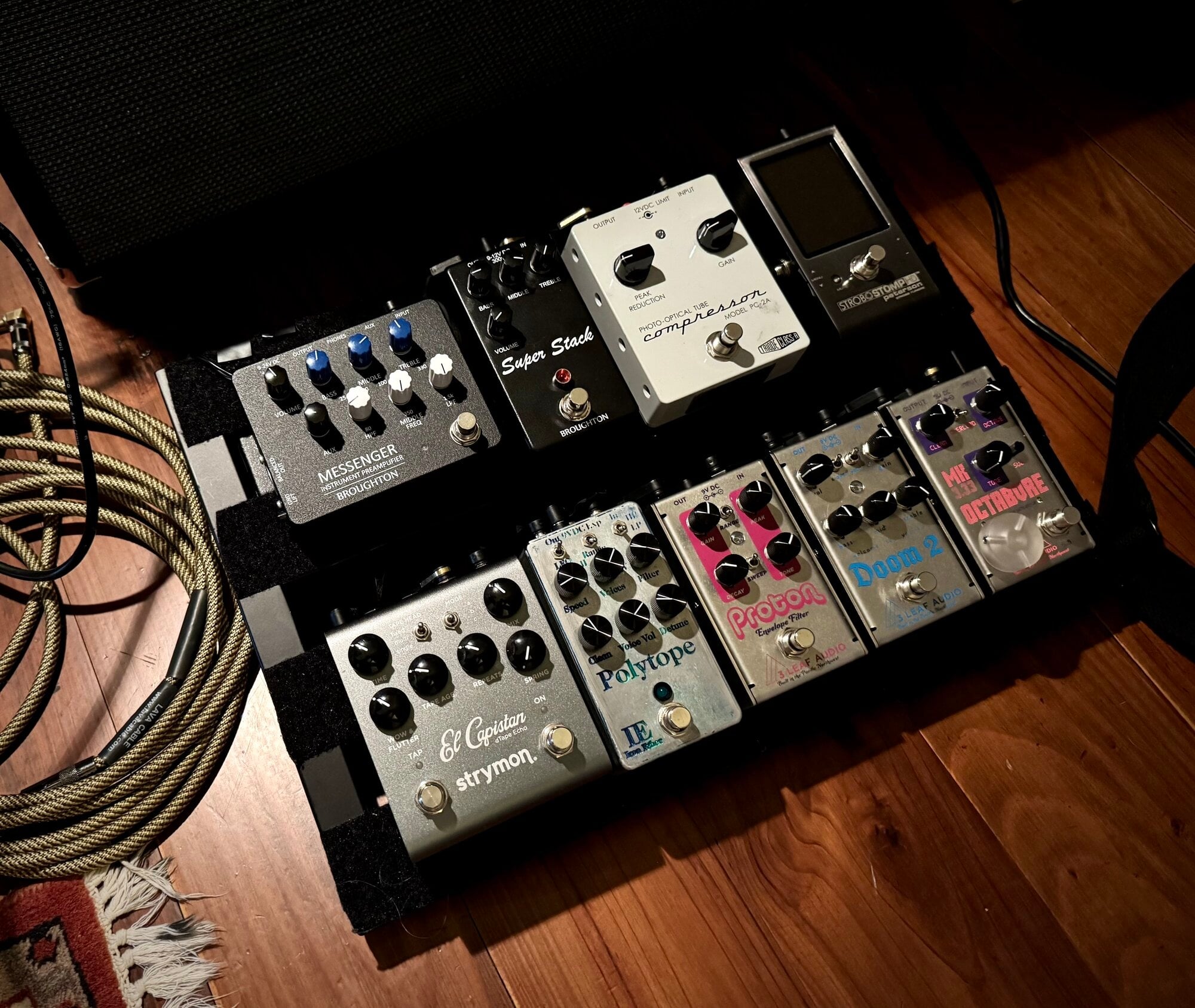
Needed a small board for the acoustic/coffee shop/arts festival-type band, but my usual always-on units are being taken up by the larger Dead covers group board (detailed above). I don’t want to transfer any pedals between bands - need just two stable boards, so I went to the shelf. I think it’ll serve its purpose well. Happy to have the Broughton Parametric back in the mix. We’re playing this street fair thing on Friday, so we’ll see how it goes.
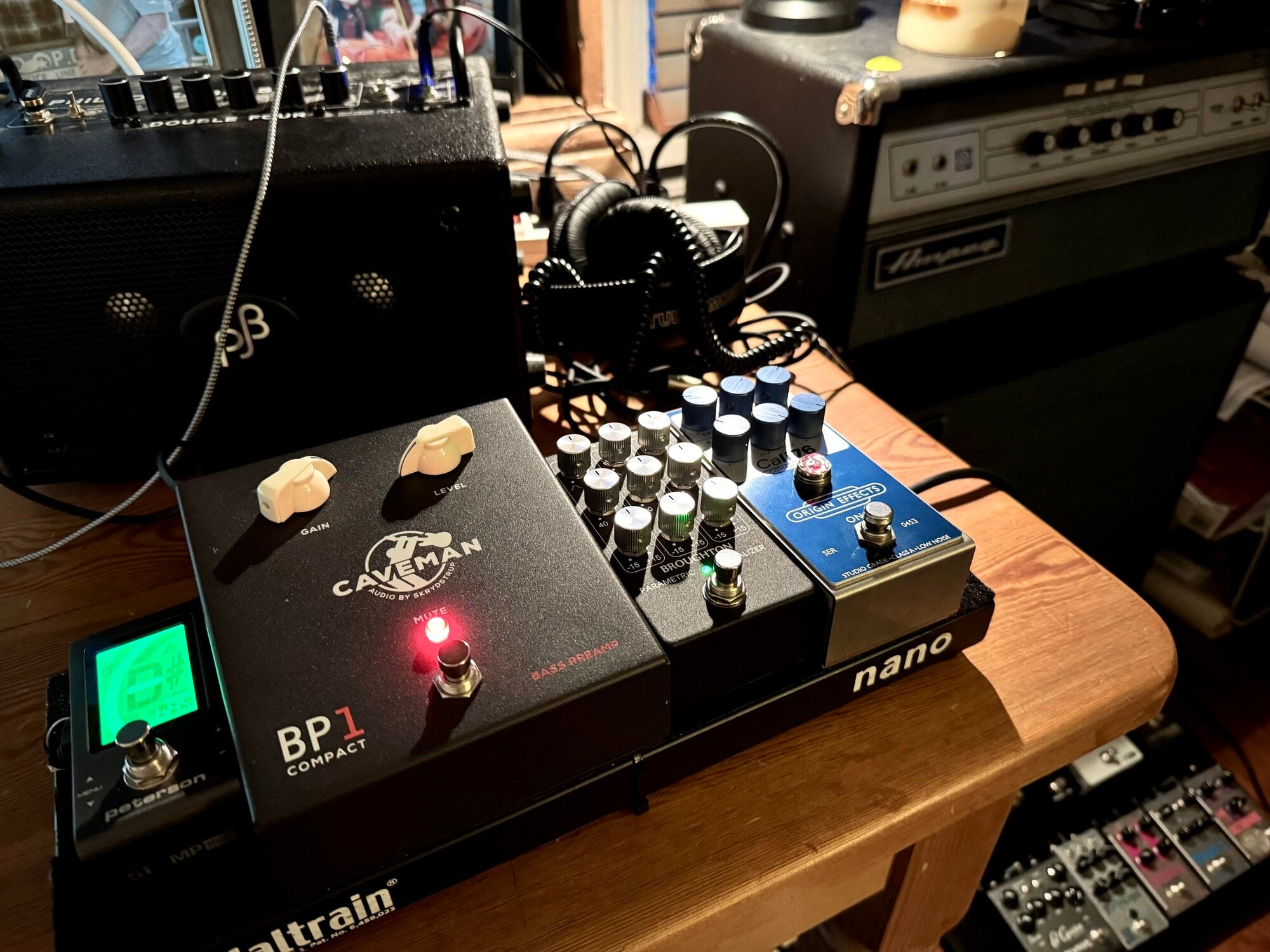
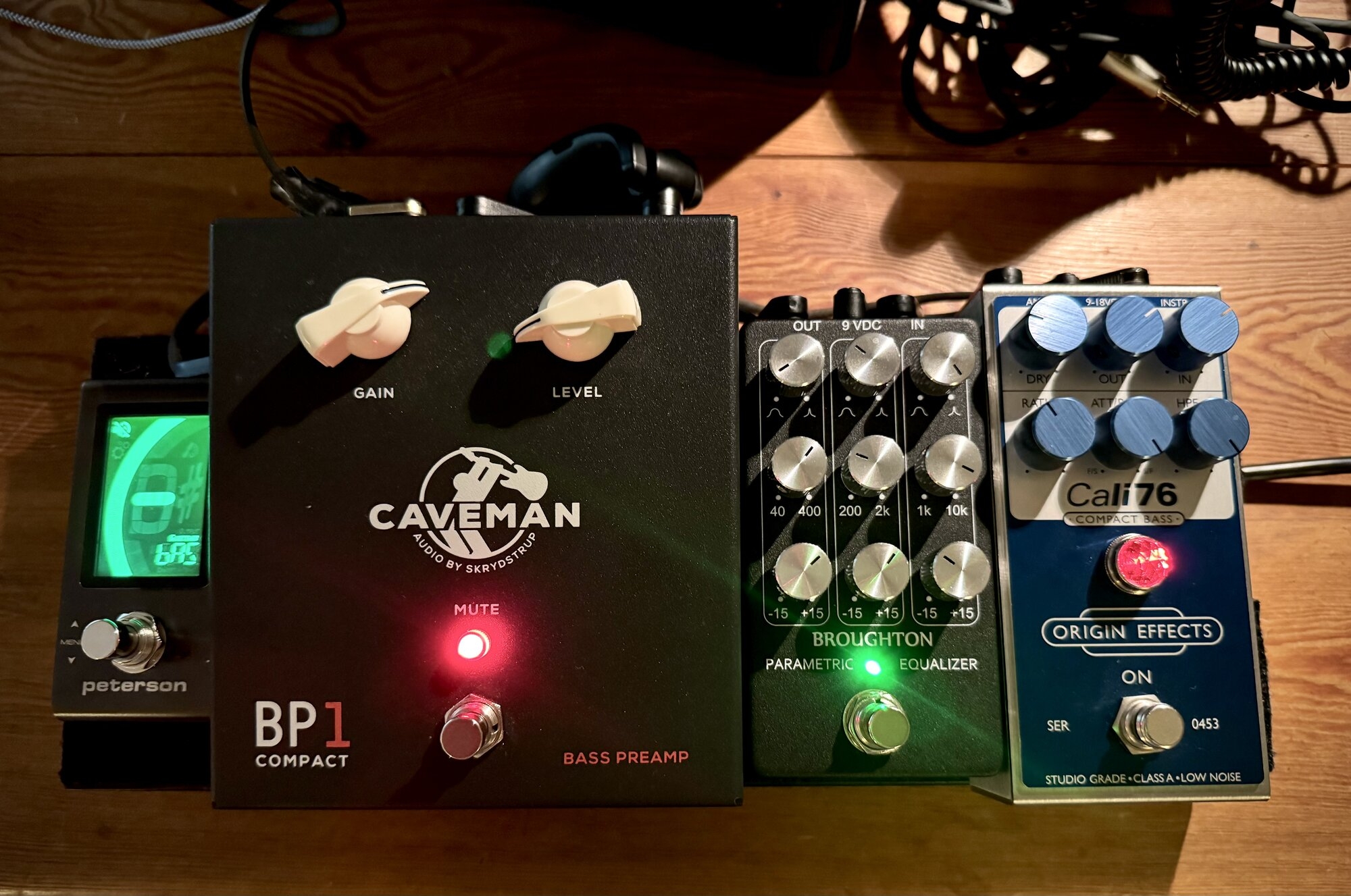
IMG_7635.jpeg

IMG_7639.jpeg

IMG_7636.jpeg
 
What are you powering this with?

I had this tuner and the Bass Jive on a board powered with a Cioks 4 and i just constantly had noise and i couldn't work out why.
I assume you've had no issues?
I'm using a NUX Zeus Jr. as I needed something skinny to sit under the board - there's not much depth there. No problems at all with the Bass Jive.

The Bass Jive says on the tin that it takes 9v only, but the designer said it'll happily take 12 or 18v for more headroom, so I have it in a swtiched 18v port. The Finally is listed as 400mA and it was in a 500mA port - but it draws a fraction more when the tube warms up - and that was cycling the demand protection relay on that port. So the pedal would switch off and on a couple of times when it did a cold start, as the power supply would close the circuit to protect itself and the pedal - then switch back on a second later. Nathan at Sushi said that wouldn't hurt it, but as I had a spare port free, I used a current-doubler lead to power it with two of the power supply ports (the green socket) and now it starts up fine.

Screenshot 2026-05-05 at 07.34.29.png
 
I'm using a NUX Zeus Jr. as I needed something skinny to sit under the board - there's not much depth there. No problems at all with the Bass Jive.

The Bass Jive says on the tin that it takes 9v only, but the designer said it'll happily take 12 or 18v for more headroom, so I have it in a swtiched 18v port. The Finally is listed as 400mA and it was in a 500mA port - but it draws a fraction more when the tube warms up - and that was cycling the demand protection relay on that port. So the pedal would switch off and on a couple of times when it did a cold start, as the power supply would close the circuit to protect itself and the pedal - then switch back on a second later. Nathan at Sushi said that wouldn't hurt it, but as I had a spare port free, I used a current-doubler lead to power it with two of the power supply ports (the green socket) and now it starts up fine.

View attachment 7488185
Maybe next time I put the Bass Jive on a board I'll try it at 18v to see if I get a different result.
 
  • Like
Reactions: 900se
I don't really go to many jams anymore, but I always like having a tiny grab-&-go board available that I can just throw in the gigbag front pocket. Also useful for quick rehearsals where I just can't be bothered bringing my main setup.

I have a couple of different small wood cutting boards covered in velcro sheets that are useful for these small boards.

Battery powered, tuner and a VST-ish preamp pedal will get me through most random rock jams. Works in front of an amp or straight to the board.

1777973439762.png
 
I (recently) scored my dream portaflex in a trade; late last night put together this signal chain for a simple, straightforward, and leisurely drive.

Off-board wildcard: Green Ringer//
ST300//KA2A//Surveyor//Loop&Gate(V7D muff in loop)
EBS flats +1VHT patch, Cioks AC10

IMG_7003.jpeg


Plugged in, no sound other than the amp’s “life” noise floor thru the speaker. Concern. Brief dilemma. Quick solution found.

IMG_7005.jpeg


It works, sounds much better when one actually remembers to connect the pedalboard lead to the amp :thumbsup:
 
On the left, the compact pedalboard pedalboard I’ve loved for the past 5 years. Been playing in a new band lately (less classic and power pop, more modern pop, 3rd wave emo, and pop punk stuff), so wanted a harder distortion (homemade basstortion clone) and a synth pedal. But I didn’t want to move to a large board. So, picked up a new power supply, some duplicates of the staples (RC Booster, Keeley Bassist, Zoom 60b, and tuner) and built the board on the right. Grab the right board and I’m good to go!

IMG_4447.jpeg
 
On the left, the compact pedalboard pedalboard I’ve loved for the past 5 years. Been playing in a new band lately (less classic and power pop, more modern pop, 3rd wave emo, and pop punk stuff), so wanted a harder distortion (homemade basstortion clone) and a synth pedal. But I didn’t want to move to a large board. So, picked up a new power supply, some duplicates of the staples (RC Booster, Keeley Bassist, Zoom 60b, and tuner) and built the board on the right. Grab the right board and I’m good to go!

View attachment 7493450

Might be the first time I've seen a PSM-5 used.
 
  • Like
Reactions: instrumentlevel
Might be the first time I've seen a PSM-5 used.
Totally! I’ve played my way through a couple of LS-2s over the past three decades, replacing jacks and switches as they degrade. Turns out I never use them to their potential. So when the last LS finally gave up the ghost, I remembered I had the PSM-5 somewhere. After 15 years in the bottom of a bin, it still works great (aside from those weak LEDs Boss used).

Or it was free, and I’m just a cheapskate.

(Says the guy who just bought duplicate pedals!!!)
 
Last edited: