
This is a NASH 63JB. I thought this one looks legit so I bought it.

Enjoy the benefits of a premium membership!
Upgrade Account
-
TalkBass has been independent since 1998. Add your voice.
Create a free account to reply to discussions, view embedded media, and browse with fewer display ads.
Join free Log in
Want zero display ads or expanded classifieds tools? Compare plans.
You are using an out of date browser. It may not display this or other websites correctly.
You should upgrade or use an alternative browser.
You should upgrade or use an alternative browser.
SHOW YOUR DISTRESSED FINISHES!
- Thread starter JIO
- Start date
More options
Who Replied?

- Jun 30, 2010
- 49,612
- 222,129
- Disclosures
- musician/artist/owner - Gildaxe
View attachment 3795963
This is a NASH 63JB. I thought this one looks legit so I bought it.
Thanks for doing so!



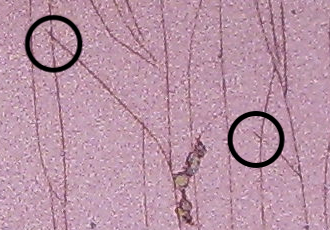
BTW on the issue of razor checking (which I'm not slagging - it's an interesting technique which takes skill and a whole lot of time), here's a 'tell', beyond general look, on why I believe that BMM is done with that method - note the places where the check lines cross over the other lines - real checking stops when it hits another crack as does forced temperature change checking:
So maybe you can clear something up. I thought that mint (green) guards were called that due to that changing of color of the white guards, at least until they started intentionally making mint guards? Is that not correct? From your sample it appears the white guards should have turned more yellow than green.
Different materials. The 'green' guards (generally seen on basses mid 1962 - 1964 -- earlier on guitars) were made from celluloid/nitrate material and you're correct, they were white and discolored over time to the greenish hue.
Later '64, Fender switched to vinyl/plastic and those tend to stay more white or discolor more yellowish or towards the 'parchment' look. The one of mine in the photo is this type and is more discolored - towards yellow - than average. There were also some hybrid tort guards around this time which have plastic W-B-W with celluloid tort top layer (on those tort guards starting in 1959 all 4 layers were celluloid).
Later - like the 90's - plastic guards tinted green became common to simulate the look of the aged celluloid guards. They usually don't look all that convincing though. Partly as the old ones shrank and don't lay perfectly flat. The real ones tend to look more 'waxy' than the plastic ones as well.
Last edited:

Different materials. The 'green' guards (generally seen on basses mid 1962 - 1964 -- earlier on guitars) were made from celluloid/nitrate material and you're correct, they were white and discolored over time to the greenish hue.
Later '64, Fender switched to vinyl/plastic and those tend to stay more white or discolor more yellowish or towards the 'parchment' look. The one of mine in the photo is this type and is more discolored - towards yellow - than average. There were also some hybrid tort guards around this time which have plastic W-B-W with celluloid tort top layer (on those tort guards starting in 1959 all 4 layers were celluloid).
Later - like the 90's - plastic guards tinted green became common to simulate the look of the aged celluloid guards. They usually don't look all that convincing though. Partly as the old ones shrank and don't lay perfectly flat. The real ones tend to look more 'waxy' than the plastic ones as well.
Thanks David for the thorough explanation here. You mention the guards shrink and don’t lay flat. Did you mean to say waxy or wavy?
Last edited:
That’s one I photographed. There’s a bunch more pics of it in a long forgotten website of mine .... it was at Link Removed
there are a bunch more first gen basses there as well....
Those are great shots. Thanks for sharing!
Thanks David for the thorough explanation here. You mention the guards shrink and don’t lay flat. Did you mean to say waxy or wavy?
Both! Waxy and wavy. The material itself has a very slight translucence which, at least I think, looks sort of wax like. But, yes, also wavy due to warpage/shrinkage.
Both! Waxy and wavy. The material itself has a very slight translucence which, at least I think, looks sort of wax like. But, yes, also wavy due to warpage/shrinkage.
Thanks again for fielding my questions!
Thanks again for fielding my questions!
You're welcome! Got lots of useless info here

You're welcome! Got lots of useless info here
Me too, let me know if you ever have any questions on motion design.


Really enjoyed that, @Dark Horse !That’s one I photographed. There’s a bunch more pics of it in a long forgotten website of mine .... it was at Link Removed
there are a bunch more first gen basses there as well....

Man, that's beautiful.
- Jun 30, 2010
- 49,612
- 222,129
- Disclosures
- musician/artist/owner - Gildaxe
View attachment 3796028 1977 P that I bought in early 1978. For some reason during a rehearsal I did a Paul Simonon treatment and broke the body into two pieces. After regaining my composure, I repaired it and did some body work to smooth things out but never got around to repainting. It still sports the primer/filler look, but I'm used to it now. Big old neck, and it must weigh 11 pounds, but plays and sounds good. Dimarzio pickup and noname tort guard have been on there a long time too.
I like the look more because it has a story behind it!

- Jun 30, 2010
- 49,612
- 222,129
- Disclosures
- musician/artist/owner - Gildaxe
BTW on the issue of razor checking (which I'm not slagging - it's an interesting technique which takes skill and a whole lot of time), here's a 'tell', beyond general look, on why I believe that BMM is done with that method - note the places where the check lines cross over the other lines - real checking stops when it hits another crack as does forced temperature change checking:
View attachment 3796038
relic forensic

- Jun 30, 2010
- 49,612
- 222,129
- Disclosures
- musician/artist/owner - Gildaxe
Different materials. The 'green' guards (generally seen on basses mid 1962 - 1964 -- earlier on guitars) were made from celluloid/nitrate material and you're correct, they were white and discolored over time to the greenish hue.
Later '64, Fender switched to vinyl/plastic and those tend to stay more white or discolor more yellowish or towards the 'parchment' look. The one of mine in the photo is this type and is more discolored - towards yellow - than average. There were also some hybrid tort guards around this time which have plastic W-B-W with celluloid tort top layer (on those tort guards starting in 1959 all 4 layers were celluloid).
Later - like the 90's - plastic guards tinted green became common to simulate the look of the aged celluloid guards. They usually don't look all that convincing though. Partly as the old ones shrank and don't lay perfectly flat. The real ones tend to look more 'waxy' than the plastic ones as well.
Yep, for fully convincing relic'ing one needs to go that extra mile focusing on the pg. On my '68 Coral, the clear pg has turned yellowish and because the body is so sculpted/tapered the flat pg, which is is relatively thick became wavy from screw to screw. Part of the gestalt of a vintage bass is how it becomes less "perfect" (new and shiny) and yet more perfect over time.
Tommy Shannon's Jazz Bass:

That bass has some history:
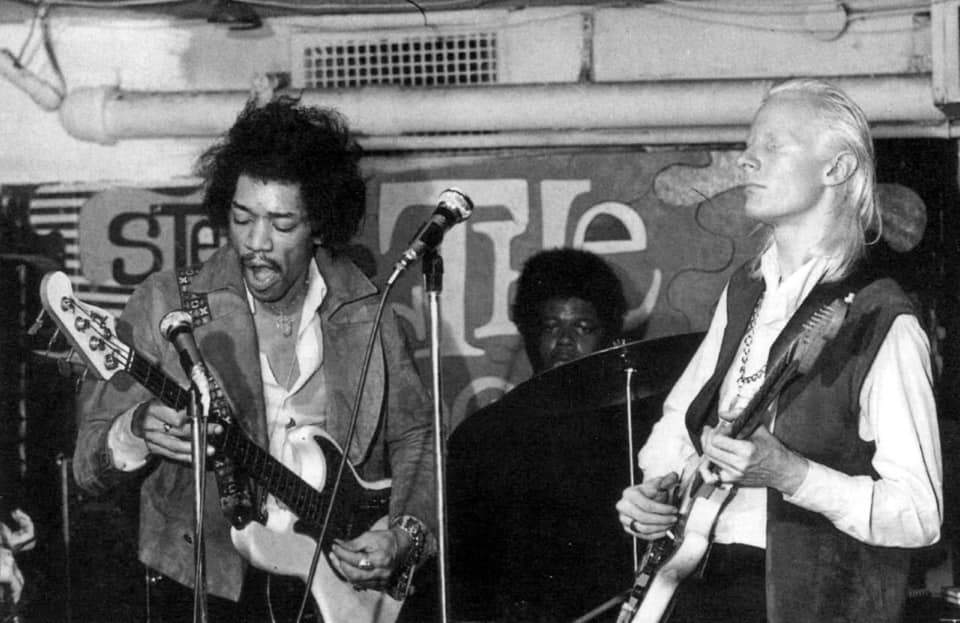

That bass has some history:
- Jun 30, 2010
- 49,612
- 222,129
- Disclosures
- musician/artist/owner - Gildaxe
Tommy Shannon's Jazz Bass:
View attachment 3796586
That bass has some history:
View attachment 3796587
View attachment 3796588
That's all kind of awesome!


