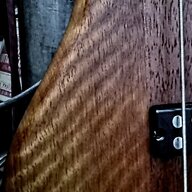
WOW!That's amazing! Thanks for posting! What kind of guitar is it?
Looks like a Magnatone Hurricane


TalkBass has been independent since 1998. Add your voice.
Create a free account to reply to discussions, view embedded media, and browse with fewer display ads.
Join free Log in
Want zero display ads or expanded classifieds tools? Compare plans.
WOW!


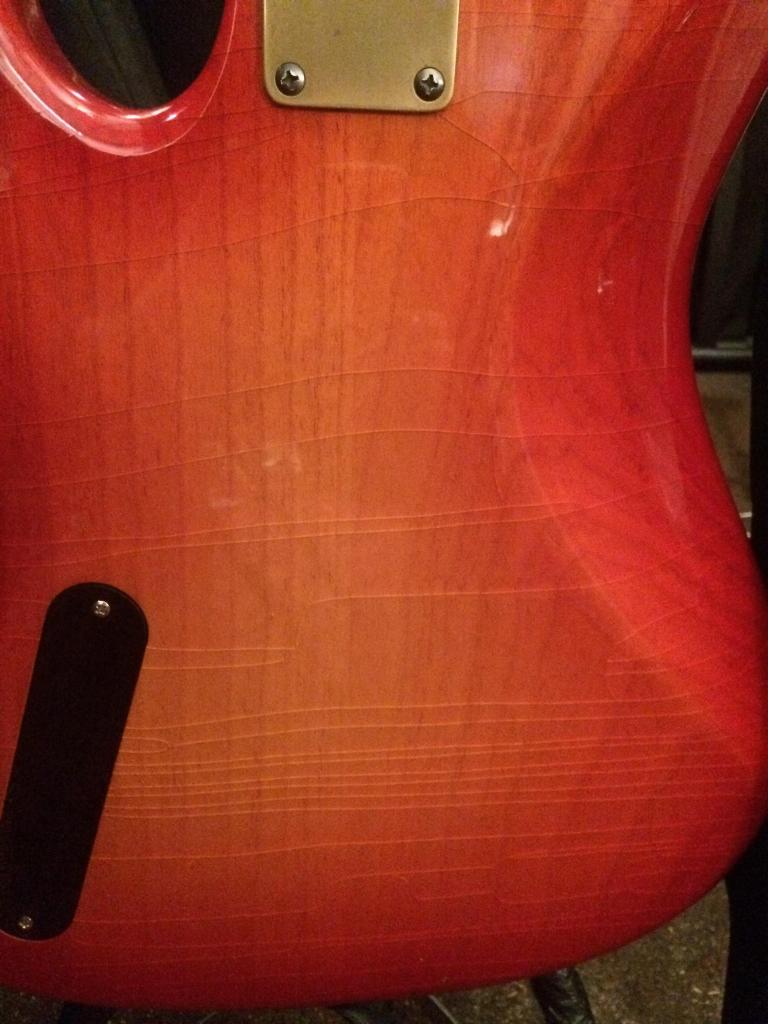
Not sure if this counts as "distressed" or just insane lacquer checking, but fwiw:

I can be a take it or leave it guy on "relic-ing" as there are soooo many different results and different techniques that each individual think actually looks "right". To each his own, but MAN, I AM ALL ABOUT THIS ONE! *SPLOOOSH*FCS '56 P-bass gold sparkle 'relic' currently on ebay
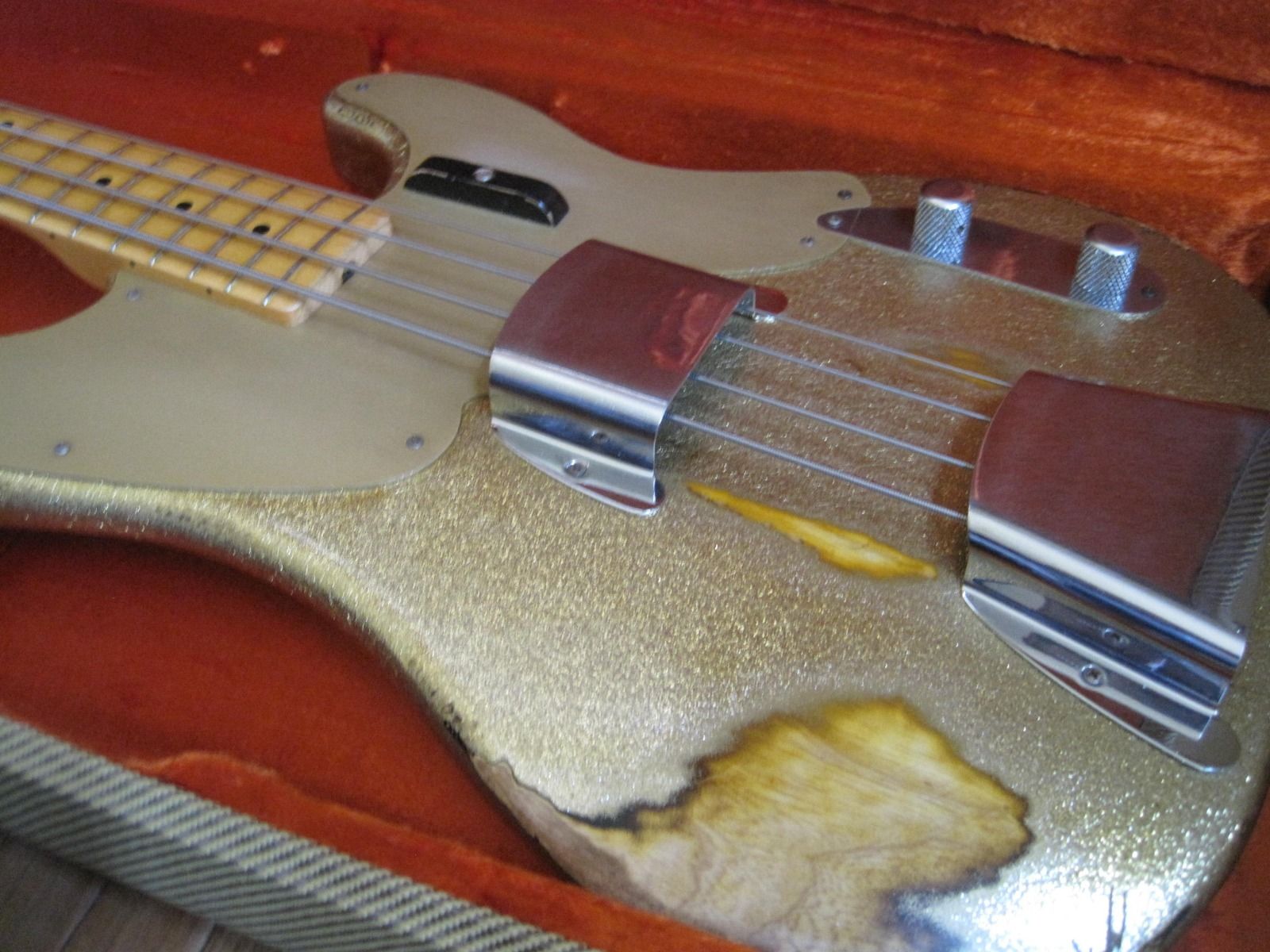
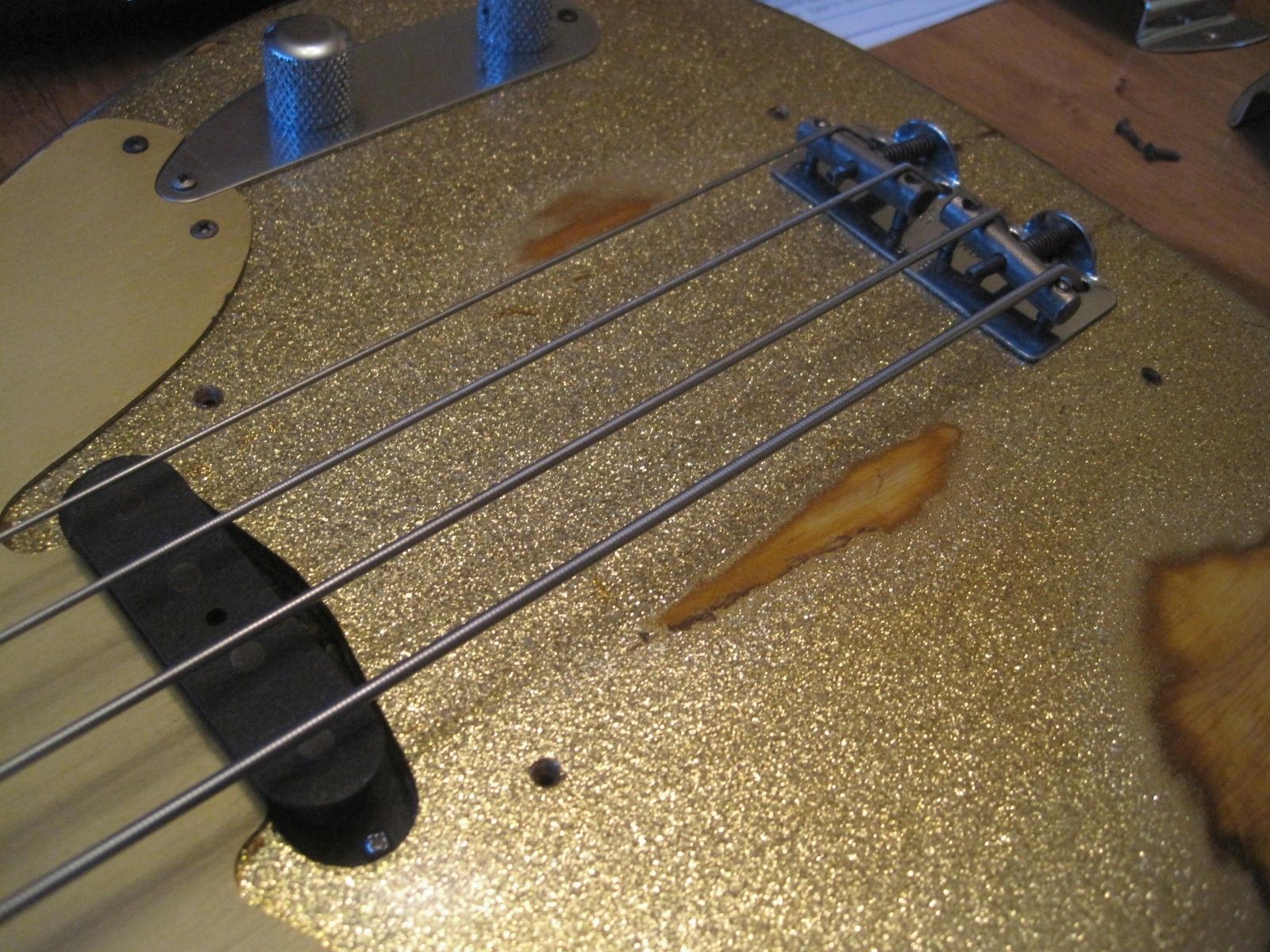
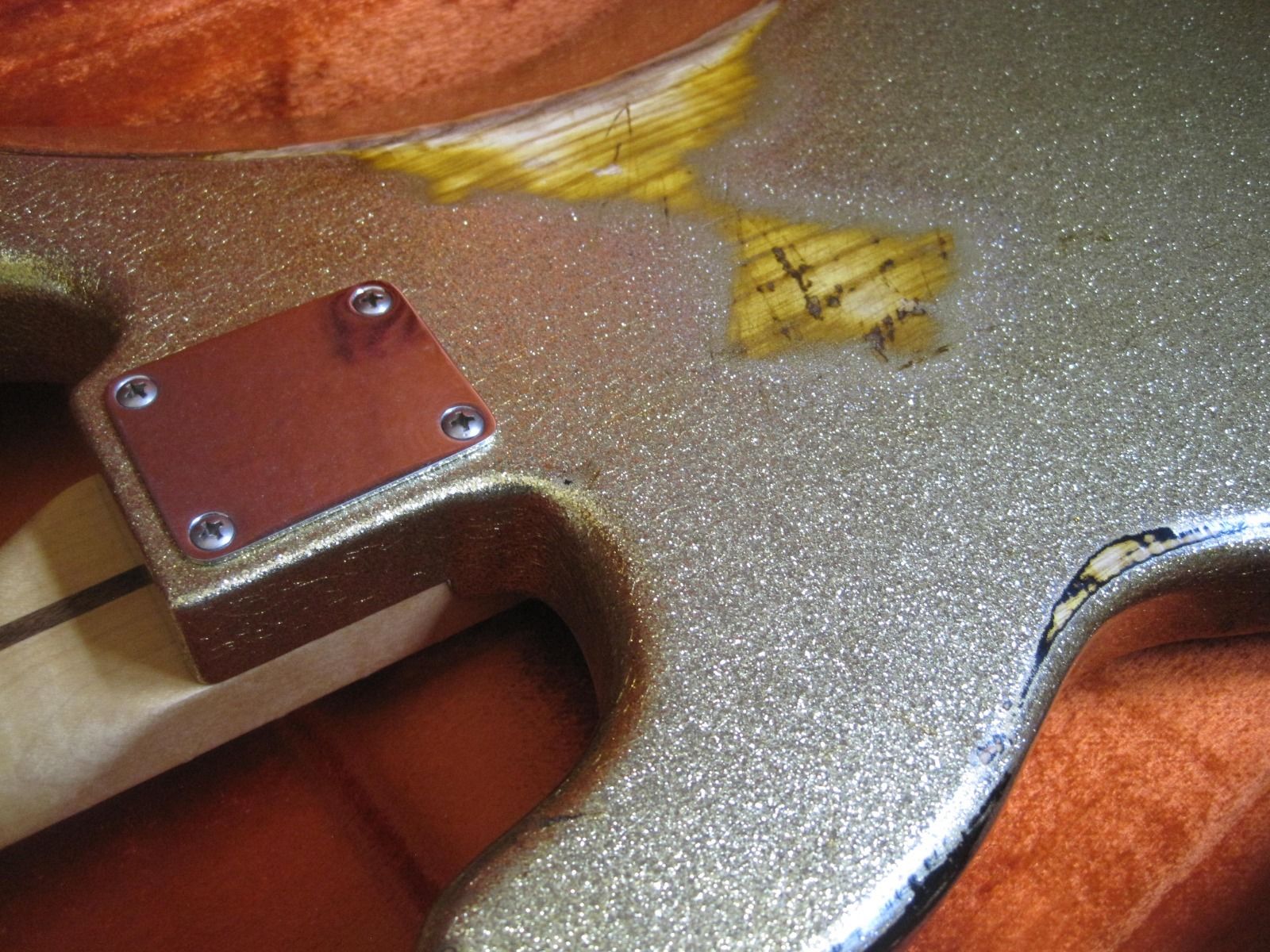
I can be a take it or leave it guy on "relic-ing" as there are soooo many different results and different techniques that each individual think actually looks "right". To each his own, but MAN, I AM ALL ABOUT THIS ONE! *SPLOOOSH*
 I like shiny, and in fact I think a very distressed finish like on the lefty P-bass emphasizes/brings into focus the shiny bits left because of the wear. In summery, it's a big world and there's plenty of shiny instruments out there to coddle.
 This thread is a serious study and consideration of the iconic look and implied history of distressed instruments to be enjoyed visually and discuss philosophically. A continued welcome to all who have open minds and eyes.
.....
The distressed glitter P is cool even more so because those sparkly finishes are so artificial looking.(no hint of wood showing through like on a 3TSB) So seeing the core wood starkly revealed as the surface is worn away really pops because it's natural/organic vs artificial/superficial.....
Agreed. I used to paint for this guy http://davesguitar.com/ and still do some painting and have owned many distressed instruments but at a time when they came by it the "hard way" so to speak (pre "relic-ing" era). I do enjoy a nice vintage distressed finish...so much character and history. I remember reading an interview with Jaco once where his bass was discussed and he said how he knew where every dent ding and splat of chicken grease was on it. Also as an artist (of the visual media type) there is something artistic about a nice vintage, worn in instrument much the same as an aged painting. My wife/beautiful lab assistant refers to guitars as art pieces, literally, (which helps when I want another one LOL) and I really appreciate the handwork that goes into a "well done" relic.Yes, relicing affected (as a technique) can have varying results both good and bad. (or worst, mediocre) Time and time again the whole notion of 'distressed' rises to the surface of the debate. Those who worship smooth and shiny (not insinuating you here - just follow me) will react the strongest to a distressed finish for two reasons; if real it is looked at as "abused" and therefore not "worth" as much, and if used as an affected look, because it's not "real/earned" regardless of quality of technique. To those folks I respect their right to have this aesthetically challenged opinion but just wish they would return to polishing their shiny instruments and know we've all heard their side of the story ad nauseam and "one more time" won't impress or persuade anyone thank you. I have my own theory why people think like this, but Jim, Jim - I'm a bass player/artist - not a doctor!
…as you GFB just illustrated (the open-minded version) which is once you see the gestalt of the technique - you are able to like it, or not based on 'seeing' it for what it is - a visual artistic 'look'. As an artist I look at it objectively as an object, as a vessel that embodies a history of use with a treasure trove of stories to imagine caused all that 'mojo', and I appreciate when it's done well. It's like going to a film and acknowledging the 'suspension of disbelief' - one accepts it's not real, but allows themselves to enjoy the fantastic presented before them. If distressing is done well, it shows not only believable 'mojo', inviting that use history imagined, but it displays the artists' skill and their critical eye for mocking/replicating/imitating reality artistically.
The distressed glitter P is cool even more so because those sparkly finishes are so artificial looking.(no hint of wood showing through like on a 3TSB) So seeing the core wood starkly revealed as the surface is worn away really pops because it's natural/organic vs artificial/superficial. I'm not especially crazy about the blue/red FCS P as those two colors always clash in my eye and the distressing is just not as good on that one. The lefty with real use mojo is hands down awesome -
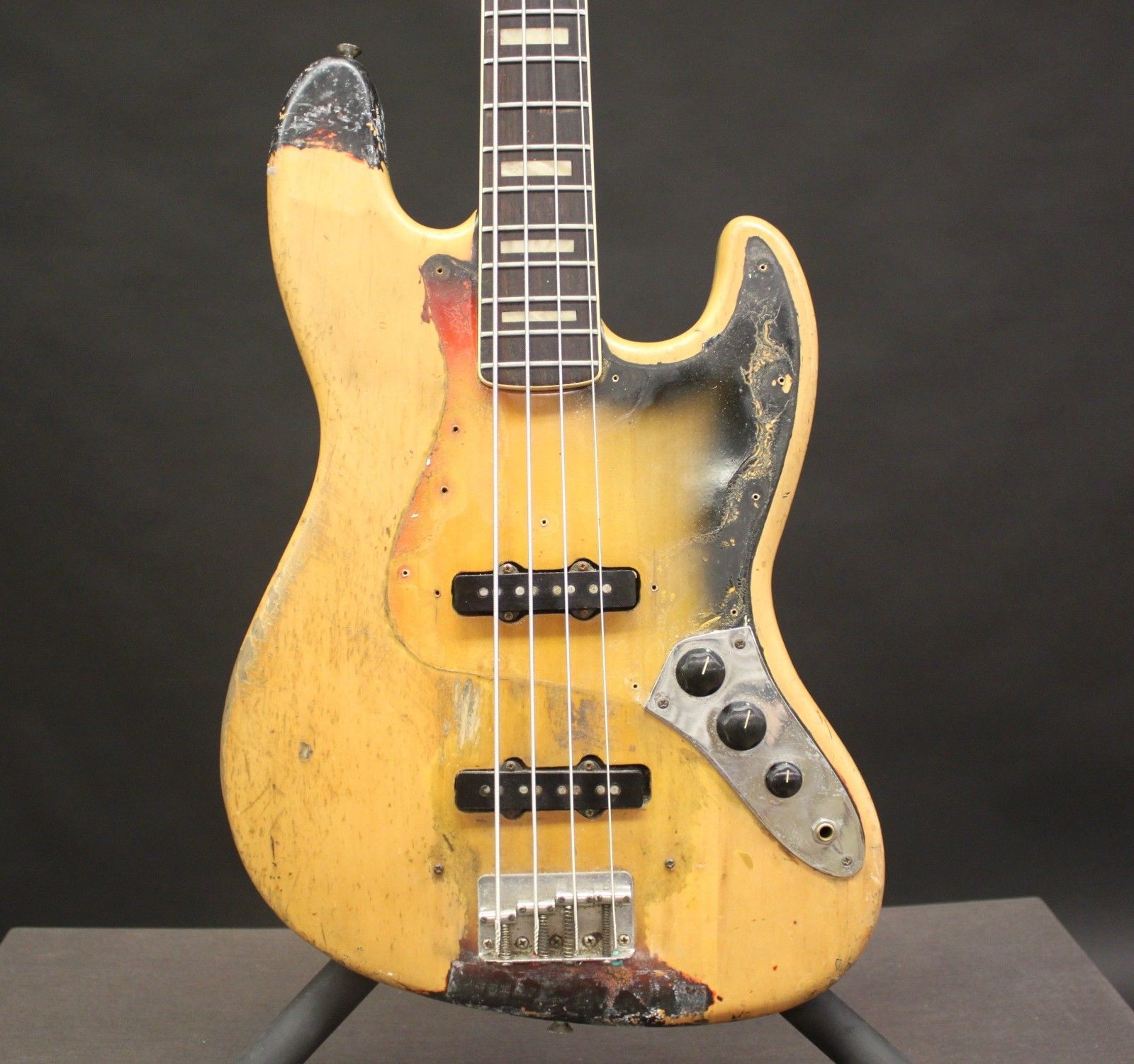
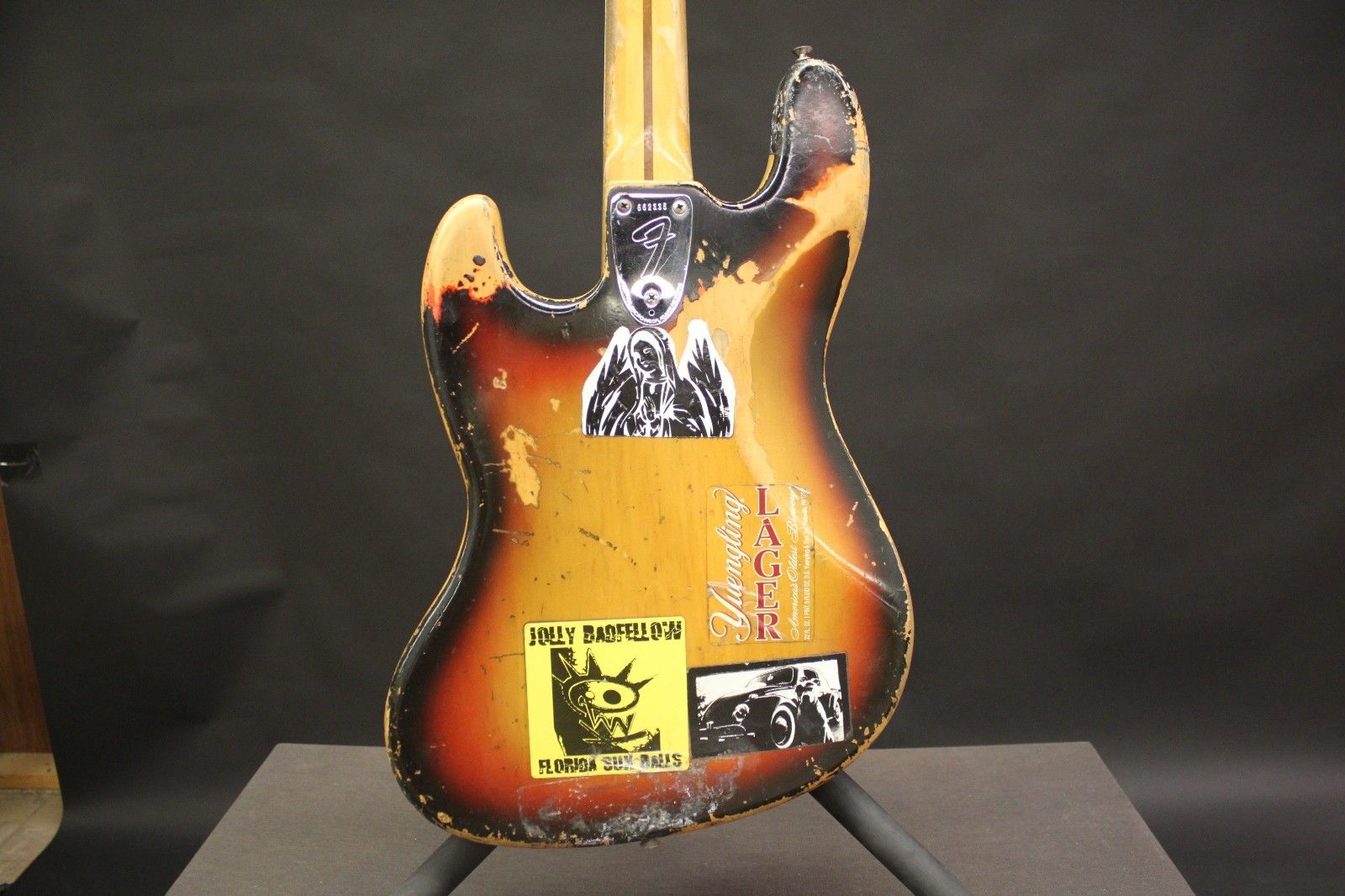
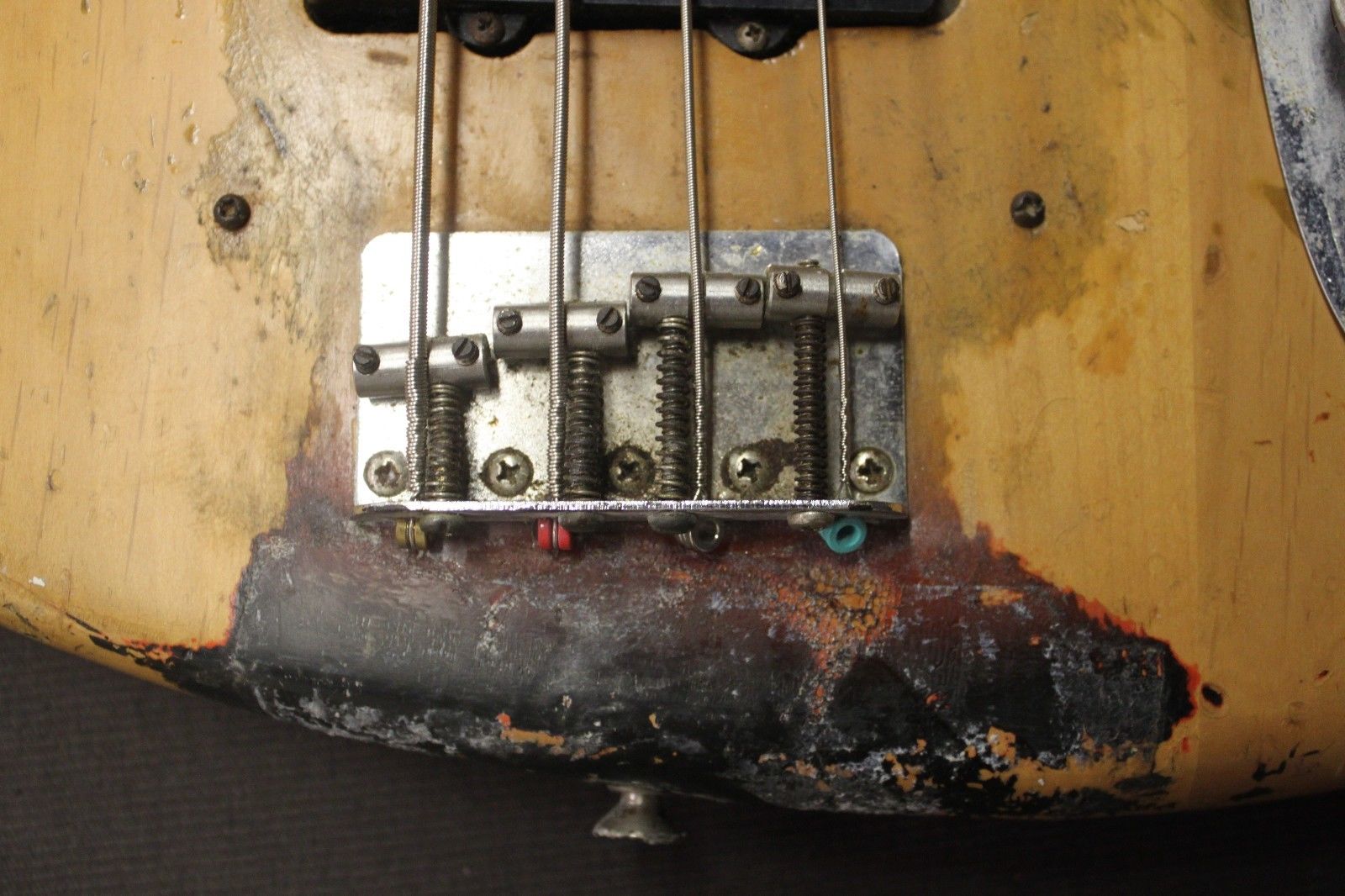
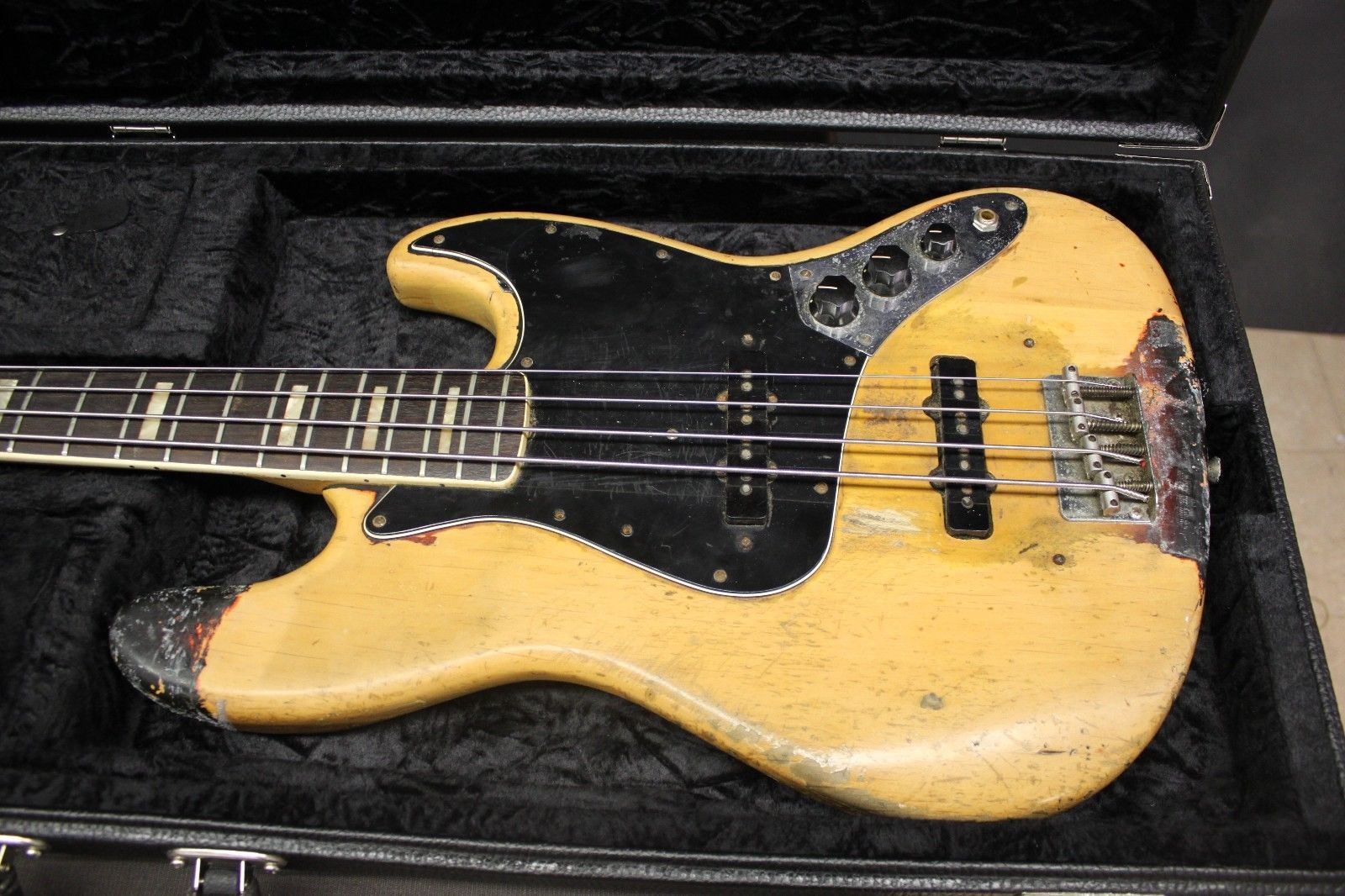
That '75 J sure has been rode hard, just look at the rusted screws, now moldy duct tape residue on body, deep pick gouges & scratches on body & pickguard and punk stickers on body back.From an ebay auction - '75 J