
Enjoy the benefits of a premium membership!
Upgrade Account
-
TalkBass has been independent since 1998. Add your voice.
Create a free account to reply to discussions, view embedded media, and browse with fewer display ads.
Join free Log in
Want zero display ads or expanded classifieds tools? Compare plans.
You are using an out of date browser. It may not display this or other websites correctly.
You should upgrade or use an alternative browser.
You should upgrade or use an alternative browser.
Slapping on a p bass
- Thread starter Yup
- Start date
More options
Who Replied?
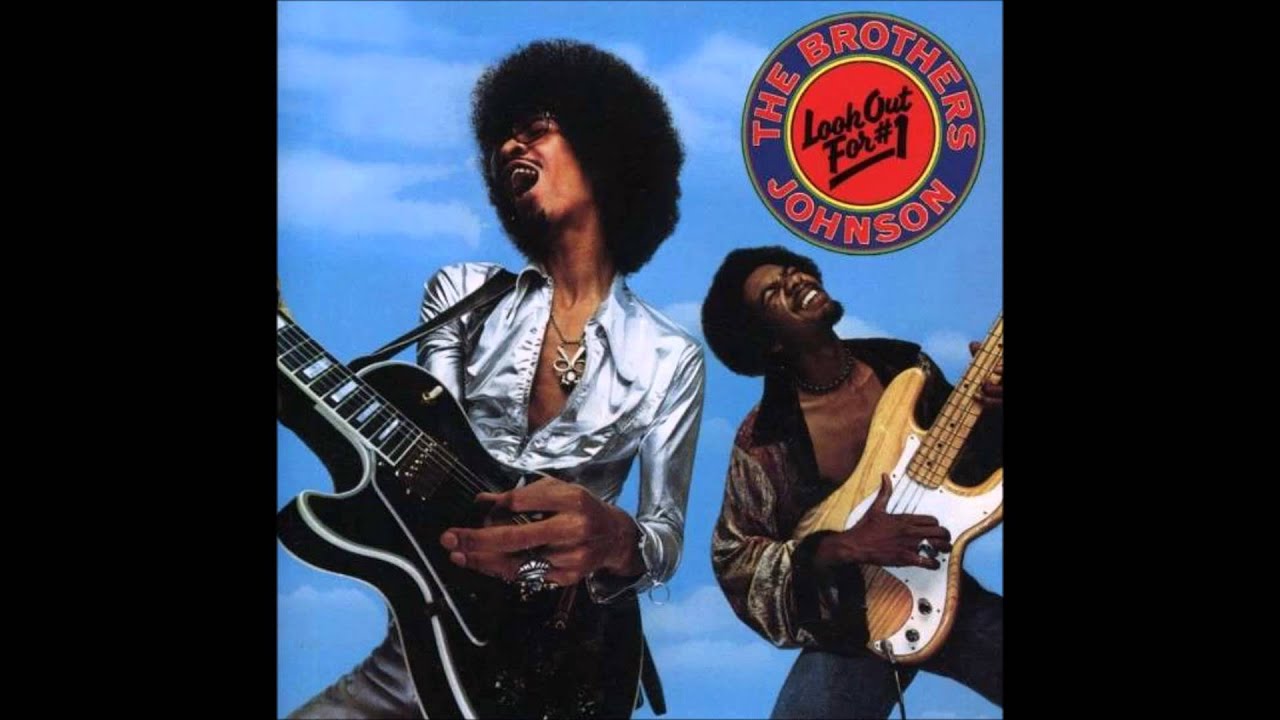
 .
.

But shortly after he did get his Music Man Stingray bass....the rest is history
But shortly after he did get his Music Man Stingray bass....the rest is history
I believe he also played a Gibson and an Alembic.
The Patrice Rushen Forget Me Nots being performed by another capable ('amateur') female bassist on a P bass. Well actually a PJ bass which just happens to be the 'posh' version of my current goto gigging bass
I hope you'll agree that she does a pretty good job!
But shortly after he did get his Music Man Stingray bass....the rest is history
 Still though...
The Patrice Rushen Forget Me Nots being performed by another capable ('amateur') female bassist on a P bass. Well actually a PJ bass which just happens to be the 'posh' version of my current goto gigging bass
I hope you'll agree that she does a pretty good job!
she has an uber strong little finger and doesn't use her third finger....Is she really playing that good...and clean...I am skeptical and if not... in awe
Last edited:
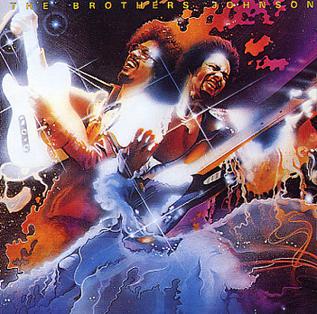
BLAM....one of my all time fave album covers.....and albums...aint we funkin now
The Patrice Rushen Forget Me Nots being performed by another capable ('amateur') female bassist on a P bass. Well actually a PJ bass which just happens to be the 'posh' version of my current goto gigging bass
I hope you'll agree that she does a pretty good job!
I'm more interested in that awesome sound of her Yamaha.
More Will Lee flanged slapped P-goodness:
When I used to see Will in the clubs he would sometimes slap that part over the top of the fingerboard. Most of his 70's work was a P-bass.
Killer!!!
This is more like the sound my Precision with tapes gets. It’s IN the mix.
Or you could just dig in like Paul Jackson
YES!! The best Precision Bass ever: Yamaha BB1200!
(Seriously)
Last edited:
I'm more interested in that awesome sound of her Yamaha.
Well absolutely! My goto PJ basses are the Yammy BB1025 and the BB P35 - they are both fantastic.
What about the BB 1200S ?! (or the BB 3000/A or BB 5000/A?)YES!! The best Precision Bass ever: Yamaha BB1200!
(Seriously)


Patrice Rushen -"Forget Me Nots"
Nice interview with Patrice Rushen in Popmatters last week! She talks a little about the origins of 'Forget Me Nots'.
I have no doubts! In fact, I learned to slap on my P and slapped the heck out of it before moving to a J.I agree that EQ will not make a P-bass sound exactly like a J-bass. But it can still make a huge difference, and also give you an awesome slap tone.
Both EQ and technique help getting a usable slap tone with a P, but I prefer a J for slapping. The reason why I prefer a J for slapping is the same why I prefer a P for thump (and basically almost everything I play): its their unique natural, uneffected sound.
A P sounds more rich, full, bassy, smooth, while a J has more treble, definition, articulation. Even if you can get almost any tone you want with an efficient EQ, you should choose wisely where to start, IMHO.
I simply choose the more "appropriate" bass depending on the music I want to play, and start from there. If I want to play 60's Motown Soul classics, I grab my P w/flats, I don't spend time trying to transform my Jazz bass into a James Jamerson Funk Machine.
The same is for slap, for example. I want that clarity, definition, treble, snappyness, with enough bass but not too boomy. And I want those mids scooped! So I bring my J and again... start from there.
These eclipse the Precision..!What about the BB 1200S ?! (or the BB 3000/A or BB 5000/A?)
My soft spot is for the BB2000. But it’s the greatest PJ ever..!!!
I have no doubts! In fact, I learned to slap on my P and slapped the heck out of it before moving to a J.
Both EQ and technique help getting a usable slap tone with a P, but I prefer a J for slapping. The reason why I prefer a J for slapping is the same why I prefer a P for thump (and basically almost everything I play): its their unique natural, uneffected sound.
A P sounds more rich, full, bassy, smooth, while a J has more treble, definition, articulation. Even if you can get almost any tone you want with an efficient EQ, you should choose wisely where to start, IMHO.
I simply choose the more "appropriate" bass depending on the music I want to play, and start from there. If I want to play 60's Motown Soul classics, I grab my P w/flats, I don't spend time trying to transform my Jazz bass into a James Jamerson Funk Machine.
The same is for slap, for example. I want that clarity, definition, treble, snappyness, with enough bass but not too boomy. And I want those mids scooped! So I bring my J and again... start from there.
This is all very true, but if you only have one bass with a relatively limited tonal range, it's a good idea to learn how to use EQ if you want to explore a variety of tones.
My first bass was a Ric 4001. I also owned an Orban 672a equalizer and spent a lot of time trying to copy the different tones I heard on the radio and recordings. I think many people would be surprised by how close I could get. However some context is appropriate. The Orban is a very flexible and powerful EQ, and it is capable of modifying tone far beyond the basic controls on most amps. Still, people should not be afraid to adjust their tone controls and modify the sound of their instruments. There are lot's of great sounds hidden in the P-bass.
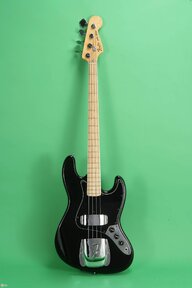
Ibanez...with hot rod pickupsWhat bass is Scott using there?
Oh...Scott has a
Marco Bass Guitars
precision bass
Last edited:


