
Enjoy the benefits of a premium membership!
Upgrade Account
-
TalkBass has been independent since 1998. Add your voice.
Create a free account to reply to discussions, view embedded media, and browse with fewer display ads.
Join free Log in
Want zero display ads or expanded classifieds tools? Compare plans.
You are using an out of date browser. It may not display this or other websites correctly.
You should upgrade or use an alternative browser.
You should upgrade or use an alternative browser.
Small Hands
- Thread starter Soonerbldr
- Start date
More options
Who Replied?
Hand size doesn't matter. Just move your left hand. I knew a 5 foot female who played bass - no problem.

I have good sized hands. I used to think hand size was important and perhaps it is helpful but I have to say it is clearly not essential. Not at all. I know some very good bassists with smaller hands.
I wouldn't hesitate to use a medium or short scale bass. My first bass was short scale, and I still like it. It's a cheap bass with tone that is not great so I don't play it much anymore, but I've thought about getting another shorter scale bass that sounds good. Short scale basses thump like crazy, frankly. I generally play regular scale basses, but my hand is almost always around the 5th to 7th fret area. There are plenty of great sounding shorter scale basses so....get yourself one and don't look back!
I wouldn't hesitate to use a medium or short scale bass. My first bass was short scale, and I still like it. It's a cheap bass with tone that is not great so I don't play it much anymore, but I've thought about getting another shorter scale bass that sounds good. Short scale basses thump like crazy, frankly. I generally play regular scale basses, but my hand is almost always around the 5th to 7th fret area. There are plenty of great sounding shorter scale basses so....get yourself one and don't look back!

Good teacher, Good technique, 1,2,4 fingering, etc. will all help. I was going to go the 34" or shorted route, but I am getting very comfy on my 35" fretted and fretless 5 strings. I will probably add a 6 as soon as I sell my Geddy Lee - that would be a great "starter bass" for you - thin neck, easy to play, etc. PM me for a deal.
Honest question: are you guys suggesting the 1-2-4 fingering in only certain instances, or all the time? When practicing scale positions, i always adhere to the one finger per fret rule. To leave out "3" seems almost counterintuitive. Just wondering ! 
Also, OP, I am 5' 9" , and my hands are barely bigger than my 5' 6" wifes. And i definitely support the advice of keeping your hand relaxed (you dont have to squeeze the neck, just as long as your holding it enough that the neck is stable), and learning how to pivot your elbow. Also, alot of times when you see guys getting down on their instrument, its not that they are trying to be showy, rather they are making postural adjustments to their playing to make what they are trying to do easier.
Also, OP, I am 5' 9" , and my hands are barely bigger than my 5' 6" wifes. And i definitely support the advice of keeping your hand relaxed (you dont have to squeeze the neck, just as long as your holding it enough that the neck is stable), and learning how to pivot your elbow. Also, alot of times when you see guys getting down on their instrument, its not that they are trying to be showy, rather they are making postural adjustments to their playing to make what they are trying to do easier.


For a short 5'4" guy like me with small hands I've noticed that 34" seems to be ok on both fretless and fretted, however it's uncomfortable when a neck is thick, so I feel right at home with my Ibanez SR and SRT(which still has a noticeably thicker neck than SR).
Honest question: are you guys suggesting the 1-2-4 fingering in only certain instances, or all the time? When practicing scale positions, i always adhere to the one finger per fret rule. To leave out "3" seems almost counterintuitive. Just wondering !
I personally use 1-2-4 whenever possible, expanding to 1-2-3-4 as necessary. Stuff like scale fingerings you can research in double bass method books. I was taught 1-2-3-4 for many years but now that I've switched to 1-2-4 I don't find it counterintuitive at all. It covers root, 4th, 5th, and octave (the most important notes IMHO) without any stretching or tension. YMMV.

BassHappy
Supporting Member
What do Paul McCartney (Beatles), Jack Bruce (Cream), Bill Wyman (Rolling Stones), Glenn Cornick (Jethro Tull), Tina Weymouth (Talking Heads), Stanley Clark, Jonas Hellborg and many other world class bassist's have in common? They all play short scale (30") or medium scale (32") basses - as opposed to the more conventional long scale (34").
I don't know if you saw the Bass Player magazine with Jonas Hellborg on the cover recently, but that custom bass - which he designed along with Warwick - is only available in medium scale. Ever wonder about the Beatles? Much of their early catalog was recorded with a Hofner short scale bass. And there are so many others, including Stanley Clarke - even with his huge hands. in the early days Stanley simply fell in love with the sound of the smaller shorter scale Alembics - and of course the piccolo basses he is known to play.
My best advice my friend, is to find the bass that feels like home. If the short scale works for you - find one and stick with it until or unless you outgrow it. Then - if you feel like moving up - try a medium scale bass. There are not a lot of production medium scales around, but if you look - you will find them.
If and when you outgrow the medium scale - you can certainly move up to long scale. Maybe a Rickenbacker at 33.25" rather than going right to the full length 34" Fender. I can't tell you how many talented students fall by the wayside just because they have small hands and simply couldn't play with any degree of "chops" on a long scale bass. There is no shame in it, and there is no badge of courage or macho trophy for playing a long scale bass. It's in the tracks man, forget the losers on here who genuinely feel like you are only a "player" if you have a Fender long scale bass. What a joke. Hey, it's 2013 - let's all wake up to possibilities.
Here are some short scale basses to check out. Go to a big city store and play them all if you can before you decide. They all have a number of pros and cons.
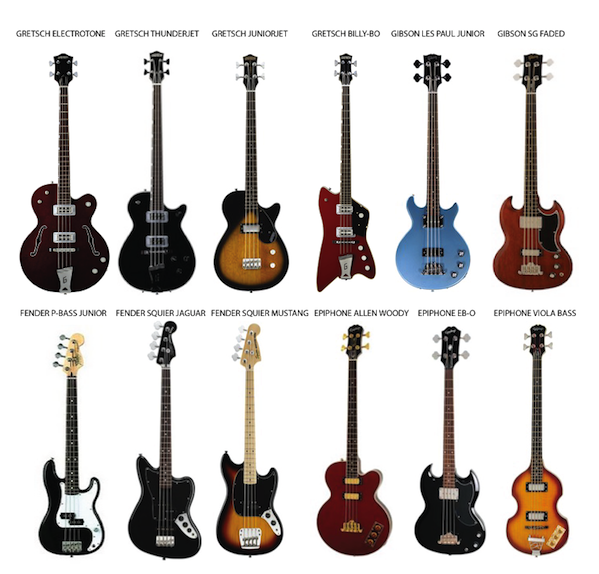
For more information on short and medium scale basses - and to read a little of my story - go here:
[Invalid or Expired Link Removed]
Pluckin and grinnin....
BassHappy
www.innertainment.net
I don't know if you saw the Bass Player magazine with Jonas Hellborg on the cover recently, but that custom bass - which he designed along with Warwick - is only available in medium scale. Ever wonder about the Beatles? Much of their early catalog was recorded with a Hofner short scale bass. And there are so many others, including Stanley Clarke - even with his huge hands. in the early days Stanley simply fell in love with the sound of the smaller shorter scale Alembics - and of course the piccolo basses he is known to play.
My best advice my friend, is to find the bass that feels like home. If the short scale works for you - find one and stick with it until or unless you outgrow it. Then - if you feel like moving up - try a medium scale bass. There are not a lot of production medium scales around, but if you look - you will find them.
If and when you outgrow the medium scale - you can certainly move up to long scale. Maybe a Rickenbacker at 33.25" rather than going right to the full length 34" Fender. I can't tell you how many talented students fall by the wayside just because they have small hands and simply couldn't play with any degree of "chops" on a long scale bass. There is no shame in it, and there is no badge of courage or macho trophy for playing a long scale bass. It's in the tracks man, forget the losers on here who genuinely feel like you are only a "player" if you have a Fender long scale bass. What a joke. Hey, it's 2013 - let's all wake up to possibilities.
Here are some short scale basses to check out. Go to a big city store and play them all if you can before you decide. They all have a number of pros and cons.
For more information on short and medium scale basses - and to read a little of my story - go here:
[Invalid or Expired Link Removed]
Pluckin and grinnin....
BassHappy
www.innertainment.net

Small hands aren't a disadvantage if you have good technique. I have small hands and am at home on a 35" scale 6 string.
Exactly..The OP just started so I am sure the technique is not there.
The solution always seems to be to tell someone to buy something. That's ridiculous.
Play the Pbass. Learn the proper left hand technique. At a certain point down the road if your hands are really that small go for something else.
I am assuming you are exaggerating and don't actually have baby hands.
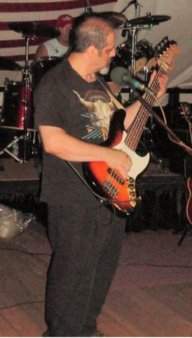
If going with a 34/35” scale, consider getting a five-string where often the B string allows you to play higher up on the neck where the frets are closer together, and you’re not reaching out nearly as far.
Have to say, I have tiny hands and just picked up a Classic 50's P bass with a 1.75 inch beast of neck. I was very worried I wouldnt be able to handle it. In fact I have gotten used to it and have come to love this bass. I have come to accept that there are some things I will never be able to do on the bass and will play within those limitations.
I understand at 5 foot 4 I will never be able to dunk on the basketball court, but I can learn to rock some three pointers. AND I CAN ROCK that P bass.
I understand at 5 foot 4 I will never be able to dunk on the basketball court, but I can learn to rock some three pointers. AND I CAN ROCK that P bass
.Short scales are very cool.
However, if you want to stay with standard 34" scale then get a Jazz not a Precision. The Precision neck is thick and wide. Both dimensions are working against small hands.
You'll find the Jazz much easier.
Davo
Huge +1. They're worlds apart for playability and comfort.

I have the smallest hands of any adult male I've ever met. They are seriously small. I play 34" scale basses. I started on a Precision, and like others here, I found the Fender Jazz to be a huge improvement in terms of ease of play, even with my tiny hands. I think if you continue to practice, you'll find that your hands will eventually conform to the width of the frets. I am a guitarist, too, and after spending a long time only on the bass, going back to a Gibson scale guitar (24 3/4"), the width from the nut to the first fret on the guitar seems tiny, while even that width, when starting out on the guitar, seemed awfully big.
There certainly are nice short scale basses out there, but I believe you are limiting yourself in the long run if you don't try to keep playing at least a 34" scale instrument. Just my $0.02.
There certainly are nice short scale basses out there, but I believe you are limiting yourself in the long run if you don't try to keep playing at least a 34" scale instrument. Just my $0.02.
I have small-ish hands. The only bass available to
me when I started was 34" scale. I had no choice
but adapt to it.
Years later I have tried shorter scales and honestly
do not like them. I thought for I would be all over
a 30" SS bass. Nope! I am at home on a 34.
My point is hand size doesn't matter.
me when I started was 34" scale. I had no choice
but adapt to it.
Years later I have tried shorter scales and honestly
do not like them. I thought for I would be all over
a 30" SS bass. Nope! I am at home on a 34.
My point is hand size doesn't matter.

I don't have a problem with scale length. I started learning in the 70's on a cheap short scale, then went to long scale. I own one of each, a 34" Thunderbird, a 30" Danelectro Longhorn and an ultrashort 20" Kala Ubass, and i'm equally comfortable on all of them. Don't put too much into scale length. Work on proper technique and it may be a bit painful for awhile, but it will come in time. Then I think you will find them all scale lengths great to play each with their own unique feel and sound. As far as shortscale basses, my personal preference goes to the Longhorn whether Danelectro or Jerry Jones. Lightweight with fantastic necks and the lipstick tube pups sound great.
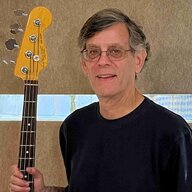

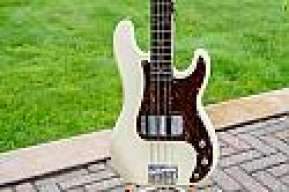
I started out on a full scale, then bouht a short scale and rocked that for a good numbers of years, an Ampeg crystal bass, which was the Dan Armstrong reissue without the lucite and MIJ, great bass btw if you can find one used (plus, the price will probably be low since they never got any traction in the market and were discontinued almost immeditely). It was light and had a great neck and minimal neck dive for a short scale.
Then I bought full scale basses again and adapted. I have small hands and I favor medium action and wide, beefy necks. I relearned how I played on the instrument: now I almost always go for a 1-2-4 fingering and I shift more. The more substantial necks also aid me in not wrapping my palm around the neck and keeping the wrist straight.
But there's nothing wrong about wanting a short scale bass for comfort. I know some people don't like to do a lot of shifting and that's okay.
Then I bought full scale basses again and adapted. I have small hands and I favor medium action and wide, beefy necks. I relearned how I played on the instrument: now I almost always go for a 1-2-4 fingering and I shift more. The more substantial necks also aid me in not wrapping my palm around the neck and keeping the wrist straight.
But there's nothing wrong about wanting a short scale bass for comfort. I know some people don't like to do a lot of shifting and that's okay.


