• TalkBass has been independent since 1998. Add your voice.
    Create a free account to reply to discussions, view embedded media, and browse with fewer display ads.
    Join freeLog in
    Want zero display ads or expanded classifieds tools? Compare plans.

Solid State Amps with Overdrive/Distortion?

Actually, the classic designs were not designed that way. It was accidentally discovered in the late 50's by players and became popular soon after. And Everett Hull, who started Ampeg, hated loud music, hated rock and roll, and absolutely hated distortion, and refused to cater to that market that wanted really high power and distortion. And yet, you crank one of their amps from those days and it sounds terrific. If he hadn't sold Ampeg in 67 and retired soon after, there would be no SVT or even V4B.

Even while still sounding relatively clean, if I'm not mistaken, those older amps are still running with significant amounts of THD, and I'd assumed that was purposeful (having them maintain an audibly clean sound for as long as possible) - likely at least in part because of Everett's ideas of what a bassist's role should and shouldn't be.

Who knows, maybe it's too much of a stretch, but I do wonder how much of that design is what contributed to a smooth transition into distortion at even higher levels.

Regardless, I guess I was mostly thinking of later amps when I wrote my original post - along with other classic tube amps that may have been designed with even higher levels of distortion in mind, but there's no denying that a B15 sounds great when pushed.
 
Last edited:
Even while still sounding relatively clean, if I'm not mistaken, those older amps are still running with significant amounts of THD, and I'd assumed that was purposeful (having them maintain an audibly clean sound for as long as possible) - likely at least in part because of Everett's ideas of what a bassist's role should and shouldn't be.

Who knows, maybe it's too much of a stretch, but I do wonder how much of that design is what contributed to a smooth transition into distortion at even higher levels.

Regardless, I guess I was mostly thinking of later amps when I wrote my original post - along with other classic tube amps that may have been designed with even higher levels of distortion in mind, but there's no denying that a B15 sounds great when pushed.

This is a side effect of particular topologies common initially with tube amps, but could also be done with similar effect in solid state. It depends very much on choices made during the design phase of an amp.

There are many possible circuit topologies in solid state, not all are even close to being equal.
 
Even while still sounding relatively clean, if I'm not mistaken, those older amps are still running with significant amounts of THD, and I'd assumed that was purposeful (having them maintain an audibly clean sound for as long as possible) - likely because of Everett's ideas of what a bassist's role should and shouldn't be.
The only reason for that was the design limitations of the format. They were striving for as clean a tone as they could get. Bear in mind we're talking about the 40's and early 50's when these early amps were designed, where rock and roll wasn't yet a thing and most popular music was jazz, folk, pop and country, with blues just starting to get a foothold.

Who knows, maybe it's too much of a stretch, but I do wonder how much of that design is what contributed to a smooth transition into distortion at even higher levels.

Regardless, I guess I was mostly thinking of the SVT and V4B when I wrote my original post - along with other classic tube amps that may have been designed with even higher levels of distortion in mind, but there's no denying that a B15 sounds great when pushed.
Another myth :D The SVT was invented with the sole purpose of providing 300 tube watts to musicians cleanly. It wasn't till Ampeg took them out on a test run with the Stones that they discovered that some players were wanting to turn them up all the way and crank them into distortion. One could argue that the V4B was designed to go either way, and they even started making them with separate volume and gain after the first few years so you could get preamp distortion, but the intention with the SVT was to be run cleanly.


 
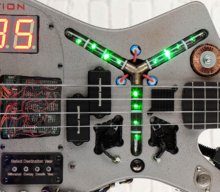
My man basically needs an SWR Mo Bass. Just do some exposure therapy. Look at a few pics of the onboard effects. Feel the anxiety. Feel the anxiety subside.

Same process of feeling and feeling subside as you:

1. Sit next to the Mo Bass, powered off.
2. Power him on. Look at the pretty lights. See how “real” he is.
3. Snuggle up to him. Feel the gentle warmth of the “real” transistors.

You might even like his fake on board SS effects one day.

I think they use this technique for ppl who are bothered by spiders.

Thanks for letting me share.

moogs
 
  • Like
Reactions: Doner Designs
Don't Know what to tell yah.
Distortion is distortion musicians like it.

They put switch mode power supplies and switch mode amps into amps. I find them more annoying than anything else and that's 90 % of the market.

I don't consider 12ax7 distortion any more special than opamp or transistor distortion.

Gain stages and filtering is what makes a good distortion. In a head or in a pedal don't care.
 
  • Like
Reactions: Artman
I wonder if the trend to building distortion as an effect into bass heads indicates that it has become a staple of modern bass playing vs a spice thrown in on rare occasion. Perhaps I’m a dying breed of purist (got rid of all my pedals too except EQ and compression).
100% accurate, except the dying breed part :D Plenty of bass players out there still don't want distortion, just like plenty of guitar players who don't, although that's becoming a rarity more and more. And bass players are embracing distortion like never before, and that is exactly why you're seeing it more and more on amps.
 
Very interesting insights from all!

I guess we are indirectly answering another question I have had which is about why a 40 lb behemoth like the Aguilar DB 751 is still around in a Class D hybrid world. Apparently a dozen MOSFETS sound better or different vs an ICE module and I’ll bet that has a lot to do with how they sound when slammed hard?
 
Very interesting insights from all!

I guess we are indirectly answering another question I have had which is about why a 40 lb behemoth like the Aguilar DB 751 is still around in a Class D hybrid world. Apparently a dozen MOSFETS sound better or different vs an ICE module and I’ll bet that has a lot to do with how they sound when slammed hard?
Partially, but I don't think that group is nearly as big as the group of people who just plain prefer trad SS. Even though the only SS amps I own are micros (one class AB, the rest D), and even though I get into arguments over it with people who are more knowledgeable about the design process than me, I strongly believe that just like there are inherent differences in the sound of tube amps vs trad solid state, there are differences between trad SS amps with large metal transformers supplying power vs SS amps made with switchmode PS's. Little amps with distortion capabilities do distortion just fine, and I doubt that would be a deal-breaker to someone who prefers the DB751 or the SVT 4 Pro but would rather travel with a TH500 or PF800.
 
there are differences between trad SS amps with large metal transformers supplying power vs SS amps made with switchmode PS's

@Doner Designs as JimmyM mentioned above, many people like the way certain power sections perform, like some with big (heavy) power transformers.

IME the power transformer is typically where the weight comes into play with heavier SS moreso than any other single component.
 
  • Like
Reactions: Doner Designs
My experience is that the overall design goals, including voicing, impact the tone and performance more than the type of device or topology.

Exactly. It just so happens I like my 20+ lb amp with a largish power transformer better than I like a similar 5lb Class D amp I own.

Is the difference just due to the transformer? Doubtful, but one amp I just overall prefer over the other so I use it. It's just as simple as that. Nothing inherently better or worse with either platform IMO.
 
Exactly. It just so happens I like my 20+ lb amp with a largish power transformer better than I like a similar 5lb Class D amp I own.

Is the difference just due to the transformer? Doubtful, but one amp I just overall prefer over the other so I use it. It's just as simple as that. Nothing inherently better or worse with either platform IMO.

Exactly, play the amp that you like. When comparing, there's generally a WHOLE lot more that's different besides the transformer no matter how similar they may otherwise appear to be.
 
@Doner Designs as JimmyM mentioned above, many people like the way certain power sections perform, like some with big (heavy) power transformers.

IME the power transformer is typically where the weight comes into play with heavier SS moreso than any other single component.
I'm not aware of any SS amps these days that have output transformers except the original Warwick Hellborg power amps. They have power trannies, but OT's aren't required on SS amps so the vast majority of makers don't add them.
 
  • Like
Reactions: Doner Designs
I'm not aware of any SS amps these days that have output transformers except the original Warwick Hellborg power amps. They have power trannies, but OT's aren't required on SS amps so the vast majority of makers don't add them.

Who’s talking about output transformers? I’m not talking about output transformers, you’re talking about output transformers. :whistle:

(Yes, I had originally mixed the two up in my initial reply, but I caught it well within the 5 minute edit window)!
 
Who’s talking about output transformers? I’m not talking about output transformers, you’re talking about output transformers. :whistle:

(Yes, I had originally mixed the two up in my initial reply, but I caught it well within the 5 minute edit window)!
What's really weird is that you must have slipped in that edit just before I hit the button to quote your post, because it's corrected in the quote I have for you.
 
My experience is that the overall design goals, including voicing, impact the tone and performance more than the type of device or topology.

For what it’s worth, I like how Mesa blends in a little dirt if you turn the gain up past a certain point on the D800+. Surprised me the first time I heard it. Thought it was coming from elsewhere in the chain.
 
  • Like
Reactions: Artman

Latest posts