• TalkBass has been independent since 1998. Add your voice.
    Create a free account to reply to discussions, view embedded media, and browse with fewer display ads.
    Join freeLog in
    Want zero display ads or expanded classifieds tools? Compare plans.

Sound guy attempted to adjust my amp

This doesn't much make sense to me. Unless your amp is mic'd, stage sound is completely irrelevant to your FOH, no?

And even if mic'd, it's still your amp and preference. So yeah, I'm dazed and confused by this post, and by this sound man!.

YMMV etc.
Well like I said before in this thread, it's not like there's this invisible wall between your amp and the front of the stage. People who think their amp isn't getting heard play quieter than I do, and I'm one of the most quiet on this board. That said, it's generally agreed that the sound tech in question is a jerk.
 
The bass player vs sound guy battle is eternal. I learned long ago to just anticipate it.

I do more sound work than bass playing, and I find most bassists very easy to work with.

Most of them play bass better than I can, but very few know much about how it works once the sound/signal goes beyond their equipment.

Those who I work with who have the opportunity to hear the way it sounds in the FOH usually have no complaints, and when making suggestions, or evaluating how we make use of their signal seldom request we do anything much different than we are doing it.

We worked with a guy once who had a pickup/preamp at the neck/fingerboard for the slap, and separate pickup/preamp at the bridge for string note tone on an upright bass who had never worked with us before. I could tell he was apprehensive that we would not understand the concept, or know how to get the right balance between the two pickups. I have to admit I was completely ignorant of this type of setup before he explained why he needed two channels, and it was the first time we had dealt with a double bass. It only took one song to get it dialed in to our liking. After the show, he said it was the first time anyone had given him the sound exactly how he wanted it. I did not tell him it was the first time we had ever done a rockabilly show.
 
We worked with a guy once who had a pickup/preamp at the neck/fingerboard for the slap, and separate pickup/preamp at the bridge for string note tone on an upright bass who had never worked with us before. I could tell he was apprehensive that we would not understand the concept, or know how to get the right balance between the two pickups. I have to admit I was completely ignorant of this type of setup before he explained why he needed two channels, and it was the first time we had dealt with a double bass. It only took one song to get it dialed in to our liking. After the show, he said it was the first time anyone had given him the sound exactly how he wanted it. I did not tell him it was the first time we had ever done a rockabilly show.

Good for you for grasping the concept quickly. Man, you guys think electric bassists have it bad? I've heard from rockabilly guys stories like sound techs saying to them, "You were getting this nasty clicking sound at first but I managed to dial it out."

:D

I don't use a clicky on the neck when I play upright, but I have had to tell sound techs that the slap is supposed to be there so don't dial it out (although I don't like it nearly as prominent as most rockabilly players so it's not been as much of an issue for me).
 
I do more sound work than bass playing, and I find most bassists very easy to work with.

Most of them play bass better than I can, but very few know much about how it works once the sound/signal goes beyond their equipment.

Those who I work with who have the opportunity to hear the way it sounds in the FOH usually have no complaints, and when making suggestions, or evaluating how we make use of their signal seldom request we do anything much different than we are doing it.

We worked with a guy once who had a pickup/preamp at the neck/fingerboard for the slap, and separate pickup/preamp at the bridge for string note tone on an upright bass who had never worked with us before. I could tell he was apprehensive that we would not understand the concept, or know how to get the right balance between the two pickups. I have to admit I was completely ignorant of this type of setup before he explained why he needed two channels, and it was the first time we had dealt with a double bass. It only took one song to get it dialed in to our liking. After the show, he said it was the first time anyone had given him the sound exactly how he wanted it. I did not tell him it was the first time we had ever done a rockabilly show.
In my experience, sound people who are also musicians are generally the best at their task.
 
We started with a bit too much click, and dialed it back by the start of the second song. I worried he would think it was not prominent enough, but he modulated it with his technique too, (I think), so once we had cut it back a little, I think it was really under his control. (I guess. I don't play upright). (Heck, I can barely play my four string electric).
 
Yes,

I caught the sound man at a popular Oregon casino at my amp with a flashlight turning knobs between sets...........

Funny thing is my house feed was straight DI, it wasn't even for the house sound.

Weird.
 

giphy.gif
 
I do sound a lot at an environment with some really top pros, and I try to understand their sound desires first, then I'll ask them if they would mind changing something if it's having a tough time as it is a very boomy echoing location. Amazing for a string quartet, not as much for high energy jazz.

If they player is a little apprehensive about changing something, I try to let them know that I understand what they are going for and how the room is not allowing it. But, if the change in sound ultimately makes them uncomfortable, their comfort in order to create wins and I'll do my best to make it work, or we can try to find a middle ground. But ultimately, I'm there to serve their sound, that was taught to me in the beginning and now I try to teach that to others.

I also definitely found that the longer I've been there and gotten to know some of them, they've also been more interactive in asking me how things are working. I definitely had to earn their trust.
 
  • Like
Reactions: Groove Doctor
Well like I said before in this thread, it's not like there's this invisible wall between your amp and the front of the stage. People who think their amp isn't getting heard play quieter than I do, and I'm one of the most quiet on this board. That said, it's generally agreed that the sound tech in question is a jerk.

I've been really fortunate over the years. I have rarely had a sound guy give me problems (but it has happened on occasion) but usually its a young dude with little experience who was given the "title" of sound guy.

Nothing of any great importance....hell, usually nothing more than plugging either the Mic in or coming out of the back of the amp, plugging into the snake and away we go!!
 
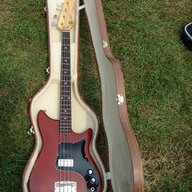
We did sound for a band recently where the bassist brought a brand new bass that would be perfect for a metal band. Problem is, they don't play metal. His tone just did not fit the genre of their repertoire. He usually played a vintage Fender Mustang bass.

Please imagine a post here titled:

"Soundguy comes on stage, and unplugs my new bass, and hands me my old Mustang bass between songs at a gig!"

:D :whistle: :rollno: