• TalkBass has been independent since 1998. Add your voice.
    Create a free account to reply to discussions, view embedded media, and browse with fewer display ads.
    Join freeLog in
    Want zero display ads or expanded classifieds tools? Compare plans.

Speaking of neck dive...

OP:

I seem to recall seeing some gizmo that you attach to the strap that adds weight to the part of the strap that is near the butt end of the bass, thereby bringing up the neck.

I have no idea if that gizmo actually works, but perhaps someone here on TB knows what thingie I'm talking about and maybe can offer comments on its effectiveness.
 
I build my own straplok extenders ...

5s%20028.jpg


r%20014.jpg


b5%20091.jpg


5s%20015.jpg


5s%20042.jpg
 
The only bass I own that has any sort of neck dive is my US G&L ASAT. The Tele shaped body is a little small compared to the scale length of the bass. I tried a Neotech strap and didn't really care for it. Now I'm just using a 4" wide leather strap (not suede) and I sling the bass a little higher than my other basses. It hasn't eliminated the neck dive, but it has made it less noticeable.
 
i currently wear my bass in a very similar fashion.

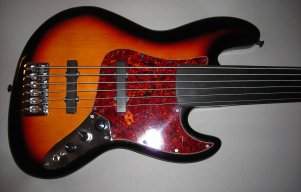
here's a photo with a 2lb dumbell velcro'd to the neck to try to get my bass to neckdive ( as it's virtually 100% impossible to have ANY neckdive with my strap )

DSC01032_zps7c5cf023.jpg
[/URL]

Nice saxophone strap, but you are doing the apples and oranges thing. That is a Fender-style Jazz bass with the balance point at the 12th fret you are using. Of course there's no neck dive. But I"m sure at some amount of weight on the neck and the thing will dive. You've just made your bass into a balance. When one side is heavier than the other that side goes down.

Which shows why a upper horn extender works and some other ideas don't. Notice that since there is no strap on the rear button moving it will do nothing. But one can ALSO see that if the bass were suspended by a slippery strap rather than the above single point suspension now the actual suspension point is not at the front button (as it would be with a strap glued to your shoulder) but now is further behind you as that strap can freely move allowing the the upper horn suspension point to move down as the strap slides which pulls the back end up.

So the above style strap is certainly an improvement over slippery straps. But sticky straps aren't real comfy either as they pull on your shirt. This one is an improvement as it doesn't slide when creating a balance point on your bass at the front button. This style strap would certainly work provided that your bass actually balances when lifted by the front button. If it doesn't balance at the front button then the only answer is to extend that button forward until it does.
 
I would modify the instrument so it balances well with a slippery nylon strap over a slippery nylon sports T-shirt, then use a strap appropriate for its weight.

Two ways to change balance are to move the strap locations (extend at horn, raise at heel of body).

Two other ways are to reduce weight at the headstock, or add weight at the body.

To check if lighter tuners might be an answer, you could remove a couple of strings and their tuners then check the balance.

To see if adding weight to the body would make a difference, you could get some known weights (rolls of pennies, car tire weights, whatever) and put them in a bag, then tie the bag off the rear sling button and adjust the weight until you get the balance you want.

You might try experimenting to see if making your bass heavier but balanced is better than lighter and unbalanced. Try removing all four tuning machines just for the hell of it. (But don't leave it unstrung for more than a little while without releasing tension on the truss rod.)

I'm in the 55+ club and think if your instrument works for you, rather than against you, you'll be better off in the long run. YMMV
 
This has a lot to do with traction, there are many variables. Your shoulder width side to side and thickness front to back, what kind of material your shirt is made off, how low/high you want to wear your bass and at what angle(s)....then there's the bass and the strap. You've just got to try some things.

A lot of players use the forearm of their plucking/picking hand to help stabilize the bass as well.
 
I would modify the instrument so it balances well with a slippery nylon strap over a slippery nylon sports T-shirt, then use a strap appropriate for its weight.

Two ways to change balance are to move the strap locations (extend at horn, raise at heel of body).

Two other ways are to reduce weight at the headstock, or add weight at the body.

To check if lighter tuners might be an answer, you could remove a couple of strings and their tuners then check the balance.

To see if adding weight to the body would make a difference, you could get some known weights (rolls of pennies, car tire weights, whatever) and put them in a bag, then tie the bag off the rear sling button and adjust the weight until you get the balance you want.

You might try experimenting to see if making your bass heavier but balanced is better than lighter and unbalanced. Try removing all four tuning machines just for the hell of it. (But don't leave it unstrung for more than a little while without releasing tension on the truss rod.)

I'm in the 55+ club and think if your instrument works for you, rather than against you, you'll be better off in the long run. YMMV

I agree with ideas in this post. I love my Fender Js and Ps, but i find naturally they want to hang horizontal on a strap when I let go. The way I get around this is 3 fold. Replace the stock tuners with Hipshot Ultralites, add some fishing sinkers to the control cavity and finally move the bottom strap button up higher on the bottom of the bass (so the strap button is closer to the top of the bass where the forearm contour starts). This will add some weight but balances the bass just right.
Just for the record I reckon that Waters is holding his bass in that position. It wouldn't hang naturally like that.
 
Notice that since there is no strap on the rear button moving it will do nothing. But one can ALSO see that if the bass were suspended by a slippery strap rather than the above single point suspension now the actual suspension point is not at the front button (as it would be with a strap glued to your shoulder) but now is further behind you as that strap can freely move allowing the the upper horn suspension point to move down as the strap slides which pulls the back end up.

just actually read your post & you're WAYYY off track here

you are assuming :D that this bass is hanging from the front pin only ? wrong, you're way overthinking this stuff, it ain't rocket surgery :rolleyes:

DSC00904_zps8839da30.jpg
 
I just rest my right hand on the body of the bass which anchors it. It's more comfortable this way anyway.

I have never understood neck dive being an issue. :hiding:

For players who like to do things such as tapping or play more complicated things and everything in between, neck dive can be an issue.

It's one think to lightly rest your arm on the instruments body. It's another to actually have to push down on it to keep the angle of the neck playable for the fretting hand.
 

Latest posts