
Enjoy the benefits of a premium membership!
Upgrade Account
-
TalkBass has been independent since 1998. Add your voice.
Create a free account to reply to discussions, view embedded media, and browse with fewer display ads.
Join free Log in
Want zero display ads or expanded classifieds tools? Compare plans.
You are using an out of date browser. It may not display this or other websites correctly.
You should upgrade or use an alternative browser.
You should upgrade or use an alternative browser.
More options
Who Replied?
Okay so I did a couple of experiments on my CV 70's pbass. I tried putting an active 2-band EQ preamp on it but i found that i much preferred it to be passive so i reverted it back. installed new pots, new orange drop .47 cap, and cleaned up the wiring and a solid new jack as well. as for the aesthetics, i changed the pickguard to white (reminiscent of my very first cheap bass) and i just installed a BADASS v1 himass bridge today that I got for really cheap for less than US$20.. I didn't notice much change in terms of "sustain" with the BADASS v1 but I definitely had to adjust the truss rod a bit as the BADASS v1 is taller than the neck's profile even when the saddles are at the lowest. all in all i got it to a string height i pretty much find comfortable and all is well.
That bridge was designed to be set into a routed out space to get it to sit low enough so you'd have room for adjustments to string height etc. Otherwise you'd likely need to shim the neck to get enough angle to get string height to a workable level. Had one on a '72 Precision back in the day, just screwed it on not knowing it was supposed to be sunk. Had to take it to a luthier to get the neck shimmed just to get the string height to a useable level.

That bridge was designed to be set into a routed out space to get it to sit low enough so you'd have room for adjustments to string height etc. Otherwise you'd likely need to shim the neck to get enough angle to get string height to a workable level. Had one on a '72 Precision back in the day, just screwed it on not knowing it was supposed to be sunk. Had to take it to a luthier to get the neck shimmed just to get the string height to a useable level.
that makes a lot of sense! i've thought of a shim too. hmmm i should try routing that space.. but then again thats way too much of a permanent mod. i've still yet to decide if i want this permanently. (my
wife's freaking out with my nonstop bass modding tho i am one who is not afraid to get a little rough with my instrument)
for now it works kinda ok for me. tightened the truss rod carefully (only a little bit) to back bow enough to angle with the bridge.
that makes a lot of sense! i've thought of a shim too. hmmm i should try routing that space.. but then again thats way too much of a permanent mod. i've still yet to decide if i want this permanently. (my
wife's freaking out with my nonstop bass modding tho i am one who is not afraid to get a little rough with my instrument)
for now it works kinda ok for me. tightened the truss rod carefully (only a little bit) to back bow enough to angle with the bridge.
scratch that. not gonna route that space. shim worked fine
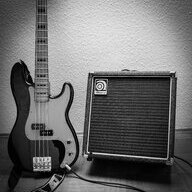
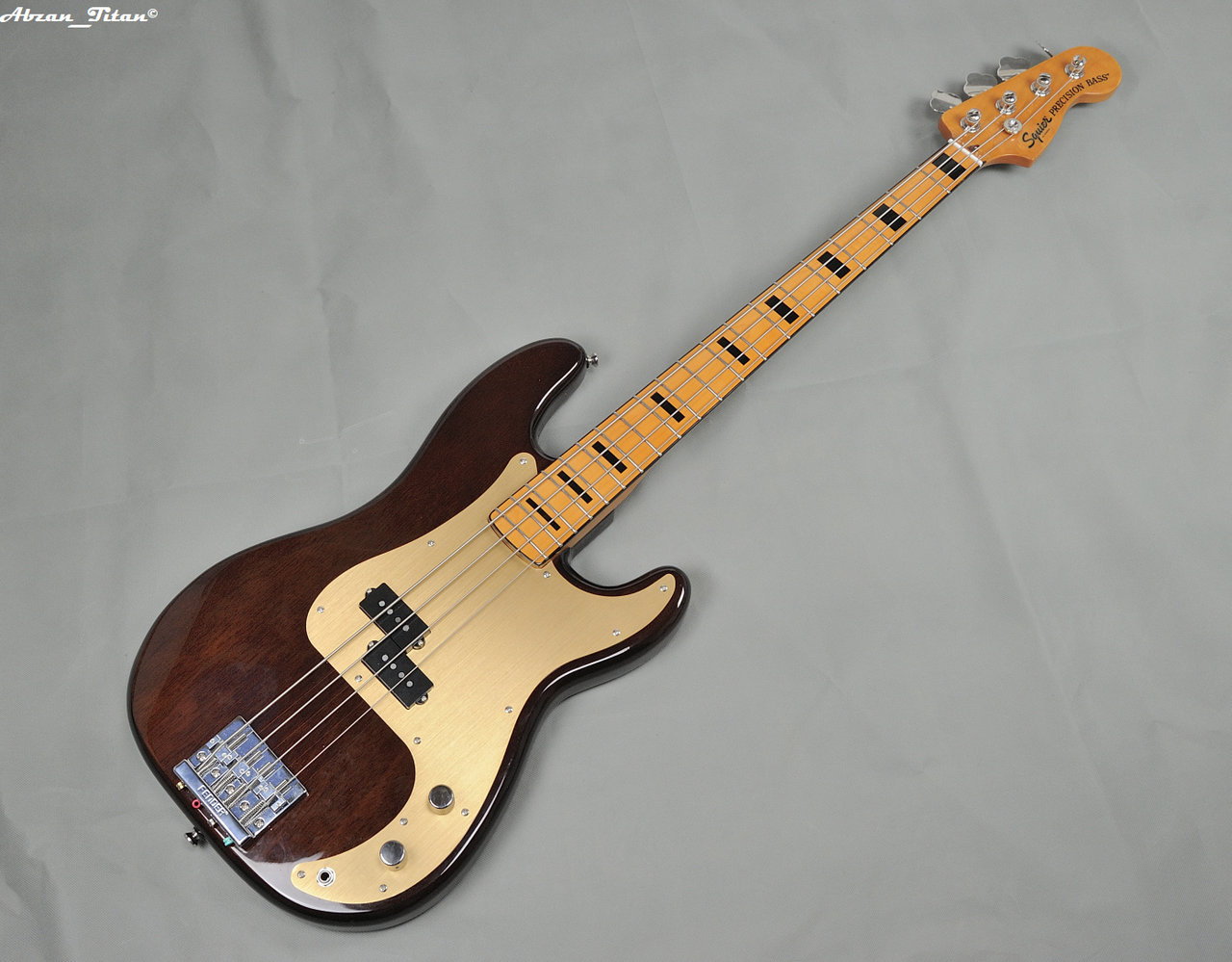

Hello folk! I'll join up if I may. Here's my CV 50s Precision.
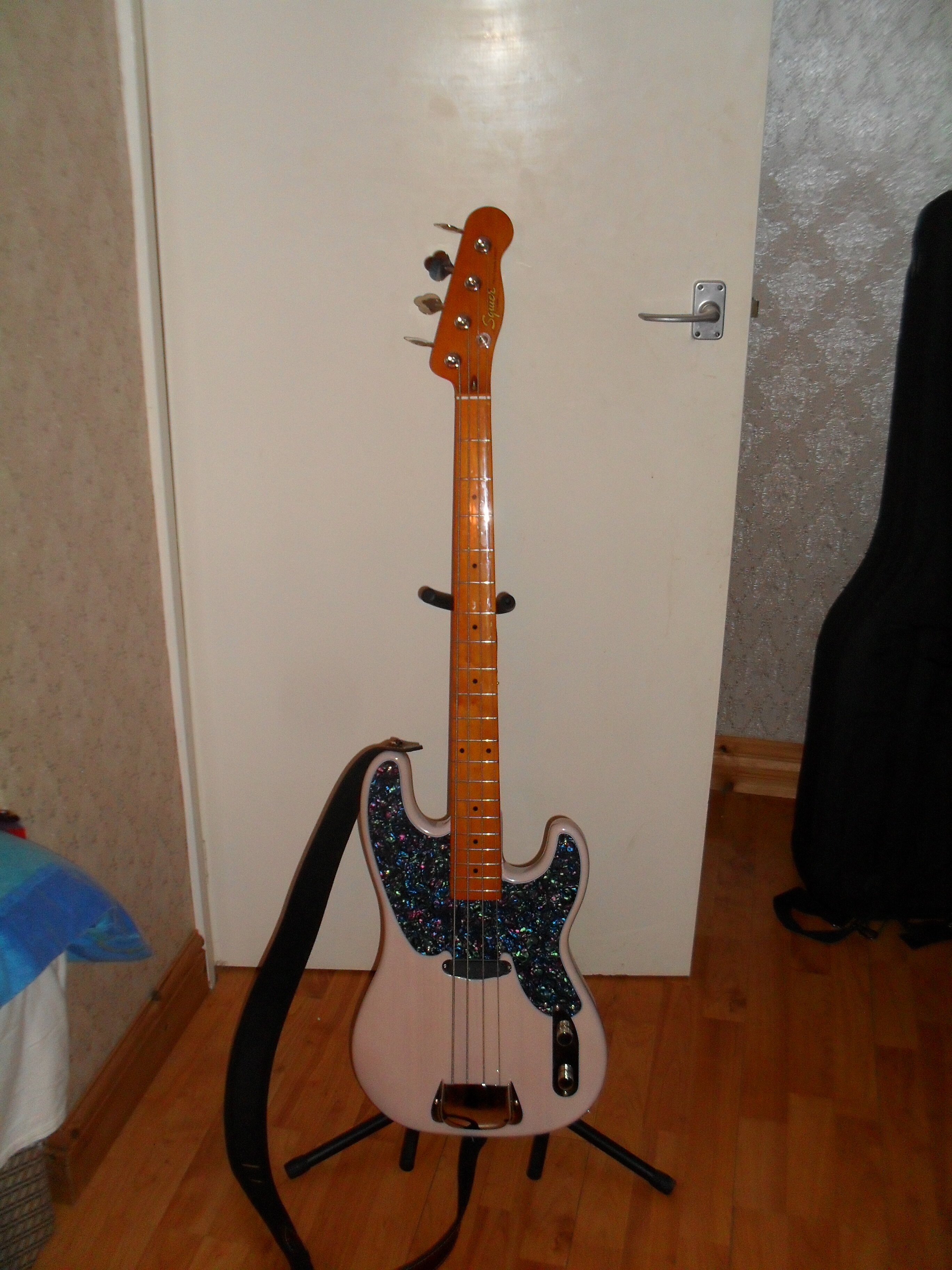

Nice grab! Super nice lookin P brother.Picked up a CIC Sonic Blue 60's P-Bass from the guitarcenter used section. Crazy to see how much the color ages on these! Seen a few examples of the blue turning green, but this is pretty much surf green by now. Can still see a bit of the orig blue in the neck pocket and body contours. Plays like a dream
View attachment 5272070
View attachment 5272071


I will never get tired of installing Hipshot Lollipop keys on my Classic Vibes lol
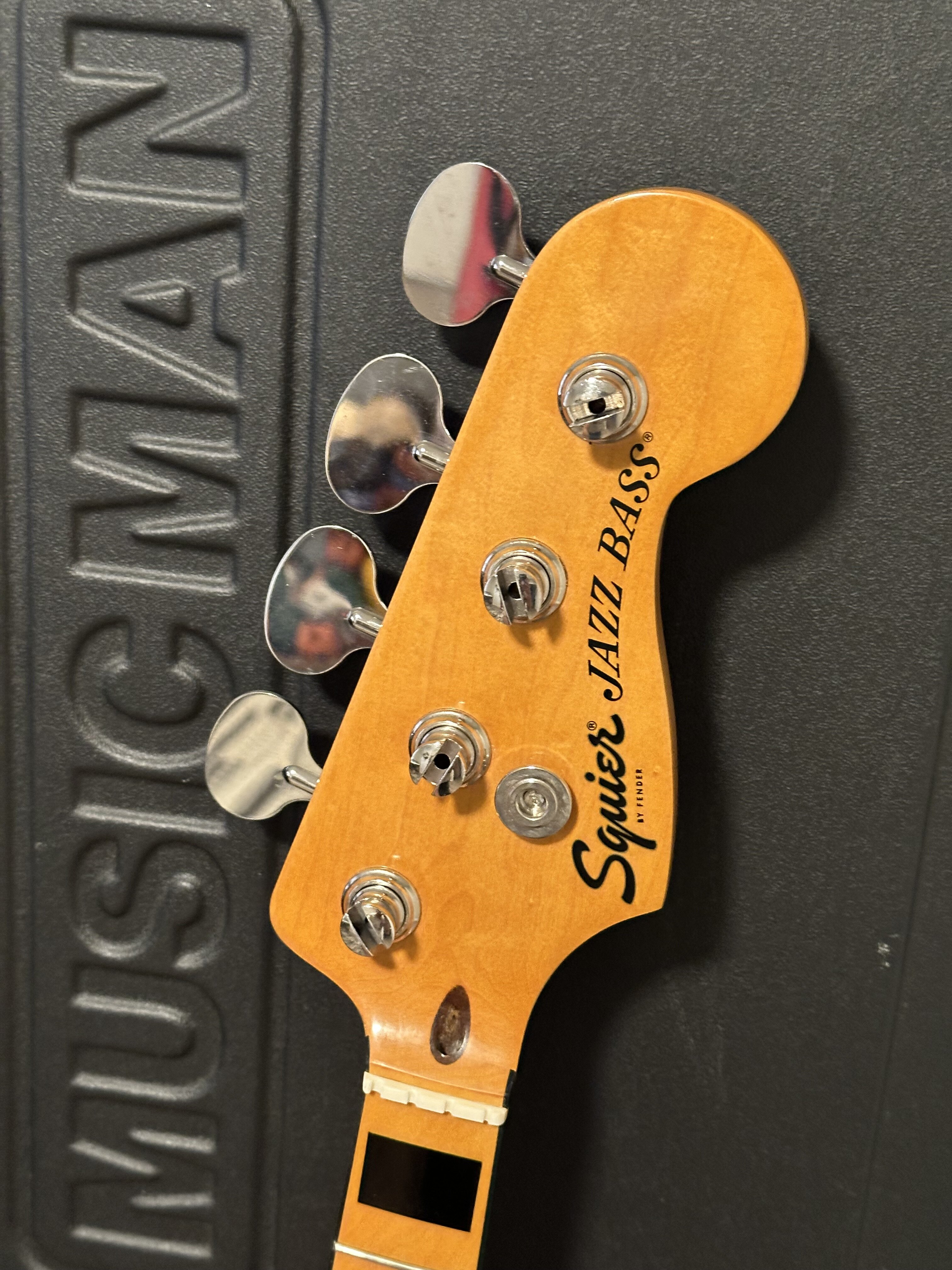

I will never get tired of installing Hipshot Lollipop keys on my Classic Vibes lol
View attachment 5278868
Lolipop on J are great match !
HB2 or HB7 in use ? Mind share each machine head weight ?
The current Indo CV bass machine head weight 77gram. Has same weight to CIC machine head with longer tuning shaft. Lighter than 86 gram machine head on Fender Player bass.
Last edited:

Hey all - just purchased a 2021 CV P, made in China, in Olympic White from the TB classifieds. While I wait impatiently for its arrival - I have a couple questions:
1) how do the current MiC CV's compare to the earlier MiC and Indonesian made models? I'm guessing higher build quality than Indo, but with lower quality components than the earlier MiC?
2) any issues to look out for? I'm sure I'll at least replace the jack before I gig it.
3) does a standard Hipshot DeTuner bolt right on, or are mods needed there? Worth it to replace all the tuners then right away?
1) how do the current MiC CV's compare to the earlier MiC and Indonesian made models? I'm guessing higher build quality than Indo, but with lower quality components than the earlier MiC?
2) any issues to look out for? I'm sure I'll at least replace the jack before I gig it.
3) does a standard Hipshot DeTuner bolt right on, or are mods needed there? Worth it to replace all the tuners then right away?

I just bought a used CV '70s Precision Bass in black with a Road Runner soft case for $200 locally.
This one is Samick Indo made and I like it a lot.
The nut is 1.625 width (Fender says it's 1.685) and the fretboard edges feel soft (not edge-y) the way they should, ...that makes me very happy
I think the neck binding and blocks are just paint under the finish but I don't care, the neck looks good and feels good.
I expected the neck to be bigger like the '70s Precisions were, but I was never a fan of thick/deep/fat P necks anyway, ...so good again.
The neck tint is pretty good, better than the tint on my Samick Indo made CV '50s Precision, which is a little closer to orange than I would like.
The fit and finish work on this bass is the same as my CV '50's which is good (very good for and inexpensive bass) as far as I'm concerned.
The pickup sounds right, don't think I'm gonna bother to swap in something more expensive/aftermarket.
I do wish they made the access opening for the truss rod barrel nut bigger and I wish they would use the larger sized hex barrel nut.
This one takes a 4mm Allen wrench instead of the 3/16" that some of the other Fenders do.
My Yamahas have the bigger one as well.
It always feels better tightening a truss rod barrel nut with a 3/16" Allen wrench.
I recently had a Squier 40th Anniversary Precision Vintage Edition here and I think this CV '70s Precision is a bit better.
This one is Samick Indo made and I like it a lot.
The nut is 1.625 width (Fender says it's 1.685) and the fretboard edges feel soft (not edge-y) the way they should, ...that makes me very happy
I think the neck binding and blocks are just paint under the finish but I don't care, the neck looks good and feels good.
I expected the neck to be bigger like the '70s Precisions were, but I was never a fan of thick/deep/fat P necks anyway, ...so good again.
The neck tint is pretty good, better than the tint on my Samick Indo made CV '50s Precision, which is a little closer to orange than I would like.
The fit and finish work on this bass is the same as my CV '50's which is good (very good for and inexpensive bass) as far as I'm concerned.
The pickup sounds right, don't think I'm gonna bother to swap in something more expensive/aftermarket.
I do wish they made the access opening for the truss rod barrel nut bigger and I wish they would use the larger sized hex barrel nut.
This one takes a 4mm Allen wrench instead of the 3/16" that some of the other Fenders do.
My Yamahas have the bigger one as well.
It always feels better tightening a truss rod barrel nut with a 3/16" Allen wrench.
I recently had a Squier 40th Anniversary Precision Vintage Edition here and I think this CV '70s Precision is a bit better.
Last edited:
Poplar is just slightly heavier than the Alder variety that Fender has used for making bodies for 50+ years.Same here, seems to me poplar is light and resonant so sounds rather good to me.
Nevertheless, there are downsides IMO :
-1 : It's a very fragile wood so someone has to be careful with screws not to apply too much torque when tightening
-2 : It also seems to me this wood sounds a bit thin on D and G strings of a std p bass compared with alder of the same weight but it's not a night and day difference though
Poplar is 29lbs/ft3
Alder is 28lbs/ft3
Poplar is 540 on the Janka hardness scale.
Alder is 590 on the Janka hardness scale.
Which means that Alder is little harder than Poplar but 50 points on the Janka scale is not very much.
Alder looks better when you do a sunburst finish, when doing solid colors the two woods are the same for practical purposes.
Warmoth, who makes lots of bodies out of lots of different wood, says they sound the same.
Last edited:

Hi richntiff, Im new in the world of basses. But I did some reading on the web before buying mine a few months back. As far as I remember, most of the comments I read were saying Indonesian-made are usually built better than China-made Squiers (at least nowadays). Unfortunately I don't have any more info or quotes from specific sites.Anybody have any insight on my post a few back?
To those who bought new Squier recently, is it Indonesia, China???
My Jazz 60s CV is indonesian-made. Pretty decent build. No complaints so far.
A few months ago I happened to be looking for a P-bass to add to the arsenal. I had seen prior through one of the threads that someone provided info on serial number ranges and those identifying which factory (Cort or Samick) built the instrument; further noting that the Samick instruments were seemingly superior quality. I happened across a 60's P locally in my price range so went to check it out. I noted the serial indicated it was a Samick-made bass and it all made sense as i handled the thing and played it. I bought it and have been enjoying it thoroughly since. I know it's not an answer specific to the question but I thought it'd be helpful to note that it's really more a matter of the factory than country of origin. There's quite a reputation that the older Chinese made versions have always been superior in the Squier lines over time, but these latest instruments through Samick may change some of the sentiment of having to own the older Chinese versions and passing up newer basses. As SharpCat said also, i think universally, the Squier manufacturing has shifted to Indonesia these days.
Hi richntiff, Im new in the world of basses. But I did some reading on the web before buying mine a few months back. As far as I remember, most of the comments I read were saying Indonesian-made are usually built better than China-made Squiers (at least nowadays). Unfortunately I don't have any more info or quotes from specific sites.
Sadly, 5 unit of Indo CV50P I been own included the current one still can't catching up with my previous CIC CV50P build quality. Poor factory fret work are main issue on them. My low action setup and low tension flatwound bass string easily shown those weakness.
Butter scotch CIC CV50P still in my radar.
I am currently touching with a greeny 2008 sonic blue CV60P, price are right but condition not as I expect for. Still under consideration...
Last edited:
The older CIC CV models have a reputation for being very good, I have not read any reviews of the newer CIC Squiers.Hey all - just purchased a 2021 CV P, made in China, in Olympic White from the TB classifieds. While I wait impatiently for its arrival - I have a couple questions:
1) how do the current MiC CV's compare to the earlier MiC and Indonesian made models? I'm guessing higher build quality than Indo, but with lower quality components than the earlier MiC?
2) any issues to look out for? I'm sure I'll at least replace the jack before I gig it.
3) does a standard Hipshot DeTuner bolt right on, or are mods needed there? Worth it to replace all the tuners then right away?
I received one of the older CIC CV '50s Precisions.
The fit and finish of the all maple neck was very good, the maple color was too white to look vintage.
I'm not a fan of the soft Basswood body it had and I did not like the non Fender spec bridge.
I've had good luck with two Indonesian Samick made Classic Vibe models. CV'50s and CV'70s Precisions.
My Samick made CV '50s P has a heavy Pine body that looks great with the tobacco sunburst finish and the body wood is harder than Basswood.
My Samick made CV '70s P has a nice medium weight Nyatoh wood body that works well for a black bass and it is also harder than Basswood.
I am happy with the hardware and nut on both, the necks have good fretwork and the fretboard edges are rolled nicely.
I think Samick (ISS serial numbers) is doing a pretty good job in Indonesia, I don't know how the Indo Cortek made Classic Vibe basses are (ICS serial numbers).
Is that CV60P a Cortek made bass or a Samick made bass?I am currently touching with a greeny 2008 sonic blue CV60P, price are right but condition not as I expect for. Still under consideration...
Last edited:

In the early 90s, most of the Fender Mexico instruments were made out of poplar. The reason that Fender switched to alder wasn't that they replied to customer demand - as I supposed -, but that there was such a high demand for poplar in the furniture industry that the prices went too high.Poplar is just slightly heavier than the Alder variety that Fender has used for making bodies for 50+ years.
Poplar is 29lbs/ft3
Alder is 28lbs/ft3
Poplar is 540 on the Janka hardness scale.
Alder is 590 on the Janka hardness scale.
Which means that Alder is little harder than Poplar but 50 points on the Janka scale is not very much.
Alder looks better when you do a sunburst finish, when doing solid colors the two woods are the same for practical purposes.
Warmoth, who makes lots of bodies out of lots of different wood, says they sound the same.


