
That's how they're supposed to be made. When you think about it, the larger strings always take less turns around the tuning peg to be drawn up to pitch on a conventional bass. Same with double ball ends. When I tried the Rotosound DBE strings, the ball ends at the tuner hung farther out of the housing as the strings got thicker. By the time I got to the E string, it hung almost completely out from under the tuner housing. It was kinda scary. I thought the string might slip out of its cradle at any time just from the vibration of being played. The D'Addarios that I used didn't do that.I am unable to find the reference, but a few years back, in one of these discussions, it came up that the original original Steinberger double ball bass string sets actually had strings of slightly different lengths. There was a scan of an old spec somewhere on-line. IIRC it was the E that was a couple of mm longer. But I don’t think anyone, not even LaBella, does that anymore.

Enjoy the benefits of a premium membership!
Upgrade Account
-
TalkBass has been independent since 1998. Add your voice.
Create a free account to reply to discussions, view embedded media, and browse with fewer display ads.
Join free Log in
Want zero display ads or expanded classifieds tools? Compare plans.
You are using an out of date browser. It may not display this or other websites correctly.
You should upgrade or use an alternative browser.
You should upgrade or use an alternative browser.
Steinberger Club
- Thread starter king_xanadu
- Start date
-
- Tags
- club
More options
Who Replied?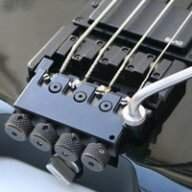
There was a scan of an old spec somewhere on-line. IIRC it was the E that was a couple of mm longer.
Let's put that scan right here…



Was there any difference in scale length, the headpiece dimensions, or bridge claw travel between the L2 and XP basses? I always assumed they were identical, but never knew for sure, the XP was always the sort of "red headed stepchild" of the series, but I love mine. Its still the only absolutely trouble-free bass I own (other than strings).
Was there any difference in scale length, the headpiece dimensions, or bridge claw travel between the L2 and XP basses?
The XP bass has exactly the same bridge(s), headpiece and scale length as the XL, XM, XQ basses. They all share the same hardware and (thus) specs. The L2 differs from all of them, simply because the headpiece and the bridge are completely different. There are metric threads on all later instruments like XL, XM, XP, XQ, but imperial threads on the L2. However, the scale lenght should be the same.

I use Labella flats on my L2 and Labella rounds on my XL and I havent had any issues..

Voila! Thank you. The point here being that, even with double-balls, the bend radius of thicker strings makes a difference. Implicitly, though, there’s an assumption made about the strings’ rigidity when that factor is worked in, so even if manufacturers follow the original spec, if the string is less flexible, the 3mm difference may not be enough.
Also, note that the spec allows tolerances so that all strings *could* be the same length, 909.5mm, and be a “legal” set,but they would have to be *exactly* 909.5.
Last edited:

I have this set of Rotos on my L2, they fit just right, the ball ends go "under the hood" at the bridge and they tune up no prob as well.I've found D'Addario double ball ends fit well and sound good...like nickel roundwounds are supposed to sound. I tried Rotosounds and the E string was almost too short to work. To make it worse, Rotosound actually argued with me, telling me that's how they were supposed to fit. So my recommendation is the D'Addarios. I buy them from Just Strings.,com (no affiliation).
I string the L2 BEAD, and to me, the LaBella B string was too stiff: too many enharmonic overtones when playing up the neck (around the 10th position A for example). I guess that is not a broblem with a 4-banger setThe LaBella double ball end flatwounds are amazing on the L2
Smooth as, a great buy
Highly recommend
Last edited:
Failed to add the link:I have this set of Rotos on my L2, they fit just right, the ball ends go "under the hood" at the bridge and they tune up no prob as well.
https://www.thomann.de/fi/rotosound_rdb665ld.htm

I string the L2 BEAD, and to me, the LaBella B string was too stiff: too many enharmonic overtones when playing up the neck (around the 10th position A for example). I guess that is not a broblem with a 4-banger set
I’ve had no problems with LaBella Strings. I’ve got a set on a Jazz Bass but haven’t used a 5 string set.
I haven't found any strings since Rotosound Superwounds that actually fit on my L2. Can you post a couple photos showing how the KS strings fit on the bass? I'm particularly interested in how they seat across the bridge and over the "zero-fret".I've been using Ken Smith double ballend strings on my L-2 for almost 40 years.
thx

Can you post a couple photos showing how the KS strings fit on the bass? I'm particularly interested in how they seat across the bridge and over the "zero-fret".
@ Bob Ross - Thank you for the fast reply and great pics.
I've always kept the piano-wound Roto Superwounds on to prevent the bridge saddles from mushrooming and the overwind at the head end from lifting up the string higher above the zero-fret.

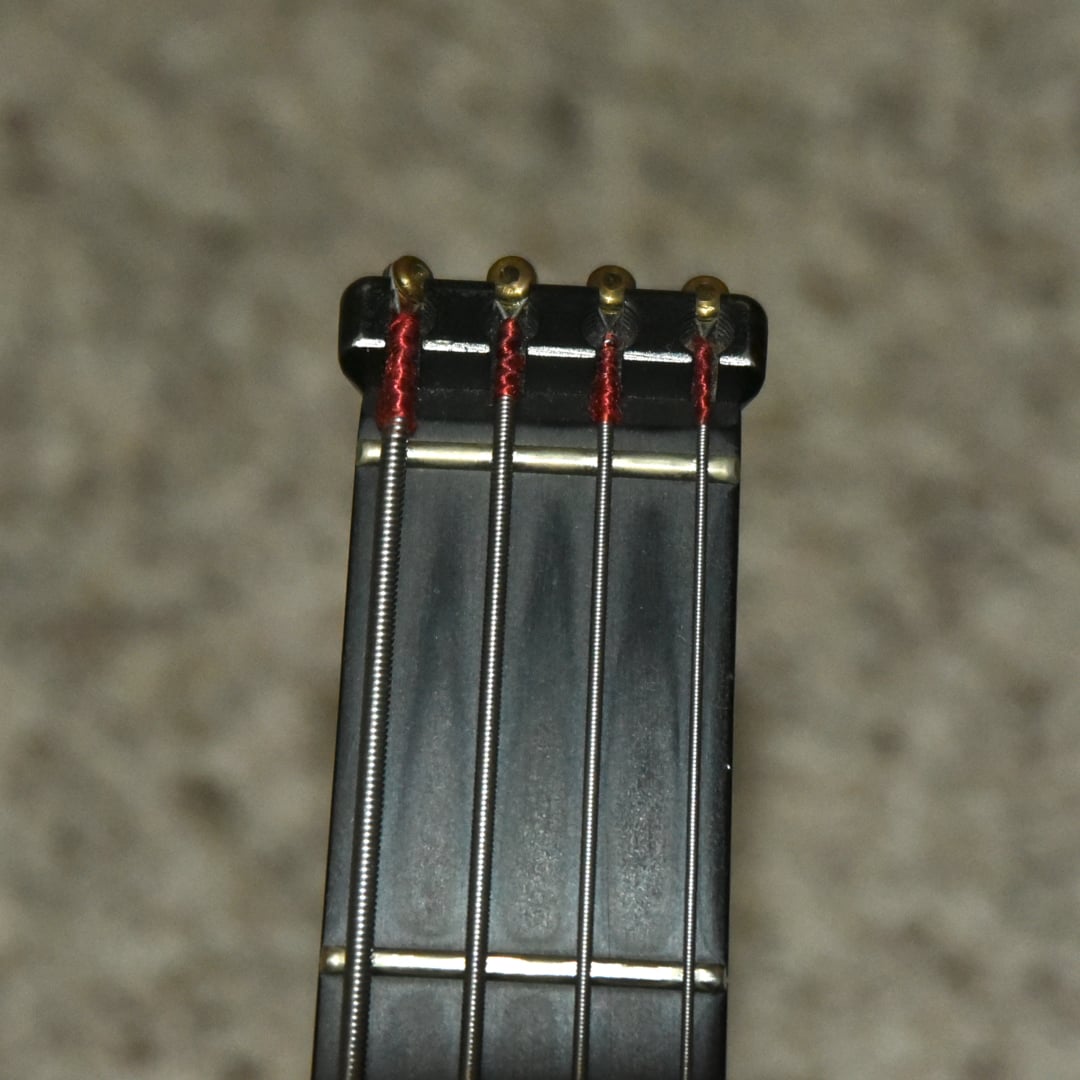
I've tried a number of of other DB strings but they were either too long or the windings up from the ball were too big.
I've also checked out the possibility of having replacement bridge saddles machined to perserve the original saddles and use the bigger winding strings.
I'll try the KS you have and see how they work out.
Thanks again for the very useful information.
dd
I've always kept the piano-wound Roto Superwounds on to prevent the bridge saddles from mushrooming and the overwind at the head end from lifting up the string higher above the zero-fret.
I've tried a number of of other DB strings but they were either too long or the windings up from the ball were too big.
I've also checked out the possibility of having replacement bridge saddles machined to perserve the original saddles and use the bigger winding strings.
I'll try the KS you have and see how they work out.
Thanks again for the very useful information.
dd
Last edited:
Thanks for this info. I wasn't sure what the difference was between the calibrated sets for my XL2T and the standard double balls until I read this. I still have a couple extra calibrated sets in my parts bin, but I'm thinking maybe to stock up on a few more now so they last me until someone ccomes to pry my Steiny from my dead hands.
Good info to have.
Two Questions:
Q1: Does the specs apply to the Spirit series?
Q2: Can anyone confirm that the ball for either
Link Removed or
D'Addario Electric Bass Chromes Flat Wounds strings will fit the Spirit XT-2 bridge?
BACKGROUND: I recently bought the sting adapter (STADB04) for single ball strings for my Spirit XT-4 (Korea) to expand my options for using flat wounds for this bass. I tried to fit a spare pair of flat wounds today (unknown brand - probably Ernie Ball) but the ball was too large to fit properly in the bridge of the XT-2.
Last edited:
Yeah, it is the late 80s on a blues rock gig....and a taped up Polaroid...
XL25a, 5 on 4 like an L. 6922 out of Newburgh, special ordered.
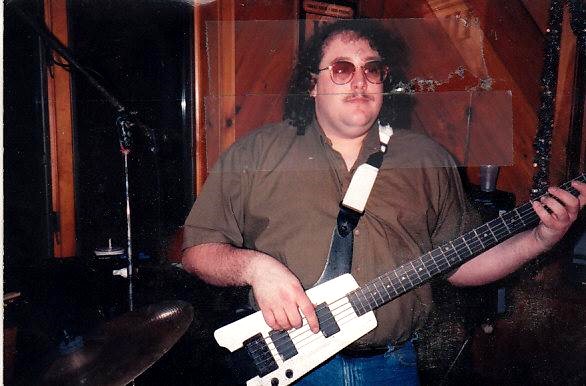
XL25a, 5 on 4 like an L. 6922 out of Newburgh, special ordered.
Cool photo @BergerXL25
I once played a XL25
Pretty sure it was a 4 string neck .. too tight spacing for me (not that it was up for sale anyway)
What strings do you use on your XL25?
I once played a XL25
Pretty sure it was a 4 string neck .. too tight spacing for me (not that it was up for sale anyway)
What strings do you use on your XL25?

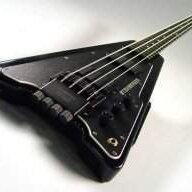
I forgot that I wanted to tell you about this HBCS pickup.
After some consideration, I put it in my white XP in the neck position and soldered it to the original circuit.
The difference in sound is much more noticeable than I would have expected. With the HBCS, the XP sounds more voluminous, fuller, you could even say "more grown-up". The typical Steinberger sound comes out even more clearly. And the HBCS harmonizes perfectly with the old original HB in the bridge position. With the HBCS in the neck position, the sound spectrum is wider, which I really like.