Now that you mention it, the graphic EQ probably goes a long way and probably makes that amp have more grind potential than the demos would lead me to believe. I knew someone who had an Acoustic 370, and once you got that thing distorting, you could really alter its sound radically with the graphic sliders.
I have to admit, I wasn't aware of the great tube amps Peavey was putting out in the late 80's/90's when they were new. I started to see them in pawn shops and realize how great they were around 2000. They keep putting out great stuff, I hope Peavey never dies.
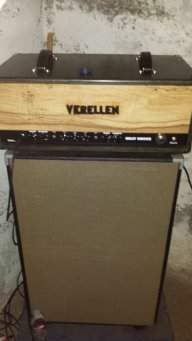
And yeah, with guitar the VHT has nearly enough beans to get the job done, and sounds great trying. I record stuff with it all the time, but I wasn't willing to haul around the amount of cabinet that it would require for it to carry bass loud enough to compete with my drummer. He plays an old Rodgers jazz kit, and every drummer we play a show with still comments on how hard he hits.
Hmm, Big Muffs can be the muddiest fuzz ever. It depends on what generation it is, and how it's set. When we recorded recently, I used my Big Muff. It's a NYC reissue, umm, EC3003-E revision circuit, I think. Even the different revisions of that board sound different. The Super-Fuzz still needed to be re-capped, and my drummer preferred the Muff to the Mastotron (gotta keep the drummer happy, they're weird). The engineer and producer came out to adjust it when I turned it on, and decided it sounded best with all three knobs on 10. That was the only way it cut through the mix.
So, yeah, I also think it might be the pedal. I'm getting a Behringer SF300 because: it seems to do a pretty spot-on imitation of my Super-Fuzz, I'm not really sure about gigging with an expensive pedal that's quite old, and at $25 it's about the cheapest path to fuzz there is. If it works out, I can buy ten for backup and still be under the replacement cost for the Super-Fuzz (no, I didn't pay those crazy prices, I traded a chorus pedal for it when I was 19).
Since it's an octave fuzz that generates a lot of information that your bass isn't even really making, using the scooped Super-Fuzz sound, the high end might get lost when both of my guitarists are going, but if there's an open frequency up there, it fills it. The low end is still filled up, too. Using it on guitar with other guitars in the mix, it sometimes becomes a question of "do you want the fuzz to dominate them, or be background", using it on bass, it still has enough room in the mix to live without drowning out everything else.
OTOH, you might like more mildly overdriven sounds sometimes. I might have the gain dimed on all channels all the time, but I turn the fuzz off when it's appropriate, and switch channels too.