i try not to go any lower than dropping the e to d (if the riffs require it) on a four string (most of my guitars are tuned to either drop d or DADGAD). had a guitar tuned to an open B chord for a powerviolence band i played in but I've come around to the idea that I'd much rather be able to borrow anyone's guitar and play without retuning the whole thing. plus slayer played in Eb so why i gotta try to go lower?

Enjoy the benefits of a premium membership!
Upgrade Account
-
TalkBass has been independent since 1998. Add your voice.
Create a free account to reply to discussions, view embedded media, and browse with fewer display ads.
Join free Log in
Want zero display ads or expanded classifieds tools? Compare plans.
You are using an out of date browser. It may not display this or other websites correctly.
You should upgrade or use an alternative browser.
You should upgrade or use an alternative browser.
Stoner/Doom Bassists Thread, Part 90: Maxed Out
- Thread starter Korladis
- Start date
More options
Who Replied?

Behold the majesty of Al's live tone: OM2019-03-01.CA14.UBB.R05.flac1648/OM2019-03-01.CA14.UBB.R05.ffp and 12 more files
In todays bad decisions, I'm going to go hunt down an octave pedal that can do octave up stuff...
>.>
>.>
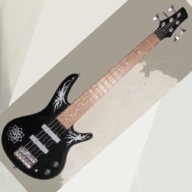
Ended up deciding to just tune my bass 2 semi tones up to F# to D, instead of 3 to G to D#, as I first intended, since eventually I discovered that the G to D# tuning made it sound just a tad too thin, plus I'll have less open string sharp notes to deal with this way, with only the bottom F# string being sharp.
Gives me slightly more bottom end, and with my current gauge .100 to .032 set of strings there is still less tension put on the neck than had it been a 34" scale bass with same gauge of strings in regular E standard tuning, though I think I eventually will get a gauge .095 to .040 set, plus a separate gauge .030 string, and restring it to get the tension down to something closer resembling how my current set of strings felt in E standard tuning.
Glad I got the idea of tuning my bass up a bit, cause it makes my bass much more functional for how I use it, playing a lot of simple chords and harmonizing, often with several strings ringing at once, perhaps a bit more similar to how you would play a Bass VI type instrument or a baritone guitar, rather than how you'd traditionally play a bass.
I'll try to pull myself together to do another recording of the bass to the track "In Orbit" and post it later, to give you an idea of how much it has improved the overall sound of compositions utilizing the open lowest string for harmonizing, preventing it from getting muddy, but at the same time having sufficient bottom end to support my compositions when needed, and not sounding too thin in any way.
So this is how the bass to "In Orbit" sounds played in the new higher F# to D tuning on my 5 string Ibanez Mikro, this recording is also using the songs actual real form and played in a bit slower tempo, like it is supposed to be played than the first recording of the track I linked to in a previous post, the same recording that the 2nd link in this post leads to (link to Dropbox):
"In Orbit" (new F# tuning)
Compared to how it sounded in standard E to C tuning (link to Dropbox):
"In Orbit" (old standard E tuning)
I admit though that I have also changed a bit on my setup since the first recording, which is part of the explanation why it sounds better, but the higher tuning and the resulting increased string tension is a huge part of it.
My distortion setup, a Behringer GDI21 (Tech 21 GT2 clone) in the California setting, blended with some cleans via my Boss LS-2, on the bass signal, and a Boss MT-2 Metal Zone in a relatively low gain setting on the 1 octave up signal, also sounds absolutely killer now, so great that I even stopped considering getting new different distortion pedals, as I otherwise planed, since I wasn't completely satisfied with how it sounded before used with the standard E tuning.
Here's a sample of me playing the distorted riffs from "3rd Eye of Hypnos" and a new riff I am working on in the new higher tuning, using my distortion setup (link to Dropbox):
Distortion sample (F# tuning)
Really made everything sound much, much better, I think not alone because of the higher tuning, though that has a big say in it, but also because of the increased string tension, that along with the higher tuning helps making the tone of my bass sound clearer and more defined, so think I will drop my plans regarding getting a gauge .095 - .030 string set, and instead keep the gauge .100 - 032 set that is on my bass currently.
Last edited:

In todays bad decisions, I'm going to go hunt down an octave pedal that can do octave up stuff...
>.>


@rutrho great advice for buying older cabs.
And what are you looking for in an octave up. I went down that wormhole a couple years ago, lots of compromise, but I think there's something out there for everyone. There's warble, glitchy, clean but harsh, etc. I tried more than I care to remember.
@JohnArnson sounds good in both tunings. I tend to just invert chords if they get too muddy for my taste.
And what are you looking for in an octave up. I went down that wormhole a couple years ago, lots of compromise, but I think there's something out there for everyone. There's warble, glitchy, clean but harsh, etc. I tried more than I care to remember.
@JohnArnson sounds good in both tunings. I tend to just invert chords if they get too muddy for my taste.

The Tyler is more-or-less a 100w Marshall superbass. So it can be farty if you run the bass too high, which makes it perfecto for biamping. I run it at breakup level and push it with whatever fuzz/distortion I fancy at the moment. It takes pedals wonderfully.What’s the Tyler sound like? Do you keep it pretty clean and dirty it with pedals or just crank it super loud?
My guitarist just reworked his whole rig and downsized to a 210 Roland jazz chorus 40 and a couple new pedals. I’m pumped he is ditching some pretty meh sounding stuff for higher quality effects and getting his signal chain a little shorter.
Rr
Not 100% yet but mostly looking for something cleanish that I can run into a separate signal path. Not sure I'm doing much with it other than messing around at this point, i have a buddy I play with here who's a bassist and we jam sometimes so some of that could be fun for our fsking around sessions.
@rutrho great advice for buying older cabs.
And what are you looking for in an octave up. I went down that wormhole a couple years ago, lots of compromise, but I think there's something out there for everyone. There's warble, glitchy, clean but harsh, etc. I tried more than I care to remember.
Not 100% yet but mostly looking for something cleanish that I can run into a separate signal path. Not sure I'm doing much with it other than messing around at this point, i have a buddy I play with here who's a bassist and we jam sometimes so some of that could be fun for our fsking around sessions.
In todays bad decisions, I'm going to go hunt down an octave pedal that can do octave up stuff...
>.>
I am extremely satisfied with the octave up effect I get from the stock polyphonic octaver of my Sub'n'Up Mini.
To my knowledge there is really only two octave pedals on the market that will do the octave up, tracks as good as perfect on a bass, all the way down to the low E, and properly even lower, and that also got really low, nearly unnoticeable, latency, and that is one of the EHX POG pedals or one of the TC Electronic Sub'n'Up pedals.
The Sub'n'Up stock polyphonic octaver has a more natural sounding octave up, or well as natural as a signal pitched up a whole octave gets, whereas the POG octave up has a bit more synthy organ like quality to it.
With the Sub'n'Up you also get the option for pitching your signal down whole 2 octaves, and with the Toneprint app you get an impressing amount of options for customizing you octave tone, with pre and post effect EQ, the option for adding overdrive to your octaves, and/or one of the full featured vibrato, chorus or flanger effects it offers, and the artist tone prints you can download for free offers additional octave types that you can't create yourself using the user version of the Toneprint app.
On the downside though, while the octave up effect of the Sub'n'Up has nearly unnoticeable latency the octave down effect seems to be a little slower to react, actually having a noticeable latency, though that might not be an issue for you, and certainly not if you only use the octave up effect.
If it will be an issue for you though you should properly go for the POG instead.
Also if you are not going for natural sounding, but would actually prefer your octave up to sound a bit more organ like, the POG might still be a better option, even if it is more expensive and that it is possible using the Toneprint feature of the Sub'n'Up to get more synth and organ like octave effects out of it.
@rutrho great advice for buying older cabs.
And what are you looking for in an octave up. I went down that wormhole a couple years ago, lots of compromise, but I think there's something out there for everyone. There's warble, glitchy, clean but harsh, etc. I tried more than I care to remember.
@JohnArnson sounds good in both tunings. I tend to just invert chords if they get too muddy for my taste.
Well, to me at least the new recordings sound quite a lot better.
Also I think I came to the conclusion that I really have no use for going lower than the low F#, plus the fact that the increased string tension tuning up results in on the Mikro's just 28,6" scale length, along with the higher tuning, just overall gives a, to me at least, noticeable clearer and more defined tone, also resulting in all my effects sounding considerably better, regardless of on which strings and where on the fretboard I play my bass.
Of course I could get similar string tension by using strings of a thicker gauge, but that wouldn't exactly give me the same effect of clarity and increased definition, as strings of a thinner gauge, regardless of tension always will sound clearer an more defined than strings of a thicker gauge, also strings with a thicker gauge at a certain point has a tendency to sound somewhat thudy, due to their relative rigidness, which will be even more prominent the shorter the scale of the bass.
So all in all and in my specific case I am pretty certain that my solution to the issue is in fact the optimal one.
Last edited:
I am extremely satisfied with the octave up effect I get from the stock polyphonic octaver of my Sub'n'Up Mini.
To my knowledge there is really only two octave pedals on the market that will do the octave up, tracks as good as perfect on a bass, all the way down to the low E, and properly even lower, and that also got really low, nearly unnoticeable, latency, and that is one of the EHX POG pedals or one of the TC Electronic Sub'n'Up pedals.
The sub'n'up is one of the main ones I'm looking at... I have a zoom ms60b and that has some good octave down sounds, but I haven't found a place where I need them at all, really, ever as I'm playing a 5'er in drop A. I'll pick up one of the mini ones and see how it behaves with my fretless basses.

I figure a lot of people in this group are playing the same kind of shows as I am, so I want to get some input on In Ear Monitors.
Every show I've played lately has had problems with us not always being able to hear each other. It isn't a "too loud" problem, it is not getting what we need in the monitors, or for the drummer there not being a monitor. It is making us think about IEMs, but I really don't know if they would work in our world: 4-5 metal bands playing bars and small clubs.
Do any of you make IEMs work as part of your rig?
Every show I've played lately has had problems with us not always being able to hear each other. It isn't a "too loud" problem, it is not getting what we need in the monitors, or for the drummer there not being a monitor. It is making us think about IEMs, but I really don't know if they would work in our world: 4-5 metal bands playing bars and small clubs.
Do any of you make IEMs work as part of your rig?
The subnup is what I have now, but I miss the pog I had and I wish I had picked up the luminary. I got it to save board space as you can do some filtering with the toneprint.
In a live/gig situation the differences between the pog and subnup aren't noticable, especially if you put some meat on the signal. I always ran an overdrive afterward to give it some warmth. I also learned passing your signal through an lpf prior to the octaver helps tame the harshness. You can test out how it works by just rolling the tone off on your bass. I play with a heavy hand so this help make it sound a lot more natural since I was using it to give the impression of a rhythm guitarist.
I'm certainly no expert authority, but here's the impression of ones I've owned or tried.
The full on POG2 has a lot of useful tools, especially the filtering and if you want to get synth and organ like. The gold standard. Zero tracking issues, but can have a harsh attack from picking which the filter solves. Also presets, and seems to have a fullness of signal, never lacks punch.
Micro pog, all the tracking abilities of the full one without the extra stuff. I used this for two years because I liked it and made due with just rolling my tone knob of a tad. I've used it in recording and live. Tone is the same as the big one.
Nano pog, I didn't get to try it side by side with the other two, but it sounded different. A little more sterile and thin personally.
The Luminary is interesting, almost the same as the POG2 in features. I like the tone the most of this one. Warmer than almost any other pedal and the upper octave has a better tone. The modulation is better too. The downside I found was a ever so slight warble to the pitch. Live I don't think anyone would notice, especially with dirt. IDK wish I had given it a long test run, but I didn't have the cash to keep it at the time.
SubnUp is good, gets the job done. I actually love the analog setting. The tone is hands down my favorite, real organic sounding but mid honky at times. Some chords actually sound good, although most just glitch out into harsh sounds. If you never plan on playing chords this may be the best option IMO. The toneprint is awesome because you can actually set up what each knob does and how the sweep works. I have one knob dedicated to vibrato mod on mine. You can change the pre EQ and post EQ. It's an awesome pedal and tracks well.
Pitchbay is pretty unique. I've only tried one at an EQD booth, albiet multiple times. Great sound, but it does have a little warble. This pedal would be great as an effect moreso than a foundation, and the dirt built in is awesome. I like how you can do two different pitches and you're not tied down to octaves only.
I've heard good things about the pitchfork and other similar pedals, but haven't tried em.
Whew that was long
TLDR:
If pedal board space wasn't an issue: Luminary, POG2, SubnUp/micro POG.
With tight space: SubnUp, Micro POG, Nano POG
All the warble I heard is really when you let a note ring out.
In a live/gig situation the differences between the pog and subnup aren't noticable, especially if you put some meat on the signal. I always ran an overdrive afterward to give it some warmth. I also learned passing your signal through an lpf prior to the octaver helps tame the harshness. You can test out how it works by just rolling the tone off on your bass. I play with a heavy hand so this help make it sound a lot more natural since I was using it to give the impression of a rhythm guitarist.
I'm certainly no expert authority, but here's the impression of ones I've owned or tried.
The full on POG2 has a lot of useful tools, especially the filtering and if you want to get synth and organ like. The gold standard. Zero tracking issues, but can have a harsh attack from picking which the filter solves. Also presets, and seems to have a fullness of signal, never lacks punch.
Micro pog, all the tracking abilities of the full one without the extra stuff. I used this for two years because I liked it and made due with just rolling my tone knob of a tad. I've used it in recording and live. Tone is the same as the big one.
Nano pog, I didn't get to try it side by side with the other two, but it sounded different. A little more sterile and thin personally.
The Luminary is interesting, almost the same as the POG2 in features. I like the tone the most of this one. Warmer than almost any other pedal and the upper octave has a better tone. The modulation is better too. The downside I found was a ever so slight warble to the pitch. Live I don't think anyone would notice, especially with dirt. IDK wish I had given it a long test run, but I didn't have the cash to keep it at the time.
SubnUp is good, gets the job done. I actually love the analog setting. The tone is hands down my favorite, real organic sounding but mid honky at times. Some chords actually sound good, although most just glitch out into harsh sounds. If you never plan on playing chords this may be the best option IMO. The toneprint is awesome because you can actually set up what each knob does and how the sweep works. I have one knob dedicated to vibrato mod on mine. You can change the pre EQ and post EQ. It's an awesome pedal and tracks well.
Pitchbay is pretty unique. I've only tried one at an EQD booth, albiet multiple times. Great sound, but it does have a little warble. This pedal would be great as an effect moreso than a foundation, and the dirt built in is awesome. I like how you can do two different pitches and you're not tied down to octaves only.
I've heard good things about the pitchfork and other similar pedals, but haven't tried em.
Whew that was long
TLDR:
If pedal board space wasn't an issue: Luminary, POG2, SubnUp/micro POG.
With tight space: SubnUp, Micro POG, Nano POG
All the warble I heard is really when you let a note ring out.
I figure a lot of people in this group are playing the same kind of shows as I am, so I want to get some input on In Ear Monitors.
Every show I've played lately has had problems with us not always being able to hear each other. It isn't a "too loud" problem, it is not getting what we need in the monitors, or for the drummer there not being a monitor. It is making us think about IEMs, but I really don't know if they would work in our world: 4-5 metal bands playing bars and small clubs.
Do any of you make IEMs work as part of your rig?
we never tried IEMs, if we can't hear each other we decide the drummer will lead and bass and guitar will follow the drums. of course that may not work for bands with vocals, so I just say dump the vocals...

sorry not much help

I’ve always done the opposite of IEMs - I use musician earplugs to reduce the volume level. I hated having the ringing in my ears long after practice or a show. That way I can be loud as I need and comfy.
I figure a lot of people in this group are playing the same kind of shows as I am, so I want to get some input on In Ear Monitors.
Every show I've played lately has had problems with us not always being able to hear each other. It isn't a "too loud" problem, it is not getting what we need in the monitors, or for the drummer there not being a monitor. It is making us think about IEMs, but I really don't know if they would work in our world: 4-5 metal bands playing bars and small clubs.
Do any of you make IEMs work as part of your rig?
I dont currently use them but ive looked into them. In order to really do it well you have tl have your own mixer and pass throughs so that you can mix your own iems then send the dry signal to the house. Otherwose your relying on the house to have enough outputs for your iem and he could turn them up to high and blow your ears out. Seems like alot of hastle. We just turn our amps to shoot accross the stage if its really bad during sound check
I use ear plugs as well. IEM protect from loud dBs while giving you the house mix.I’ve always done the opposite of IEMs - I use musician earplugs to reduce the volume level. I hated having the ringing in my ears long after practice or a show. That way I can be loud as I need and comfy.
At least that is the theory.
I've been in two 5 piece bands. When there is that much happening it is easy for the drummer to miss their queues. I can almost never hear myself properly.
The messed up thing is that really a stage with the amps facing out is the worst way for a band to play. A around stage with our amps facing each other and the audience around us would be the proper arrangement. They are using mics and DI for everything anyway. Why should my performance suffer because their monitors suck and the sound guy doesn't know what we are hearing?
Any cool new (or unknown old) dirt pedals you guys run these days? I’m currently GASless in life, and consequently, somewhat directionless. Not that I need anything since I’m not jamming or in any sort of group at all, but I’m trying to find a reason to play more often. Been quite a dry spell lately, and have been playing much more guitar (is Hour still barely any) than bass lately as I’ve taken a local kid in for guitar lessons.
For reference, I have and love dirt based on these circuits:
Muff
Rat
HM-2
Neve (Pork Loin)
Tubescreamer
GK “grind”
Superfuzz (Carcosa, right?)
DOD 250
I have other dirt, but feel this runs the gamut of “typical” dirt boxes. Let the recommendations begin! Thanks!
Also, if anyone has a lead on an Iceman bass or 7 string guitar, especially affordable, let me know. One of my dreams is a 7 string Iceman and Iceman bass. One of the few areas of GAS left for me.
For reference, I have and love dirt based on these circuits:
Muff
Rat
HM-2
Neve (Pork Loin)
Tubescreamer
GK “grind”
Superfuzz (Carcosa, right?)
DOD 250
I have other dirt, but feel this runs the gamut of “typical” dirt boxes. Let the recommendations begin! Thanks!
Also, if anyone has a lead on an Iceman bass or 7 string guitar, especially affordable, let me know. One of my dreams is a 7 string Iceman and Iceman bass. One of the few areas of GAS left for me.

I have a Roger Mayer Axis Fuzz (big orange spaceship looking thing) that I love for bass, especially when it’s pushing my amp a bitAny cool new (or unknown old) dirt pedals you guys run these days? I’m currently GASless in life, and consequently, somewhat directionless. Not that I need anything since I’m not jamming or in any sort of group at all, but I’m trying to find a reason to play more often. Been quite a dry spell lately, and have been playing much more guitar (is Hour still barely any) than bass lately as I’ve taken a local kid in for guitar lessons.
For reference, I have and love dirt based on these circuits:
Muff
Rat
HM-2
Neve (Pork Loin)
Tubescreamer
GK “grind”
Superfuzz (Carcosa, right?)
DOD 250
I have other dirt, but feel this runs the gamut of “typical” dirt boxes. Let the recommendations begin! Thanks!
Also, if anyone has a lead on an Iceman bass or 7 string guitar, especially affordable, let me know. One of my dreams is a 7 string Iceman and Iceman bass. One of the few areas of GAS left for me.

Alright, any clips? I’m hesitant for fuzz on bass, because I find it such a personal effect, but love it when it works. A quick search found no bass clips.I have a Roger Mayer Axis Fuzz (big orange spaceship looking thing) that I love for bass, especially when it’s pushing my amp a bit
Latest posts
-

-
 TC Electronic Spark Booster. Underrated champion of low-gain overdrives
- Latest: John D Harris
-

-
