• TalkBass has been independent since 1998. Add your voice.
    Create a free account to reply to discussions, view embedded media, and browse with fewer display ads.
    Join freeLog in
    Want zero display ads or expanded classifieds tools? Compare plans.

Struggle with live bass tone

If no one knows what they are doing, its a world of pain, plus through in ears as well, you might not have much feedback into what the out front sounds like.

A recent rehearsal without our ears mix on a Sub date showed just how try awful this band actually sounded, played.

I'd spring for a very sorted and respected engr to shake down the sound for you..and hope you can retain enough info to do it yourselves in future.
The hapless amateur carrying the P.A is not usually the best place to start.
 
Have you tried running everything flat? Turn off all the filters and start with a nice, flat signal across the board. It’s the correct starting position, especially if you’re new to sound.

Guitars and basses are inherently designed to occupy different sonic space. Excessive eq and effects typically are the culprit for a muddy mix. You may find you only need to tweak from the flat positions to dial in a proper tone.
 
  • Like
Reactions: PhillipHolbrook
Thanks for the input so far! HPF is set to 40hz on all channels right now. I could definitely see if raising that on guitars and vocals makes a difference. Gonna research frequency slotting.

Watch out with High passing everything, 80Hz is enough for many sources. HPF can make the show sounds thin and sterile.

Your problem might be an EQ problem with the crossover of the PA system or just a bad EQ.
Try to get your bass signal as straight as possible if you want clean of course, meaning no comp, no EQ, no HPF or filters.
And if you're not happy with the sound, then the PA EQ and crossover is degrading your signal.

Simple test: does music played through the PA sounds good?
And by good i mean balanced and plain, not hollowed.
 
  • Like
Reactions: PhillipHolbrook
Thanks for the input so far! HPF is set to 40hz on all channels right now. I could definitely see if raising that on guitars and vocals makes a difference. Gonna research frequency slotting.
I'd move that up to 80 -100 hz for everything except bass drum. If your a 5 string player maybe only 60 hz for the bass, but you wanna get the super low rumble outta the subs, especially if they're being pushed really hard. Then try to find a spot in the mid range to accentuate the bass' articulation. I've got an EMG BQC System in my main working bass and I find that a bump at 1k hz gives me that cut through the mix thing I want without being overly clanky or harsh and bright, but the specific frequencies that do that will vary bass to bass. The mixer you use should have sweepable mids. Turn the mid gain up, sweep the frequency knob around listening for a brightening that sounds pleasant then adjust mid gain down to a level where it sits nicely with your low end and the rest of the mix. Maybe also increase compression, or add a compression pedal.
 
Last edited:
  • Like
Reactions: BassMic_84
Bass EQ through subs is the tough thing.

First though I'd be using a P to play country, much better starting point. We're no pros but I still use my backline to supplement 'cause it's hard to get a good bass EQ through mains with subs, but one key is that something needs to be notched out between the kick drum and your low end. And the low end of guitars for that matter. I wish I had more knowledge, will be watching this thread to hopefully gain some.
 
Are you using the Tone Hammer with AGS on or off? Please note that with AGS on, the EQ is very different from clean signal. It’s EQ profile is similar to cab sim. You might need to boost lows and/or cut mids with AGS on…

Edit: see post 1825 in the following thread:

https://www.talkbass.com/threads/ag...-500w-megathread.717712/page-92#post-13429692


Yes, I have AGS engaged, set at 9 o'clock. I can hear a little of that grit through the PA when playing solo. I don't hear it in an obvious way when once everyone is playing, but I do feel that it adds a nice color/character.
 
  • Like
Reactions: Wisebass and Zbysek
Bass EQ through subs is the tough thing.

First though I'd be using a P to play country, much better starting point. We're no pros but I still use my backline to supplement 'cause it's hard to get a good bass EQ through mains with subs, but one key is that something needs to be notched out between the kick drum and your low end. And the low end of guitars for that matter. I wish I had more knowledge, will be watching this thread to hopefully gain some.


Thanks for the reply. The P has definitely been my go to bass with this band. Even with my dissatisfaction with the FOH sound at the moment, the P sounds the best and most focused right now. In rehearsal I play my rig, which is a Tone Hammer 500 through an SL212. Sounds incredible to me. My dream is to get close to that with the Tone Hammer DI into the PA, if possible.
 
It could be two or three combined issues out of about a dozen possible issues. Getting a sound tech in for a few gigs is the best advice I’ve seen in responses.

I personally have always been a little disappointed in my bass sound out of any PA I’ve played through and I’ve played through a bunch. In my case, I think there’s a an expectation of hearing myself the same as out of my amp, except louder, and I’ve concluded that’s never going to be the case.

Assuming you are liking what you hear in your IEMs, have you ever spoken to someone in the crowd at your gigs and got feedback on your bass tone in the PA mix? It could be you have a little “doesn’t sound like my amp tone” syndrome, but you sound great in the mix to others.
 
  • Like
Reactions: Zbysek
it's very common for the sound 'engineer' to reduce your bass tone to a pile of warm mashed potatoes. How many sound guys have we all met that are overly impressed by the number of subs they can bring to a show? Bass is bass, no need for articulation, right? It just has to thump, isn't that FREAKING AWESOME?

So, yeah. You need to be talking with your sound 'engineer' about tonal goals and have the BL back you up. If they can't effectively eq you, add some HPF/low cut, boost up your mids, etc etc etc - then find a new sound 'engineer' that knows how to do it. It's disheartening to spend the time we do on our tone, only to have it reduced to the sonic equivalent of a down comforter by someone who doesn't understand or care.
 
  • Like
Reactions: BassMic_84
My first concern is FOH.

IMO as a stage performer -- your first concern should be getting your sound dialed in so that it sounds good to you (and maybe your drummer) on your little corner of the stage.
When your sound is good to you, you will play better. Performance is more important that FOH mix.

FOH should be left to the person who is out in the FOH running sound. If your band doesn't have a FOH person, then dial it in on stage, and do the best you can for FOH - meaning keep it as simple as possible. Just try to get a nice balance and make sure you can hear the singer.

There is a bit of trust and letting-go involved here. You can't possibly control everything, so pick the one thing you can control and do that as good as you can.

Have you tried running everything flat? Turn off all the filters and start with a nice, flat signal across the board. It’s the correct starting position, especially if you’re new to sound.

Great advice... it's important to have a "home base" to return to after going down a tone rabbit hole.
Also... when in doubt, a nice clean signal with minimal EQ usually will work pretty well out front. A bass (passive or active with no crazy eq), plugged into a simple clean box ("pre" DI, JDI, etc). Then maybe on the board hit the HPF button, bump the bass control up one and the treble control down one. Turn it up until you can hear it in FOH. Keep it simple - especially for country / Americana.


I am currently playing through a Tone Hammer DI direct to the board.

Great box. If you are going "post" to FOH, and using the AGS, then you already have you your EQ curve. The AGS with gain low for very minimal distortion works great. The AGS give you the HPF and LPF that you need (basically a cab-sim). From there do minimal knob tweaking.

----- I think your problem is more with the PA. TOO much subs! Instead of HPF-ing the heck out of your bass, lower the crossover frequency of the subs/mains. Or turn the volume of the subs down compared to the volume of the tops so you get better balance.

Again,,, keep it simple and don't go down EQ and signal chain rabbit holes. If everything is just getting washed out by the subs, then turning the subs down for better balance is the first step.
 
I always thought the "right thing to do" is send the DI signal without EQ. I use a Tonehammer preamp/DI also and set the DI to "pre" rather than "post". Then who ever is running the FOH sound can tweak the bass signal to match the room. Yes, this means that if you are relying on the AGS, this won't get transferred to the PA, but for me that is fine (don't use AGS much). However, that is just me.

By sending a clean signal, it is not in your hands on how to make the room sound good. Don't get me wrong, of course you and I care about how it sounds in the room. But really that is the job of whomever is running the PA.
 
I'd like to sincerely thank everyone for the input so far. The band has a break coming up after the new year and we will use that time to set up our full system and try these suggestions out. It would be even better if we can bring someone in with more experience for a few hours to help us get a good baseline saved.
Exactly what I was wanting to do with our band in the spring in terms of paying a sound person to get us set up and dialed in at a show. There might be a few nuggets of insight that an knowledgeable engineer could point out that would cheer up your own sound and also bring some definition to your band's mix. I never got to the point of doing this - also another story...

I was also going to suggest primarily using one bass while you're squaring away this issue with your own sound along the lines of what our pal @2thAche recommended above in post #27. None of your basses are either wrong or right (they're all potentially very right :thumbsup:), but sticking with one of them should give you a more consistent reference to work from when your sending "your sound" to the PA.


I've also found that I'm much more confident when I can hear myself well enough on stage. My band is nowhere near ready for the investment and commitment of IEM's and a full PA, but if your in-ears aren't quite delivering your sound to your ears that you need, you might want to consider keeping an amp on stage at moderate volume if that will give you more of the confidence you need to effectively drive the bus. Or maybe it's a case of finding the right IEM's to help you get "your sound". There are obvious advantages to a more quiet and uncluttered stage when going ampless and using in-ears, but I know that I'm very accustomed to the sound I get with my own rig.
 
I treat this type of thing like mixing.

If I'm the sound guy, I get a couple recordings I really like and know of the appropriate genre and energy that I'd like for the live sound.

Test them through the PA. Make sure it sounds good and not boomy. EQ the main channels if the known good recording is not sounding good in the room.

Then I mix the band in. I usually start mixes with drums, then bass, then guitar, then vocals. But in some bands I start with vocals (get them loud, then mix in the rest), the order is not as important as getting layers.

Vocals I HPF pretty heavily usually up to 250 or 300hz- maybe even higher for a female vocalist or soprano range. Guitar same, sometimes even higher 400hz - unless it is metal- even then you really want them sitting above the bass. From lowest to highest: kick drum, bass, guitar/keys, vocals, then cymbals/snare. Sometimes keys or guitar slot above or around vocals. EQ, compression and fader are all inter-related weapons. Learn and use them all.

Making sure an instrument sounds good in the ensemble is more important than sounding thin. In fact guitar or or non-solo keys often sounds thin on it's own if it's going to sound good in a mix. listen to some individual multi tracks or stems of bands/songs you like if you can. Even through the PA.

I also tend to compress vocals a fair amount- most singers are garbage with dynamics, and live there isn't nearly as much subtlety anyway. It can help you mix it to the front.

I tend to mix live in mono, but some gigs in a theatre or ampitheater with excellent acoustics I'll do stereo.

Also if the PA and equipment has a good manual, read it.
 
HPF at 40hz is way too low for anything except kick drum and Bass guitar…

My guess is the subs are hyped. The first step is to balance the subs and mains for flat response. Then if you want more or less bass, the tone should be adjusted on the bass channel strip. .

These were my first two thoughts. Our basic desk has hpf buttons set at 100hz, which we engage on everything except bass and bass drum.

Definitely get into a rehearsal space with the PA and calibrate it properly to find your flat baseline. QSC has a useful guide for calibrating tops and subs here:
Setting Subwoofer Level correctly in your PA System - Live Sound (qsc.com)
It's pretty simple to do. A couple of phones and an SPL meter app will do - one to play noise into the desk and one to go out front to measure it. Once you know the knob settings for each speaker you have a reference point from which to tweak.

Remember, "top" PA speakers are usually full range, as such (and I stress IMHO) a subwoofer has two jobs. Relieve the pressure on the tops so they aren't doing all the work. Put back the low end you lose by putting the tops on poles (a speaker up on a pole in the middle of the room can lose as much as -12db of low end).

As Wasnex says, if you want to hear more bass, turn up the bass guitar channel or eq. Leave the subs alone.
 
This is a dumb question, but are you listening to your bass tone from out front? It will sound like mud and garbage behind the mains. Also what kind of IEM's are you using? Cheap IEM's will also sound like garbage. Make sure you have very good isolation, i.e. when you put them in you shouldn't hear much of anything from the outside world. You should also be able to control your own monitor mix with the Allen and Heath QU16--are you pushing your bass high enough in the mix? What kind of EQ and/or compression is being applied to your signal at the mixer? What makes your bass sound good out front may unfortunately not sound great in your ears. My experience is that if you give your FOH engineer a good signal to begin with, it should still remain mostly good in your ears unless they're doing something extreme to it. Finally, check to see if there is any eq/compression being applied to the aux mix that drives your IEM's. All those things have an effect, sometimes a very large one, on what you are hearing. Finally, a system-wide HPF at 40 hz isn't too extreme. Kick drum 'thump' is around 60 hz, and most bass energy that we hear is the first harmonic and above. Letting much below 40 hz into the mains can potentially damage subwoofers, so the FOH engineer is making a choice to balance good bass energy with protecting the system. But the channel HPF on vocals, guitar, snare, toms, and drum overheads should be much higher, 80 - 100 Hz or so.
 
Last edited:
  • Like
Reactions: BassMic_84
Hi BassMic :)

advice on getting an articulate live bass sound

Play articulately? :D

HPF is set to 40hz on all channels right now.

See below!

HPF at 40hz is way too low for anything except kick drum and Bass guitar…

Even for the bass I consider that too low (at least for country rock!)

It would be even better if we can bring someone in with more experience for a few hours to help us get a good baseline saved.

This a thousand times! For the sake of everybody's sound (not just yours!!!)

the EQ is very different from clean signal. It’s EQ profile is similar to cab sim

This is a very good point! If you are not shredding for satan, gear like this can take your sound to

undefined = the opposite of articulate!

I can hear a little of that grit through the PA when playing solo. I don't hear it in an obvious way when once everyone is playing, but I do feel that it adds a nice color/character

It gives you a nice grit and warmth that you hear soloing but it is also there when you don't hear it!

=> this can mush up your band sound!!!

But in your case, I would suggest some sort of preamp DI. The reason is because mixers are not typically set up so you can adjust your bass's tone in the monitors separately from the main PA speakers.

Exactly that! :thumbsup:

A good preamp D.I that lets you send pre or post eq D.I to the mixer.


In rehearsal I play my rig, which is a Tone Hammer 500

Mic, did you ever try to run your signal through your head to FOH?

Use the D.I. post eq! (if your amp has that function)

If your sound is articulate through a bass cab it should be through P.A. Cabs too!!!

And if you like the amp's sound better tha the D.I's

=> get a preamp pedal :hyper::hyper::hyper: or bring your head to the gig!


greetings

Wise(b)ass
 
  • Like
Reactions: Zbysek
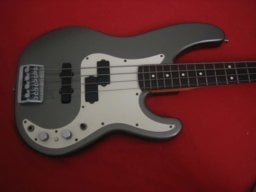
Hello. Looking for some advice on getting an articulate live bass sound. I am currently playing in a country/rock cover band. I am currently playing through a Tone Hammer DI direct to the board. I generally play a Fender P or J, but sometimes play a G&L L2000 as well.

Before joining this band I've only played in smaller groups where only the vocals were assisted by a PA. We were on the quieter side and our amps could hold their own. Playing through just my amp, the tone was deep and present, but also articulate, defined and full of nuance.

In this bigger (and louder) band, my tone is about as articulate as mashed potatoes. Sure, there's a deep sonic presence, but nothing else. The bands system is not lacking. Allen and Heath QU16 through a pair of QSC 18" subs and 3 way tops. I care much more about definition than shaking the rafters. I try to dial up a little grit with the Tone Hammer, but it still sounds so bland compared to pushing my cab. We do our own sound and I will admit we are definitely green at it.

If anyone has ever been in the same boat and figured it out, or has better live sound experience I'd love to hear from you! Thanks!

Simple fix, cut back on the ultra low bass (like flat), bump up for low mids (165hz). I play Fender basses in large ensembles My EQ is flat across the board with a slight boost at 165hz. Pickups and tone controls wide open. I will roll of some treble on the bass when I have newer strings, and in very dry room I’ll give a slight boost on the amps bass.

ToneHammer is a good head but make sure you follow the instructions in the manual. As for the deep low end, let the PA do that. That what it gets paid to do..LOL!

Your rig on stage is for you to hear what your are doing, not filling the room.

Best wishes and hope this works.
 
  • Like
Reactions: BassMic_84