
Enjoy the benefits of a premium membership!
Upgrade Account
-
TalkBass has been independent since 1998. Add your voice.
Create a free account to reply to discussions, view embedded media, and browse with fewer display ads.
Join free Log in
Want zero display ads or expanded classifieds tools? Compare plans.
You are using an out of date browser. It may not display this or other websites correctly.
You should upgrade or use an alternative browser.
You should upgrade or use an alternative browser.
Stuart Zender compressor?
- Thread starter Ryan Mohr
- Start date
More options
Who Replied?
Hi,
you may find more responses if you specify which era-Zender sound your looking for.
Merry Christmas.
you may find more responses if you specify which era-Zender sound your looking for.
Merry Christmas.
Hi,
you may find more responses if you specify which era-Zender sound your looking for.
Merry Christmas.
That's a good point, he doesnt use too much compression anymore. I was thinking during the Travelling Without Moving era, particularly on songs like Travelling Without Moving and You Are My Love.

bongomania
Commercial User
If you can post a Youtube link I can maybe offer a suggestion; but OTOH there's so much studio production in the original recordings, and so much audio corruption in the Youtube process, that it could be impossible to say what was used.
If you can post a Youtube link I can maybe offer a suggestion; but OTOH there's so much studio production in the original recordings, and so much audio corruption in the Youtube process, that it could be impossible to say what was used.
http://youtube.com/watch?v=JG0CnnqziJA
Different song but that's the sound I'm after.
bongomania
Commercial User
While his signal is compressed, there's nothing "characteristic" of one compressor vs. another there IMO. I might choose the Demeter just because it is capable of more compression than the other two mentioned, but what I could hear had more to do with fingers, strings, and EQ. I guess I would rule out the really bright crisp comps though, e.g. CS-3/THAT or Keeley/Dynacomp types.
While his signal is compressed, there's nothing "characteristic" of one compressor vs. another there IMO. I might choose the Demeter just because it is capable of more compression than the other two mentioned, but what I could hear had more to do with fingers, strings, and EQ. I guess I would rule out the really bright crisp comps though, e.g. CS-3/THAT or Keeley/Dynacomp types.
Thanks for the advice. Are you saying I shouldn't get the demeter because it is bright and crisp, or are you saying I should?
bongomania
Commercial User

Should get, as it is fat and warm, not bright or crisp.
I'm interested in this Demeter too, I read all of your info and reviews, excellent, excellent stuff.
One question - in your opinion - would the Demeter be able to limit the dynamics of playing attack, in terms of levels.
The preamp I'm using is musically excellent, but it's passive and very sensitive to attack. I don't really want to cut the highs with an EQ pedal - do you think that the Demeter would help smooth things out for me??
Dale.
bongomania
Commercial User
Yeah, the Demeter does a great job of smoothing and limiting note attack. In fact, that's the big "negative" to it for some players who want to hear more of a sharp clicky attack on their notes- the Demeter smoothes that stuff over.
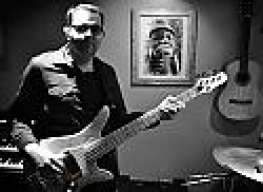
He used Trace Elliot gear which had a built in dual band compressor. That may have been the compression he was using.
Yeah, the Demeter does a great job of smoothing and limiting note attack. In fact, that's the big "negative" to it for some players who want to hear more of a sharp clicky attack on their notes- the Demeter smoothes that stuff over.
Great I'm gonna try it - thanks for access to all of your info, it's guys like you that make talkbass the amazing resource that it is.
Sorry for derailing the thread for a few posts.
Dale.
He used Trace Elliot gear which had a built in dual band compressor. That may have been the compression he was using.
Should I go for the EBS then because it is a dual band compressor?

The Sound is really good... How would you set your Copmressor to get as near as possible to this Sound...
BTW: I have the tc electronic Vintage Compressor..
BTW: I have the tc electronic Vintage Compressor..
bongomania
Commercial User
It's just heavy compression, which is easy enough to do by lowering the threshold or raising the ratio. But I'm betting 98% of his sound is the bass, the strings, the amp, EQ settings, his playing technique... the compressor is just helping an already-fat sound to sit in the mix the way he wants. Compression is like polish- you can polish a nice car and make it look even nicer, or you can polish a rusty old junker and it will still look bad.
It's just heavy compression, which is easy enough to do by lowering the threshold or raising the ratio. But I'm betting 98% of his sound is the bass, the strings, the amp, EQ settings, his playing technique... the compressor is just helping an already-fat sound to sit in the mix the way he wants. Compression is like polish- you can polish a nice car and make it look even nicer, or you can polish a rusty old junker and it will still look bad.
You´re absolutely 100% right !

Get a bass with Bartolini pickups and a Bart preamp...that's a good part of what you're hearing. You're also hearing a good studio compressor to fill out the sound and limit the signal.
My Ashdown amp used to get that sound without a compressor. Check those out.
My Ashdown amp used to get that sound without a compressor. Check those out.
bongomania
Commercial User
Here's an update. I have been messing with a Yamaha Magicstomp for a couple of weeks now, and have finally written a review of its compressor models. I strongly recommend it for anyone after a thick heavily-colored compression effect. I think it will cop the Zender tone better than the Compulator, Fat Burner, or any other fattening comp I have recommended in these many Zender-related threads. There are down sides as well, which you can read about in the Link Removed. I intend to get my hands on a few other modelers for comparison, but for now I'm saying the Magicstomp is the best way to get extreme vintage-funk/soul-funk/jam-funk compression coloration on a tight budget.
Darn, that's sounds pretty good. I think I'll be a little less excited when my Compulator shows up in the mail. At least, I know to maybe hold off on a Fat Burner as my "fat" comp.
Some of the clips on basstasters sound decent:
[Invalid or Expired Link Removed]
This is actually my first time hearing of the Magicstomp EB. Too bad that with two seconds of research, I found that it's already gone the way of the do-do.
-Eric
Some of the clips on basstasters sound decent:
[Invalid or Expired Link Removed]
This is actually my first time hearing of the Magicstomp EB. Too bad that with two seconds of research, I found that it's already gone the way of the do-do.
-Eric
I fell in love with his sound right before I started going further back to Motown like stuff. The closest I got was with:
My Warwick(made of similar woods as his Streamer)
AH250 Mark V
Punch Factory with compression cranked
Ampeg 4x10
I also come very close with the RAH350SMX Trace. But for this particular sound I preferred the 250. Its one of the reasons I never ended up selling the AH250 after getting the SMX.
My theory is that compressing the hell out of a Trace Elliot's HUGE bottom end and low mids has alot to do with the sound he used back then.
My Warwick(made of similar woods as his Streamer)
AH250 Mark V
Punch Factory with compression cranked
Ampeg 4x10
I also come very close with the RAH350SMX Trace. But for this particular sound I preferred the 250. Its one of the reasons I never ended up selling the AH250 after getting the SMX.
My theory is that compressing the hell out of a Trace Elliot's HUGE bottom end and low mids has alot to do with the sound he used back then.


