
Enjoy the benefits of a premium membership!
Upgrade Account
-
TalkBass has been independent since 1998. Add your voice.
Create a free account to reply to discussions, view embedded media, and browse with fewer display ads.
Join free Log in
Want zero display ads or expanded classifieds tools? Compare plans.
You are using an out of date browser. It may not display this or other websites correctly.
You should upgrade or use an alternative browser.
You should upgrade or use an alternative browser.
Tech 21 lost their minds?
- Thread starter Nephilymbass
- Start date
More options
Who Replied?

Because they market it as Made in USA.
Edit: above posted ahead by a second
Made in America by workers paid a living wage?
Carvin is made in America and their products are high quality and affordable. I guess they use slave labor.

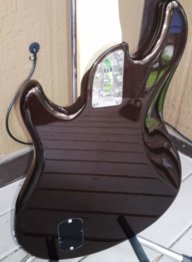

Carvin is made in America and their products are high quality and affordable. I guess they use slave labor.
Plain and simple difference: economies of scale. The Carvin is a mass-produced item. Spinning up the tooling for Tech 21 to mass produce the dUg would cost $100k+, easily (per my professional experience engineering mass-produced products).
Besides, the Carvin will ever sound like the dUg, so your average Carvin purchaser isn't probably interested in the dUg, anyway.

- May 20, 2000
- 3,200
- 1,917
- Disclosures
- Endorsing Artist: Aguilar Amplification, Spector, Dingwall, Tech 21 NYC, Darkglass
Carvin is made in America and their products are high quality and affordable. I guess they use slave labor.
They do direct sales.
What do I care if it's $1800 or $18000? I'm never going to buy one, and I'm sure there are better amps for half that price.
As so many people have said, Made in USA of components from somewhere else. If it is priced as a Behringer, nobody will buy it.
I see it as a unique piece of American made electronics. I don't feel it's going to be targeted to those who don't want to spend that kind of money.
Tech 21 knows it creates a sound that appeals to a lot of bass players. So it created a total package that will recreate that sound, custom build from the ground up.
Just like at a car show. If you don't think it's in your budget, just walk on by.

I see it as a unique piece of American made electronics...
Just like at a car show. If you don't think it's in your budget, just walk on by.
I'm finding that to be the case with more and more gear, especially anything made in the USA.
A Fender Bassman300 is $1800, a Mesa Prodigy is $1800...
So if Tech21 builds a really cool new product with tons of features for $1800 why does that seem so crazy?
So if Tech21 builds a really cool new product with tons of features for $1800 why does that seem so crazy?

Based upon the voicing, the dirty channel seems like it really only has any usefulness when combined with the clean channel.
True enough. The dUg distortion is based on the John Entwistle's methodology: combine clean bass with distorted mids and highs. Ox originally did it with clean bass amps for lows, dirty guitar amps for mids/highs. Bassists like Chris Squire, Geddy Lee, Billy Sheehan, and Mr. Pinnick developed their own versions, but they are rooted in Entwistle's concept. It's why the dUg amp has the LPF on the clean channel, and the HPF on the dirty channel.
I can get some pretty cool OD tones running SansAmp preamps in parallel. Example: RPM for clean lows, RBI for dirty mids/highs. This rig can kinda-sorta get in the Entwistle ballpark using EQ to accentuate the appropriate frequencies, but the dUg has some extra magic in there. The HPF and LPF are likely a big part of that magic.
Point being, I'm pretty sure the dirty channel on the dUg isn't intended to be used by itself: the most effective operation would be to alternate from clean channel only, to clean-plus-dirty. As husky said, the mids on the clean channel are attenuated when both channels are combined. I agree that it's pretty slick... yet more magic that the dUg has over dual SansAmps.
Actually there is a super warehouse clearance sale going on right now. So if you want to save $.02 cents on a Fender Tube amp, go for it...
http://www.musiciansfriend.com/amplifiers-effects/fender-super-bassman-pro-300w-tube-bass-amp-head
Better hurry... it's a last chance sale.
http://www.musiciansfriend.com/amplifiers-effects/fender-super-bassman-pro-300w-tube-bass-amp-head
Better hurry... it's a last chance sale.
Last edited:
I can get some pretty cool OD tones running SansAmp preamps in parallel. Example: RPM for clean lows, RBI for dirty mids/highs. This rig can kinda-sorta get in the Entwistle ballpark using EQ to accentuate the appropriate frequencies, but the dUg has some extra magic in there. The HPF and LPF are likely a big part of that magic.
Point being, I'm pretty sure the dirty channel on the dUg isn't intended to be used by itself: the most effective operation would be to alternate from clean channel only, to clean-plus-dirty. As husky said, the mids on the clean channel are attenuated when both channels are combined. I agree that it's pretty slick... yet more magic that the dUg has over dual SansAmps.
That's probably a really good solution to creating that sound. As great of little boxes that the SansAmps are, I find that one major flaw of them is that the low-end really starts to compress in an extreme and unnatural way when you start pushing the drive. Keeping the lows clean and focusing the drive on the mids and highs is something that sounds really cool.
I have a guitarist friend whose band I went and saw back in November. He's started mixing two of his bass player's signals at the board. First, a signal is taken straight off of the bass, then a signal is taken from a SansAmp. It was a very, very good sound. Whenever the SansAmp was kicked in, there was no compromise on the solid low-end or punchy mids.
True enough. The dUg distortion is based on the John Entwistle's methodology: combine clean bass with distorted mids and highs. Ox originally did it with clean bass amps for lows, dirty guitar amps for mids/highs. Bassists like Chris Squire, Geddy Lee, Billy Sheehan, and Mr. Pinnick developed their own versions, but they are rooted in Entwistle's concept. It's why the dUg amp has the LPF on the clean channel, and the HPF on the dirty channel.
I can get some pretty cool OD tones running SansAmp preamps in parallel. Example: RPM for clean lows, RBI for dirty mids/highs. This rig can kinda-sorta get in the Entwistle ballpark using EQ to accentuate the appropriate frequencies, but the dUg has some extra magic in there. The HPF and LPF are likely a big part of that magic.
Point being, I'm pretty sure the dirty channel on the dUg isn't intended to be used by itself: the most effective operation would be to alternate from clean channel only, to clean-plus-dirty. As husky said, the mids on the clean channel are attenuated when both channels are combined. I agree that it's pretty slick... yet more magic that the dUg has over dual SansAmps.
This is an excellent explanation. I think I knew that about Entwhistle but lost a few brain cells due to excessive tequila whatevers over the years..... thank you for sharing that......
Last edited:
True enough. The dUg distortion is based on the John Entwistle's methodology: combine clean bass with distorted mids and highs. Ox originally did it with clean bass amps for lows, dirty guitar amps for mids/highs. Bassists like Chris Squire, Geddy Lee, Billy Sheehan, and Mr. Pinnick developed their own versions, but they are rooted in Entwistle's concept. It's why the dUg amp has the LPF on the clean channel, and the HPF on the dirty channel.
I can get some pretty cool OD tones running SansAmp preamps in parallel. Example: RPM for clean lows, RBI for dirty mids/highs. This rig can kinda-sorta get in the Entwistle ballpark using EQ to accentuate the appropriate frequencies, but the dUg has some extra magic in there. The HPF and LPF are likely a big part of that magic.
Point being, I'm pretty sure the dirty channel on the dUg isn't intended to be used by itself: the most effective operation would be to alternate from clean channel only, to clean-plus-dirty. As husky said, the mids on the clean channel are attenuated when both channels are combined. I agree that it's pretty slick... yet more magic that the dUg has over dual SansAmps.
Great explanation Fuzzbass, thanks!
I am getting kind of excited about this product. This is really quite innovative.
I'm thinking there might be one of these in my future.

I'm not experienced at all with this stuff, at all. But, ain't this about the same for less?
http://www.notreble.com/buzz/2015/01/23/orange-amplification-announces-ob1-bass-amp-series/
http://www.notreble.com/buzz/2015/01/23/orange-amplification-announces-ob1-bass-amp-series/
- May 20, 2000
- 3,200
- 1,917
- Disclosures
- Endorsing Artist: Aguilar Amplification, Spector, Dingwall, Tech 21 NYC, Darkglass
John Entwistle's methodology: combine clean bass with distorted mids and highs.
That's my attraction to this amp and the Orange OB1-500. I love the Ox tone. I get a similar sound now with a Brimstone XD-1 crossover distortion pedal.
- May 20, 2000
- 3,200
- 1,917
- Disclosures
- Endorsing Artist: Aguilar Amplification, Spector, Dingwall, Tech 21 NYC, Darkglass
I'm not experienced at all with this stuff, at all. But, ain't this about the same for less?
http://www.notreble.com/buzz/2015/01/23/orange-amplification-announces-ob1-bass-amp-series/
Yes, same idea. But the Orange is simpler, heavier and made in China. I think both sound great.

I've been in the room with this thing going and I've played through it, and the video DOES NOT do it justice. You can feel this thing compressing your chest when it's going!
I've been in the room with this thing going and I've played through it, and the video DOES NOT do it justice. You can feel this thing compressing your chest when it's going!
Agreed.


