
Enjoy the benefits of a premium membership!
Upgrade Account
-
TalkBass has been independent since 1998. Add your voice.
Create a free account to reply to discussions, view embedded media, and browse with fewer display ads.
Join free Log in
Want zero display ads or expanded classifieds tools? Compare plans.
You are using an out of date browser. It may not display this or other websites correctly.
You should upgrade or use an alternative browser.
You should upgrade or use an alternative browser.
Tell me about expression pedals please
- Thread starter Pbassred
- Start date
More options
Who Replied?
No. An expression pedal looks like a v pedal, but plugs into a separate pedal to control one of the effect pedals circuits.... I.e.control filter sweep of an envelope filter, delay or modulation of a delay pedal.
Volume pedal goes in series with effects chain controlling volume.
Volume pedal goes in series with effects chain controlling volume.
Yep what he said and also many company's pedals that use expression pedals will only work with there expression pedal

I learned a lot when I was trying to get a Source Audio HH3 express a Pigtronix EP-2, here's what I learned.
I wasn't able to get the HH3 to fully sweep the EP-2, and for a good reason, it never will. What I learned during that whole debacle is that the value of the potentiometer you are "Expressing" on your pedal needs to the same or lower than that of the "Expresser". So in the case of the EP-2/HH3 combo, the EP's pot value is 25k and the HH is a digital 10k.
What this means is that the HH will only express about 40% of the EP. It is probably the most overlooked issue when it comes to the typical "What's the best expression pedal?"-type questions. The answer has everything to do with what your are expressing.
All an expression pedal does is take the designated parameter that can be controlled by a pot or envelope and and sends it through the expression pedal's pot and now you can essentially turn a parameter's pot with your foot. These pots regulate the amount of voltage going to the effect.
So let's take a standard LFO/Expression pedal combo and let's say they're both 10k resistance pots. The TRS cable (Tip, Ring, Sleeve) is really only working as a two-way conductor. So let's say the pot for controlling the LFO frequency goes to the tip of the cable and that tip is then one side of the pot in the expression pedal. Then the signal goes through the pot on the expression pedal and back to the Ring part of the cable and back to the LFO telling it a specific value based on the position of the pot in the expression pedal, or, your foot.
The reason it was never going to work between the HH3 and Pigtronix EP-2 is because the EP needs at LEAST a 25k resistance pot in order for the full range of the circuit to be recognized. The REAL reason the Moog EP2s are so popular isn't just due to price, it's because the pot on the Moog is adjustable from 50k all the way down to 5k or lower.
So in a nutshell, the HH3 will only fully express FX and pedals that use a 10k pot or smaller. Obviously all the Source Audio pedals, as well as BOSS, and EHX use 10k pots for all their pedals. From what I understand, most of the Pigtronix use 25k.
Now if I haven't lost you yet, hang on, there's more. There are also two types of pots, linear and logarithmic. If you could picture a basic graph, the linear pot does what it sounds like, it goes in a straight line. We'll use volume pedal pots for this explanation. With a linear pot, you move it a little bit, the volume comes up a little bit or move it a lot the volume jumps a lot, it is directionally proportional to your movement like an equal power fade in a DAW. A logarithmic pot works a little bit differently. The movement of your foot is not proportional to the pot voltage. In other words, you can move your foot quite a bit and only get a little bit of response in volume, but once you are almost in toe position on the pedal, the volume moves up very fast.
Now in the real world, almost all volume pedals are linear, most. But that was just an example on how they work and I'll tell you why I'm telling that in a minute too. If you happen to be somewhat savvy with combustion engines, linear pots are like 4-stroke engines and logarithmic pots are like 2-stroke engines. The reason you can use volume pedals as expression pedals is that you have a TRS jack split into two TS jack in which one goes in the input and one in the output which allows you to use the pot of the volume pedal the same way as an expression pedal
After giving up on the HH3 with my EP-2, I bought the Mission Engineering Pigtronix Dual Expression pedal, which is a dual, 25k, linear pot expression pedal. Once I hooked it up to the EP-2, I was almost instantly disappointed. The reason why is because I *think*, but I'm not sure, that the pot on the EP-2 is a 25k logarithmic pot. The reason I think that is because I'd be in heel position and once I started to move my foot, the phaser would almost instantly kick on which is usually the case when pairing a linear expression pedal with logarithmic control on a pedal. A logarithmic pot on an expression pedal would provide much more smooth transition FROM the heel position. I got rid of my EP-2 (WAY too powerful for post rock) before trying it with a logarithmic expression pedal in which I think would be a perfect match, but that's speculation.
I'm telling you all this because I'm sure none of your equipment is defective, it's just that they aren't a match. Not every expression pedal works on every pedal. You have to know the value of the pot in the FX pedal and whether it is linear or logarithmic and choose your expression pedal from there.
I wasn't able to get the HH3 to fully sweep the EP-2, and for a good reason, it never will. What I learned during that whole debacle is that the value of the potentiometer you are "Expressing" on your pedal needs to the same or lower than that of the "Expresser". So in the case of the EP-2/HH3 combo, the EP's pot value is 25k and the HH is a digital 10k.
What this means is that the HH will only express about 40% of the EP. It is probably the most overlooked issue when it comes to the typical "What's the best expression pedal?"-type questions. The answer has everything to do with what your are expressing.
All an expression pedal does is take the designated parameter that can be controlled by a pot or envelope and and sends it through the expression pedal's pot and now you can essentially turn a parameter's pot with your foot. These pots regulate the amount of voltage going to the effect.
So let's take a standard LFO/Expression pedal combo and let's say they're both 10k resistance pots. The TRS cable (Tip, Ring, Sleeve) is really only working as a two-way conductor. So let's say the pot for controlling the LFO frequency goes to the tip of the cable and that tip is then one side of the pot in the expression pedal. Then the signal goes through the pot on the expression pedal and back to the Ring part of the cable and back to the LFO telling it a specific value based on the position of the pot in the expression pedal, or, your foot.
The reason it was never going to work between the HH3 and Pigtronix EP-2 is because the EP needs at LEAST a 25k resistance pot in order for the full range of the circuit to be recognized. The REAL reason the Moog EP2s are so popular isn't just due to price, it's because the pot on the Moog is adjustable from 50k all the way down to 5k or lower.
So in a nutshell, the HH3 will only fully express FX and pedals that use a 10k pot or smaller. Obviously all the Source Audio pedals, as well as BOSS, and EHX use 10k pots for all their pedals. From what I understand, most of the Pigtronix use 25k.
Now if I haven't lost you yet, hang on, there's more. There are also two types of pots, linear and logarithmic. If you could picture a basic graph, the linear pot does what it sounds like, it goes in a straight line. We'll use volume pedal pots for this explanation. With a linear pot, you move it a little bit, the volume comes up a little bit or move it a lot the volume jumps a lot, it is directionally proportional to your movement like an equal power fade in a DAW. A logarithmic pot works a little bit differently. The movement of your foot is not proportional to the pot voltage. In other words, you can move your foot quite a bit and only get a little bit of response in volume, but once you are almost in toe position on the pedal, the volume moves up very fast.
Now in the real world, almost all volume pedals are linear, most. But that was just an example on how they work and I'll tell you why I'm telling that in a minute too. If you happen to be somewhat savvy with combustion engines, linear pots are like 4-stroke engines and logarithmic pots are like 2-stroke engines. The reason you can use volume pedals as expression pedals is that you have a TRS jack split into two TS jack in which one goes in the input and one in the output which allows you to use the pot of the volume pedal the same way as an expression pedal
After giving up on the HH3 with my EP-2, I bought the Mission Engineering Pigtronix Dual Expression pedal, which is a dual, 25k, linear pot expression pedal. Once I hooked it up to the EP-2, I was almost instantly disappointed. The reason why is because I *think*, but I'm not sure, that the pot on the EP-2 is a 25k logarithmic pot. The reason I think that is because I'd be in heel position and once I started to move my foot, the phaser would almost instantly kick on which is usually the case when pairing a linear expression pedal with logarithmic control on a pedal. A logarithmic pot on an expression pedal would provide much more smooth transition FROM the heel position. I got rid of my EP-2 (WAY too powerful for post rock) before trying it with a logarithmic expression pedal in which I think would be a perfect match, but that's speculation.
I'm telling you all this because I'm sure none of your equipment is defective, it's just that they aren't a match. Not every expression pedal works on every pedal. You have to know the value of the pot in the FX pedal and whether it is linear or logarithmic and choose your expression pedal from there.
rsmith601
Commercial User
- Apr 14, 2009
- 4,461
- 8,356
- Disclosures
- CEO and Co-Founder, Source Audio
I have a hopefully helpful response from Jesse:
"I picked 10k for the maximum compatibility across a range of products. 10k combined with the DIP switches has the best coverage compared to any other configuration.
I can potentially replace the HH3 pots with some different values if somebody really wants one. I did this for some users with the Behring BSY which really need 50k.
I have the following options available 5k, 10k, and 50k. Maybe 100k. All Linear only.
Note that our Dual Expression Pedal has a dual 50k pot. But since we only have one plug configuration (no DIP switches) 50k was a good choice there.
Another note: we have more universal expression option coming that addresses all of the above "
"
That's right folks, another innovation is in the works!!
"I picked 10k for the maximum compatibility across a range of products. 10k combined with the DIP switches has the best coverage compared to any other configuration.
I can potentially replace the HH3 pots with some different values if somebody really wants one. I did this for some users with the Behring BSY which really need 50k.
I have the following options available 5k, 10k, and 50k. Maybe 100k. All Linear only.
Note that our Dual Expression Pedal has a dual 50k pot. But since we only have one plug configuration (no DIP switches) 50k was a good choice there.
Another note: we have more universal expression option coming that addresses all of the above
"That's right folks, another innovation is in the works!!
Technically an expression pedal is almost identical to volume in design differing only by the potentiometer resistance in the pedal... at least in the designs I've seen. Also, don't forget that most expression pedals don't have an input jack but a number of them do.
The important thing to check on before buying an expression pedal for a particular purpose is the resistance required by the effect you're plugging it into.
Example: Line 6 M-series boxes want 25K Ohm pedals, which means although you *could* use the Ernie Ball VP Jr Voume pedal (250K Ohm I think... maybe 100K) as the expression, you'll get better results if you use the Ernie Ball 25K Ohm pedal. I did plug my VP Jr into my M13 and it was too difficult to accurately sweep the controls. The 25K Ohm pedal worked flawlessly.
Long story short: Double check with the effect manufacturer before buying an ep.
The important thing to check on before buying an expression pedal for a particular purpose is the resistance required by the effect you're plugging it into.
Example: Line 6 M-series boxes want 25K Ohm pedals, which means although you *could* use the Ernie Ball VP Jr Voume pedal (250K Ohm I think... maybe 100K) as the expression, you'll get better results if you use the Ernie Ball 25K Ohm pedal. I did plug my VP Jr into my M13 and it was too difficult to accurately sweep the controls. The 25K Ohm pedal worked flawlessly.
Long story short: Double check with the effect manufacturer before buying an ep.
I have also seen control pedals - and effects to be controlled by such pedals - that work by sourcing a 0->5 V voltage -- and some that go both ways.
So there's one more thing to looking into the fine print of the spec box for. Sending 5V into a circuit expecting only a variable resistance could be bad...
So there's one more thing to looking into the fine print of the spec box for. Sending 5V into a circuit expecting only a variable resistance could be bad...

So would the EP2 by Moog be a good, overall, even, universal kind of exp pedal to grab if you wanted to experiment with one? I have never used one but always wanted to try and know nothing about them so Im glad someone brought up the subject. I always wanted more control over my delay pedals and maybe even my chorus or trem.

Line 6 M-series boxes want 25K Ohm pedals
Necroing here for posterity's sake:
Line 6 recommend 10k linear pedals for the M13, M9 and M5 in their user manuals. Despite this, peeps have had success with an EB 25k log pot.
Btw I'm here because I'm on the hunt for an exp for my M9. I was thinking of modding my Moog EP-3 cause I like it's feel but I'll need to investigate the logistics of this further. Any ideas besides an EB 25k, EV-5, L6 EX-1?
* Edited 29 Sep
Last edited:
25K works fine. EX-1 is plastic junk... they are so damn easy to break. Simply put >5lb pressure on it and it's toast. 5lb may seem like a lot but all that requires is a slight correction of balance (something easy to do when you're slamming around stage and then have to run up to the pedals...) and it just falls apart internally. You can reassemble it most of the time but definitely not something you want to happen in a live scenario. The Mission pedals look REALLLY nice and are no doubt durable but they're quite a bit more expensive than the Ernie Balls and I've never had an issue with the EBs so why pay more for something else?

Invalid Link Removed
I've had good experience with this one
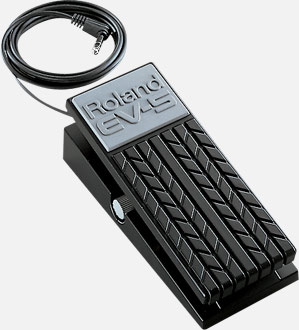
the volume pedals I've seen have TS plugs (mono), and the expression pedals are TRS (stereo)
I've had good experience with this one
the volume pedals I've seen have TS plugs (mono), and the expression pedals are TRS (stereo)

What makes a good one?
If it says Dunlop on it!
Their pedals can be used as volume pedals also.
Can't the ernie ball volume pedal do expression also?
I seem to remember this much...
Not without modding it as far as I know, I seem to recall a company selling pre-modded ones though.
You really can't go wrong with an EV-5, especially when pairing with boss products. I personally use a Moog MG-3, which has a little bit different of a range, but is adjustable and also has a switch for polarity. It also seems sturdier.
All it is - is a potentiometer that controls voltage in series with a certain knob on the effect. Delays usually allow you to control delay time or feedback, some filter your tone, and others do really weird stuff. Volume pedals rarely apply as a CV unless they have a specific input for expression only and you use the correct type of cable... you can damage your gear if you do it wrong. Make sure you use the right cables and the appropriate expression pedal for your gear.
All it is - is a potentiometer that controls voltage in series with a certain knob on the effect. Delays usually allow you to control delay time or feedback, some filter your tone, and others do really weird stuff. Volume pedals rarely apply as a CV unless they have a specific input for expression only and you use the correct type of cable... you can damage your gear if you do it wrong. Make sure you use the right cables and the appropriate expression pedal for your gear.
Last edited:
Aahh...thanks!Not without modding it as far as I know, I seem to recall a company selling pre-modded ones though.
Not without modding it as far as I know, I seem to recall a company selling pre-modded ones though.
True, but I don't think that is entirely accurate for all volume pedals... some volume pedals have multiple inputs and outputs. I recall seeing a passive one (DVP4) with a separate input for the signal and expression. I am wondering if those can be used simultaneously for volume swells and expression - not sure how you could adjust it.
Edit: Here is an easy way to use an Ernie Ball volume pedal as an expression pedal; basically requires a special cable that runs from input and output:
Invalid Link Removed
Last edited:
I'm not an electrical engineer, but I think I follow you. I'm about to pull the trigger on a Dunlop volume x mini - which is a combo volume/expression pedal. Supposedly, the parameters of the expression part is internally adjustable.I learned a lot when I was trying to get a Source Audio HH3 express a Pigtronix EP-2, here's what I learned.
I wasn't able to get the HH3 to fully sweep the EP-2, and for a good reason, it never will. What I learned during that whole debacle is that the value of the potentiometer you are "Expressing" on your pedal needs to the same or lower than that of the "Expresser". So in the case of the EP-2/HH3 combo, the EP's pot value is 25k and the HH is a digital 10k.
What this means is that the HH will only express about 40% of the EP. It is probably the most overlooked issue when it comes to the typical "What's the best expression pedal?"-type questions. The answer has everything to do with what your are expressing.
All an expression pedal does is take the designated parameter that can be controlled by a pot or envelope and and sends it through the expression pedal's pot and now you can essentially turn a parameter's pot with your foot. These pots regulate the amount of voltage going to the effect.
So let's take a standard LFO/Expression pedal combo and let's say they're both 10k resistance pots. The TRS cable (Tip, Ring, Sleeve) is really only working as a two-way conductor. So let's say the pot for controlling the LFO frequency goes to the tip of the cable and that tip is then one side of the pot in the expression pedal. Then the signal goes through the pot on the expression pedal and back to the Ring part of the cable and back to the LFO telling it a specific value based on the position of the pot in the expression pedal, or, your foot.
The reason it was never going to work between the HH3 and Pigtronix EP-2 is because the EP needs at LEAST a 25k resistance pot in order for the full range of the circuit to be recognized. The REAL reason the Moog EP2s are so popular isn't just due to price, it's because the pot on the Moog is adjustable from 50k all the way down to 5k or lower.
So in a nutshell, the HH3 will only fully express FX and pedals that use a 10k pot or smaller. Obviously all the Source Audio pedals, as well as BOSS, and EHX use 10k pots for all their pedals. From what I understand, most of the Pigtronix use 25k.
Now if I haven't lost you yet, hang on, there's more. There are also two types of pots, linear and logarithmic. If you could picture a basic graph, the linear pot does what it sounds like, it goes in a straight line. We'll use volume pedal pots for this explanation. With a linear pot, you move it a little bit, the volume comes up a little bit or move it a lot the volume jumps a lot, it is directionally proportional to your movement like an equal power fade in a DAW. A logarithmic pot works a little bit differently. The movement of your foot is not proportional to the pot voltage. In other words, you can move your foot quite a bit and only get a little bit of response in volume, but once you are almost in toe position on the pedal, the volume moves up very fast.
Now in the real world, almost all volume pedals are linear, most. But that was just an example on how they work and I'll tell you why I'm telling that in a minute too. If you happen to be somewhat savvy with combustion engines, linear pots are like 4-stroke engines and logarithmic pots are like 2-stroke engines. The reason you can use volume pedals as expression pedals is that you have a TRS jack split into two TS jack in which one goes in the input and one in the output which allows you to use the pot of the volume pedal the same way as an expression pedal
After giving up on the HH3 with my EP-2, I bought the Mission Engineering Pigtronix Dual Expression pedal, which is a dual, 25k, linear pot expression pedal. Once I hooked it up to the EP-2, I was almost instantly disappointed. The reason why is because I *think*, but I'm not sure, that the pot on the EP-2 is a 25k logarithmic pot. The reason I think that is because I'd be in heel position and once I started to move my foot, the phaser would almost instantly kick on which is usually the case when pairing a linear expression pedal with logarithmic control on a pedal. A logarithmic pot on an expression pedal would provide much more smooth transition FROM the heel position. I got rid of my EP-2 (WAY too powerful for post rock) before trying it with a logarithmic expression pedal in which I think would be a perfect match, but that's speculation.
I'm telling you all this because I'm sure none of your equipment is defective, it's just that they aren't a match. Not every expression pedal works on every pedal. You have to know the value of the pot in the FX pedal and whether it is linear or logarithmic and choose your expression pedal from there.
25K works fine. EX-1 is plastic junk... they are so damn easy to break. Simply put >5lb pressure on it and it's toast. 5lb may seem like a lot but all that requires is a slight correction of balance (something easy to do when you're slamming around stage and then have to run up to the pedals...) and it just falls apart internally. You can reassemble it most of the time but definitely not something you want to happen in a live scenario. The Mission pedals look REALLLY nice and are no doubt durable but they're quite a bit more expensive than the Ernie Balls and I've never had an issue with the EBs so why pay more for something else?
Cheers for the tip @negativefx . Does the 25k rush at all as it gets near toe down?
@Harry Champion :: It should be noted that the Line6 M5 (and IIRC other Line6 pedals with expression inputs) require...
...a TS cable 10kOhm.
Most every expression pedal on the planet works with TRS cables.
...a TS cable 10kOhm.
Most every expression pedal on the planet works with TRS cables.


