• TalkBass has been independent since 1998. Add your voice.
    Create a free account to reply to discussions, view embedded media, and browse with fewer display ads.
    Join freeLog in
    Want zero display ads or expanded classifieds tools? Compare plans.

Testing Compressors: Cali, Smoothie, Empress, Diamond, Keeley, FEA, Darkglass, Doc Lloyd, Lusithand & more

This arrived.

B1961B63-3C80-4A08-B113-DDA3E30FF831.jpeg
 
552A9C24-0ABA-4B77-9822-91050B1149D8.jpeg


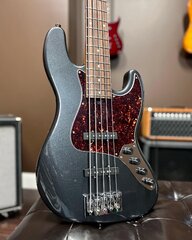
So I stopped by a cool shop just outside Pgh to try out some comps. Played a new USA Precision passive 5.

The Walrus Deep Six added a big low end and tons of squish. Maybe a little too much squish - I tried to dial it out but it seemed like it was part of the vibe. Very cool for slapping and chords/solos etc.

The earthquaker Warden was really hip. It seemed a little more transparent than the Walrus... until you crank up the sustain - then the pedal starts to really warm up. I could see grabbing one of these.

The MXR was there for reference because it was the only other compressor there! Didn’t sound too good on the bass, but I’d see using one if I still played lead guitar. Very solid construction.

Glad I got to try these. I’m going to keep looking - thanks for all the great contributions.
 
  • Like
Reactions: wmmj and scubaduba
I've been considering a compressor after not really jiving with my Keeley for about a year. I think the JHS with all it can do may sway me to pick up a compressor again. I loved the review on here! That DI capability is clutch, that is one versatile piece of kit

The Pulp 'N Peel has a lot going for it. I can see it replacing a dirt pedal and DI box and getting a compressor (a good one at that) to boot. While the Keeley is uber transparent, the JHS imparts its own color, but in a very good way that doesn't really get in the way. Makes everything bigger, smoother, and more even. And it is orange! :D
 
I'm practically dying to try an Opti-Fet. Do you still have yours? If not, why'd you get rid of it?

I was using the Diamond mostly as a tone enhancer... which it is awesome at. When I changed amps to a V4B I didn't want the tone enhancement of the Diamond, and I was jonesing to see for myself what all the hype was about with the Opti-Fet, so sold the Diamond and bought the Opti-Fet. I found the Opti-Fet to be a bit dark in combination with the V4B, but I admit I didn't play with the internal dips as much as I could have to try some of the less dark settings. I thought I'd like lots of dials and what not to play with, but in reality I like something a little more simplistic.

With respect to the DE-CL, I got on the waiting list last year so when my name came up 6 weeks ago I pulled the trigger. I haven't played with it much yet due to holidays, but so far I'm liking it. It doesn't colour my tone like the Diamond and Opti-Fet do (which I no longer want as I love the tone of the V4B by itself). It's definitely smoothing out the notes, and like the video on the DE-CL it does seem to bring the notes forward (not sure how else to explain it, the video does a decent job though).
 
FEA - DECL Quick Test
Tested with Sanberg Electra (P style with an active pre-amp; it does not have a gain boost but does offer a very nice treble / bass adjustment. GK MBF800 / GB 2x12 NeoX

If a piece of gear doesn't impress me in 15 minutes or less, it probably never will.
This compressor is studio quality, very adjustable, easy to use, and very musical.
I think my search is over.

Compression - Very natural sounding and super adjustable; I use a compressor for smoothing out signals and not as an effect; no idea how it works as an effect and no interest in studying.
With the ratio at approx 12:00 and the indicator lightly blinking, the tone gets very big and fat; at first I thought there was an EQ change but the reality is that the compression gently smooths the signal in a very linear fashion.
The sound is much more rich and full; the tonal quality is beautiful. Briefely experimented with a lower and higher ratio, but mid dial was great without the limiter.

Limiter - Just what you would expect; at a low threshold, it tames the little spikes; at noon it makes one a slap and pop genius; just so easy to spank the bass and keep things nice and tight in the mix without undue volume changes.
My slap technique is not that great. With moderarte compression and limiting, it improves how the intrument speaks and actually makes it sound like a player with better technique.

Attack on comp / limiter - Works well and in my quick test the setting was not that critical; as expected it affects where the threshold is crossed in conjunction with the threshold control

Pre-set Release - I have become a fan of program dependant release in recent years and this one works great; not once did I wish to adjust the release on either the comp. or limiter.

Warmth Control - I originally thought this would be very important feature for me and was concerned that the maximum amount had been reduced with this version.
I can't imagine ever needing more that the max amount.
The tone was good but not easy for me to embrace without a band setting. If you love your tone, it is a nice feature you may never use; if you want a slight amount of tube like distortion you will like this.
Make no mistake, this will not make your SS amp sound like an SVT.
I have an SVT, and at mid volume level, it offers a bit of tube compression. I've never wanted more with an SVT, and as time goes by, I will test further with this unit.

Negatives - None really; in my perfect world it would be great if the limiter could work by itself without the compressor being on. I'm sure their is a design reason why this was impractical or added too much cost.
The other negative is that it costs $285 shipped and you supply the battery (I would have done the same); if it sat on a shelf a long period of time, the alkaline battery could leak; ask my Fluke meter or LED flashlight about Duracells.
A percet example that you get what you pay for but this is a bargain IMO.

Why no ball park ratio label on the ratio control?
Frank, about what ratio is 12:00 on the dial?
Also, about where is 4:1?

In conclusion, this unit exceds my expectations of a pro, pedal, compressor.
The next time I'm on a session with a few extra minutes, I will ask to cut a line out with the FEA to tape (actually computer) just to see how it stacks up against plug ins.

Headed down to the shop to find some epoxy.
I could leave this as a preset with this bass; it's that good.

IMG_9349 (1).jpg
 

Attachments

  • IMG_9349 (1).jpg
    IMG_9349 (1).jpg
    830.6 KB · Views: 39
Why no ball park ratio label on the ratio control?
Frank, about what ratio is 12:00 on the dial?
Also, about where is 4:1?

Thanks for the review!:thumbsup:

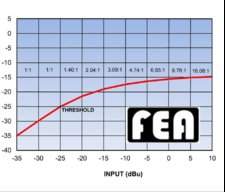
The lowest ratio settings are very soft-knee and the higher ratios are hard-knee. The discussion of "ballpark" numbers around the dial came up after I already had thousands of face-plates made. But here is the approx ratio positions around the knob:

MIN (7:00) = 1.5:1
9:30 = 4:1
12:00 = 6:1
2:30 = 11:1
Max (5:00) = 20:1

Thanks!
-Frank
 

Latest posts