Alvaro Martín Gómez A.
TalkBass' resident Bongo + cowbell player
Interesting bass. What is it and what are all the switches for?
Same feelings here. I don't like singlecuts, but this one grabbed my attention. Nice!

TalkBass has been independent since 1998. Add your voice.
Create a free account to reply to discussions, view embedded media, and browse with fewer display ads.
Join free Log in
Want zero display ads or expanded classifieds tools? Compare plans.
Interesting bass. What is it and what are all the switches for?
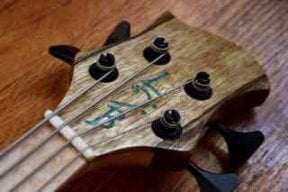
Interesting bass. What is it and what are all the switches for?




Would this count? It's in the "Fender Club" already, but as a fretless, it belongs here too, right?
It's nothing special. MIM with DiMarzio pups, Gotoh bridge, tort guard, and Fender 9050 flats.
[Invalid or Expired Link Removed]
The main difference would be that the Precision A/E has a wider range of sounds than the maple-necked Precision. It's active, and features both a Lace Sensor split PU in addition to a piezo pickup in the acoustic-style bridge. The three pots are Volume, Tone (cut & boost) and Pan, which blends between the 2 pickups. The Lace Sensor on it's own produces a tone not unlike a classic p-bass, though the new nylon-covered strings make it difficult to do a direct comparison with the maple neck bass, which has an old set of roundwounds on it. The piezo on its own make the bass sound very much like a standard amplified acoustic bass guitar, with plenty of cut. The most useful tones seem to be ones which use the blend knob at various positions. Plucking the string near the end of the fingerboard can produce a reasonable walking double bass sound.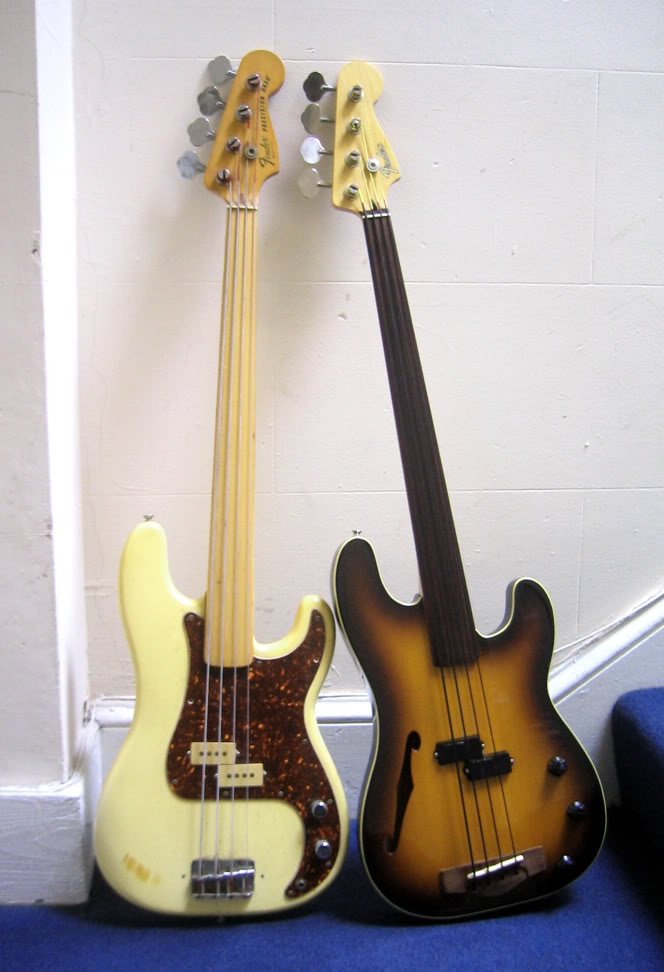
Lovin´your Precision A/E, never seen one of those before. How does it sounds compared to your "normal" P-bass?

The question I have been dying to ask people is - why do some fretless basses look like they've got frets on? They seem to have some sort of line or something in photos, and, I've never seen any here to actually find out what they are!
Please forgive my ignorance - I'm sure there's a really simple reason ...

Those are just fretlines. Thin strips of wood or plastic are inlaid into the fingerboard at the same locations as the frets would be- a (usually) more accurate place to put your finger than using just the side dots (side dots are great but don't help as much when playing on the higher strings as they won't line up with where the point of intonation will be- this is more noticeable on extended range basses). They give the player another visual reference to use when playing. There are more lined fretlesses out there than unlined. Neither is better than the other- as with most things, going lined or unlined is just personal preference.


